
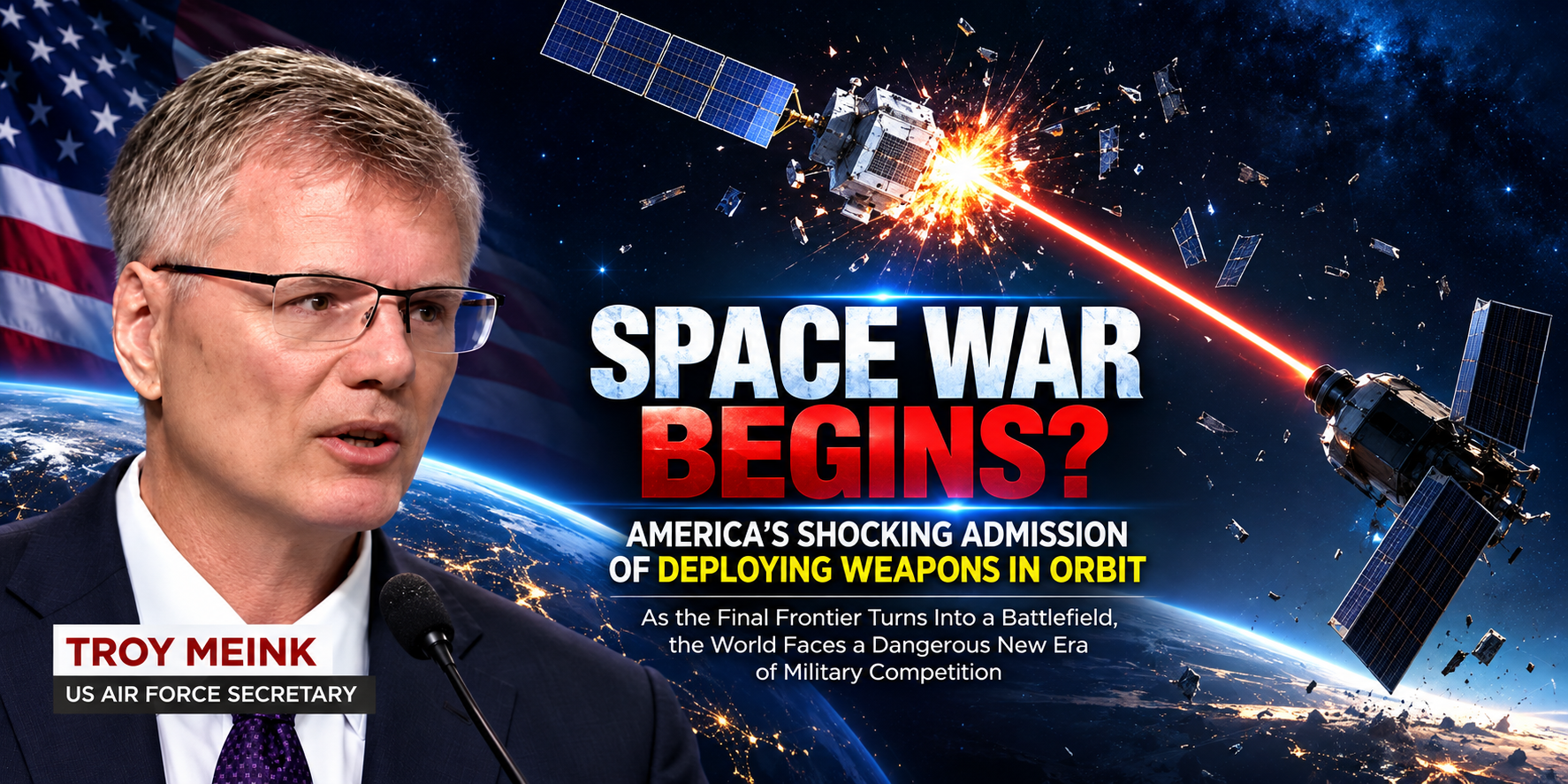
As the Final Frontier Turns Into a Battlefield, the World Faces a Dangerous New Era of Military Competition
In a revelation that has sent shockwaves through military and strategic circles worldwide, the United States has officially confirmed for the first time that it has deployed weapons in space. The announcement has triggered intense debate, raised geopolitical tensions, and drawn immediate criticism from China, which warned that the move could accelerate the militarization of outer space.
But what exactly has the U.S. deployed? Does it violate international law? And where does India stand in this rapidly emerging era of space warfare?
Let's break it down.
The Historic U.S. Announcement That Changed the Conversation
The disclosure came from senior U.S. military officials, who confirmed that America now possesses "on-orbit space control systems" capable of defending U.S. and allied space assets against hostile threats.

In simple terms, the U.S. has acknowledged that it has operational systems in orbit designed to counter adversaries that may target American satellites. However, Washington stopped short of revealing the exact nature of these weapons. Military experts believe these systems could include:
1. Anti-satellite (ASAT) technologies
2. Electronic warfare systems
3. Orbital jammers
4. Directed-energy systems
5. Robotic space platforms
6. Advanced cyber capabilities
The secrecy has only fueled speculation across global defense communities.
Why Space Has Become the Most Critical Battlefield of the 21st Century
Modern warfare no longer depends only on tanks, fighter jets, and missiles. Today, satellites function as the nervous system of military operations and national economies. They support:
a) Military Functions
1. GPS navigation
2. Missile guidance
3. Intelligence gathering
4. Surveillance and reconnaissance
5. Secure military communications
6. Early warning systems
b) Civilian Infrastructure
1. Banking networks
2. Telecommunications
3. Weather forecasting
4. Aviation operations
5. Internet connectivity
6. Disaster management
A successful attack on a country's satellite network could disrupt both military operations and civilian life almost instantly. That is precisely why the weaponization of space is viewed as such a serious development.
What Are Space Control Weapons?
Many people assume space weapons are designed solely to destroy satellites. In reality, the objective is often to control, disrupt, or neutralize an opponent's space capabilities.
Space control operations can include:
1. Interrupting satellite communications
2. Degrading sensor performance
3. Blocking navigation signals
4. Preventing mission execution
5. Hijacking data transmissions
6. Destroying satellites
This capability gives nations enormous strategic leverage during a conflict.
Kinetic vs Non-Kinetic Weapons: The Key Difference
a) Kinetic Weapons: Physical Destruction
Kinetic systems physically strike or destroy an enemy satellite.
For example, a satellite could be deliberately collided with another satellite, or a missile could intercept a target in orbit.
While effective, kinetic attacks create a major problem: space debris. Thousands of fragments can remain in orbit for years, threatening other satellites and future space missions.
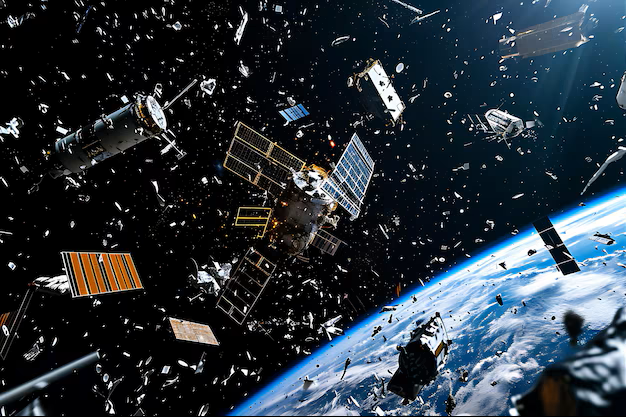
🚨 The Kessler Syndrome: One Collision Away From a Space Catastrophe?
First proposed by NASA scientist Donald Kessler in 1978, the Kessler Syndrome warns of a runaway chain reaction in orbit where colliding satellites create massive amounts of debris, triggering even more collisions. With thousands of satellites and trillions of debris fragments already circling Earth, experts fear this "space traffic nightmare" could cripple communication networks and disrupt critical sectors ranging from aviation and energy to healthcare and agriculture.
Experts frequently warn about a phenomenon called the Kessler Syndrome. Here's how it works:
One satellite is destroyed → Debris spreads across orbit → The debris collides with other satellites → More fragments are created → A runaway chain reaction begins.
If severe enough, entire orbital regions could become unusable, jeopardizing global communications, navigation, and space exploration.
This is one of the main reasons many analysts argue that kinetic anti-satellite weapons should be avoided whenever possible.
b) The Rise of Non-Kinetic Space Warfare
Because of the debris problem, military planners increasingly favour non-kinetic systems. These weapons do not destroy satellites physically but can render them ineffective.
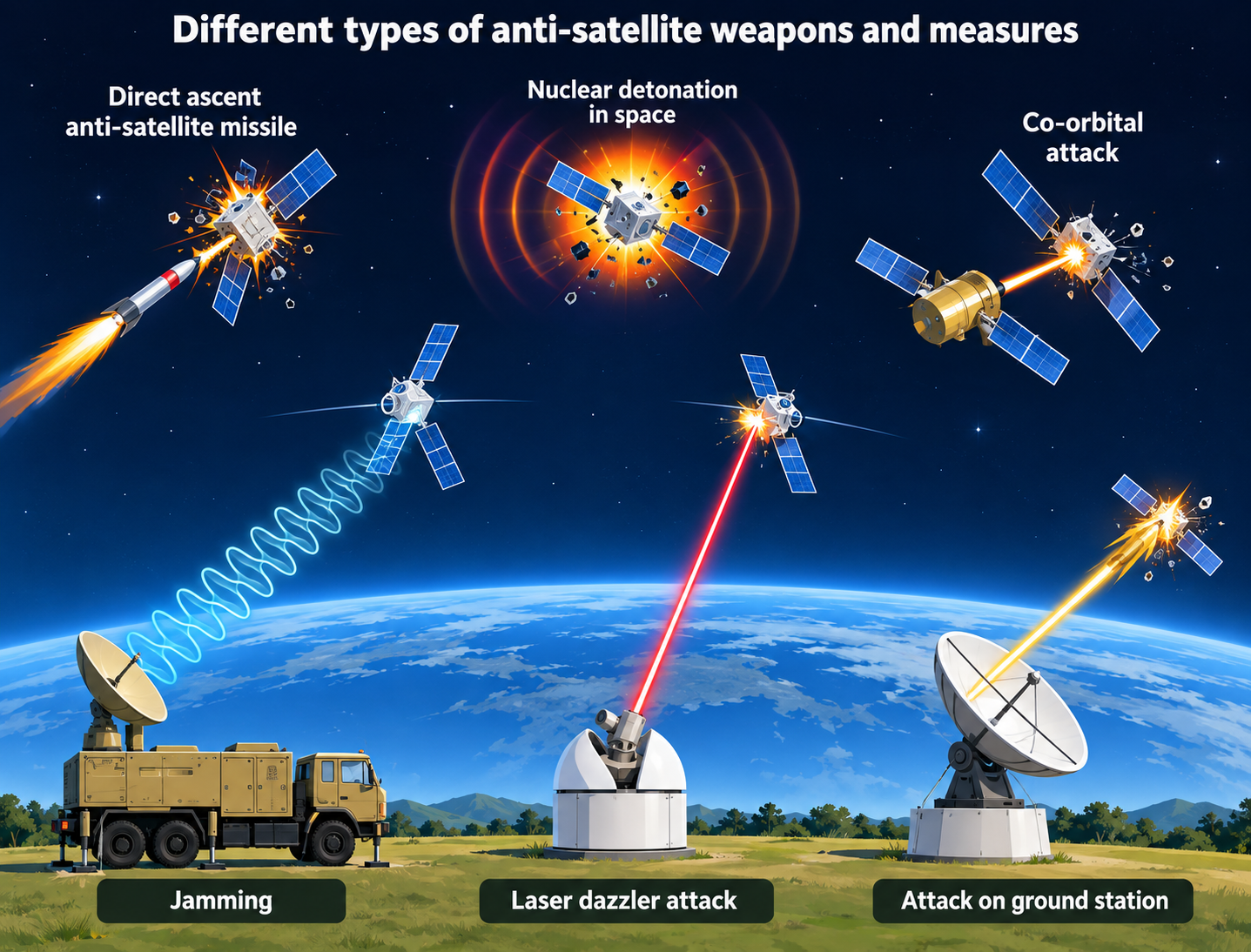
Examples include:
1. Jamming
Blocking communication between satellites and ground stations.
2. Spoofing
Sending false navigation or positioning signals that mislead aircraft, ships, or military platforms.
3. Cyber Attacks
Compromising satellite networks through hacking and digital intrusion.
4. Laser Dazzling
Using directed energy to temporarily blind or interfere with satellite sensors.
These methods are harder to detect, less destructive, and often more strategically useful than outright destruction.
Why Didn't the U.S. Reveal Full Details?
According to American officials, the public announcement was intended primarily as a deterrence message. The message is simple: "If our satellites are threatened, we can respond."
By confirming the existence of space-based defensive and offensive capabilities while withholding operational details, Washington seeks to discourage adversaries without exposing sensitive technologies.
China's Sharp Response: Warning of a New Arms Race
China reacted strongly to the announcement, arguing that the move could trigger the weaponization of outer space and intensify global military competition.
Beijing fears a classic security dilemma:
1. One country develops advanced capabilities for protection.
2. Rivals perceive a threat.
3. They build even stronger systems.
4. Competition escalates further.
The situation resembles the Cold War nuclear arms race, but this time the arena is space.
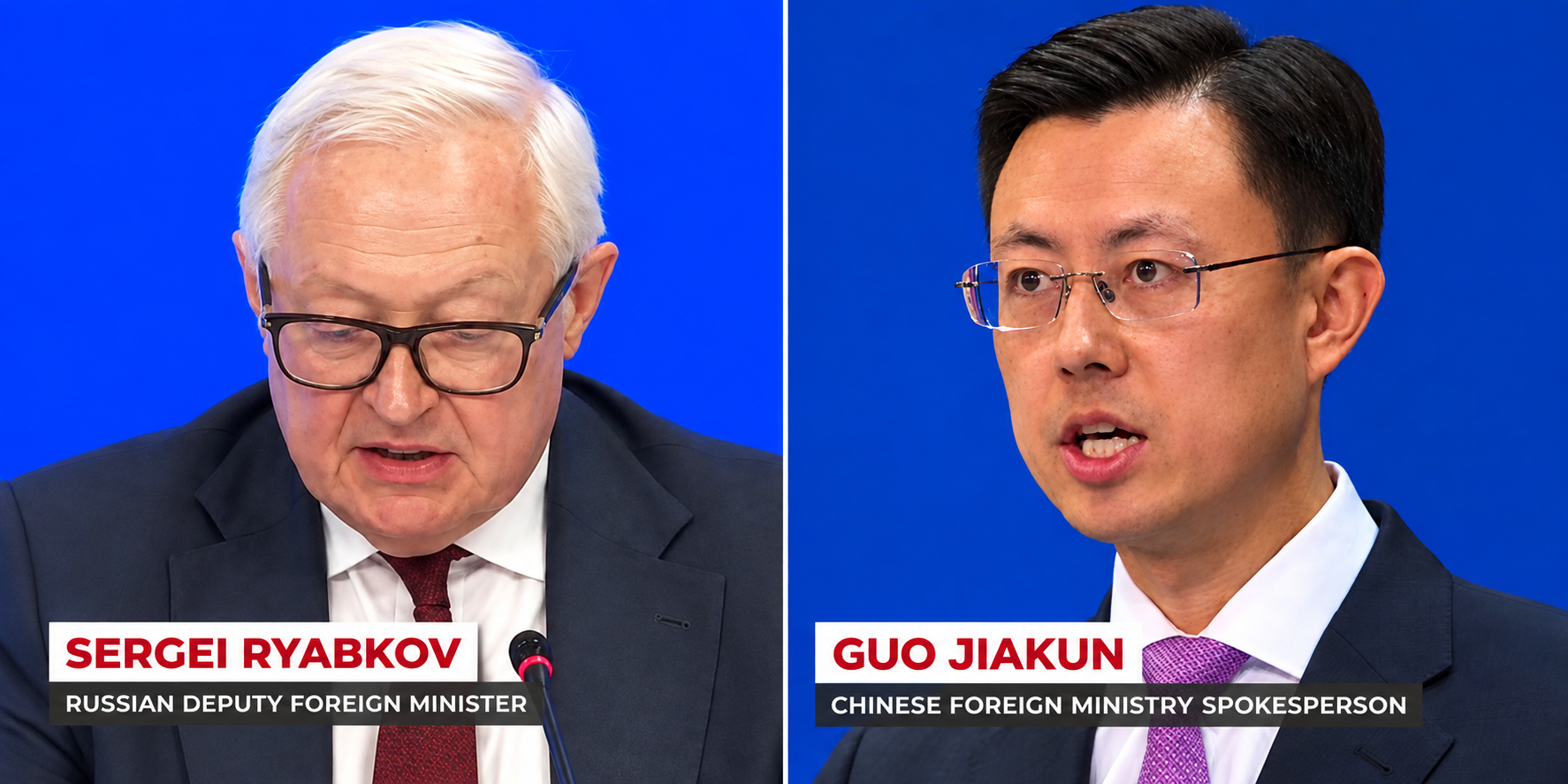
The three key players driving this competition are:
United States
1. Massive satellite constellation
2. Advanced space infrastructure
3. U.S. Space Force established in 2019
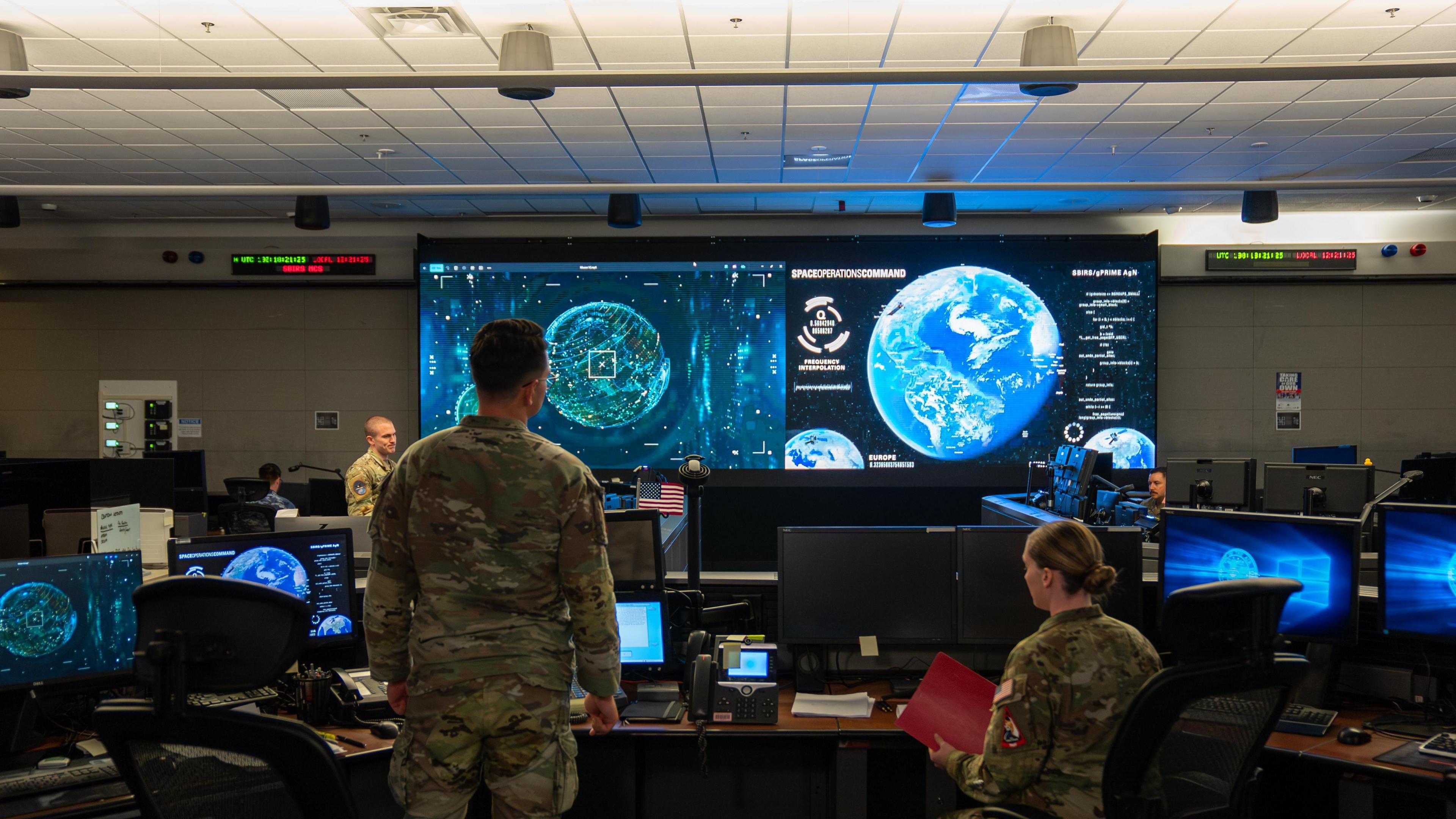
4. Global communication and navigation dominance
China
1. Rapidly expanding military satellite network
2. Anti-satellite capabilities
3. Advanced electronic warfare systems
Russia
1. Longstanding anti-satellite expertise
2. Sophisticated electronic warfare capabilities
3. Extensive military space experience
Did America Violate International Space Law?
Interestingly, not necessarily.
The 1967 Outer Space Treaty prohibits nations from placing:
1. Nuclear weapons in orbit
2. Weapons of mass destruction in space
However, the treaty does not explicitly ban all conventional weapons in space.
This legal grey area has become one of the biggest challenges facing international governance of outer space. Washington argues that its actions remain within existing treaty limitations, while critics claim the move exploits a loophole in international law.
Where Does India Stand?
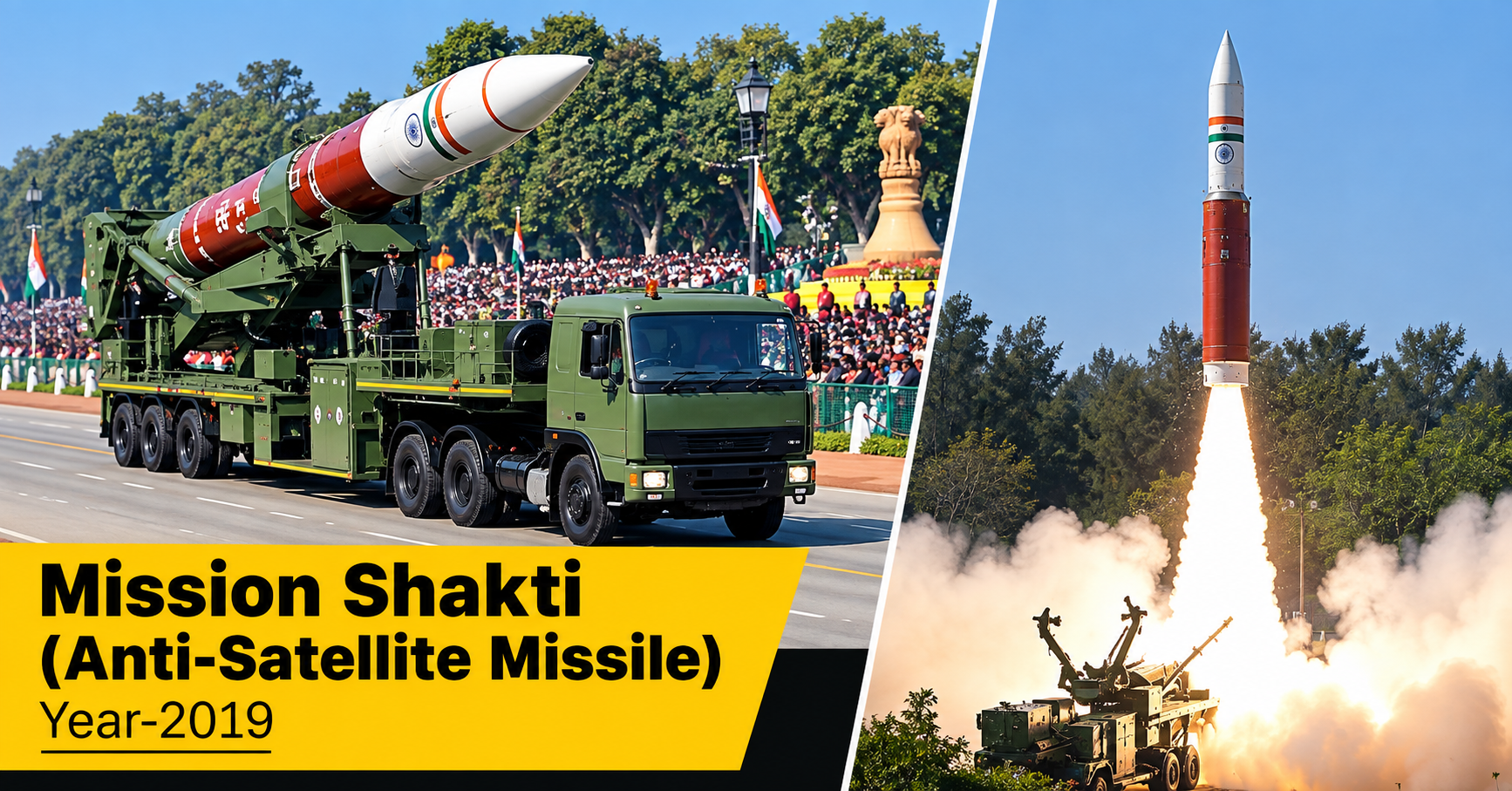
India is already recognized as a major space power and has steadily expanded its strategic capabilities. The most significant milestone came in March 2019, when India conducted Mission Shakti, successfully intercepting and destroying a satellite in low Earth orbit.
With that achievement, India became only the fourth nation after the United States, Russia, and China to demonstrate anti-satellite capability.
However, New Delhi has consistently maintained that:
1. Space should remain a peaceful domain.
2. An uncontrolled space arms race is undesirable.
3. Defensive preparedness remains necessary due to evolving threats.
India is also planning a major expansion of its space surveillance architecture, including dozens of new satellites over the coming years to improve monitoring, intelligence, and situational awareness.
The Verdict: The Next Great Power Contest Is Moving Into Orbit
America's admission marks a historic turning point in modern military strategy. Space is no longer just a domain for exploration, science, and communication. It is rapidly becoming a contested strategic arena where the world's biggest powers are preparing for future conflicts.
Whether this development strengthens deterrence or ignites a dangerous new arms race remains to be seen.
One thing, however, is becoming increasingly clear: The battlefields of tomorrow may no longer be on land, sea, or air. They may be hundreds of kilometers above our heads.
🚀 What Do You Think?
Will space weapons prevent future wars through deterrence, or are they pushing the world toward an uncontrollable arms race?
Share your thoughts in the comments, follow us for in-depth geopolitical analysis, and stay ahead of the stories shaping the future of global security.
Written by
Bhavana SharmaDiscussion (0)
Sign in to join the discussion.
Loading comments…