
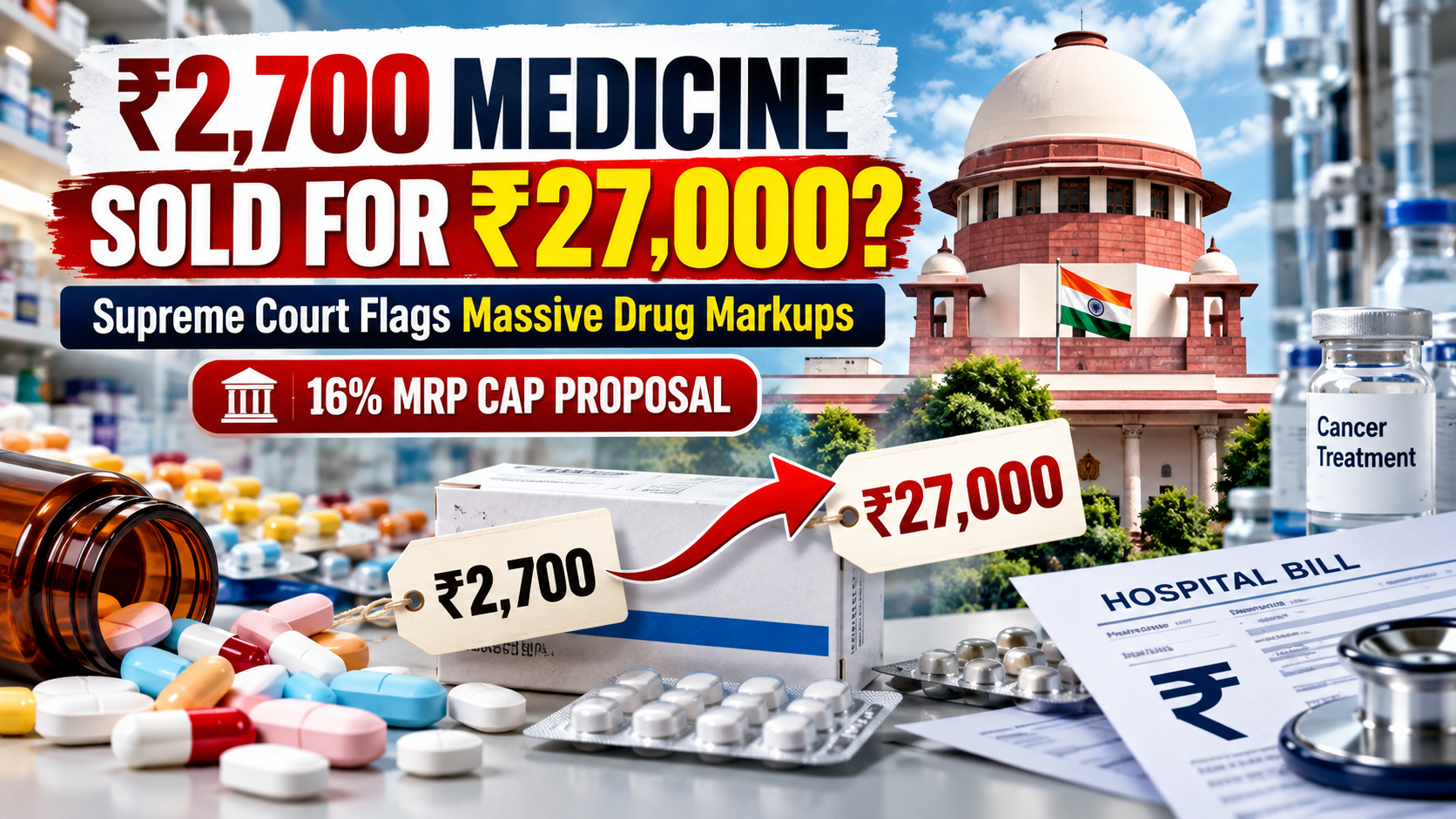
Is India’s Private Healthcare System Profiting From Patients’ Pain? The Supreme Court has raised serious concerns over sky-high medicine prices, hospital pharmacy markups, and the growing burden on patients and taxpayers.
Getting admitted to a hospital is stressful enough. But what happens when the treatment meant to save lives also threatens to drain a family's lifetime savings?
In a major development that could reshape India's healthcare sector, the Supreme Court has raised serious concerns over the pricing of medicines and medical devices in private hospitals. The court questioned whether hospitals are charging patients unfairly high prices and even suggested capping profit margins on medicines.
The issue has reignited a national debate: Are private hospitals providing healthcare services, or are they becoming profit-driven businesses at the expense of vulnerable patients?
The Case That Sparked Nationwide Concern
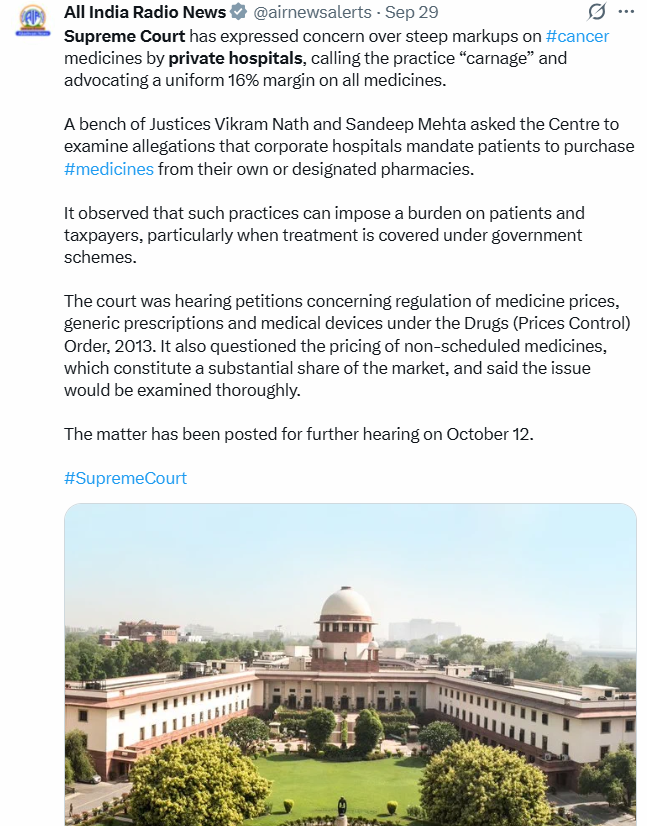
The controversy reached the Supreme Court after a shocking example was presented before the bench.
According to the case discussed in court, a hospital reportedly purchased a cancer medicine for around ₹2,700 but sold the same medicine to a patient for nearly ₹27,000, a staggering 10-fold increase.
Such a pricing gap prompted the Supreme Court to question whether these markups can be justified under any reasonable healthcare framework.

The court observed that patients entering hospitals often have little choice or bargaining power. In emergency situations, families prioritize saving lives over comparing medicine prices, making them particularly vulnerable to excessive billing.
Why Hospital Pharmacies Face Greater Scrutiny
Unlike a regular marketplace where consumers can compare prices across multiple pharmacies, hospitals operate differently.
When a patient is admitted:
1. The hospital pharmacy often supplies medicines.
2. Treatment decisions must be taken immediately.
3. Families rarely have time to explore cheaper alternatives.
4. Patients generally trust the hospital's recommendations without questioning costs.
As a result, many patients only discover the actual expenses when they receive the final bill.
This unique environment gives hospitals significant control over both treatment and the sale of associated medicines and devices.
Caught in a Crisis, Left With No Choice
When hospitals require patients to purchase medicines only from their in-house pharmacy, the ability to compare prices and alternatives disappears, especially during emergencies, ICU stays, surgeries, cancer care, transplants, and neonatal treatment, when families are least equipped to negotiate.
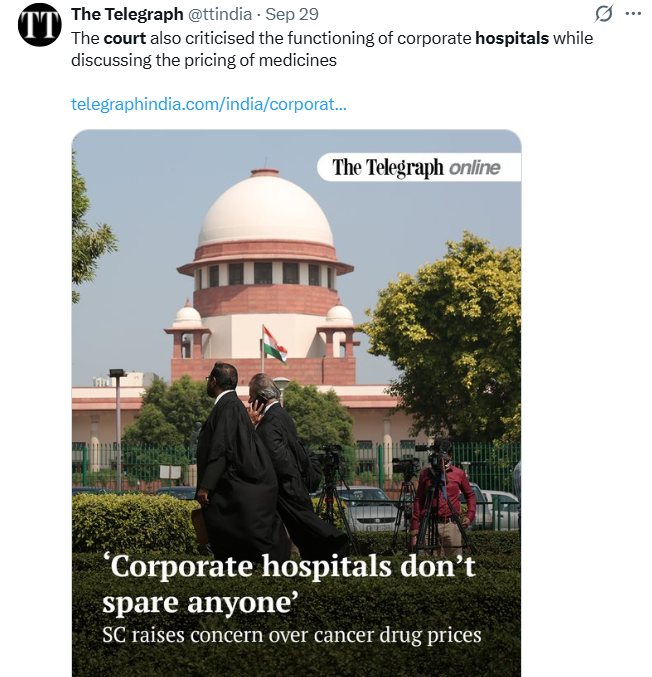
A Case That Put Hospital Practices Under the Spotlight
The issue isn't merely theoretical. In the Fortis Vasant Kunj case, the Competition Commission of India (CCI) examined concerns around whether admitted patients could become reliant on hospital-run pharmacies for medicines and consumables, potentially limiting their purchasing choices. At the same time, the regulator noted that higher margins alone are not enough to establish anti-competitive conduct, and each case must be assessed on factors such as market dynamics, competition, costs, and available alternatives.
Supreme Court's Big Proposal: A 16% Margin Cap
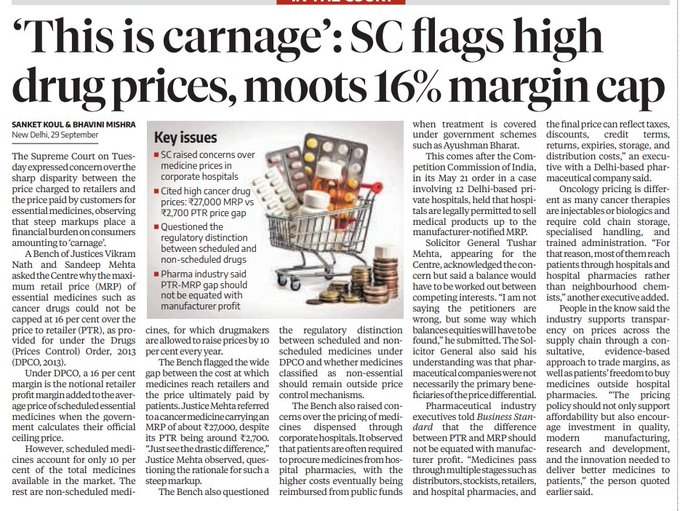
One of the most significant suggestions emerging from the hearings is the possibility of introducing a 16% profit margin cap on medicines sold by hospitals and retailers. The proposal is inspired by India's existing drug pricing framework under the Drug Price Control Order (DPCO), 2013.
Formula Used Under DPCO for Scheduled Medicines:
Ceiling Price = Average Price to Retailer (PTR) + 16% Retailer Margin
Under current regulations:
1. Scheduled Medicines
These are essential drugs included in the National List of Essential Medicines (NLEM), 2022. Their prices are regulated by the government.
2. Non-Scheduled Medicines
These medicines are largely governed by market forces, allowing manufacturers and sellers greater freedom in pricing.
The Supreme Court questioned why regulated margins should apply only to certain essential medicines and not across a broader range of drugs sold in hospitals.
If implemented, the move could dramatically reduce medicine costs for millions of patients.
The Cancer Medicine Question: When Life Has No Price Tag
The court expressed particular concern about medicines used in critical illnesses such as cancer. Unlike luxury products, healthcare demand is often "inelastic." A person battling cancer cannot simply stop buying medicine because prices increase.
Families routinely:
1. Sell property
2. Liquidate savings
3. Mortgage assets
4. Borrow heavily
to continue treatment for loved ones.
The court emphasized that when human life is at stake, patients cannot be expected to behave like ordinary consumers in a competitive market. This makes transparency and regulation even more important.
What Hospitals Say in Their Defense
While public anger largely focuses on medicine markups, the issue is more complex than it appears. Healthcare providers argue that a higher selling price does not automatically mean pure profit.
Hospitals incur several operational costs, including:
1. Procurement and logistics
2. Temperature-controlled storage
3. Inventory management
4. Pharmacy infrastructure
5. Staff salaries
6. Compliance and safety measures
7. Medicine wastage
For example, a medicine purchased for ₹200 and sold for ₹700 does not necessarily generate ₹500 in direct profit.
Competition authorities have previously acknowledged that hospitals bear multiple costs associated with maintaining in-house pharmacies. The challenge, therefore, is finding the balance between legitimate operational expenses and unjustified profiteering.
Why Investors Are Worried
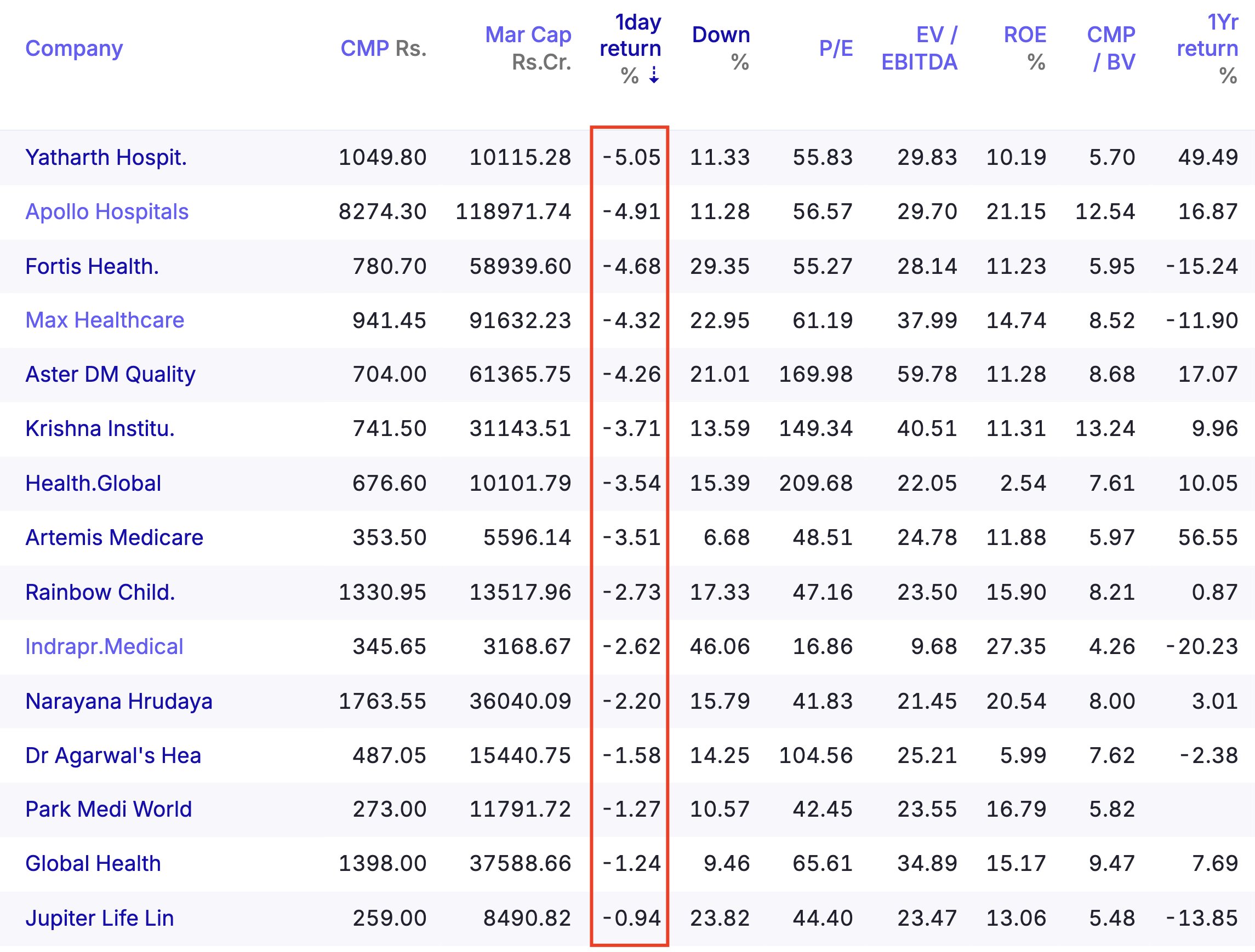
The Supreme Court's observations immediately rattled healthcare stocks. Major hospital chains witnessed significant declines in their share prices after concerns emerged regarding tighter regulation of medicine pricing.
The market's reaction reflects a simple reality: If profit margins on medicines are capped, hospital revenues from pharmacy operations could decline, potentially impacting overall profitability.
For investors, this represents regulatory risk. For patients, however, it could mean much-needed financial relief.
The Hidden Cost to Taxpayers
The court also raised another critical question: Who ultimately pays for overpriced healthcare?
In many cases, patients are covered under government-funded health insurance schemes and public healthcare programs.
When hospitals charge excessive amounts for medicines and medical devices, reimbursement often comes from public funds. That means taxpayers indirectly bear the burden.
The court suggested that unchecked pricing not only affects individual patients but could also lead to unnecessary pressure on government healthcare budgets.
The Bigger Problem: Patients Lack Information
One of the biggest obstacles to fair medicine pricing is information asymmetry. Most patients do not know:
1. Manufacturing costs
2. Distributor margins
3. Retail margins
4. Available alternatives
5. Generic substitutes
6. Market prices
Doctors and healthcare institutions usually possess far more information than patients. In such circumstances, families facing medical emergencies often accept prescribed medicines without questioning costs.
This imbalance creates a system where consumers have limited ability to make informed purchasing decisions.
Can Generic Medicines Be the Solution?
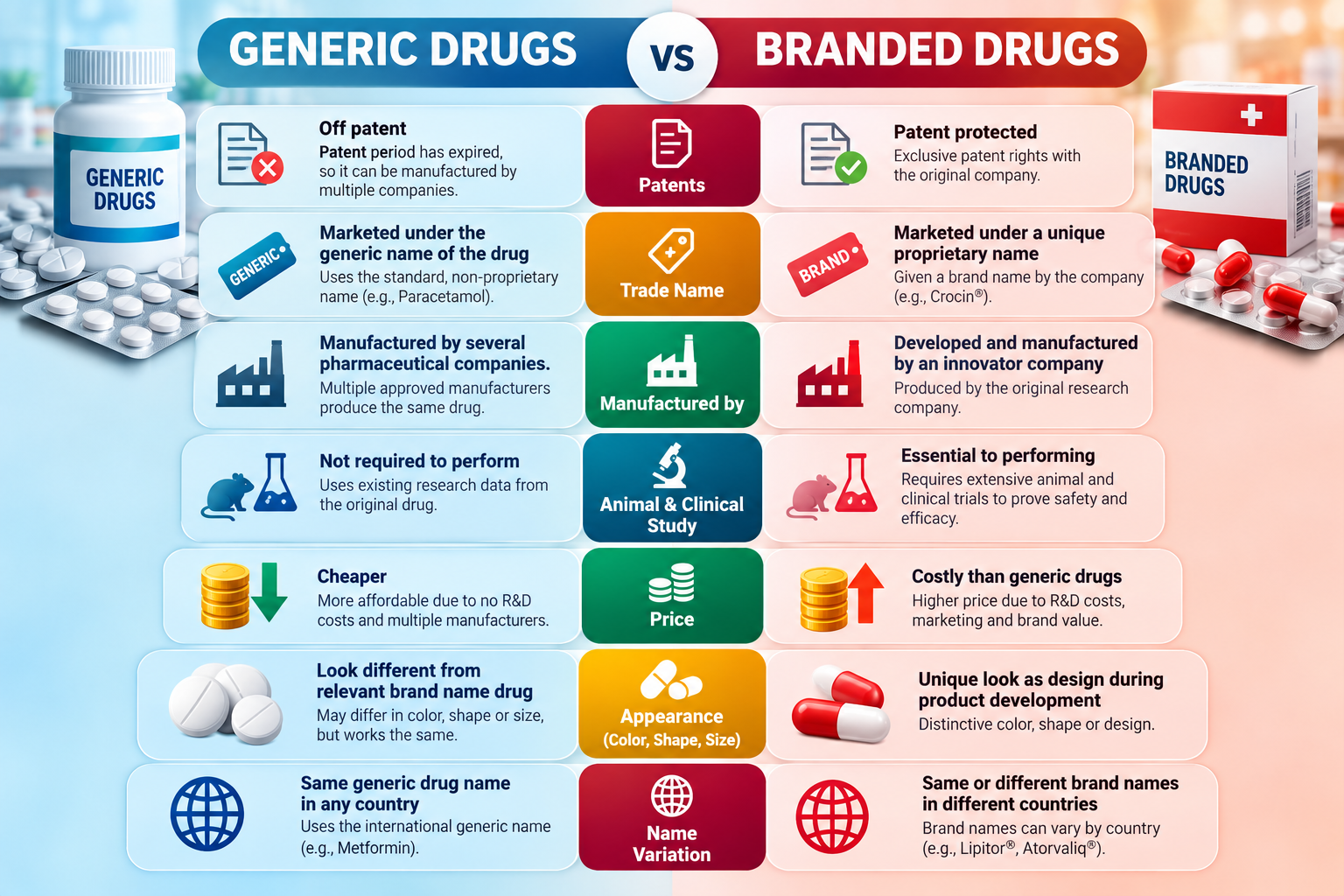
Another important issue highlighted during discussions is the promotion of generic medicines. Generic drugs often contain the same active ingredients as branded medicines but can cost dramatically less.
Experts have long argued that doctors should focus on prescribing medicines by their generic names rather than specific brands. The benefits include:
✅ Lower treatment costs
✅ Greater competition
✅ Better affordability
✅ Wider patient access
In some cases, generic alternatives can cost 70% to 80% less than branded versions while offering similar therapeutic benefits. Greater adoption of generics could significantly reduce healthcare expenses for Indian families.
It's Not Just Medicines Anymore
The debate extends beyond drugs. The Supreme Court also questioned pricing practices involving:
1. Cardiac stents
2. Implants
3. Surgical equipment
4. Medical devices
5. Consumables used during treatment
These products often form a significant portion of hospital bills, especially during surgeries and critical care procedures.
Regulating medicine prices while ignoring medical devices could leave a major gap in patient protection.
What Happens Next?
For now, the Supreme Court has raised the issue and sought responses on possible solutions. Several outcomes are possible:
1. New regulations on medicine pricing
2. Wider application of margin caps
3. Greater transparency requirements
4. Promotion of generic prescriptions
5. Price controls on medical devices
6. Stronger consumer protections in healthcare
Any reform could fundamentally alter how medicines are priced and sold in private hospitals across India.
The Bottom Line
The Supreme Court's intervention has put a spotlight on an uncomfortable question: Should healthcare operate like a public service or a profit-driven industry?
While hospitals undeniably require sustainable revenue to maintain quality care, patients should not be forced into financial distress simply because they are fighting for their lives.
The challenge lies in creating a system that protects both healthcare providers and the people they serve.
As this case develops, it could become one of the most consequential healthcare reforms India has witnessed in years.
📢 What Do You Think?
# Have you or a family member ever faced unexpectedly high medicine charges at a private hospital?
# Do you support a nationwide cap on medicine margins and stronger regulation of hospital pharmacies?
Share your thoughts in the comments, join the conversation, and stay tuned for more updates on India's evolving healthcare landscape.
Written by
Ritvik DeshmukhDiscussion (0)
Sign in to join the discussion.
Loading comments…