

A Turning Point in the Gaza Conflict
On July 31st, President Donald Trump announced what he hailed as a historic breakthrough: a framework under the U.S.-led Board of Peace aimed at ending one of the world’s longest-running conflicts, the battle between Israel and Hamas.
For the first time, a formal agreement envisions complete Hamas disarmament, Israeli withdrawal from Gaza, and the establishment of a new technocratic Palestinian administration. If implemented, this could permanently reshape the geopolitics of the Middle East.
Trump hailed the agreement as a “major milestone” in advancing his 20‑Point Gaza Peace Plan, extending gratitude to Egypt, Qatar, and Turkey for their crucial mediation efforts.
What the Deal Includes
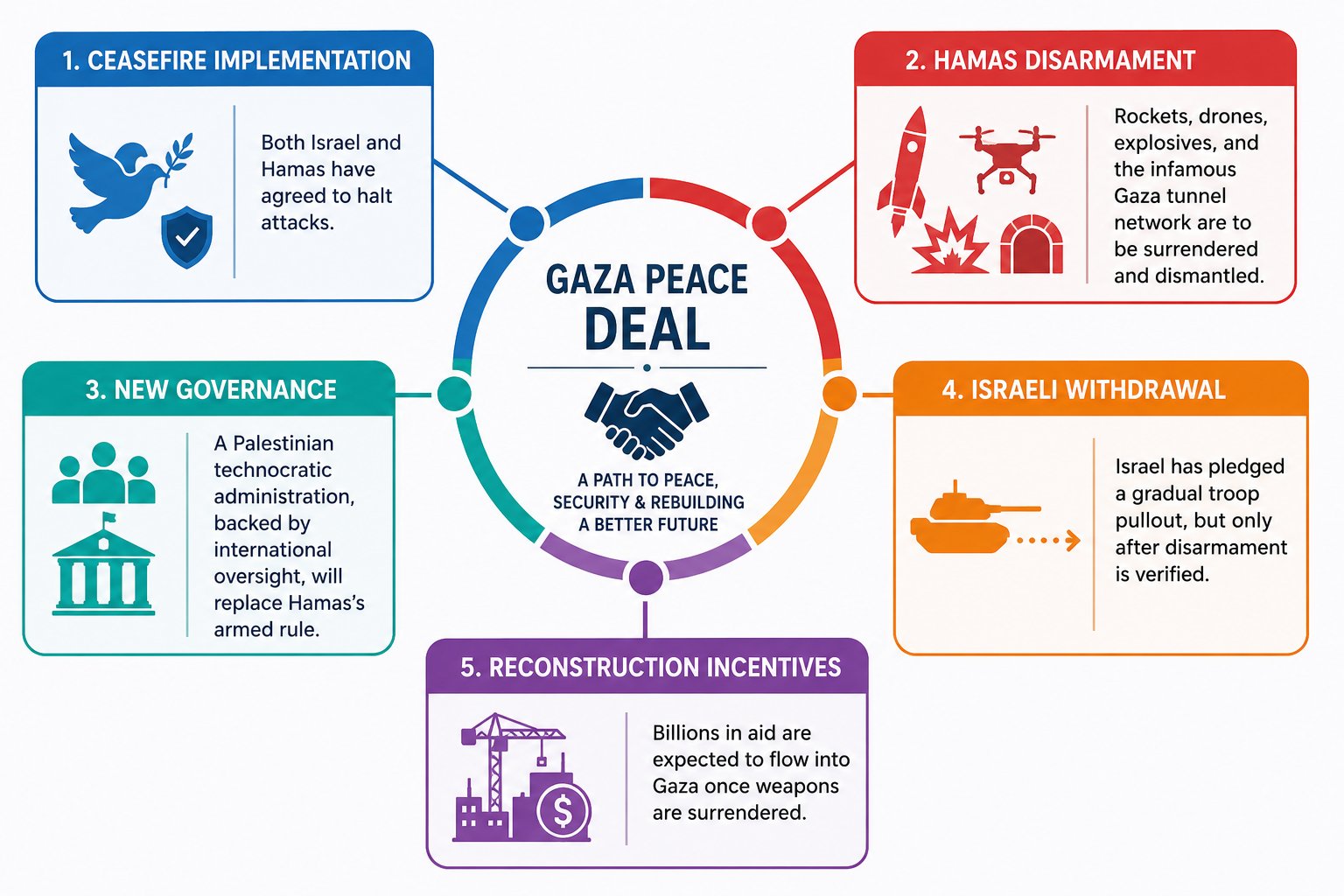
Ceasefire Implementation: Both Israel and Hamas have agreed to halt attacks.
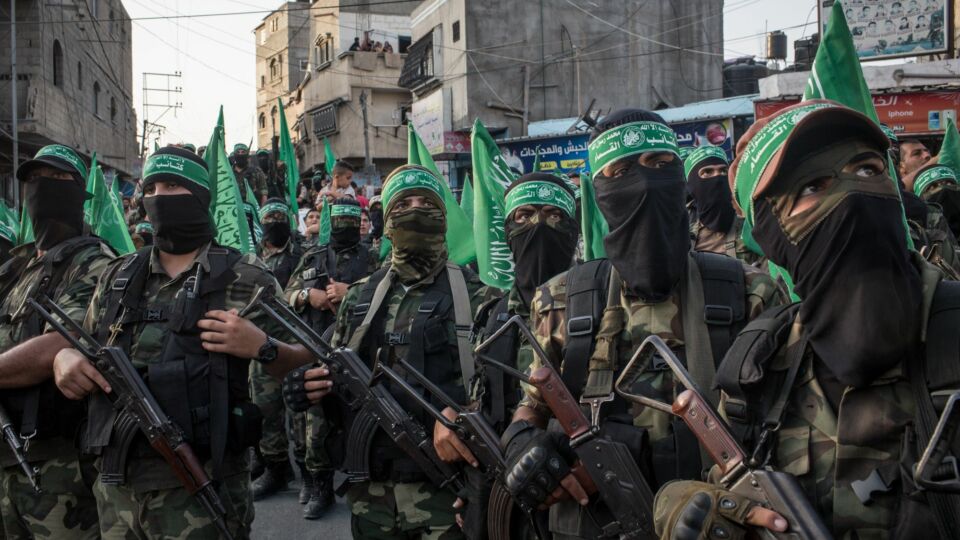
Hamas Disarmament: Rockets, drones, explosives, and the infamous Gaza tunnel network are to be surrendered and dismantled.
New Governance: A Palestinian technocratic administration, backed by international oversight, will replace Hamas’s armed rule.
Israeli Withdrawal: Israel has pledged a gradual troop pullout, but only after disarmament is verified.
Reconstruction Incentives: Billions in aid are expected to flow into Gaza once weapons are surrendered.
Why This Matters?
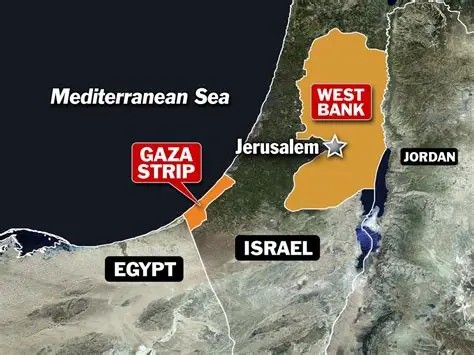
The Gaza Strip, just 365 sq. km but home to over 2 million Palestinians, has been the epicenter of repeated wars: 2008, 2012, 2014, 2021, and most devastatingly, the October 7, 2023, attacks, when Hamas killed 1,200 Israelis and took 250 hostages.
Israel’s core demand has always been total Hamas dismantlement. Hamas, in turn, insisted on guarantees of Israeli withdrawal and prisoner releases. This deal is the first framework attempting to bridge those irreconcilable positions.
The Challenges Ahead
Verification Nightmare: Hamas’s decentralized command and hidden tunnels make disarmament extremely difficult to confirm.
Israeli Scepticism: Israel has not formally endorsed the deal, insisting it will only support it once disarmament is proven.
Trust Deficit: Decades of bloodshed mean both sides remain wary of each other’s promises.
Why Hamas May Have Agreed?
Heavy Losses: Years of war have drained Hamas militarily and politically.
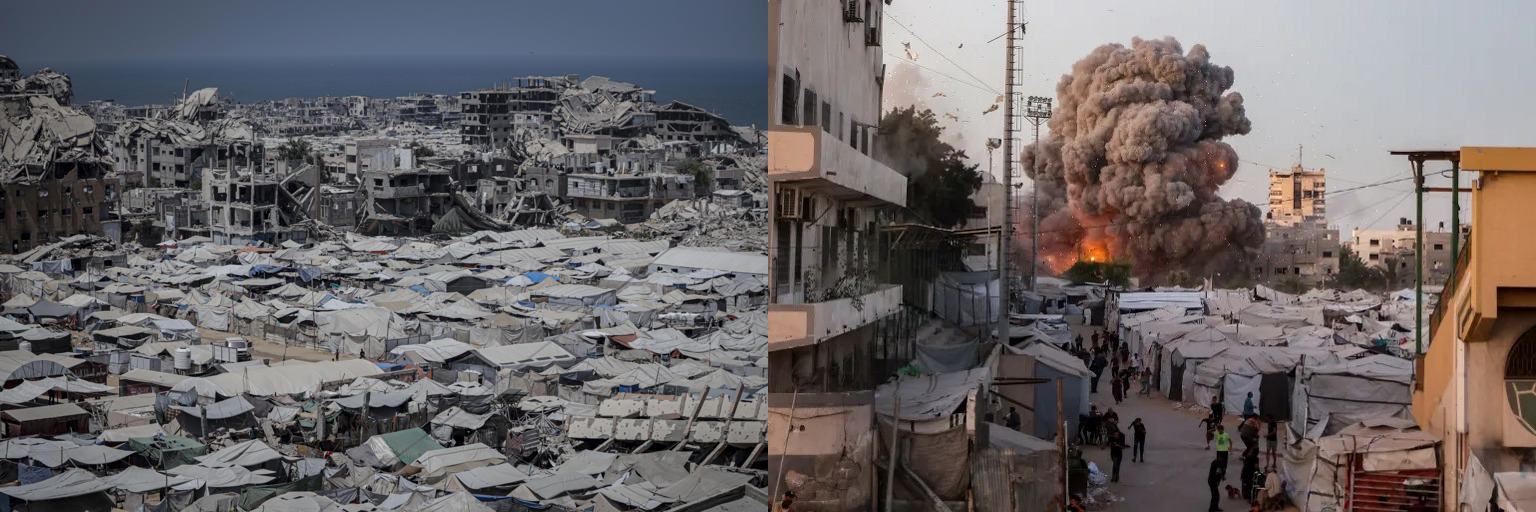
Humanitarian Pressure: Gaza faces catastrophic shortages of food, fuel, and medical supplies.
Regional Mediation: Egypt and Qatar have pushed Hamas toward compromise.
Reconstruction Incentives: International aid could rebuild Gaza if Hamas lays down arms.
A Diplomatic Gamble
Trump has branded this as a “historic diplomatic breakthrough.” Egypt and Qatar vow to continue mediating, while Israel remains cautious. Whether this deal truly ends decades of war or collapses under mistrust will define the future of Gaza and perhaps the stability of the entire Middle East.
Written by
Ritvik DeshmukhDiscussion (0)
Sign in to join the discussion.
Loading comments…