

As Washington Suspends Key Immigration Route, Thousands of Indian Tech Professionals May Be Forced to Rethink Their American Dream
The Trump administration says the move will protect American jobs, but critics warn it could disrupt Indian IT operations, delay Green Card pathways, and reshape global tech hiring.
The American Dream has long been a powerful magnet for India’s top engineering talent. For decades, Indian IT giants such as Tata Consultancy Services(TCS), Infosys, Wipro, HCL Technologies, Microsoft, Adobe and others have relied on the United States as a key growth market, sending skilled professionals to work on major technology projects.
But a dramatic policy move by the Trump administration has now sent shockwaves through the global tech industry.
The U.S. Department of Labour has suspended several major technology firms from participating in the PERM (Program Electronic Review Management) labour certification process administered by the Employment and Training Administration (ETA) of the U.S. Department of Labour (DOL), a crucial pathway that often serves as the first step toward employment-based permanent residency in the United States.
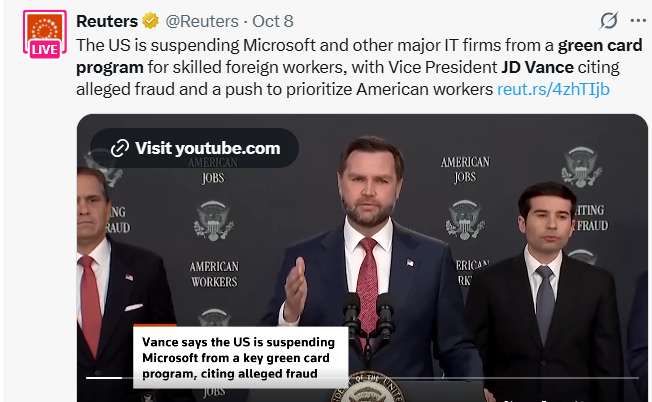
While the decision is being celebrated by supporters of the “America First” agenda, it has raised serious concerns among multinational technology companies, foreign workers, and particularly Indian IT professionals who see the United States as a long-term career destination.
So, what exactly is PERM, why has it become controversial, and what does this mean for Indian companies and employees?
What Is the PERM Program and Why Does It Matter?
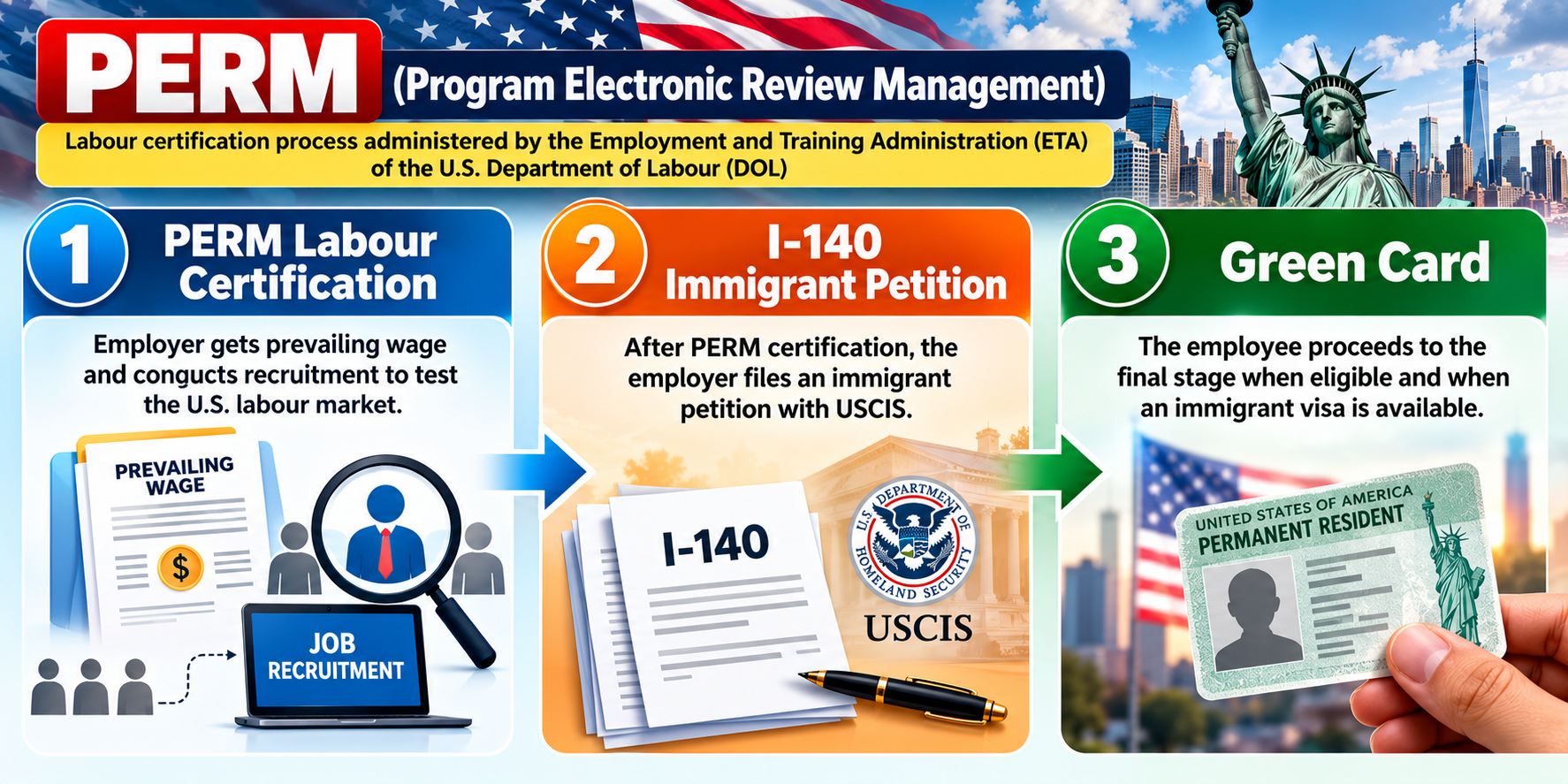
The PERM Labour Certification Program is a process through which U.S. employers can seek permission to hire foreign workers permanently.
The program exists for a specific reason: if a company cannot find a suitably qualified American worker for a position, it may recruit talent from abroad and eventually sponsor that employee for an employment-based Green Card.
In simple terms, PERM does not automatically grant a Green Card. Instead, it serves as an important step in the journey toward permanent residency.
For many highly skilled foreign workers, especially engineers and technology professionals, PERM has traditionally provided a pathway to building a long-term future in the United States.
How Is PERM Different from the H-1B Visa?
Many people confuse PERM with the H-1B visa, but the two are fundamentally different.
H-1B Visa
1. Temporary employment status
2. Allows foreign professionals to work in the U.S. for a limited duration
3. Does not directly provide permanent residency
PERM Program
1. Intended for permanent employment
2. Used when qualified U.S. workers are unavailable
3. Often serves as the starting point for Green Card sponsorship
This distinction matters because, while H-1B workers can legally work in America, PERM has often bridged temporary employment and permanent residency.
Why Has the Trump Administration Taken This Step?
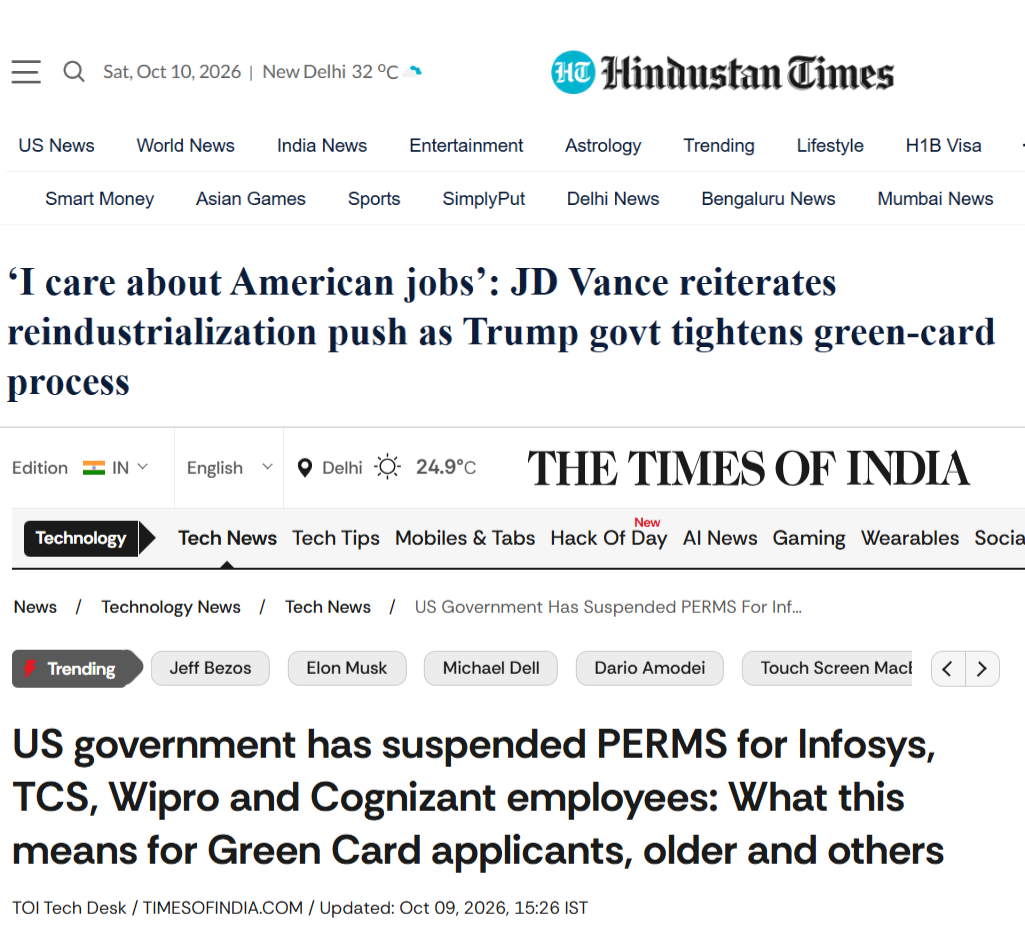
The Trump administration argues that several major technology companies have been misusing the PERM system.
According to U.S. officials, some corporations allegedly claimed labour shortages while replacing American workers with foreign employees they could hire at lower costs. Washington's position is straightforward: “The PERM program was created to address genuine skill shortages, not to help companies reduce labour expenses by bypassing qualified American talent.”
This argument aligns closely with Trump's long-standing “America First” philosophy, which prioritizes employment opportunities for U.S. citizens. The administration believes stricter oversight is necessary to ensure that foreign recruitment occurs only when American workers are genuinely unavailable.
The Allegations Against Big Tech
The controversy intensified after U.S. officials highlighted practices within major technology firms. Critics claim that some companies have:
1. Reduced domestic hiring
2. Replaced American employees with foreign workers
3. Leveraged immigration programs to lower workforce costs
4. Filed large numbers of PERM applications despite available local talent
However, technology firms strongly reject these accusations. Their argument is equally clear: The real issue is not cost reduction but a shortage of specialized talent.
Major companies maintain that certain advanced technology roles require expertise that is often difficult to find within the domestic labour market. As a result, they argue that international recruitment remains essential for innovation and competitiveness.
Why Microsoft Became the Face of the PERM Debate: The Numbers Fueling Washington’s Concerns
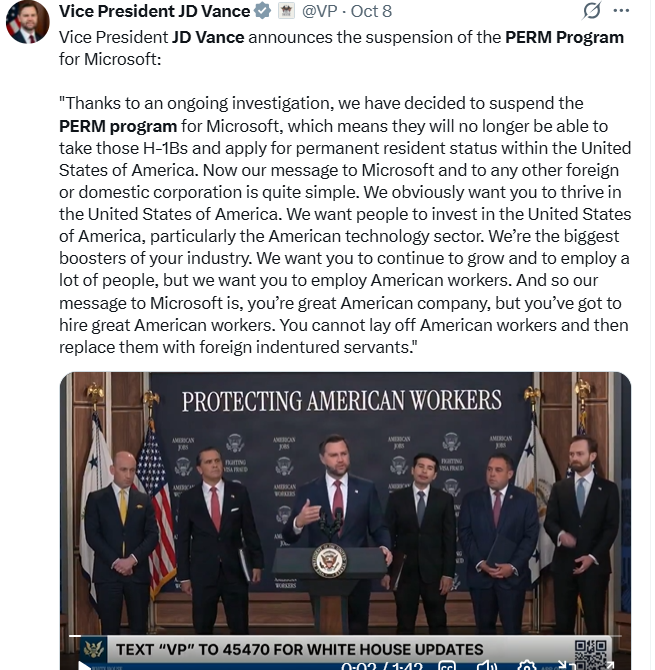
Vice President JD Vance accused Microsoft of laying off thousands of American workers while securing thousands of H-1B visa approvals and filing thousands of PERM applications for foreign employees.
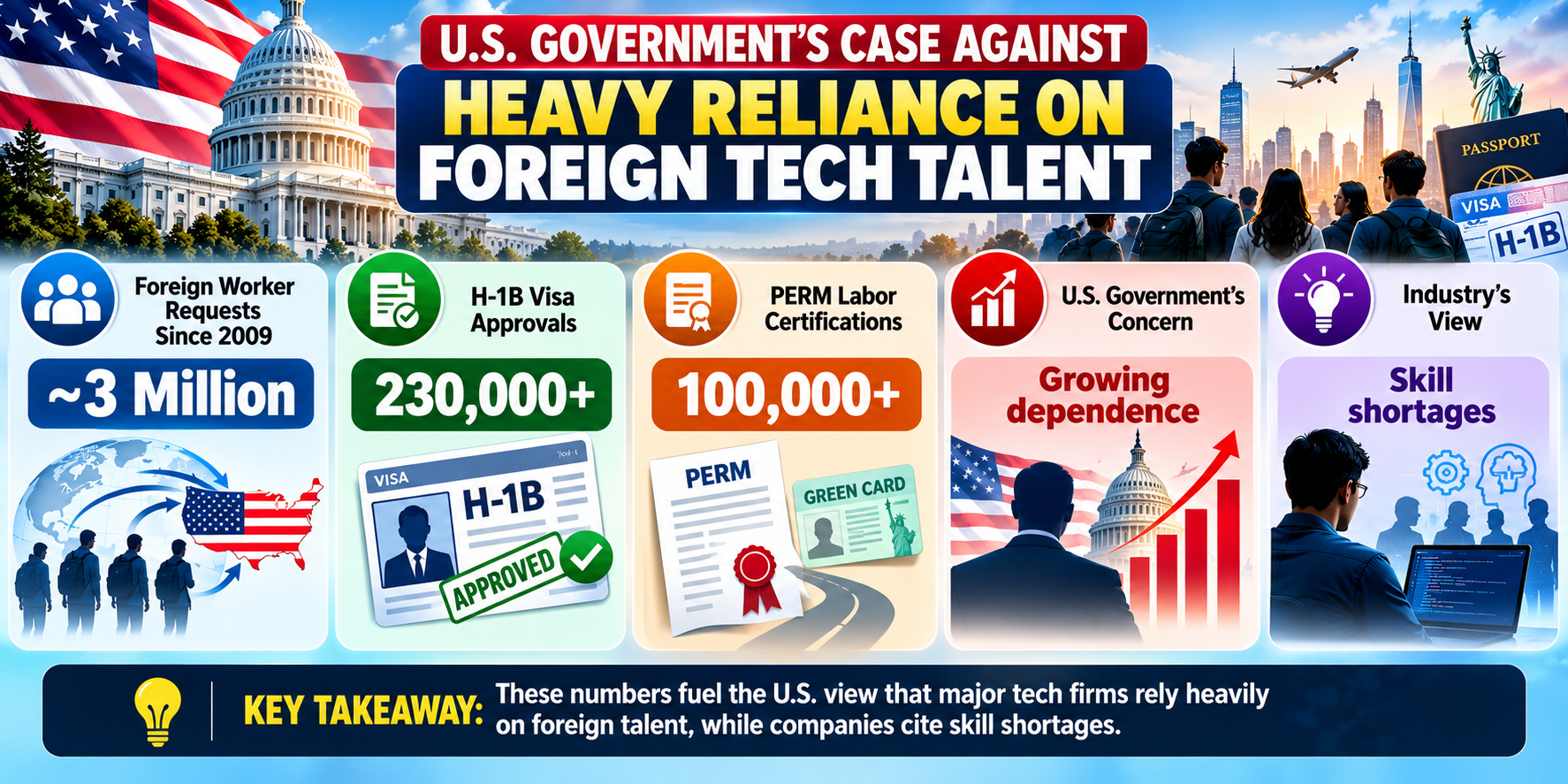
According to allegations highlighted by Vice President JD Vance, Microsoft laid off roughly 6,000 U.S. employees in 2025, secured approvals for more than 6,000 H-1B visas, and submitted 3,682 PERM applications, with some reportedly linked to roles previously held by American workers.
It is important to note that these claims are allegations raised by U.S. authorities and have not been judicially established as wrongdoing by Microsoft.
What Happens to Existing Workers?
One of the biggest fears among Indian professionals was whether employees already working in the United States would be forced to leave.
The answer is no. The suspension primarily affects:
1. New PERM applications
2. Pending PERM cases involving affected firms
Individuals already employed in the United States under valid visa arrangements can continue working.
However, the situation becomes more complicated for professionals who were planning to use the PERM route as part of their future Green Card journey. For them, the pathway has suddenly become uncertain.
Why Indian IT Companies Are Particularly Vulnerable
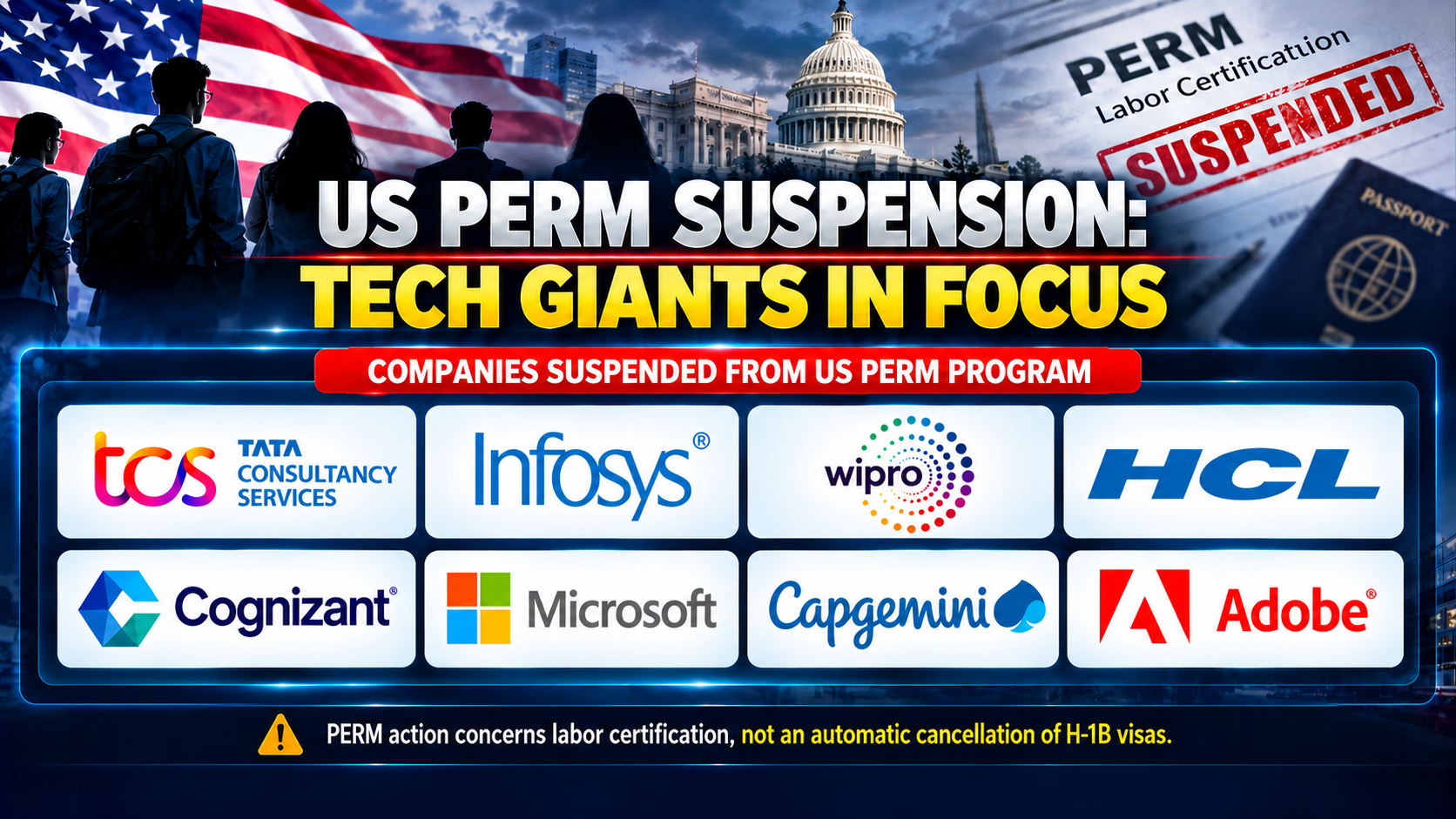
The impact on Indian IT firms could be significant. For decades, companies such as:
1. Tata Consultancy Services(TCS)
2. Infosys
3. Wipro
4. HCL Technologies
5. Cognizant
6. Microsoft
7. Capgemini
8. Adobe
have built business models that rely on a combination of Indian and local talent. Sending skilled professionals from India to client locations in the U.S. has long been a competitive advantage.
If access to permanent labour certification becomes restricted, companies may face:
1. Higher staffing costs
2. Increased local hiring requirements
3. Greater compliance burdens
4. Delays in workforce deployment
5. Reduced flexibility in talent management
This could alter the economics of the global outsourcing industry.
The Counterargument: Indian IT Has Already Changed

Industry bodies such as NASSCOM (National Association of Software and Service Companies) have repeatedly highlighted that the Indian IT industry has evolved significantly over the past decade. NASSCOM is India’s premier technology industry association, representing leading IT, software, and digital services companies across the country. Serving as the voice of India’s tech industry, NASSCOM works to promote innovation, growth, and global competitiveness.
The traditional offshore-onsite model is no longer the only approach. Today, companies increasingly rely on:
1. Local American hiring
2. Hybrid workforce models
3. Remote work arrangements
4. Global delivery centers
5. Distributed engineering teams
In fact, many Indian software professionals now serve international clients without ever relocating overseas. As remote work becomes more mainstream, physical migration may become less important than it once was.
From Crackdown to Celebration: Trump Honours Satya Nadella Just Hours After Microsoft Was Caught in the U.S. Green Card Storm

Is This About Immigration or Politics?
The answer is both. Immigration is undoubtedly at the center of the debate, but the issue also carries strong political implications.
For Trump and his supporters, tougher restrictions demonstrate a commitment to protecting American jobs. With political priorities increasingly focused on domestic employment, actions against immigration-linked workforce programs send a powerful message to voters.
The administration's approach reflects a broader trend: tighter scrutiny not only of employment-based immigration but also of foreign student inflows and university enrollment policies.
Many observers believe workforce protection has become a major political issue in Washington.
Could India Also Benefit from This?

Interestingly, the consequences may not be entirely negative for India.
Potential Advantages
If fewer skilled professionals move abroad:
1. More talent could remain in India.
2. Technology hubs such as Bengaluru, Hyderabad, Pune, Chennai, and Gurugram could expand further.
3. More global delivery centers may be established within India.
4. High-skilled employment opportunities could increase domestically.
This could strengthen India's position as a global technology and innovation hub.
Potential Disadvantages
At the same time, there are clear risks:
1. Reduced remittances from overseas professionals.
2. Weaker professional networks abroad.
3. Slower knowledge and technology transfer.
4. Fewer international career opportunities for young engineers.
The long-term impact will depend on how both governments and businesses adapt to the changing landscape.
Final Analysis: A Turning Point for Global Tech Talent?
The suspension of PERM access for major technology firms is about far more than immigration paperwork. It strikes at the heart of a decades-old model that linked Indian talent with American opportunity.
For Washington, the move is a statement that American jobs must come first.
For technology companies, it raises difficult questions about talent shortages and competitiveness.
For Indian professionals, it introduces fresh uncertainty into the pathway that many hoped would eventually lead to permanent residency in the United States.
Whether this becomes a temporary policy shift or a long-term transformation of America's immigration system could shape the future of global technology hiring for years to come.
🔔 What Do You Think?
Should the U.S. prioritize American workers even if it creates talent shortages for technology companies?
Or should skilled foreign professionals continue to have clear pathways to long-term residency and employment?
✅ Share your views in the comments below
✅ Follow us for sharp insights on geopolitics, technology, global policy, and business trends
✅ Subscribe to our newsletter for in-depth analysis that goes beyond the headlines
✅ Share this article with professionals, students, and tech enthusiasts tracking the future of global talent mobility
Written by
Vedant BhardwajDiscussion (0)
Sign in to join the discussion.
Loading comments…