
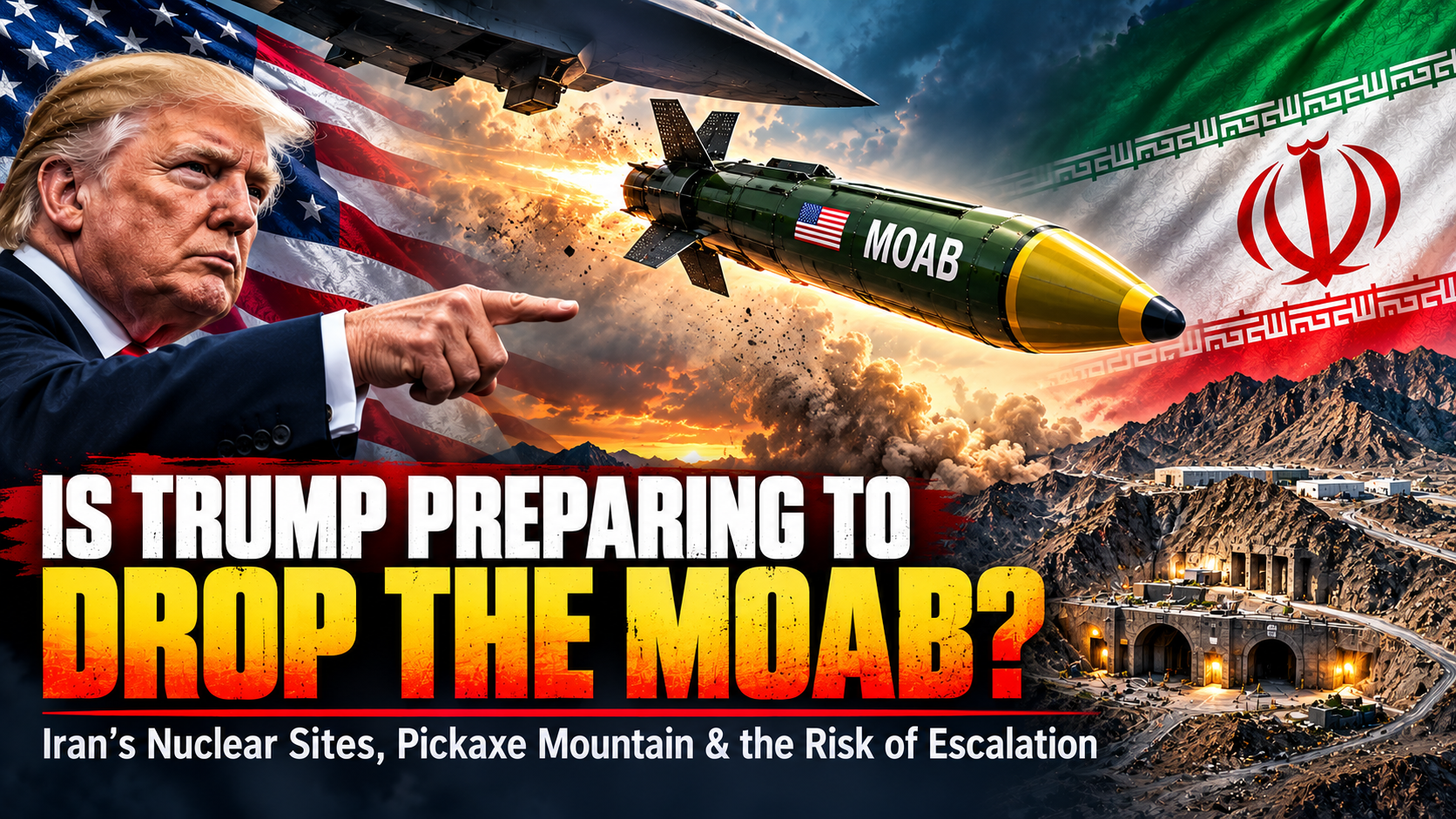
As reports swirl about a possible US contingency plan involving one of America’s most powerful conventional bombs, questions are growing over whether Washington is preparing for a dramatic escalation against Iran. Could such a strike cripple Iran’s nuclear infrastructure, or would it ignite an even larger regional conflict?
The Iran-US Conflict May Be Quiet, But Is a Bigger Storm Brewing?
Over the past few weeks, global attention has largely shifted toward the ongoing tensions between Saudi Arabia and the Iran-backed Houthi movement in Yemen. As a result, discussion of the confrontation between the United States and Iran has faded from the headlines.
However, behind the scenes, speculation continues to grow that Washington may be preparing a significant military option against Tehran.
Recent reports published on October 15, 2026, have fueled discussions that the United States has reportedly reviewed contingency plans involving the use of the GBU-43/B Massive Ordnance Air Blast (MOAB), more famously known as the “Mother of All Bombs.”
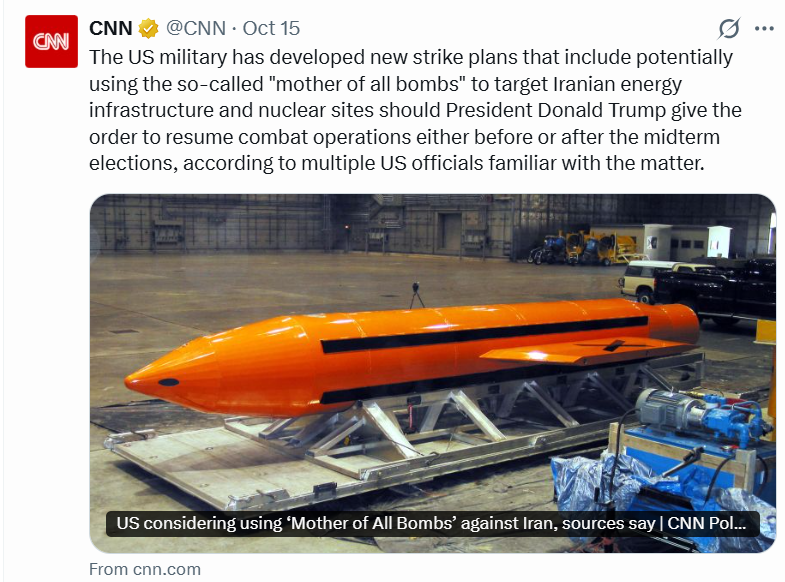
If deployed, such a strike could dramatically escalate tensions across West Asia and potentially trigger a wider regional conflict involving Iran's allies and proxy groups.
What Exactly Is the “Mother of All Bombs”?
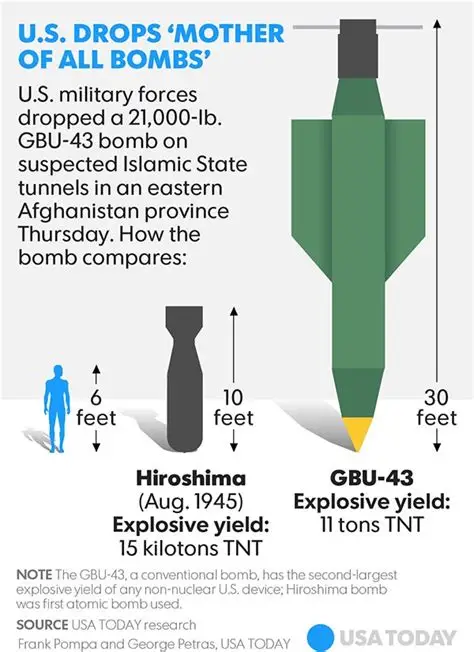
The MOAB is widely regarded as one of the most powerful non-nuclear weapons ever developed by the United States.
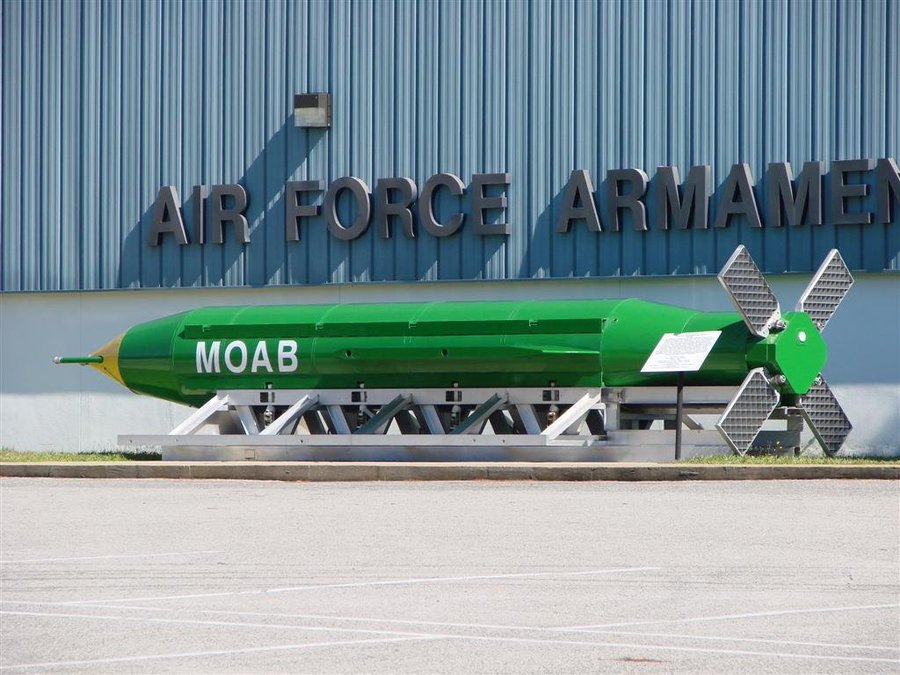
Key Facts About the MOAB:
1. Official Name: GBU-43/B Massive Ordnance Air Blast
2. Common Nickname: Mother of All Bombs (MOAB)
3. Total Weight: Approximately 9.8 tonnes
4. Explosive Payload: Around 8.5 tonnes
5. Guidance System: GPS-guided
6. Delivery Platform: C-130 military aircraft
7. Weapon Type: Conventional, not nuclear
Designed to unleash devastating blast effects over a large area, the weapon can cause widespread destruction to surface targets and military installations.
The bomb was first used operationally by the United States in April 2017 in Afghanistan against ISIS-K tunnel complexes, showcasing its ability to destroy fortified positions spread across a wide region.
Why Is Iran Reportedly Being Discussed As a Potential Target?
According to ongoing assessments and speculation from defense observers, any potential US strike would likely focus on three major objectives:
1. Crippling Iran’s Nuclear Infrastructure
For years, Washington has accused Tehran of pursuing capabilities that could eventually support a nuclear weapons program.
A major military objective would be to damage facilities linked to uranium enrichment, nuclear research, or support infrastructure associated with Iran's strategic programs.
2. Hitting Iran’s Energy Sector
Iran's economy heavily depends on oil and energy exports. A strike on key energy infrastructure could:
a) Reduce export capacity
b) Cut government revenues
c) Increase economic pressure on Tehran
Such a move would aim to weaken Iran's ability to finance military programs and regional operations.
3. Sending a Strategic Warning
Beyond physical damage, deploying a weapon as powerful as the MOAB would send a strong message.
The signal would be clear: “negotiate now or face a far more aggressive military campaign.”
Why Is Pickaxe Mountain Receiving So Much Attention?
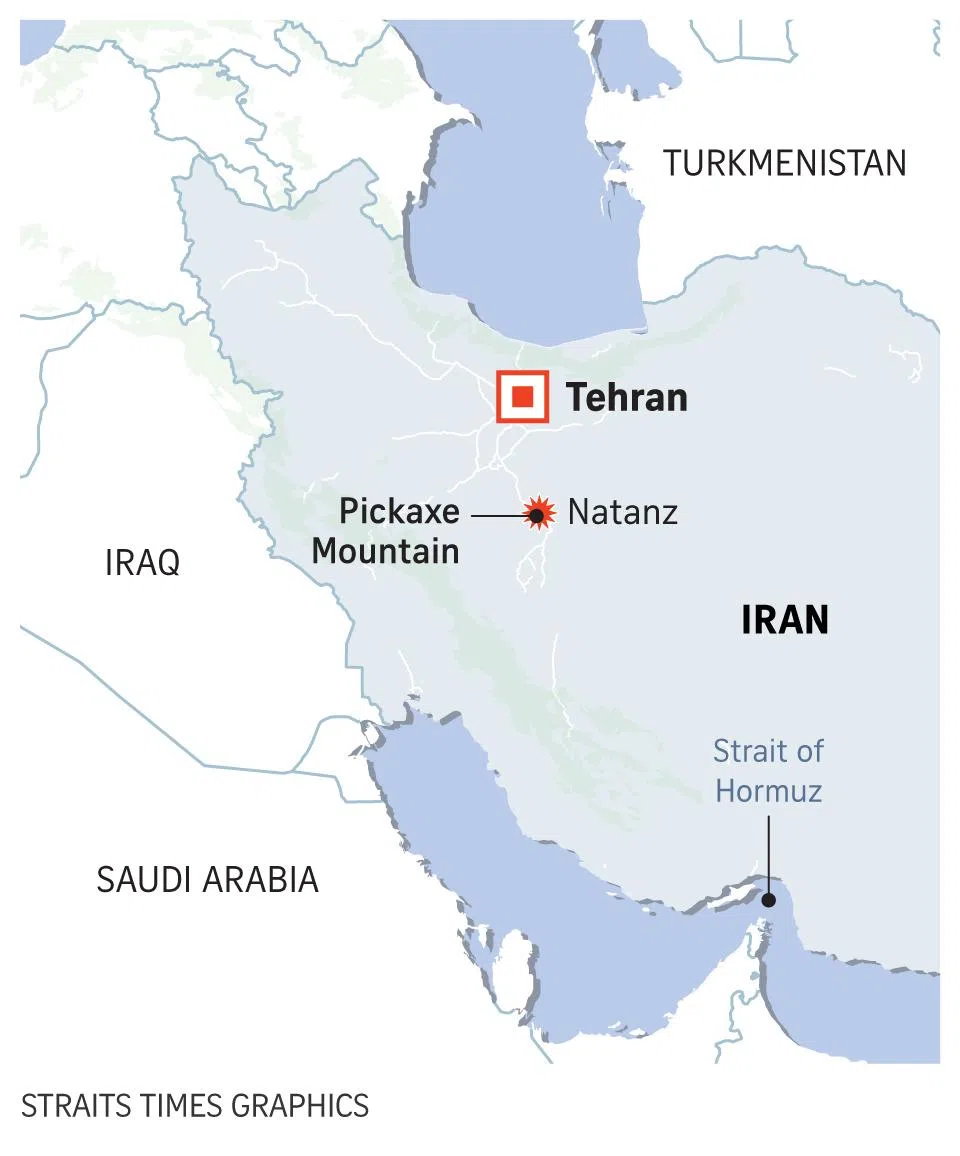
One location frequently mentioned in discussions about Iran's strategic infrastructure is Pickaxe Mountain, situated near the Natanz nuclear facility south of Tehran.
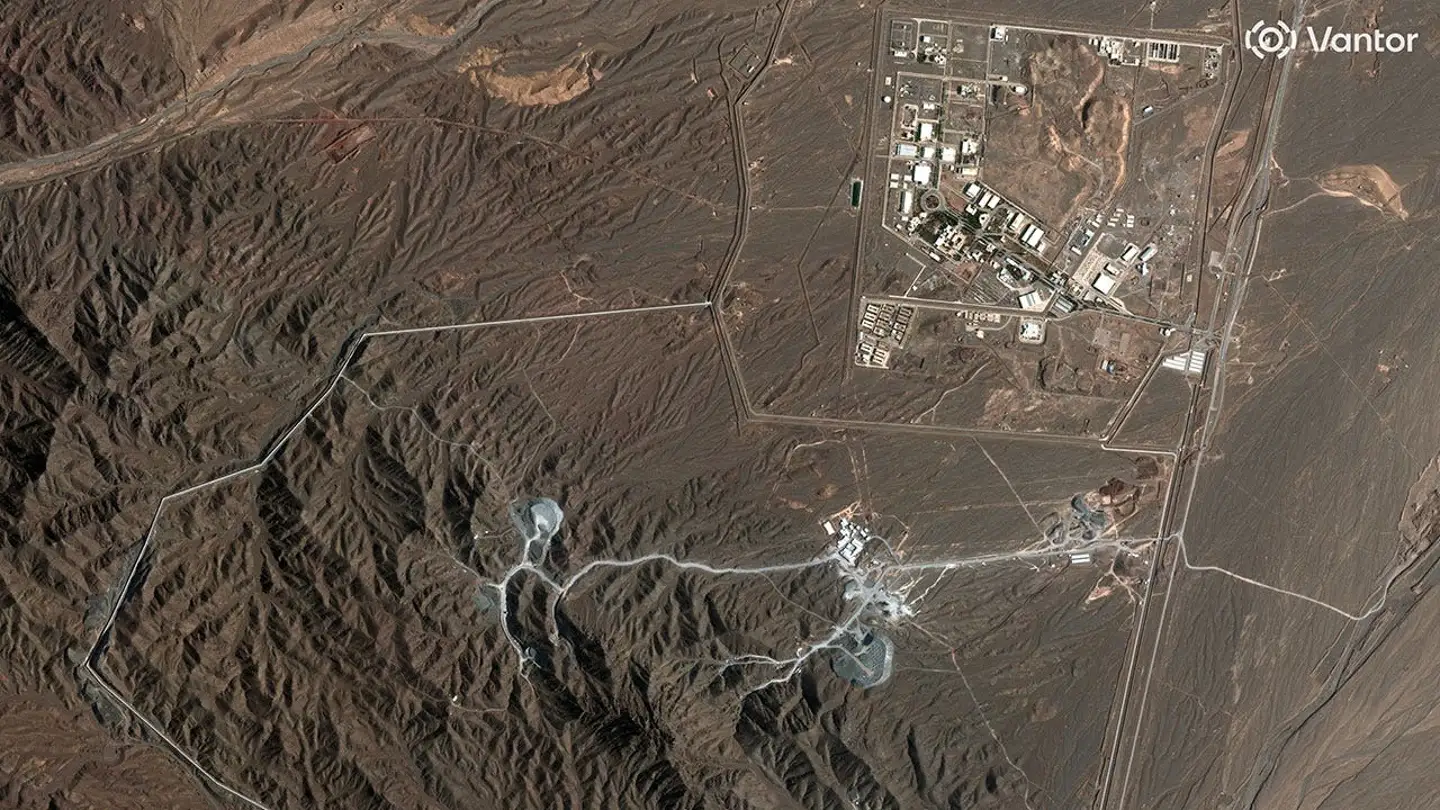
Analysts have long speculated that underground installations associated with Iran's nuclear activities may exist within or beneath the mountain.
The exact nature and scale of these facilities remain unclear, but reports have repeatedly suggested that Iran has expanded hardened underground infrastructure in the area.
Why Build Underground?
The logic is simple:
a) Underground facilities are harder to destroy.
b) Mountains provide natural protection against air strikes.
c) Hardened sites act as a deterrent by increasing the cost and difficulty of military attacks.
In strategic terms, such facilities are designed to survive even if surface installations are damaged.
Could the MOAB Actually Destroy Iran’s Underground Nuclear Facilities?
This is where the debate becomes far more complicated. Despite its enormous explosive power, the MOAB is primarily an air-blast weapon.
Its strength lies in destroying large surface areas, military positions, structures, and infrastructure above ground.
The Major Limitation
The MOAB is not designed to deeply penetrate the earth before detonating.
That means while it could devastate entrances, support buildings, roads, and nearby installations, it may struggle to destroy deeply buried underground facilities hidden beneath layers of rock and reinforced structures.
🔥 Hidden Beneath the Mountain?
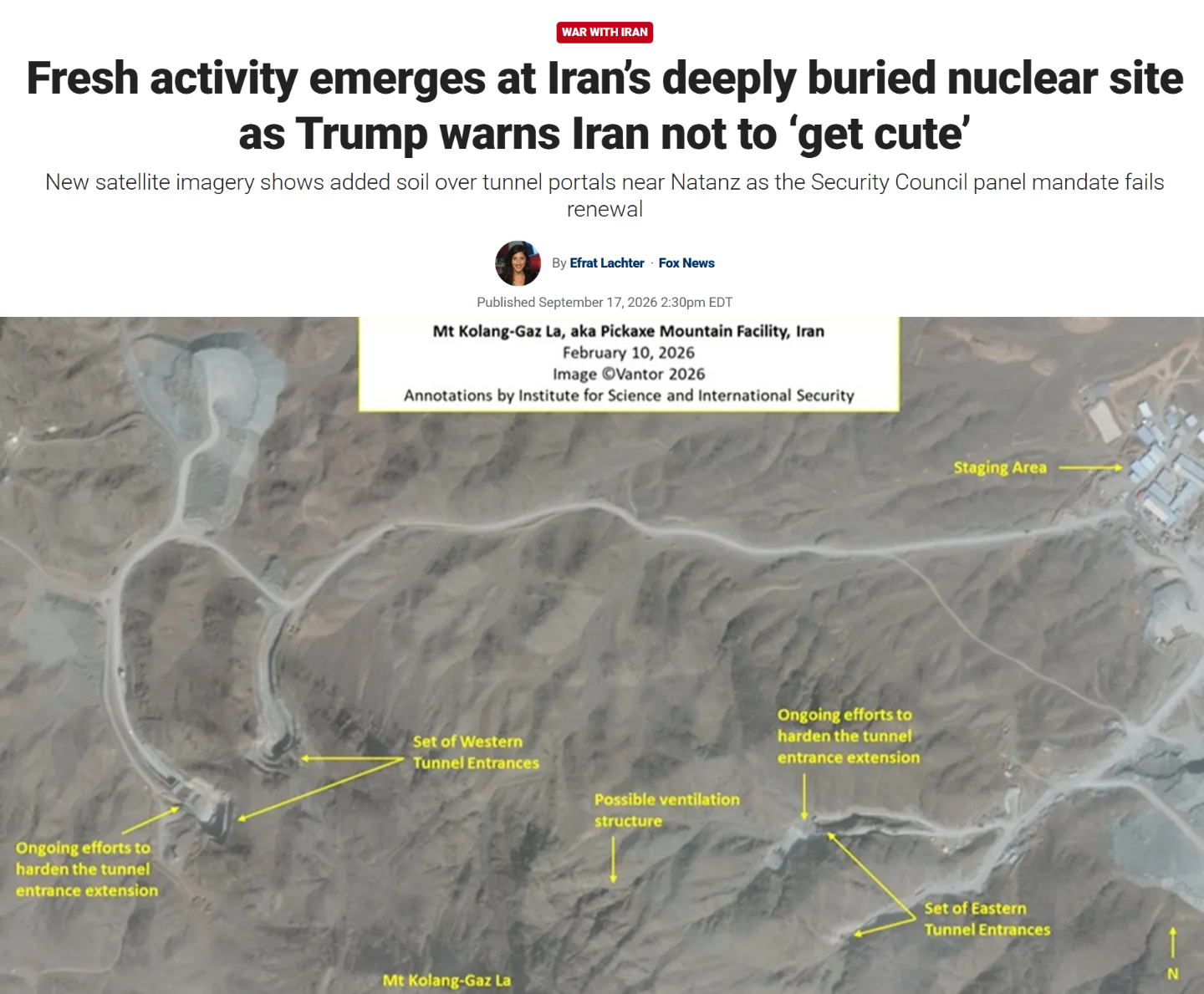
Fresh Activity at Iran’s Secretive Nuclear Site Sparks New Fears as Trump Escalates Pressure
Satellite images showing new earthworks near Iran’s heavily fortified nuclear complex have fueled speculation that Tehran may be expanding or reinforcing underground facilities. The revelations arrive amid renewed US warnings, raising fears that the Iran standoff could be entering a more dangerous phase.
The Alternative Weapon: America’s Bunker-Buster
Military experts often point to another weapon when discussing deeply buried targets:
GBU-57 Massive Ordnance Penetrator (MOP)
Unlike the MOAB, the GBU-57 is specifically engineered to penetrate deep underground before exploding.
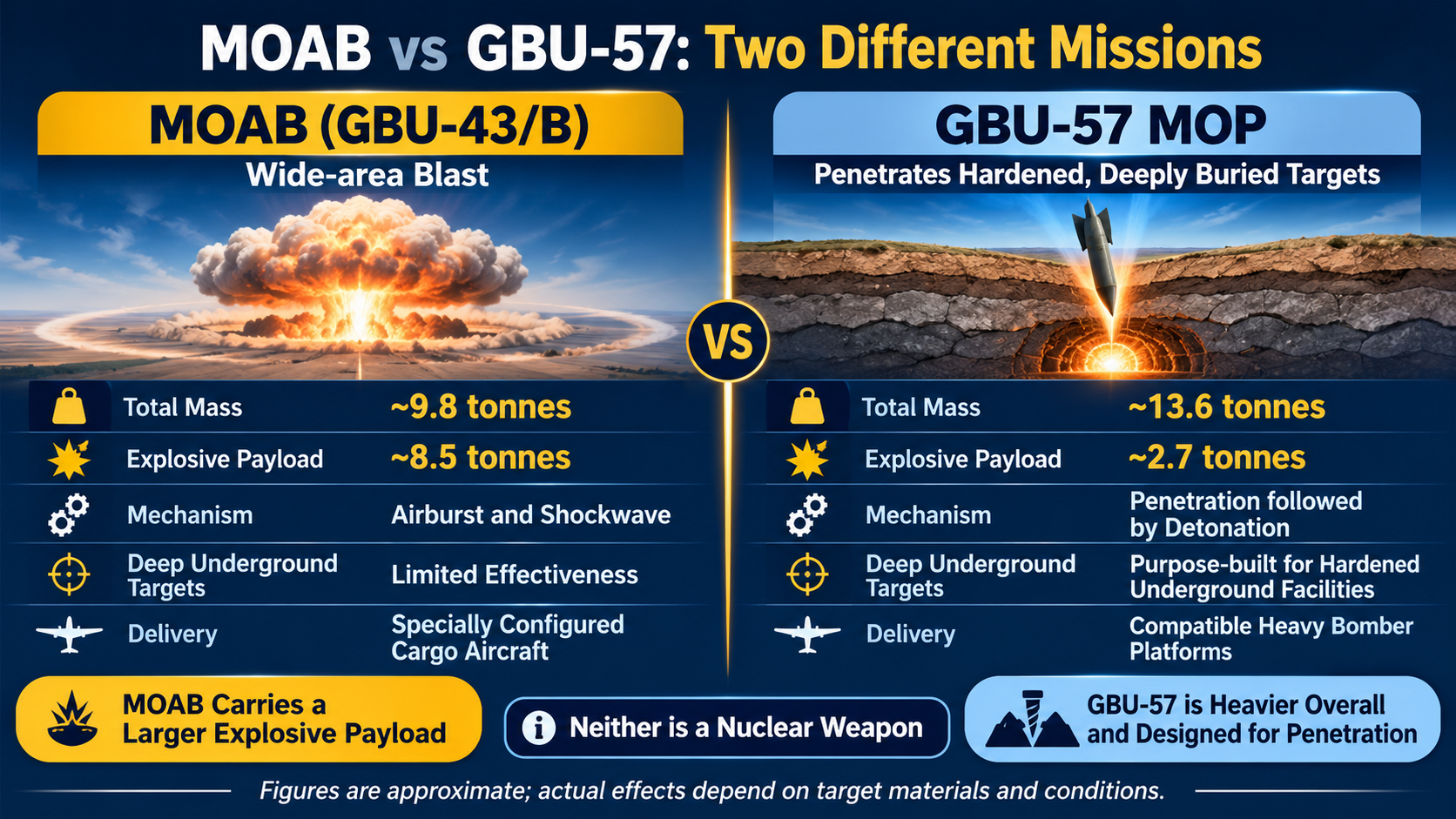
Interestingly, the GBU-57 carries a smaller explosive payload because much of its weight comes from its reinforced casing, allowing it to smash through rock, concrete, and hardened structures before detonating.
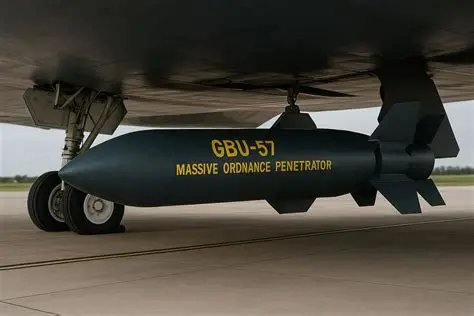
As of now, discussions have largely centered on the MOAB rather than the GBU-57.
What Could Be Washington’s Real Objective?
Even if underground facilities survive, a MOAB strike could still provide strategic advantages.
Tactical Impact
a) Destroy energy infrastructure
b) Damage military assets
c) Block access routes to underground sites
d) Cripple logistics and transportation networks
Strategic Impact
a) Slow Iranian operations
b) Increase economic costs
c) Demonstrate overwhelming military capability
Political Impact
Perhaps most importantly, such a strike could create a perception of strength and determination, a factor that often carries significant weight in international politics and domestic political calculations.
Would Such a Strike Be Legal Under International Law?
The legality of any military operation depends heavily on the circumstances. Supporters of military action could argue that a strike is justified if it prevents an imminent threat or protects international security.
Critics, including international law experts, human rights organizations, UN officials, anti-war analysts, and some foreign policy scholars, would likely question:
✅Whether military action was necessary
✅Whether civilian casualties could be avoided
✅Whether all diplomatic options had truly been exhausted before resorting to force.
If large-scale civilian casualties resulted from an attack, the operation could face substantial international criticism and legal scrutiny.
Trump's Dilemma: Strike or Negotiate?
Any future US administration decision would face difficult trade-offs.
Option 1: Escalate Militarily
Pros
a) Damages Iranian capabilities
b) Demonstrates military resolve
Cons
a) Raises risk of retaliation
b) Could trigger wider regional conflict
Option 2: Pursue Negotiations
Pros
a) Reduces immediate tensions
b) Creates opportunities for diplomacy
Cons
a) Iran may reject negotiations
b) Critics, including some security analysts, opposition politicians, and foreign policy commentators, may view negotiations as a sign of weakness.
Option 3: Limited Military Pressure
Pros
a) Lower costs
b) Maintains diplomatic flexibility
Cons
Iran could rebuild capabilities over time
Could This Trigger a Wider Middle East War?
That remains the biggest concern. Iran possesses a network of regional partners and allied groups across the Middle East. Any major US strike could spark retaliatory attacks against American interests, regional rivals, or strategic infrastructure.
Such a chain reaction could pull multiple countries into a broader confrontation, impacting global energy markets, trade routes, investment sentiment, and geopolitical stability. Even nations far from the conflict, including India, could feel the effects through higher oil prices, supply disruptions, and increased global uncertainty.
🔥 Closing Analysis
The “Mother of All Bombs” is more than just a weapon. It is a symbol of overwhelming military force and strategic messaging. Whether it is ever used against Iran remains uncertain, but the growing discussion around such a possibility highlights just how fragile the current regional balance has become.
A single decision in Washington could reshape the security landscape of the Middle East and potentially trigger consequences felt across the globe.
👉 What Do You Think?
Would deploying the “Mother of All Bombs” strengthen deterrence and force negotiations, or would it ignite a much larger regional war?
Share your views in the comments and stay tuned for more in-depth analyses of the geopolitical events shaping our world. 🌍🔥
Written by
Samar PrakashDiscussion (0)
Sign in to join the discussion.
Loading comments…