
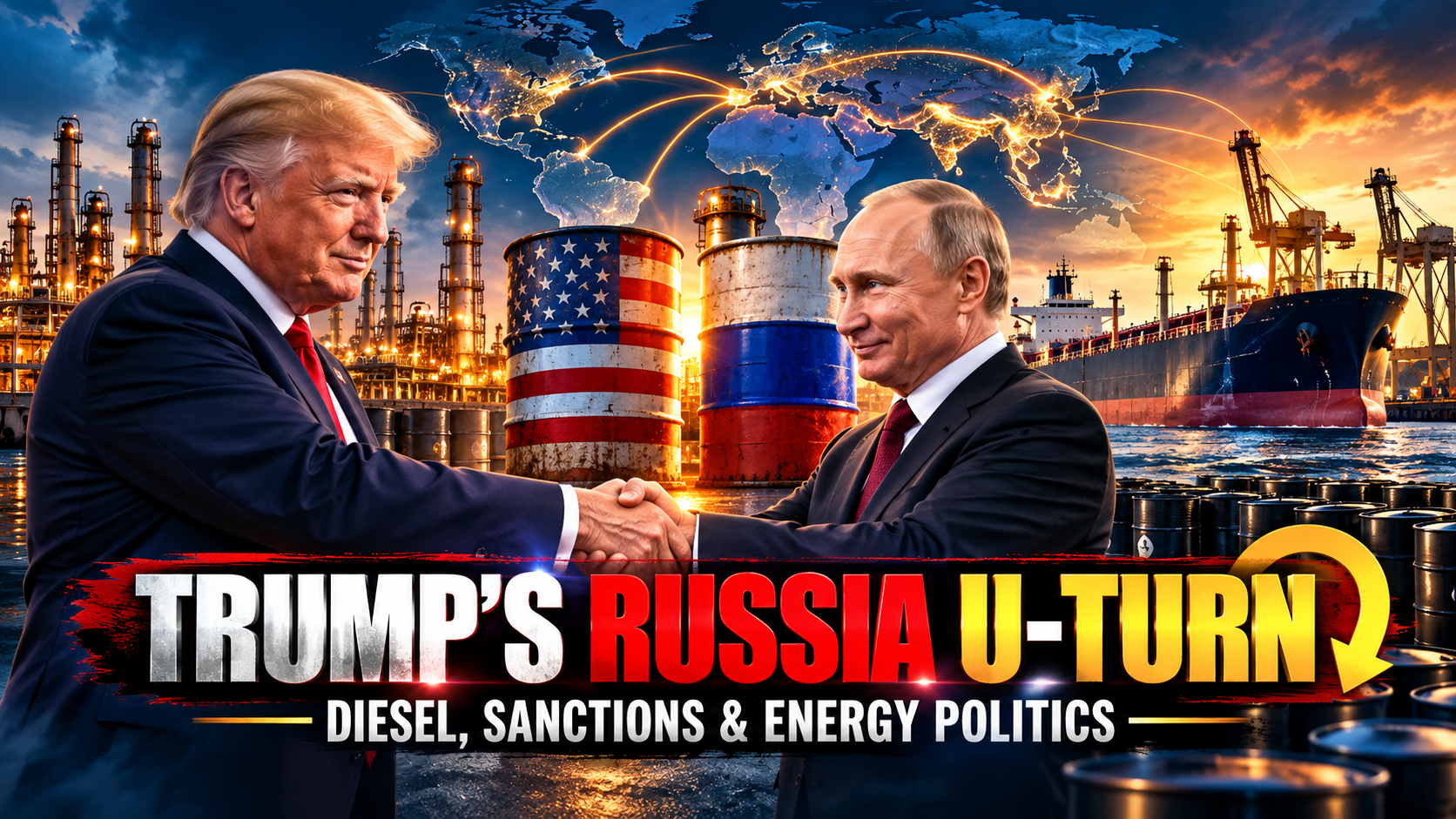
As diesel prices surge and election pressure mounts, the United States appears to be taking a dramatic turn on Russian energy. Is this a practical economic move, or a major geopolitical contradiction?
For years, countries buying Russian energy have faced intense criticism from Western governments, media outlets, and policymakers. India, in particular, has faced constant scrutiny for importing discounted Russian crude oil after the Russia-Ukraine conflict.
But now, a surprising development has sparked a global debate.
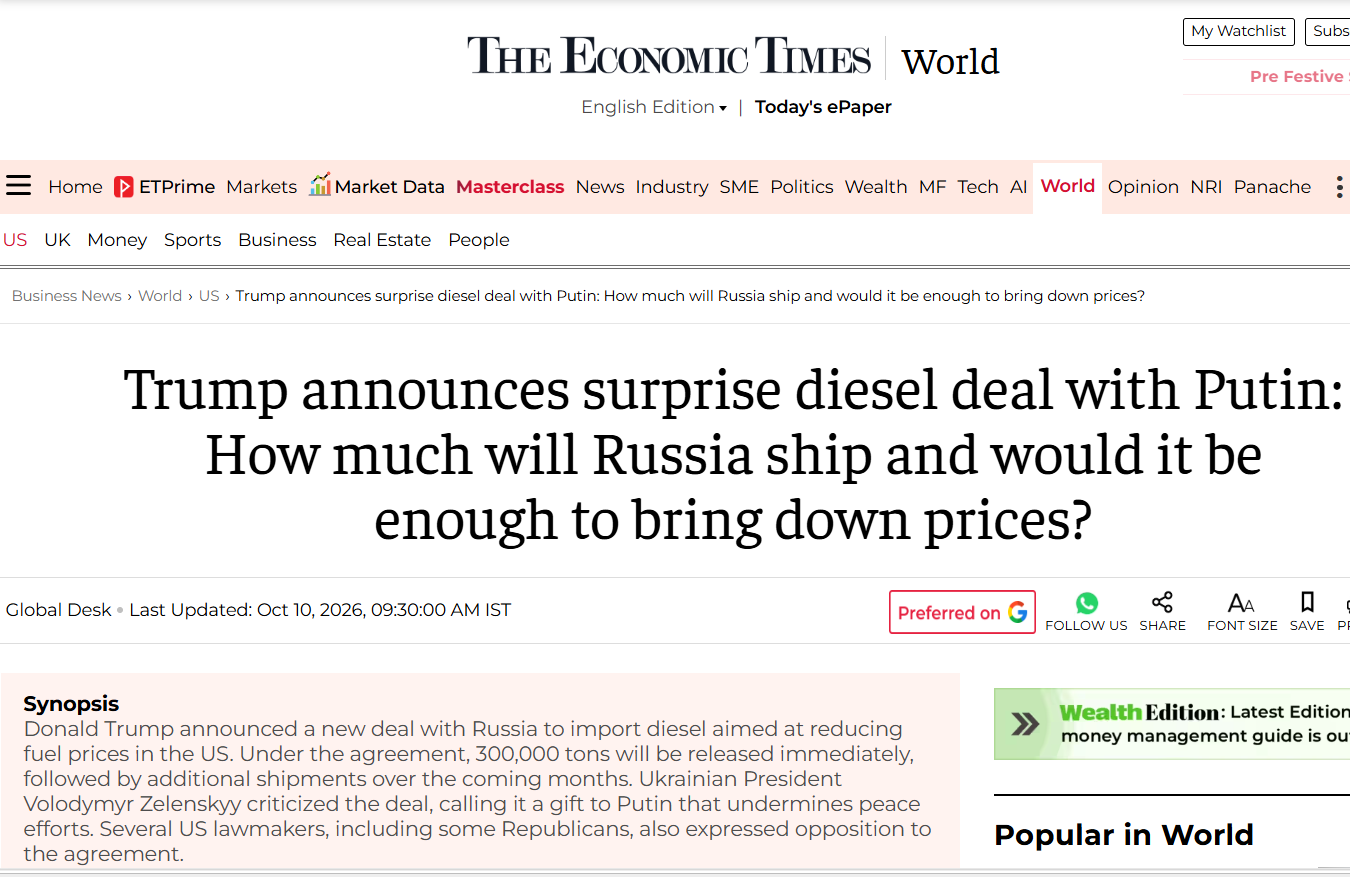
Reports suggest that US President Donald Trump has announced an agreement with Russian President Vladimir Putin on 9th October 2026 that could allow large quantities of Russian diesel to enter global markets, including supplies aimed at easing pressure on the United States.
The move has raised a simple but uncomfortable question: “If buying Russian energy was considered unacceptable yesterday, why is it suddenly acceptable today when America needs it?”
🔥 The Announcement That Shocked Energy Markets
According to the reported agreement, Russia is expected to release significant quantities of diesel into international markets over the coming months.
The proposed supply schedule reportedly includes:
1. 300,000 tonnes initially
2. 500,000 tonnes in the following month
3. Around 1 million tonnes later in the winter season
4. Additional releases that could take total supplies close to 5 million tonnes
The timing is particularly significant because the United States has been struggling with rising diesel prices and supply concerns. While America remains one of the world's largest crude oil producers, crude oil production and diesel availability are not the same thing.
And that distinction matters.
⛽ Why Is America Facing a Diesel Problem Despite Producing So Much Oil?
Many assume that if a country produces huge amounts of crude oil, it automatically has plenty of diesel.
The reality is more complicated. Crude oil must be refined before it becomes usable fuels such as diesel, gasoline, aviation fuel, and petrochemical products.
The challenge is that:
✅ Refining capacity cannot be expanded overnight.
✅ Different refineries are designed for different types of crude oil.
✅ Building or upgrading refining infrastructure often takes years.
✅ With diesel supplies under pressure worldwide, US buyers are racing to secure limited shipments, intensifying competition and pushing fuel prices higher.
As a result, even major oil producers can face shortages of refined products such as diesel. America's current concern is not necessarily crude oil availability, but the availability of enough diesel to meet demand.
🔥 Trump’s Pressure Tactic Meets G7 Resistance
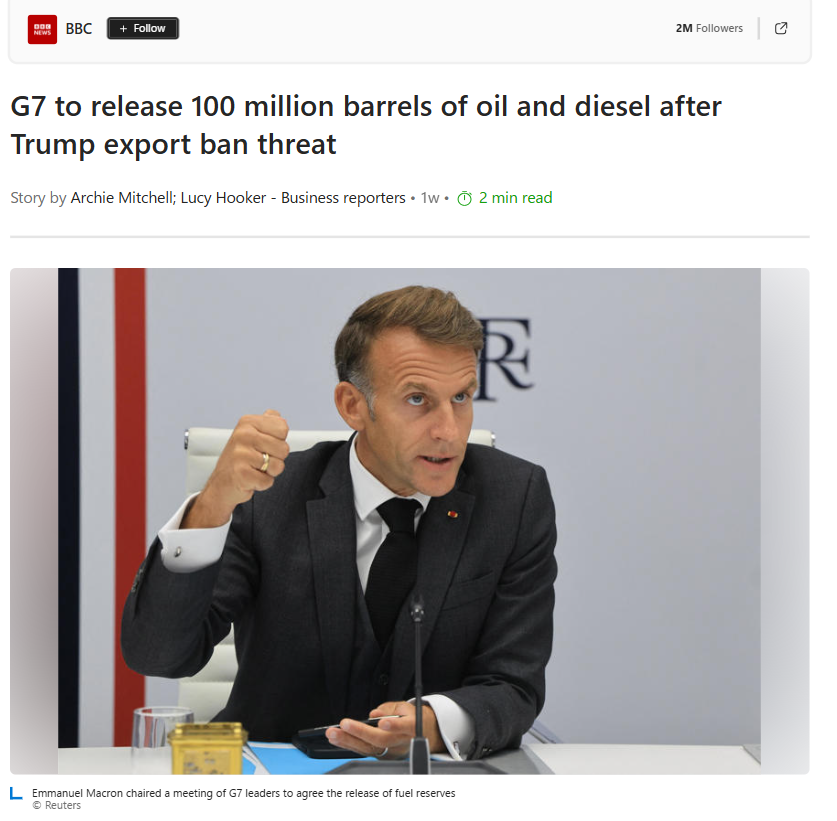
Despite earlier threats to curb diesel exports in an effort to lower domestic fuel prices before key elections, Washington ultimately backed a coordinated G7 approach aimed at keeping energy trade flowing and avoiding fresh disruptions in global fuel markets.
The grouping includes America, Britain, Canada, Japan, Germany, France, and Italy, with the European Union also taking part in G7 discussions and decision-making.
📈 Why Diesel Prices Matter More Than Many People Realize
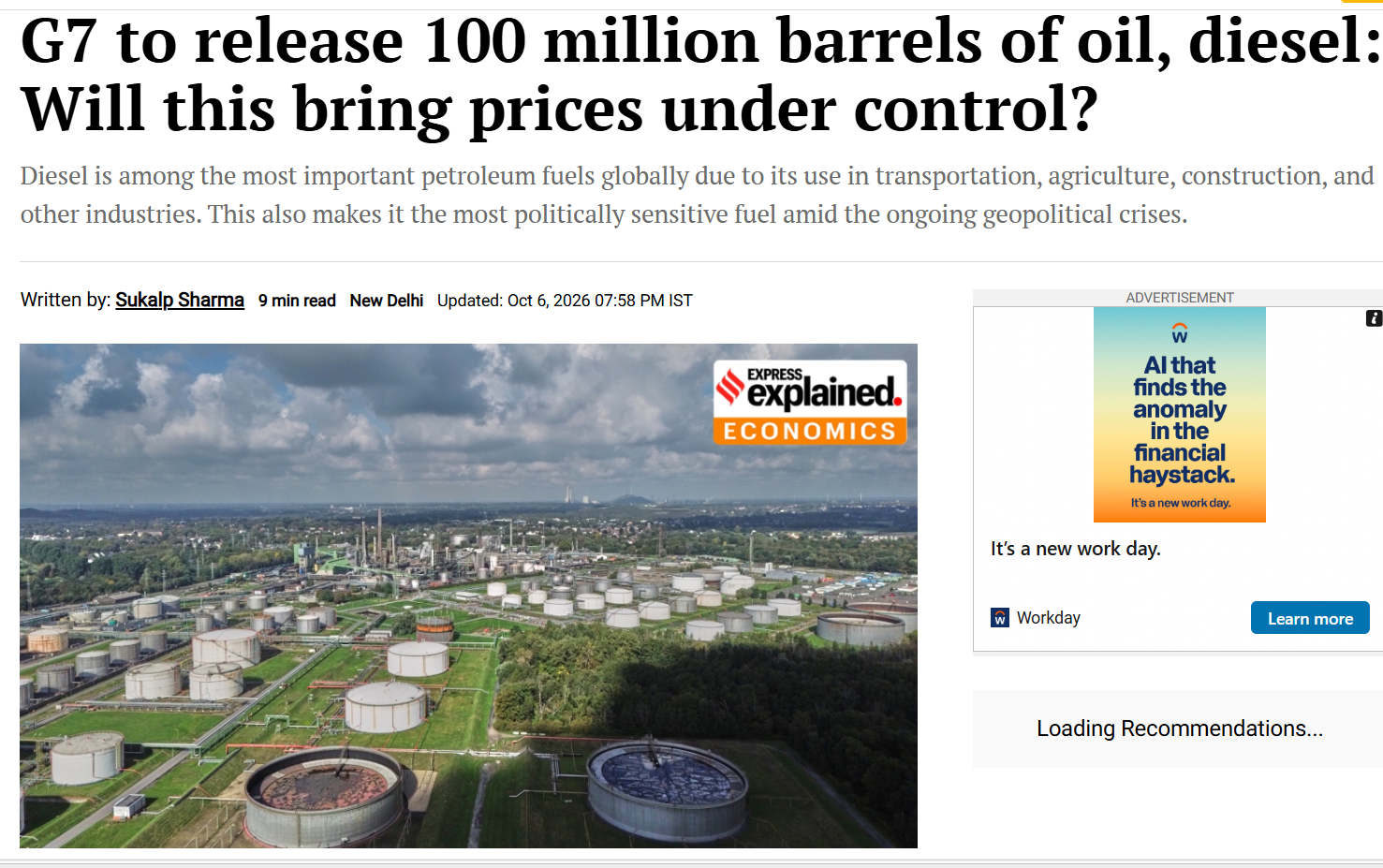
Unlike gasoline, diesel is deeply connected to almost every sector of the economy.
Diesel powers:
1. Freight trucks
2. Agricultural machinery
3. Construction equipment
4. Manufacturing operations
5. Backup generators
6. Winter heating systems in many regions
This means rising diesel prices do not affect only truck drivers and farmers. They eventually influence:
1. Food prices
2. Transportation costs
3. Industrial production
4. Consumer inflation
When diesel becomes expensive, the entire economy feels the impact. That is why policymakers become increasingly nervous whenever diesel supplies tighten.
🔥 Diesel Price Shock: Why Washington Is Suddenly Under Pressure
US diesel prices have surged to around $6.28 per gallon (about $1.66 per litre), marking a sharp rise of nearly 70% since the start of the US-Iran conflict, according to a Reuters report on 9th October 2026. The spike is increasing costs across transportation, agriculture, and industry, raising concerns about broader inflationary pressures.
⚠️ From Fuel Pumps to Ballot Boxes: Rising Fuel Costs Become a Political Headache
With the US midterm elections approaching on 3rd November 2026, soaring diesel prices are creating fresh challenges for policymakers. The impact is being felt most by key voter groups such as farmers, truckers, and small businesses, making fuel affordability an increasingly sensitive political issue ahead of the polls.
Increasing fuel supplies is one of the fastest ways governments can attempt to stabilize prices and reduce public dissatisfaction. Seen in this context, the reported Russian diesel deal appears less ideological and more economic.
The immediate objective may simply be to bring down prices.
🌍 How Two Wars Created a Global Diesel Crunch
The current diesel shortage did not emerge from a single event. Instead, it is the result of multiple geopolitical crises occurring simultaneously.
1. Russia-Ukraine Conflict
The war has disrupted global energy markets for years. Ukrainian strikes on Russian energy infrastructure have reportedly damaged refinery facilities and disrupted refining operations, while sanctions and export controls have further complicated Russia's petroleum trade.
These disruptions reduced diesel output and increased uncertainty across global energy markets.
2. Middle East Tensions
Growing instability in Iran and the Gulf region has created additional pressure on energy supply chains. Any disruption involving major oil-producing regions immediately impacts refining, transportation, and fuel exports worldwide.
3. Diesel Squeeze Intensifies Global Competition
As diesel supplies tighten and transportation bottlenecks persist, buyers are scrambling for limited cargoes, driving prices higher and exposing the challenges of replacing refined fuel at short notice.
Together, these developments have tightened diesel availability and intensified competition for supplies.
🤯 A Major Policy Reversal?
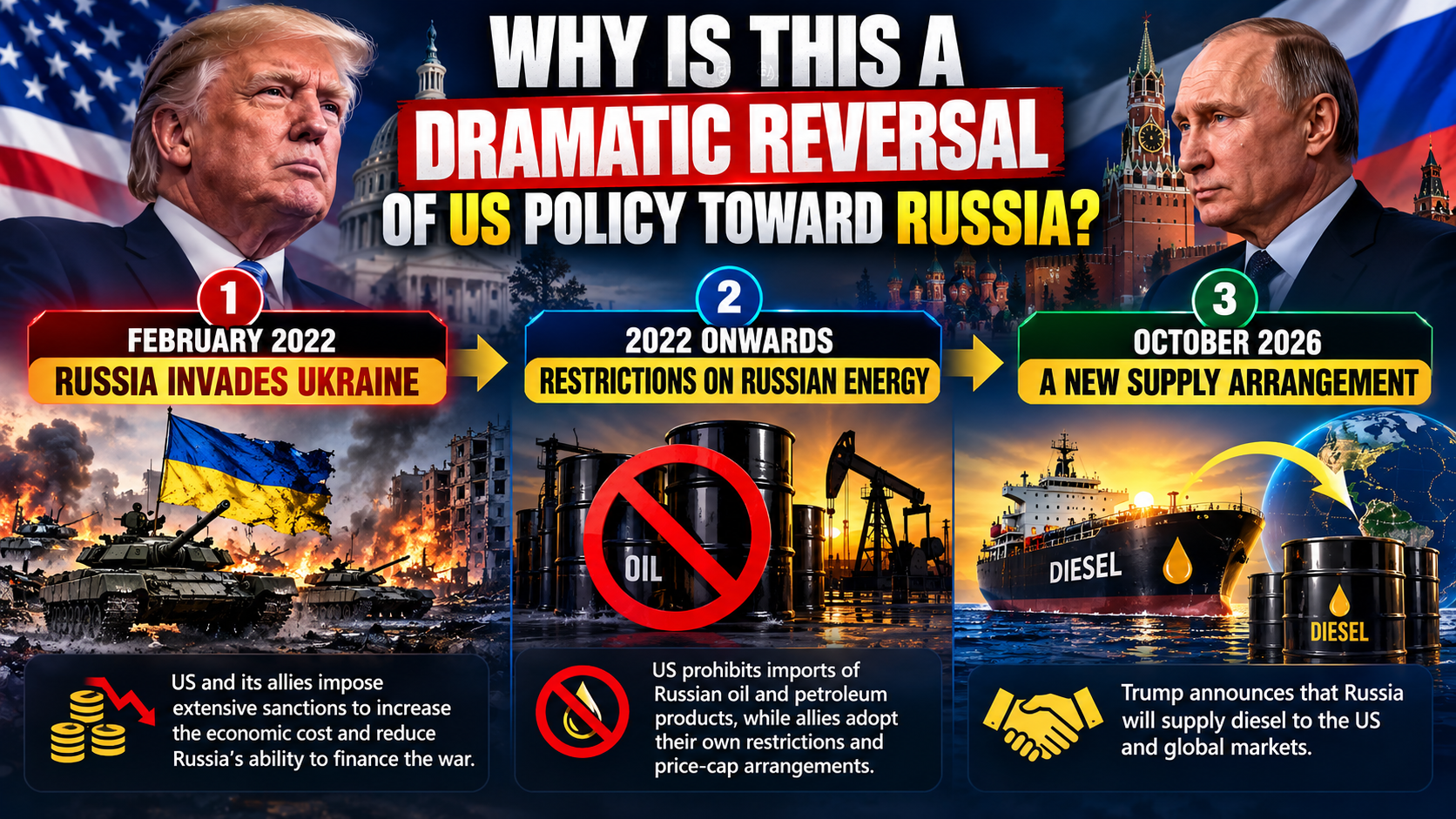
Perhaps the biggest controversy is not the diesel itself but the political message behind the decision.
Since 2022, Western nations have repeatedly argued that purchasing Russian energy helps Moscow generate revenue during wartime.
This argument was frequently used to criticize countries that continued importing Russian oil. India was often at the center of that debate.
Several Western governments, policymakers, and media commentators claimed that buying Russian crude indirectly supported Russia's wartime economy.
Now, however, the United States appears willing to facilitate Russian diesel supplies when its own market requires relief. Unsurprisingly, many observers are calling this one of the most notable policy reversals since the start of the conflict.
Supporters argue that governments must prioritize their economic interests. To many observers, the move appears difficult to reconcile with years of Western criticism directed at nations importing Russian energy.
⚖️ Sanctions Loosen, But Only Temporarily
A temporary authorization can create a legal route for restricted Russian diesel exports without fully dismantling existing sanctions. While specific transactions may be allowed for a limited period, most broader restrictions remain firmly in place.
Why Would Putin Agree?
From Russia's perspective, the incentives are obvious. More diesel exports could mean:
1. Increased revenue
2. Stronger export earnings
3. Greater utilization of available supplies
4. Potential diplomatic leverage
Some analysts also believe that any easing of restrictions, even temporary ones, could open the door to future discussions about broader trade arrangements. For Moscow, the deal offers both economic and geopolitical advantages.
Ukraine’s Strong Opposition

Ukraine has reportedly reacted negatively to the development. President Volodymyr Zelenskyy and Ukrainian officials have consistently argued that sanctions remain one of the most important tools for limiting Russia's ability to sustain the war effort.
From Kyiv's perspective, any relaxation of restrictions risks strengthening Moscow financially. Ukrainian officials, pro-Ukraine analysts, and supporters of Kyiv argue that such moves could weaken the sanctions framework that Western countries spent years building against Russia.
As a result, the reported agreement has generated criticism from those who believe sanctions should remain firm and consistent.
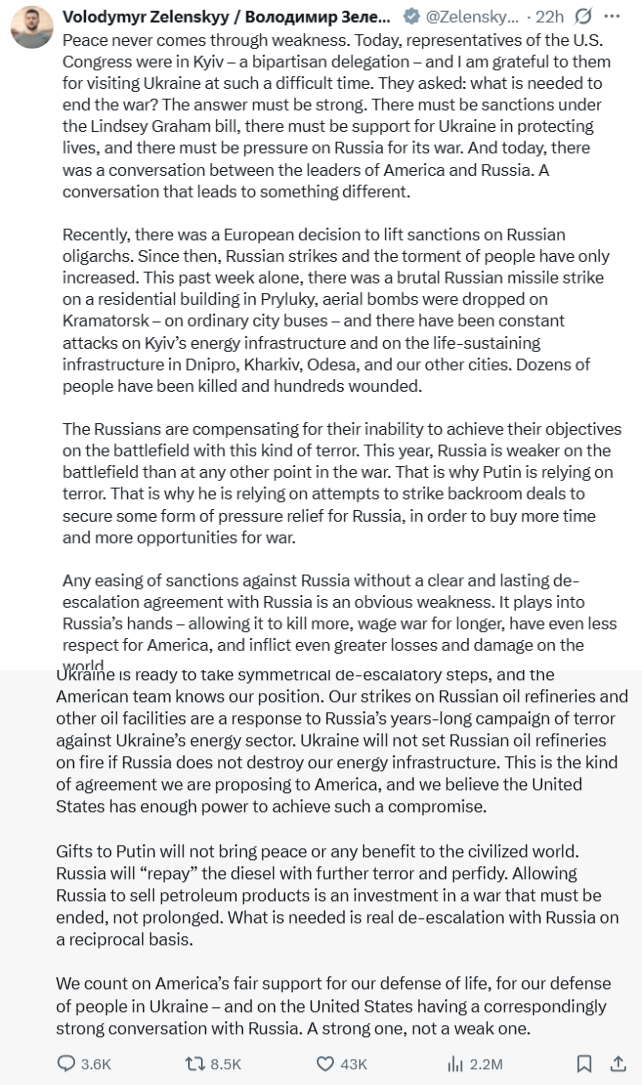
⚡ Kyiv Strikes Back After US-Russia Diesel Deal
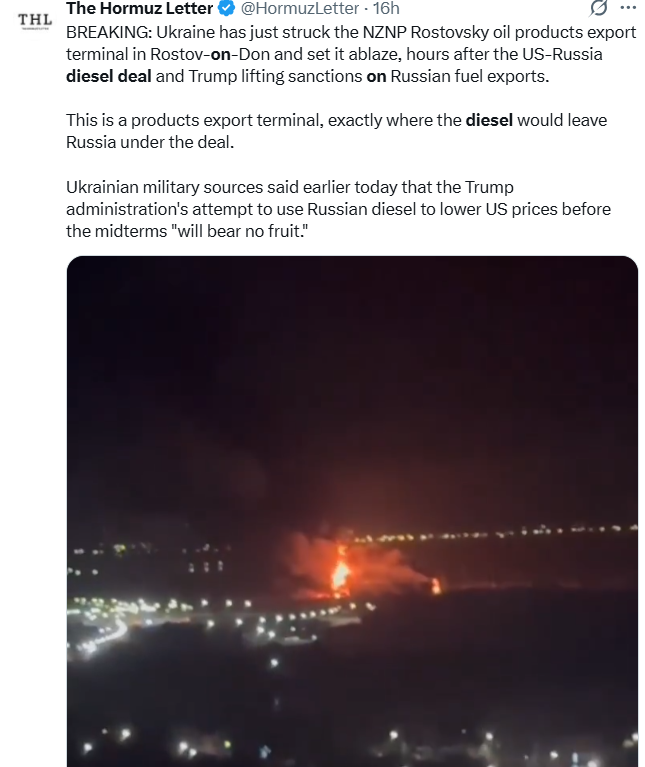
Within hours of Washington's reported move to ease Russian diesel flows, Ukraine targeted a major Russian energy facility, highlighting growing tensions over whether renewed energy trade could strengthen Moscow's economic position.

🚨 Deadly Strikes Deepen US-Ukraine Rift
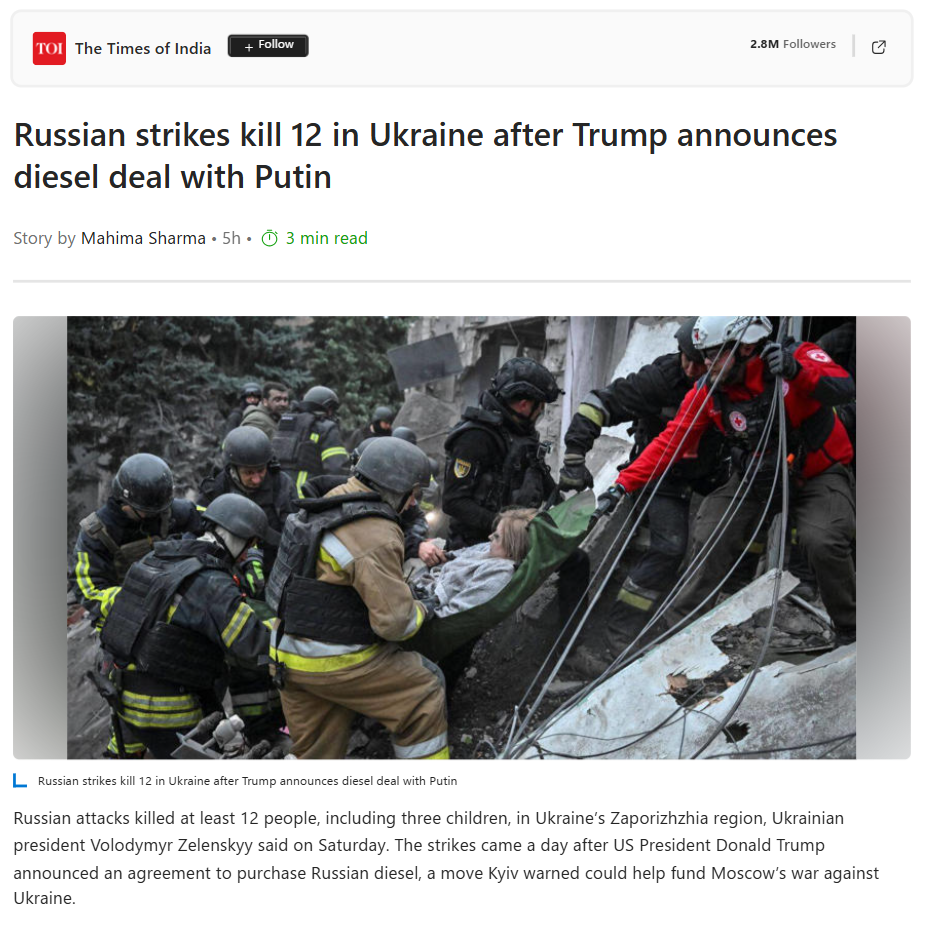
Russian attacks reportedly left multiple civilians dead, including children, shortly after Washington unveiled a controversial Russian diesel arrangement, intensifying concerns in Kyiv over the potential economic benefits flowing to Moscow.
Could India Be the Unexpected Winner?
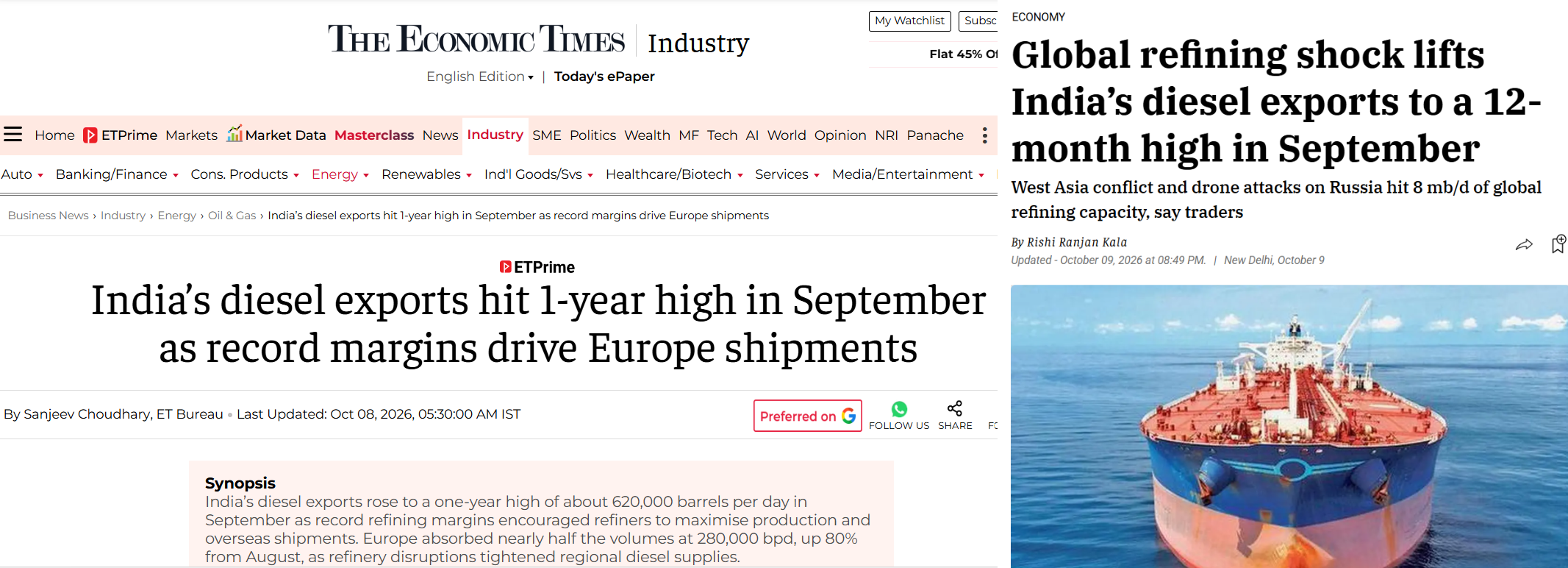
Interestingly, India may find itself in a stronger position as global diesel demand rises. Over the past few years, India has emerged as a major refining hub.
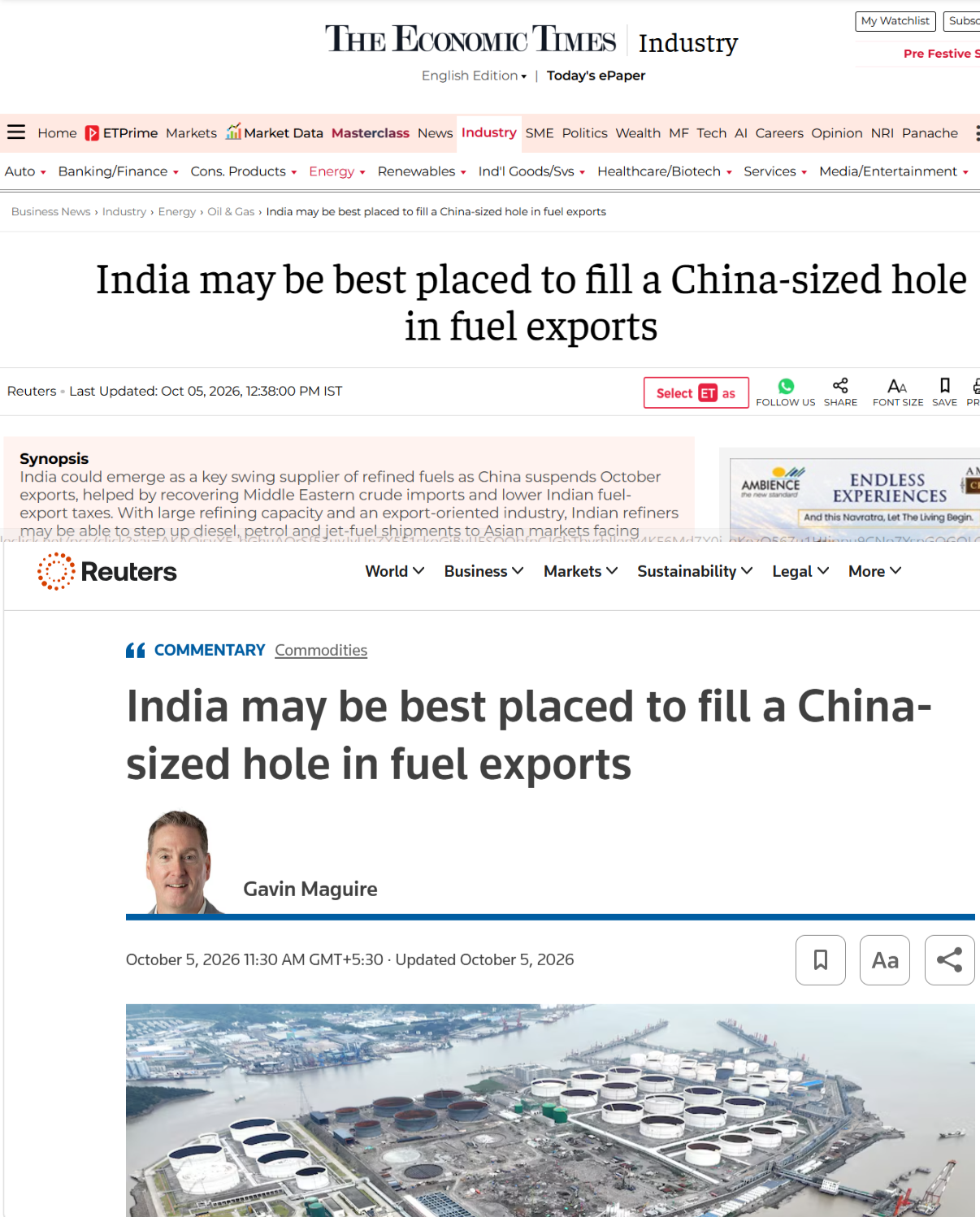
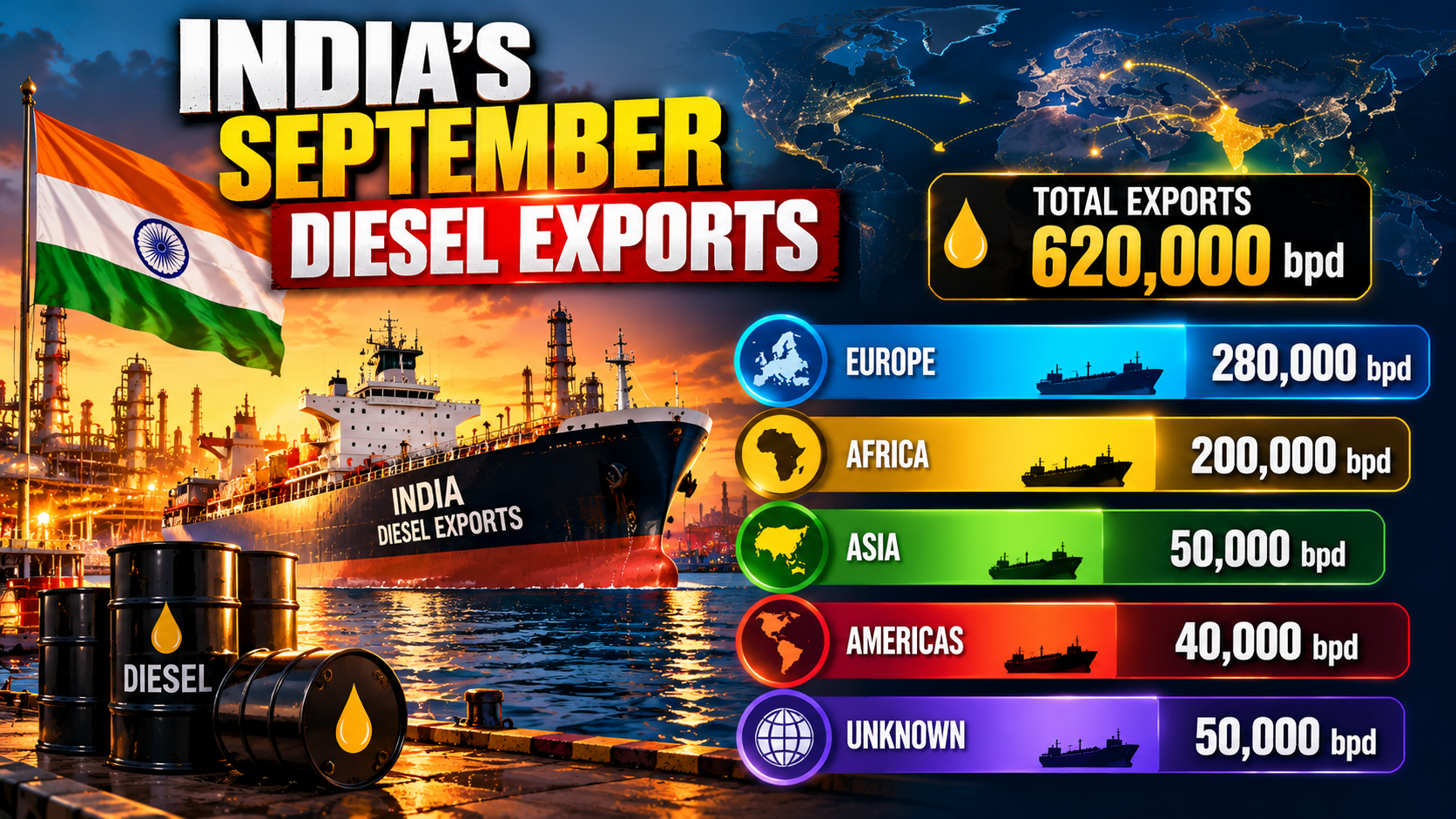
The country imports large volumes of crude oil, refines it, and exports refined products to international markets. As diesel shortages intensify globally, Indian refiners could potentially benefit from:
✅ Higher export demand
✅ Strong refining margins
✅ Increased market share
✅ Expanded trade opportunities
With some countries restricting exports and others facing refining constraints, India's refining sector could play an even more significant role in maintaining global fuel supplies.
Leading refiners include:
1. Reliance Industries
2. Indian Oil Corporation (IOC)
3. Bharat Petroleum (BPCL)
4. Hindustan Petroleum (HP)
5. Nayara Energy
have developed world-class refining infrastructure capable of processing crude oil from multiple sources and exporting high-value petroleum products worldwide.
As a result, countries facing supply disruptions or changing market conditions increasingly turn to India for refined fuel products such as diesel, petrol, and aviation fuel.
🎯 The Bigger Question: Was India Right All Along?
The controversy ultimately extends beyond diesel. It touches a larger debate about energy security and national interests.
For years, India defended its energy purchases by arguing that it must prioritize affordable fuel for its citizens and economic growth.
Today, as America explores solutions to its own diesel challenges, many observers are revisiting that argument.
When energy security is threatened, nations often choose pragmatism over ideology. And that may be the most important lesson from this entire episode.
🌍 Geopolitical Implications
The reported US-Russia diesel arrangement highlights a harsh reality of global geopolitics: “Countries may condemn a policy when others pursue it, but often adopt similar measures when their own economic interests are at stake.”
Whether this move proves temporary or marks the beginning of a broader shift in Western energy strategy remains to be seen.
What is certain, however, is that the debate over Russian energy, sanctions, and global energy security has entered a completely new phase.
📢 What Do You Think?
👉 Is this a sensible economic decision by the United States?
👉 Or does it expose a clear double standard in global energy politics?
👉Could India emerge as a major beneficiary of the global diesel shortage?
Share your views in the comments below and stay tuned for more insights on geopolitics, energy markets, and global power shifts.
🔥If you found this analysis valuable, share it with your network and follow us for more sharp, unbiased geopolitical explainers.
Written by
Kartikeya RaoDiscussion (0)
Sign in to join the discussion.
Loading comments…