
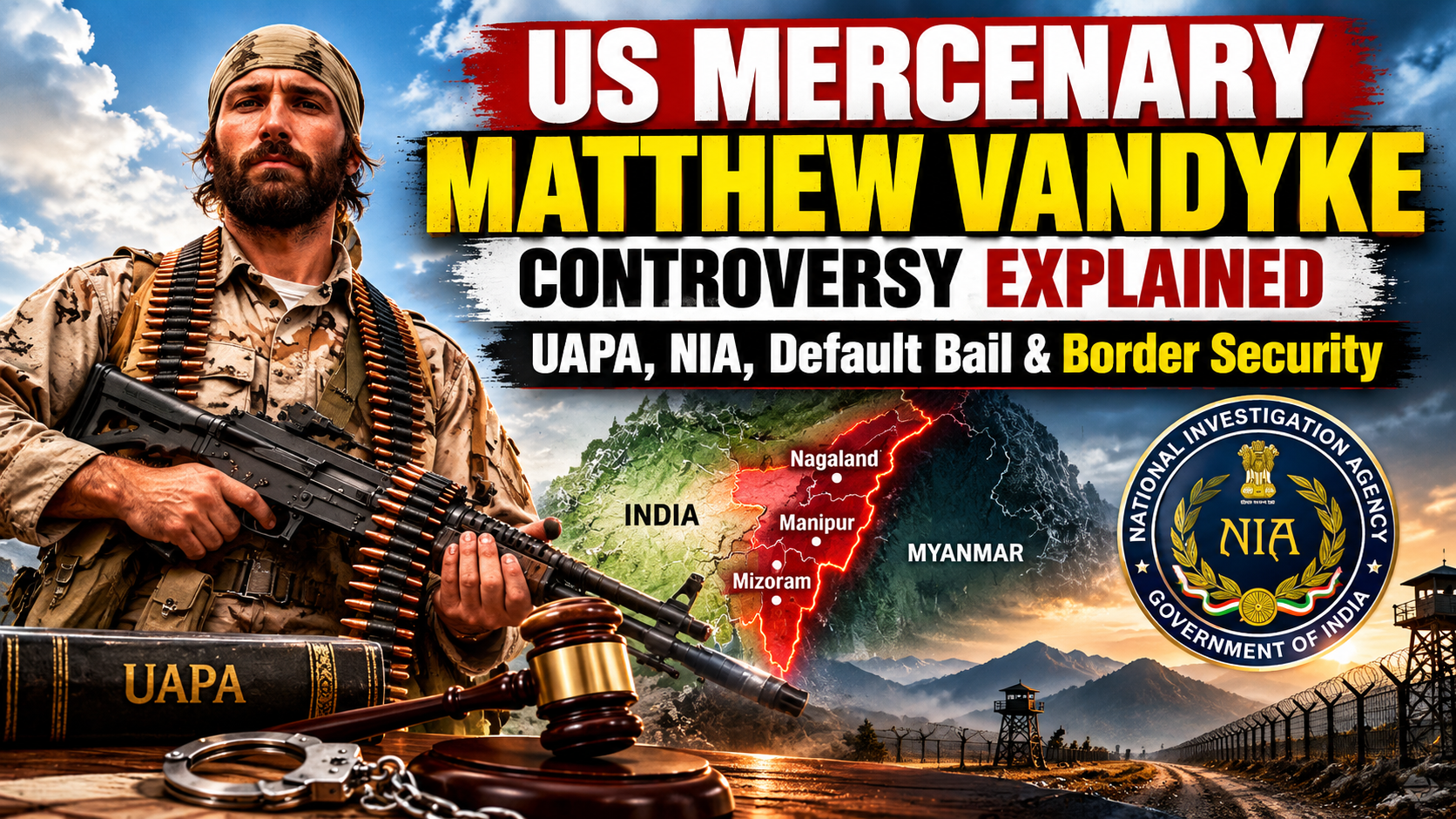
Why Did an American Accused in a High-Profile Security Case Get Bail and Permission to Leave India?
A controversial case involving American citizen Matthew VanDyke has triggered a political storm in India. Arrested by the National Investigation Agency (NIA) over serious allegations linked to illegal border crossings, military training, and possible connections with anti-India activities, VanDyke was recently granted bail by a Delhi court. Adding to the controversy, he was also allowed to travel back to the United States.
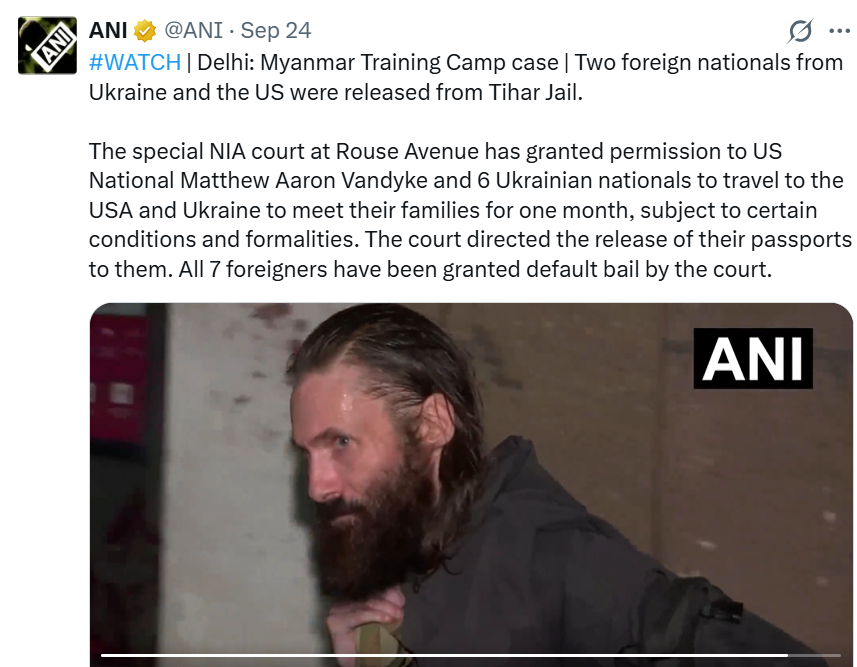
The decision has sparked fierce political debate, with the Congress party accusing the Central Government of succumbing to diplomatic pressure from Washington. But what exactly is this case? Why was VanDyke arrested? Why did the court grant bail despite serious allegations? And what does the NIA have to say? Let's break down the entire controversy.
Who Is Matthew VanDyke?
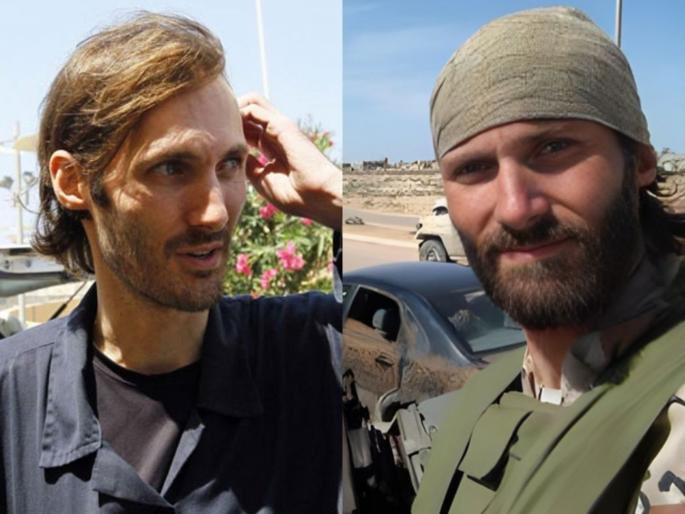
Matthew VanDyke is not an ordinary foreign traveller. Over the years, he has been associated with multiple conflict zones and military-related activities across the world.
His name first gained international attention during the 2011 Libyan Civil War, where he reportedly fought against forces loyal to Muammar Gaddafi. During that conflict, he was captured and held as a prisoner of war before eventually being released.
In subsequent years, VanDyke was linked to various security and military training initiatives. Reports also suggest that he had associations with organizations involved in military preparedness and conflict-related training.
His background alone made the allegations brought against him by Indian authorities particularly sensitive.
What Are the Allegations Against VanDyke and Six Ukrainian Nationals?
According to the NIA, VanDyke and six Ukrainian nationals allegedly entered India in December 2025 and later travelled through India's northeastern region toward Myanmar.
Investigators claim that:
1. The group entered sensitive regions without proper authorization.
2. They allegedly crossed into Myanmar from India's northeastern frontier.
3. They reportedly interacted with Myanmar-based ethnic armed organizations.
4. They are accused of providing training related to:
a) Military warfare techniques
b) Drone operations
c) Drone assembly
d) Advanced tactical training
The NIA believes these activities could potentially have implications for India's security interests, particularly because some armed groups operating near the India-Myanmar border have historically had links with insurgent movements affecting India's Northeast.
Why India's Northeast Makes This Case Extremely Sensitive
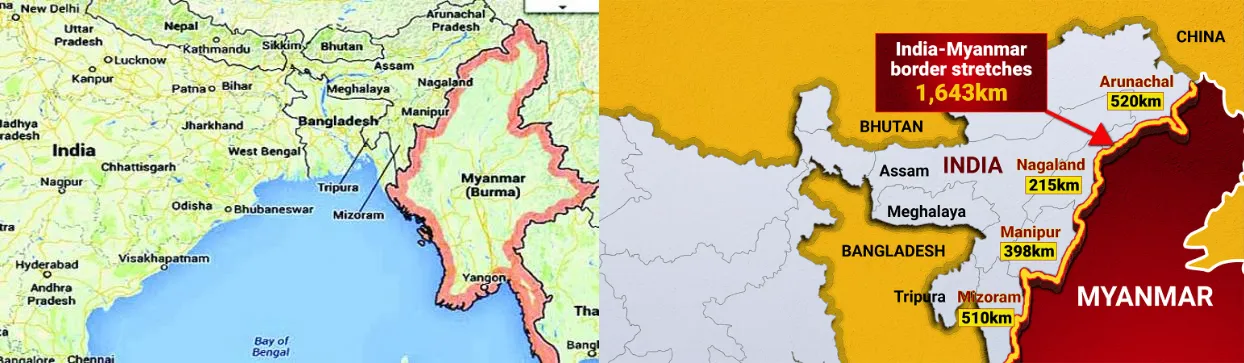
India's northeastern region remains strategically critical due to several longstanding security challenges:
1. Border Security Concerns
The India-Myanmar border has traditionally been vulnerable to illegal crossings and insurgent movement.
2. Insurgency Networks
Several armed groups have operated across the border over the years, exploiting difficult terrain and cross-border connections.
3. Weapons Trafficking
Security agencies have repeatedly highlighted the risks of arms smuggling and organized networks operating in the region.
4. Emerging Drone Threats
The alleged involvement of drone training raises additional concerns, as drones have increasingly become tools for surveillance, smuggling, and security threats in conflict-prone areas.
Because of these factors, any foreign nationals allegedly involved in military-style activities near the India-Myanmar border immediately attract national security attention.
Why Was the Case Registered Under UAPA Initially?
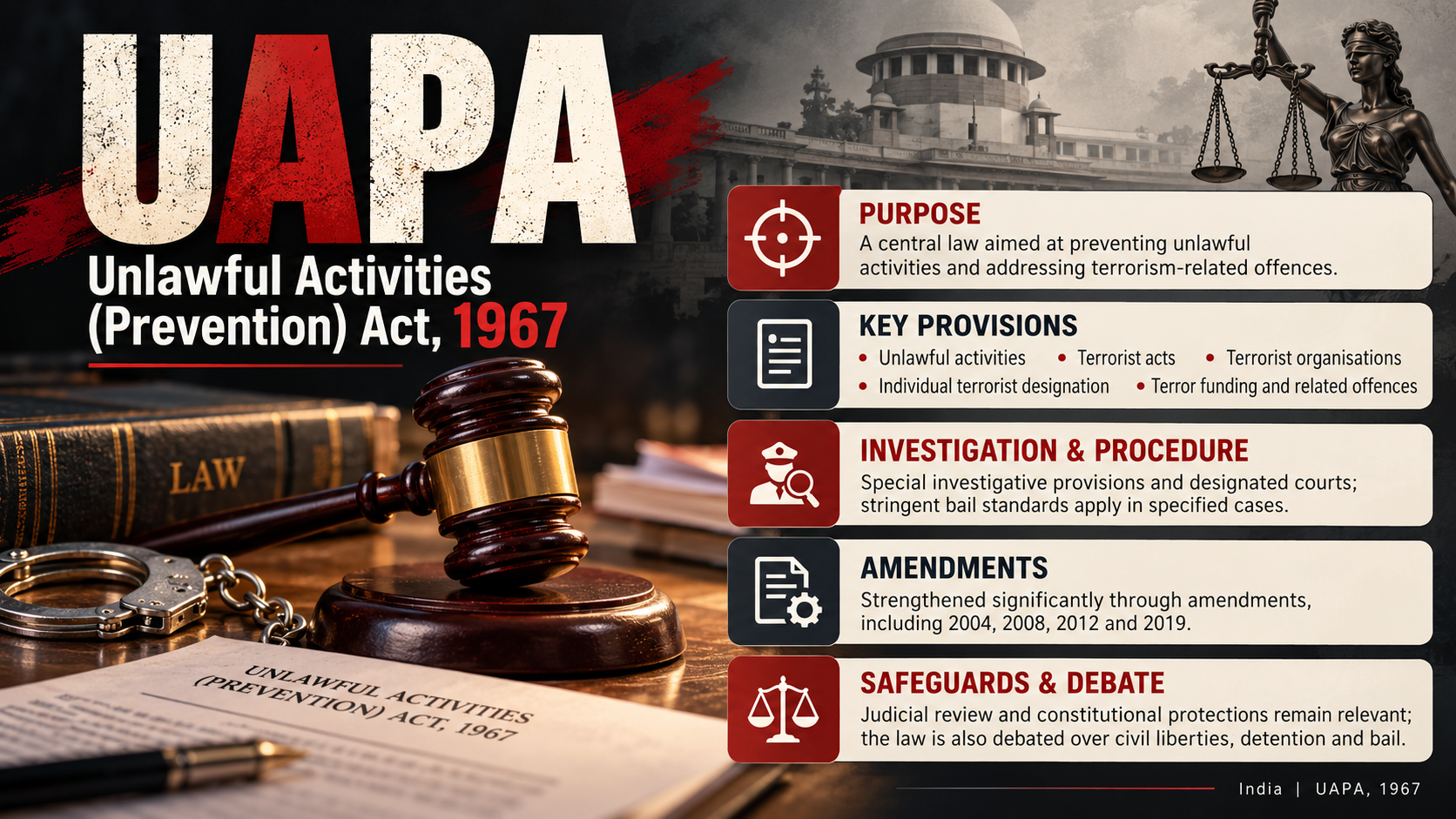
One of the most serious aspects of the case is that VanDyke and the Ukrainian nationals were initially arrested under the Unlawful Activities (Prevention) Act (UAPA). UAPA is among India's toughest anti-terror laws and is used in cases involving:
1. Terror conspiracies
2. Terror financing
3. Support for terrorist activities
4. Activities threatening national security
The inclusion of UAPA immediately elevated the case from a potential immigration violation to a matter with possible national security implications. Naturally, the arrests triggered widespread concern.
The Twist That Changed Everything
The biggest turning point came during the court proceedings. While the arrests were made under UAPA-related suspicions, the charges eventually presented before the court reportedly focused on provisions of the Immigration and Foreigners laws rather than terrorism-related sections.
This distinction proved crucial. Legal experts note that offences under immigration laws carry a significantly different legal framework compared to UAPA cases.
As a result, the case transformed from a high-profile anti-terror investigation into a matter centered largely on immigration and entry-related violations, at least at the current stage of prosecution.
Why Did the Court Grant Bail?
The court's decision was based on the charges formally placed before it. According to judicial reasoning:
1. The chargesheet filed did not proceed under UAPA provisions.
2. The allegations formally presented related primarily to immigration and foreigners-related violations.
3. Courts are required to assess bail based on the charges currently on record.
4. Since the prosecution did not pursue a UAPA-based chargesheet at this stage, the stricter legal standards associated with UAPA were not applicable.
Consequently, the court granted bail to VanDyke and the other accused individuals.
⚖️ Default Bail Decoded: Why Timing Matters in Criminal Cases
Default bail doesn't mean innocence. It is a legal right that comes into play when investigators fail to submit their chargesheet within the time limit prescribed by law.
Key Principle
A person cannot be kept behind bars indefinitely simply because an investigation is still ongoing.
What the Law Says
1. Under the Bharatiya Nagarik Suraksha Sanhita (BNSS), investigators generally get up to 90 days in serious criminal cases to file a chargesheet.
2. If they miss the deadline, the accused may become eligible for default bail.
3. However, UAPA cases follow stricter rules, allowing agencies a longer investigation window before default bail provisions apply.
Why It Matters in the VanDyke Case
The debate revolves around whether the case should have continued under UAPA's extended timeline or been treated primarily as an immigration-related offence, which significantly affected the bail outcome.
Why Was He Allowed to Leave India?

Another controversial aspect of the verdict is that the court permitted VanDyke and the six Ukrainian nationals to leave India for a limited period (one month). The court reportedly imposed conditions including:
1. Execution of the required bond.
2. Cooperation with investigators.
3. Appearance before authorities whenever summoned.
4. Return to India within the specified period.
From the court's perspective, these conditions formed part of standard legal procedure following bail. However, some political observers and opposition parties argue that allowing foreign nationals accused in a sensitive security-related case to leave India could complicate future legal proceedings if they fail to return.
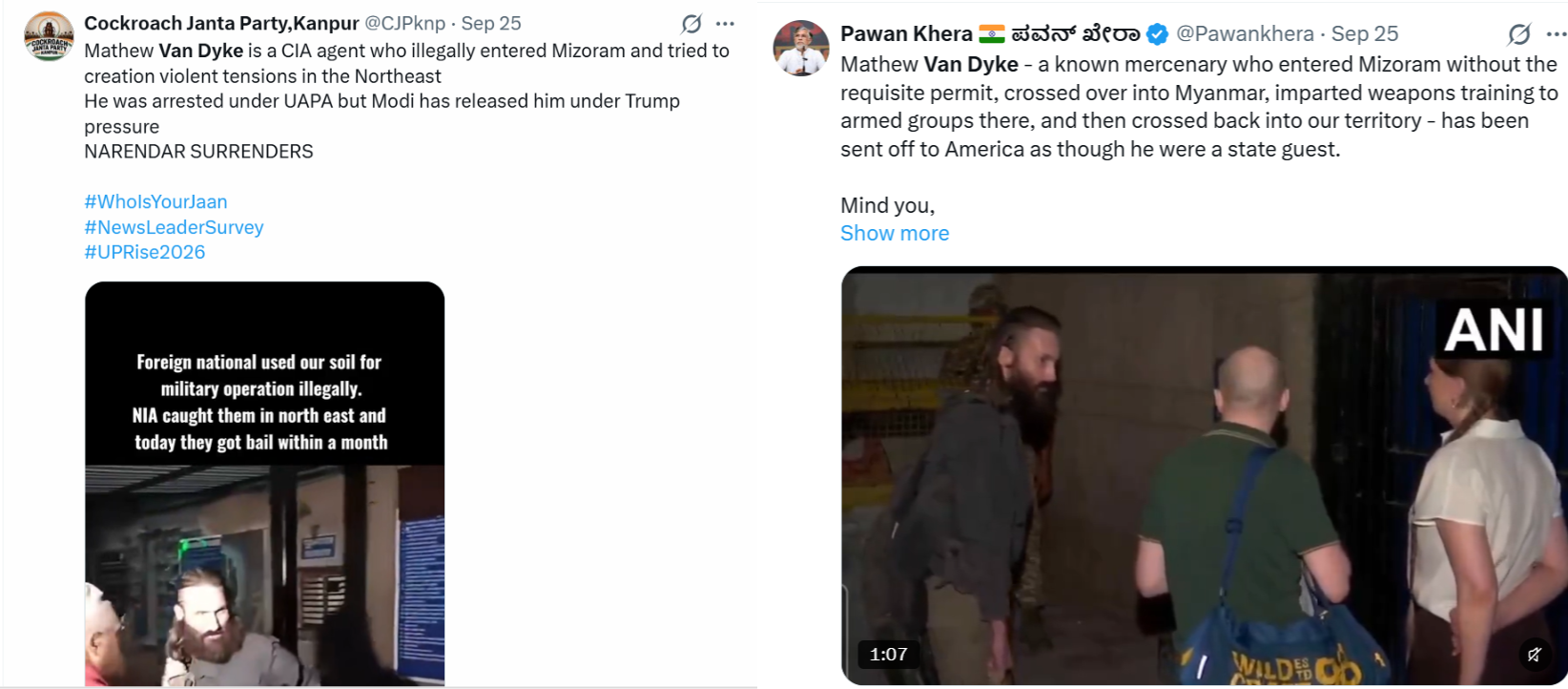
Congress & Cockroach Janta Party(CJP) Question the Government
The Congress & CJP have sharply criticized the development and raised several questions:
1. Was National Security Compromised?
The opposition argues that if the allegations were serious enough to justify an NIA arrest, the subsequent dilution of charges requires explanation.
2. How Did They Reach Sensitive Border Regions?
Questions have been raised about border surveillance, immigration checks, and security monitoring mechanisms.
3. Why Was UAPA Not Included in the Chargesheet?
Legal commentators and opposition leaders are asking why terrorism-related provisions were not eventually pursued despite the initial arrest under those sections.
4. Was There Diplomatic Pressure?
Congress has alleged that the Government may have acted under pressure from the United States, an accusation rejected by authorities.
What Is the Government's Response?
The Government has firmly denied any claims of American influence. Officials maintain that:
1.Consular access to foreign citizens is part of standard international practice.
2. Communication between governments after the arrest of foreign nationals is routine.
3. Legal decisions are based on evidence and judicial procedure, not diplomatic pressure.
According to the government's position, this case has followed established legal protocols.
NIA's Explanation: Why No UAPA Chargesheet Yet?
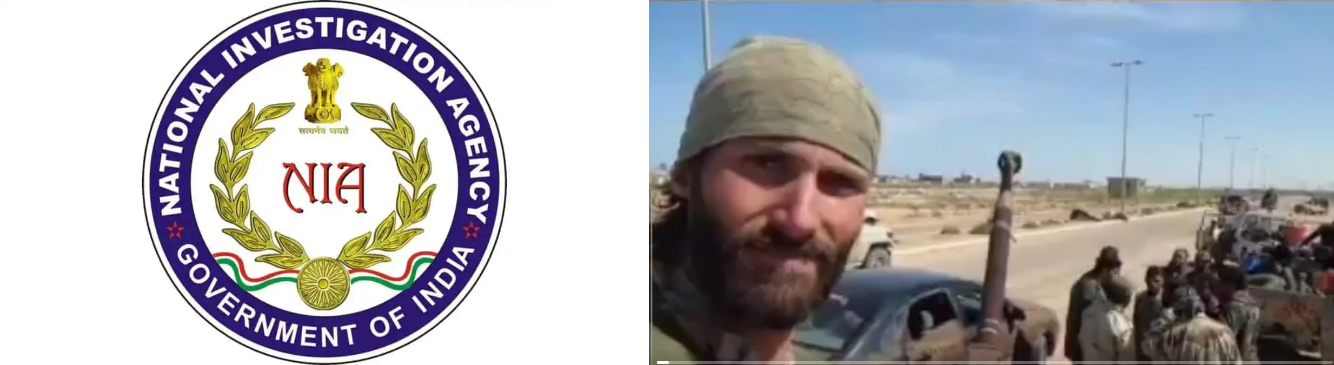
The NIA has also offered its justification. The agency reportedly argues that while immigration violations could be established based on available evidence, proving more serious allegations related to anti-India activities requires additional material.
Much of the alleged activity is said to have occurred outside India, particularly in Myanmar. Gathering evidence in such cases can involve:
1. Foreign intelligence inputs
2. International cooperation
3. Digital evidence verification
4. Foreign witnesses
5. Cross-border investigation
The agency suggests that further investigation remains possible and that additional charges could emerge if stronger evidence is obtained. The bottom line is that the cross-border investigations are far more complex and often require global cooperation to establish a strong legal case.
The Million-Dollar Question: Will VanDyke Return?
The biggest uncertainty now is not the bail itself but what happens next. With VanDyke allowed to travel back to the United States, a critical question looms over the case:
Will he return to India if summoned by investigators or the court?
Sceptics point to previous international legal disputes where foreign nationals left India and did not return for extended legal proceedings. Supporters of the court's decision, however, argue that legal systems must operate according to evidence and procedure, not speculation.
For now, the case remains open, investigations continue, and the political debate shows no signs of slowing down.
A Controversy Far From Over
The Matthew VanDyke case sits at the intersection of national security, international diplomacy, border management, and judicial procedure. While the NIA maintains that investigations are ongoing, critics remain unconvinced by the shift from UAPA-linked allegations to immigration-related charges.
Whether new evidence emerges, supplementary charges are filed, or VanDyke returns as directed could ultimately determine how this controversial case is remembered.
👉 What do you think?
Was the court's decision a fair application of law, or does this case expose deeper questions about India's border security and investigative process?
Share your views in the comments, and follow us for more in-depth analysis on geopolitics, national security, and global affairs.
Written by
Ritvik DeshmukhDiscussion (0)
Sign in to join the discussion.
Loading comments…