
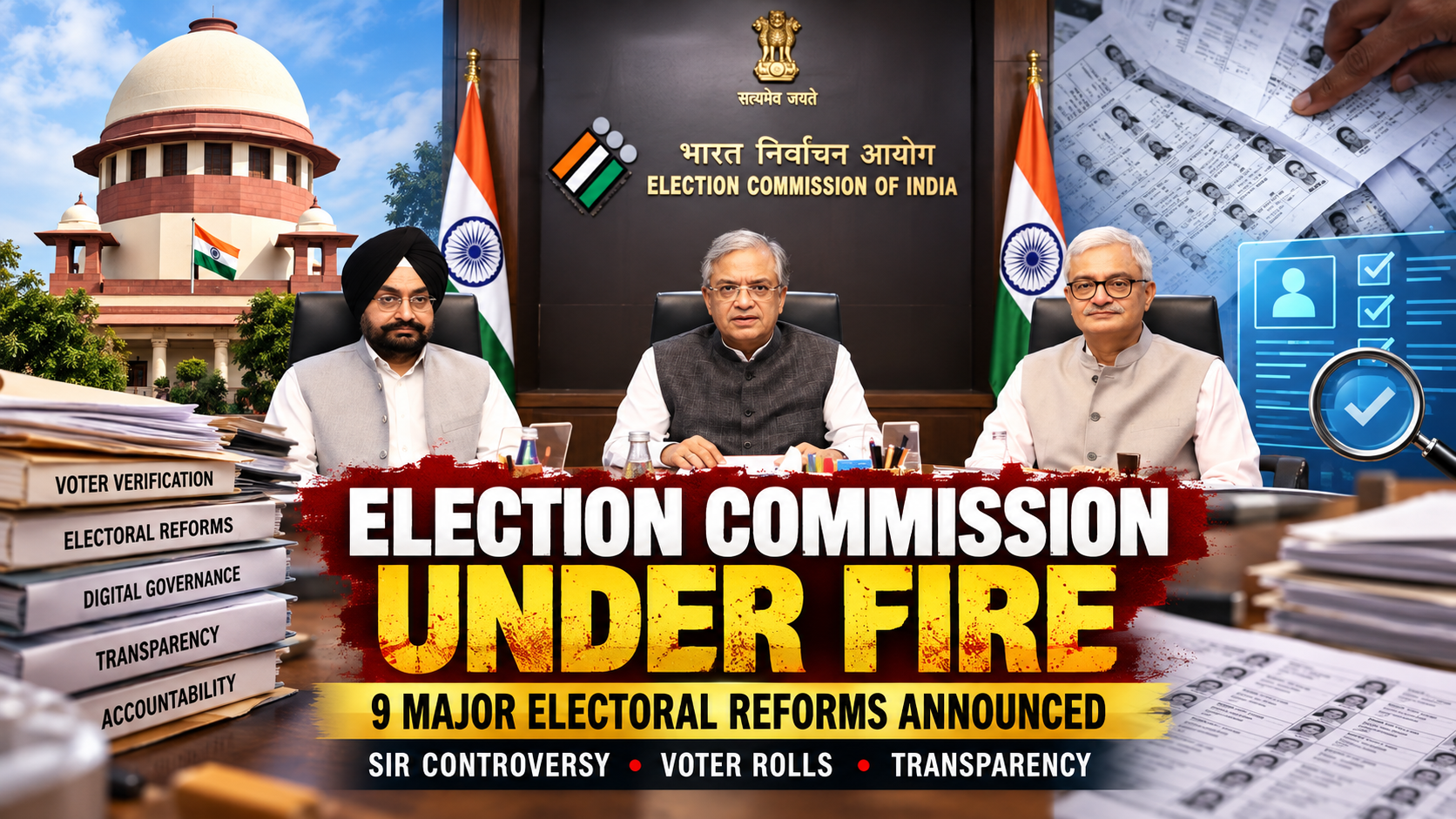
Indian Election Commission Responds to Controversy With Sweeping Changes Aimed at Restoring Public Trust
India's Election Commission has found itself at the center of an intense debate after a recent investigative report raised questions about how decisions are being made within the country's top electoral body. Allegations suggested that key decisions were being driven primarily by the Chief Election Commissioner, while the views of the other Election Commissioners were allegedly sidelined.
In response to the controversy, the Election Commission of India (ECI) has issued a detailed clarification and announced a series of significant reforms. These measures are designed to improve transparency, strengthen institutional processes, and address concerns related to voter verification exercises, internal decision-making, and digital governance.
Let's break down what happened and why these changes matter.
What Sparked the Controversy?
The debate began after reports claimed that differences of opinion had emerged within the Election Commission. According to the allegations, the two Election Commissioners had raised objections on multiple occasions over issues ranging from voter verification procedures to technology-related decisions and the implementation of the ECI-Net platform. 👉 Inside the Election Commission Rift: Dissent Claims, Voter List Row & Questions Over Transparency
A recent report from Indian Express has claimed that significant disagreements emerged between the Chief Election Commissioner (CEC) Gyanesh Kumar and the two other Election Commissioners, Dr. Sukhbir Singh Sandhu and Dr. Vivek Joshi, over several key electoral decisions.
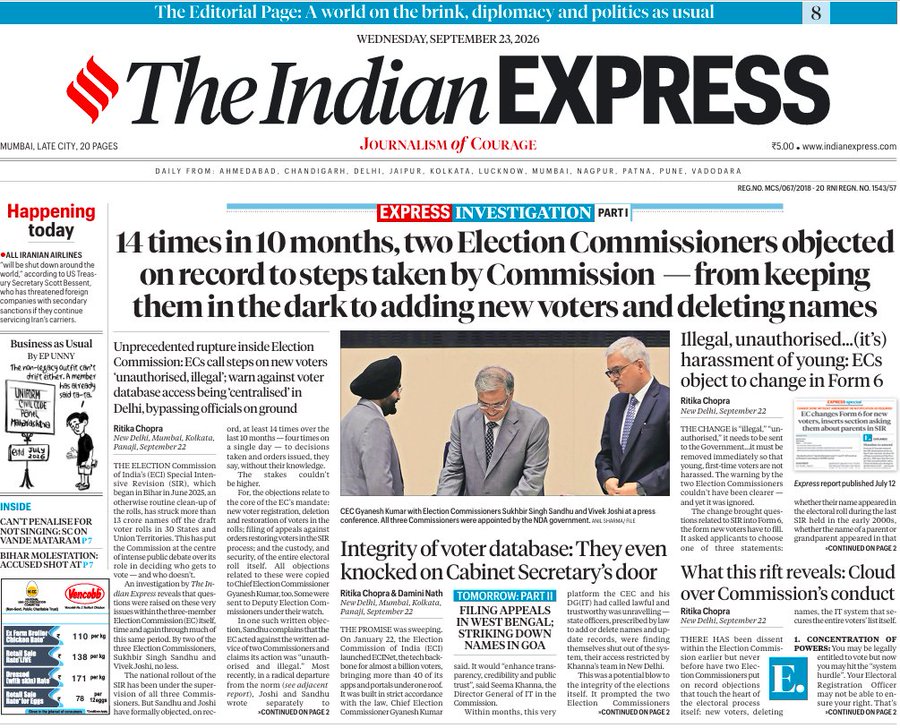
Allegations of internal discord gained traction after two Election Commissioners reportedly raised 14 formal objections in 10 months over key electoral decisions and procedures.
The controversy quickly evolved into a larger constitutional question:
How does a multi-member constitutional body like the Election Commission actually make decisions?
Is every major decision taken collectively, or does the Chief Election Commissioner hold disproportionate authority?
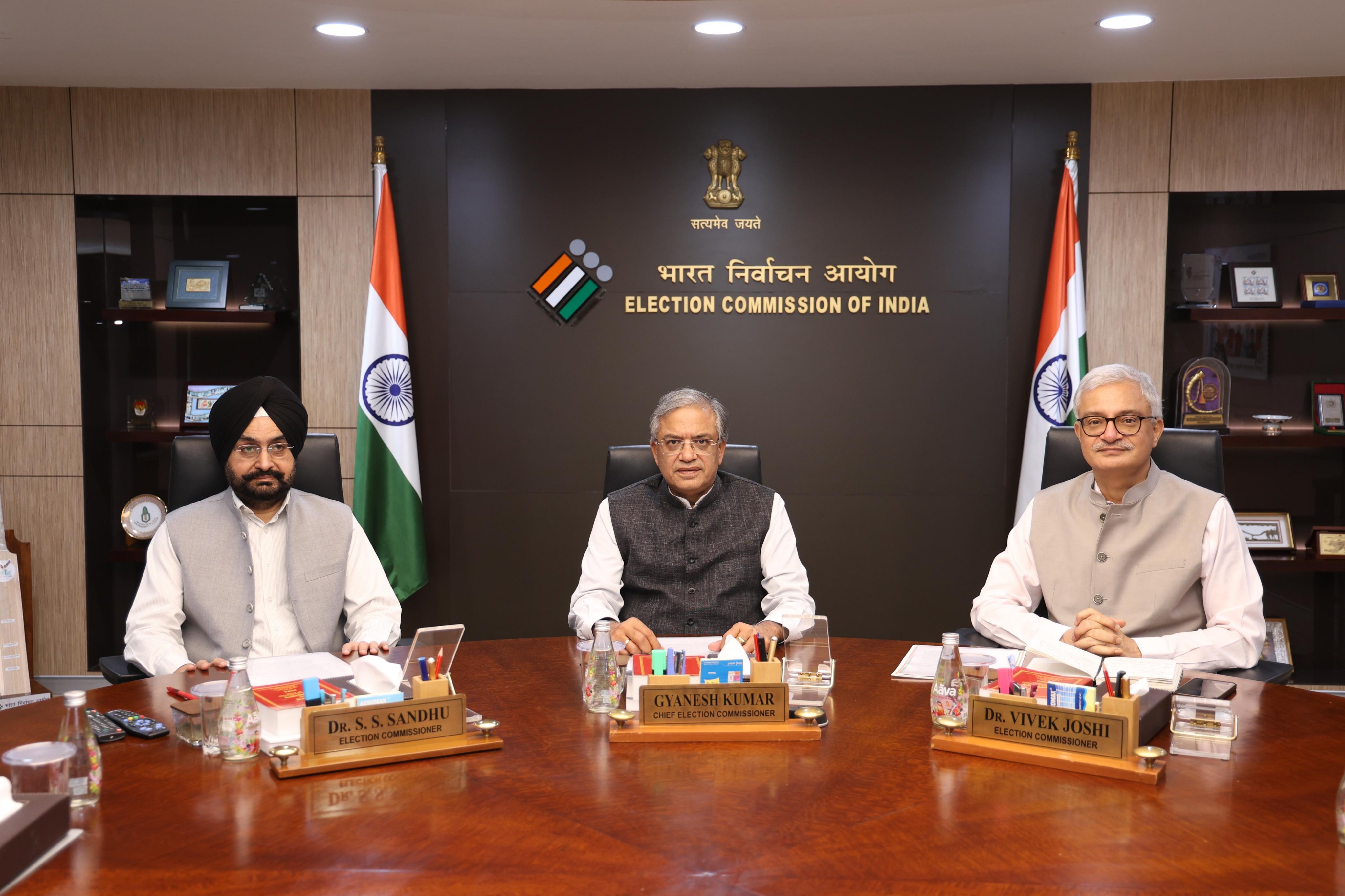
To address these concerns, the Commission convened a meeting of all three members and publicly asserted that major decisions were taken unanimously after internal deliberations.
Election Commission's Stand: Decisions Were Collective, Not Individual
The ECI has firmly rejected suggestions that decisions were being taken unilaterally. According to the ECI:
a) The nationwide SIR drive was approved collectively by all three Commissioners before being launched.
b) The verification exercise began in Bihar and was subsequently expanded to West Bengal and other 12 States/ Union Territories with the Commission's consent.
c) Every subsequent expansion phase, including schedules for an additional 19 States and Union Territories, received unanimous approval despite reported internal discussions and differing viewpoints.
While members may have expressed differing views during discussions, the Commission maintains that final decisions were made collectively. However, the bigger issue exposed by the controversy was the absence of clearly documented internal procedures governing deliberations and decision-making.
This has now prompted a comprehensive overhaul.
The 9 Major Reforms Announced by the Election Commission
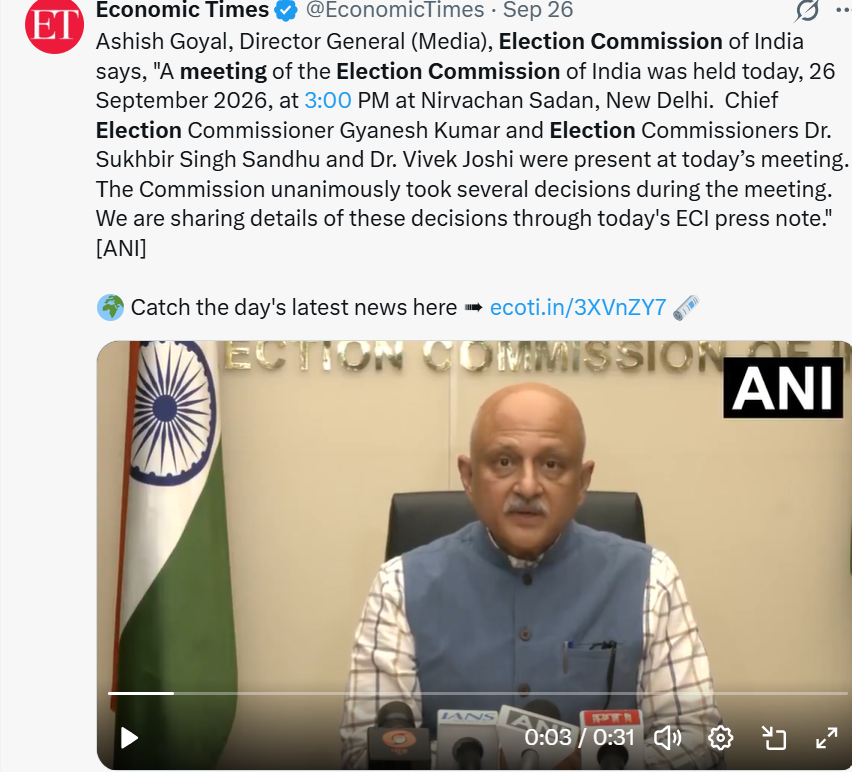
Amid mounting scrutiny, the Election Commission of India convened a crucial meeting at Nirvachan Sadan in New Delhi on September 26, 2026, to discuss the issues at the center of the ongoing controversy.
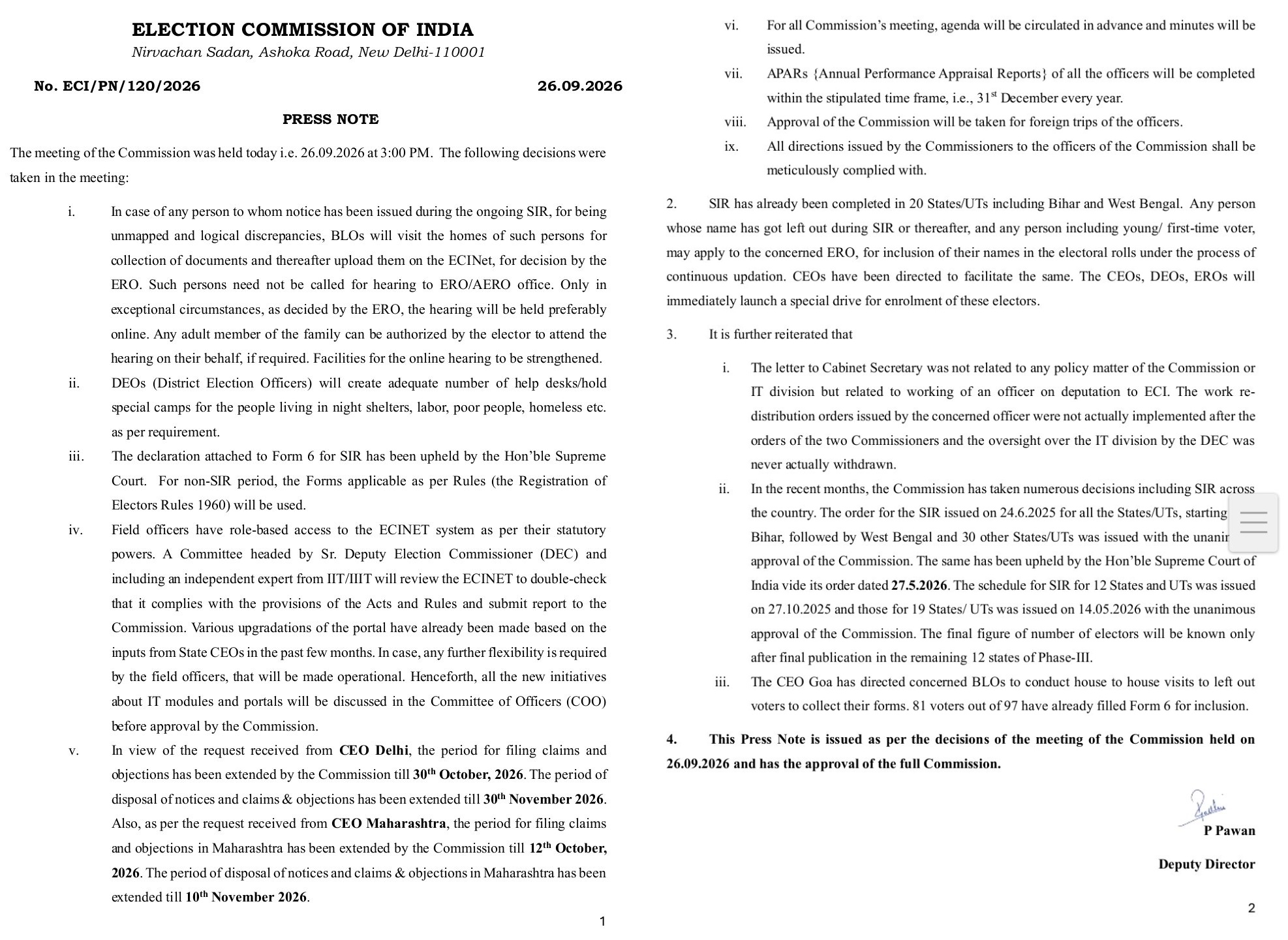
Election Commission's 9 New Decisions amid the SIR row are as follows:
1. No Routine Physical Hearings for Voter Verification Notices
One of the biggest changes directly impacts voters. Previously, if a voter received a notice related to the deletion of their name from the electoral rolls, they often had to personally appear before election authorities and submit supporting documents.
Under the new system:
a) Booth Level Officers (BLOs) will visit voters' homes.
b) Documents can be collected directly from citizens.
c) Records will be uploaded digitally.
d) Personal hearings will be required only in exceptional cases.
This will be particularly beneficial for:
a) Senior citizens
b) Persons with disabilities
c) Economically vulnerable voters
The move aims to reduce the burden on ordinary citizens and improve accessibility.
2. Help Desks and Special Assistance Camps
Recognizing that many citizens struggle to navigate electoral processes, the Commission has directed district election officials to establish:
d) Dedicated help desks
e) Special outreach camps
f) Grievance support mechanisms
These initiatives are expected to assist migrant workers, daily wage earners, homeless individuals, and others who may face difficulties accessing election-related services.
3. Special Enrollment Drives for Excluded Voters
The ECI has clarified that removal from a voter list during verification does not permanently disqualify a citizen from voting.
Anyone excluded can:
a) Submit fresh applications.
b) Fill out Form 6.
c) Seek re-enrolment in electoral rolls.
This assurance comes amid concerns that large numbers of voters were excluded during verification exercises. The Commission insists that eligible citizens will always have opportunities to restore their voting status through legal procedures.
Goa Controversy Exposes Flaws in ECI's Digital Systems
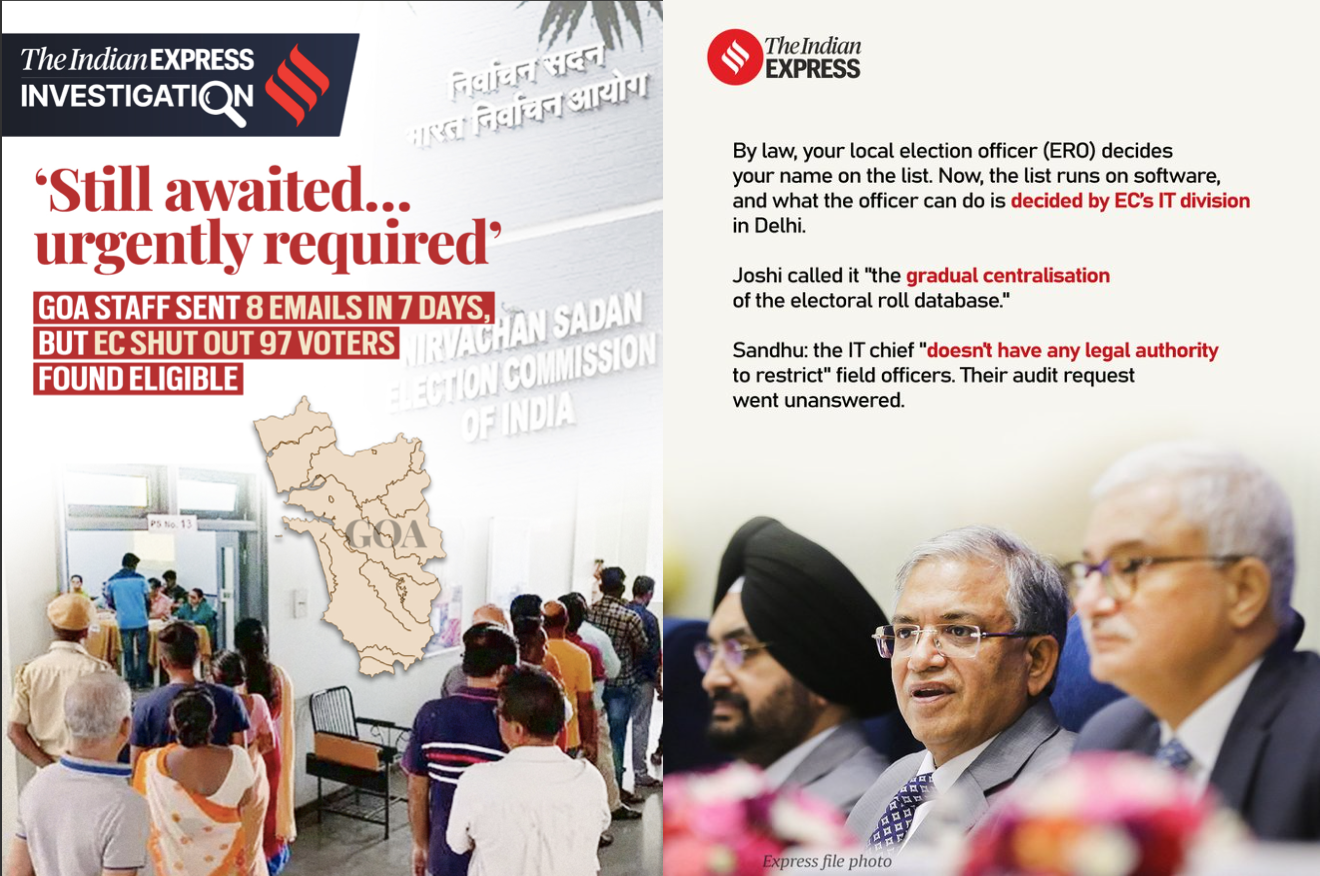
The Goa case became a key flashpoint in the SIR controversy after several voters, despite being cleared by local election officials, were reportedly left out of the final electoral roll. The incident triggered concerns over whether ECI's software systems were limiting field-level authorities from correcting voter records efficiently.
In response, the Election Commission said most affected voters(approx. 81 out of 97 voters) have already reapplied through Form 6 and directed officials to ensure their inclusion through the prescribed process.
4. Independent Review of the Controversial ECI-Net Platform
One of the most debated issues has been the ECI-Net digital platform. Some Election Commission members and field officials reportedly expressed concerns that ECI-Net could reduce the operational autonomy traditionally exercised by Electoral Registration Officers (EROs).
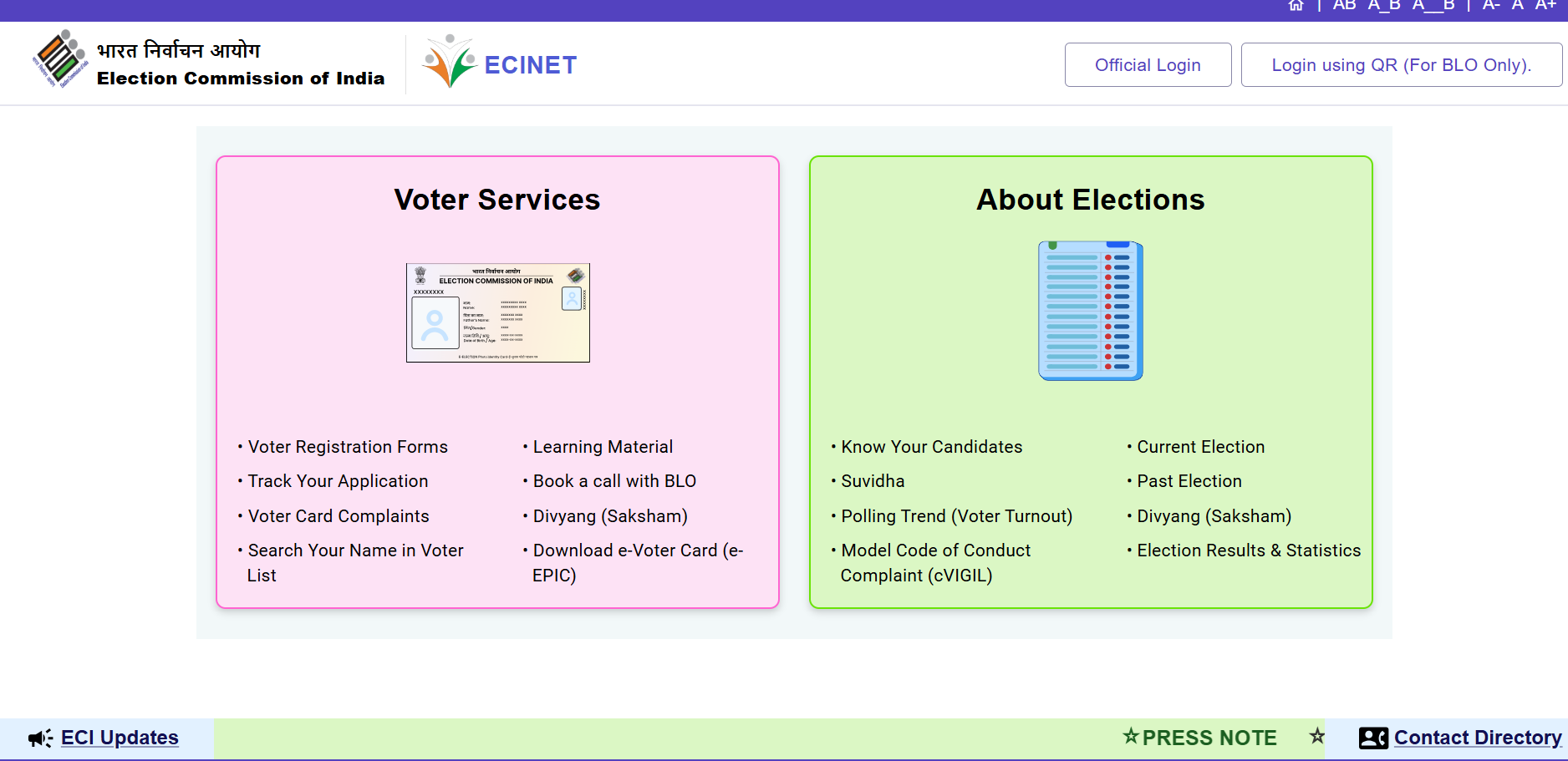
To address these concerns, the Election Commission has announced:
a) An independent review committee.
b) Participation of external technology experts from IITs or IIITs.
c) Examination of compliance with electoral laws and regulations.
The committee's findings will help determine whether the platform needs modifications or procedural safeguards.
5. Future IT Projects Must Pass Through Committee Scrutiny
In a major governance shift, future technology initiatives will no longer be implemented without structured review. Any new IT module or digital platform will now:
1. Be examined by a committee of officers.
2. Be tested for legal compliance.
3. Undergo procedural scrutiny before approval.
This change aims to prevent future controversies surrounding technology deployment.
6. Greater Flexibility for Field Officers
Several concerns emerged over field officers allegedly facing operational limitations while handling voter-related cases through digital systems(ECINET).
To resolve this issue, the Election Commission has promised enhanced flexibility for ground-level officials.
The goal is simple: Empower local officers to address genuine voter concerns without getting trapped in rigid technological processes.
7. Formal Meeting Agendas and Recorded Discussions
Perhaps one of the most important reforms relates to internal governance. Going forward:
a) Meeting agendas will be circulated in advance.
b) Commissioners will know what issues will be discussed beforehand.
c) Deliberations will be documented.
d) Official records and minutes will be maintained.
For an institution responsible for safeguarding democracy, this represents a significant step toward accountability and transparency.
8. Foreign Travel Approvals Require Collective Clearance
Previously, foreign travel proposals for Election Commission officials could be approved at a more centralized level. Under the new system, all three Commissioners must collectively approve official foreign visits.

The move reinforces the principle of shared decision-making within the institution.
9. Directions and Decisions Will Be Properly Documented
The Commission has also mandated systematic documentation of instructions issued by Commissioners to officials(like administration, IT departments, etc.). This means:
a) Decisions will leave an audit trail.
b) Administrative actions can be tracked.
c) Accountability will improve across organizational levels.
Such documentation could help prevent future disputes over responsibility and implementation.
Annual Performance Reports to Enter Public Domain
Another notable change is the introduction of annual performance reporting. By the end of each year, i.e. December 31st, performance assessments of officials will be documented and made available through official mechanisms.
This could provide the public and stakeholders with greater insight into how electoral administration performs over time. Transparency advocates have long argued that such reporting mechanisms are essential for strengthening institutional credibility.
What About the Form 6 Controversy?
Another issue that generated debate involved additional questions introduced in Form 6, which is used for voter registration.
According to Indian Express reports, the two Election Commissioners raised concerns over why applicants were being asked to provide extra details, including information related to their parents' electoral records during the SIR process.
The Election Commission has clarified that:
a) The additional questions were linked specifically to the Special Intensive Revision (SIR) process.
b) The provisions have legal backing (upheld by the Supreme Court).
c) Once the special verification process concludes, the normal version of Form 6 will continue to be used for routine registrations.
This clarification is intended to address fears that voter registration procedures were becoming unnecessarily complicated.
Political Storm Over Election Commission: Parties Trade Charges Amid Transparency and Voter Roll Debate
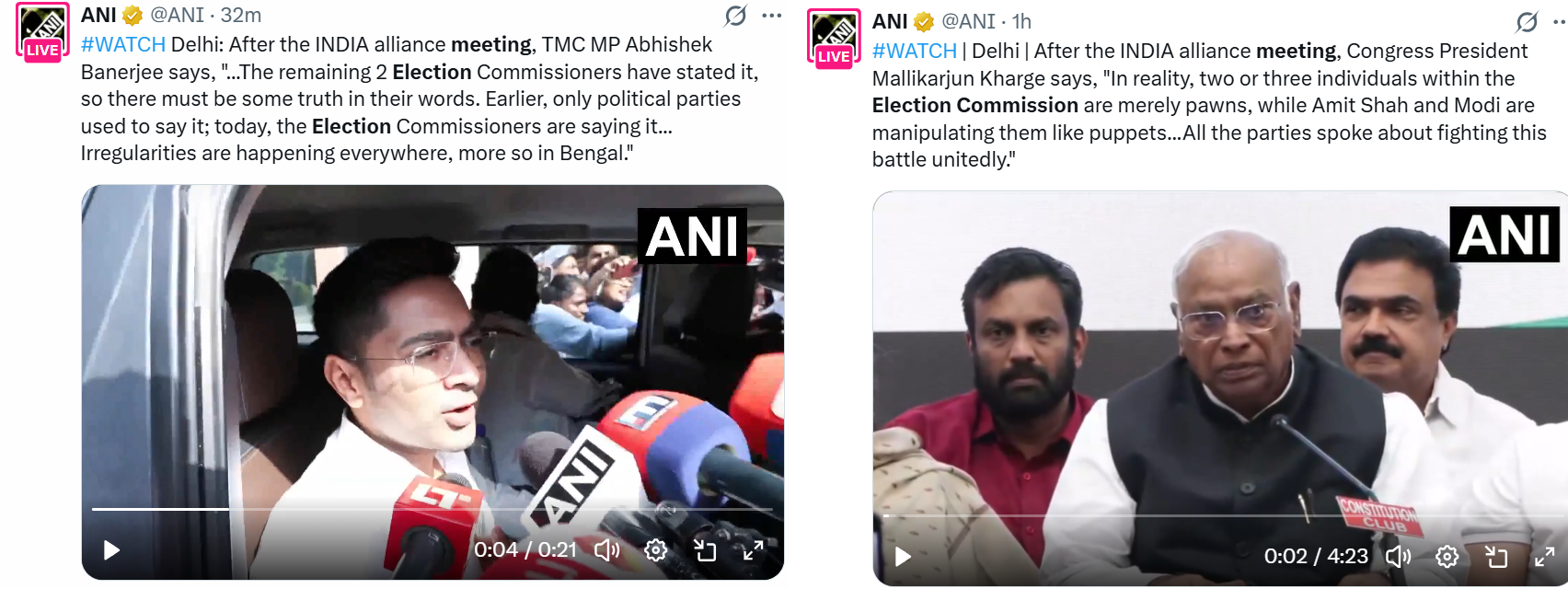
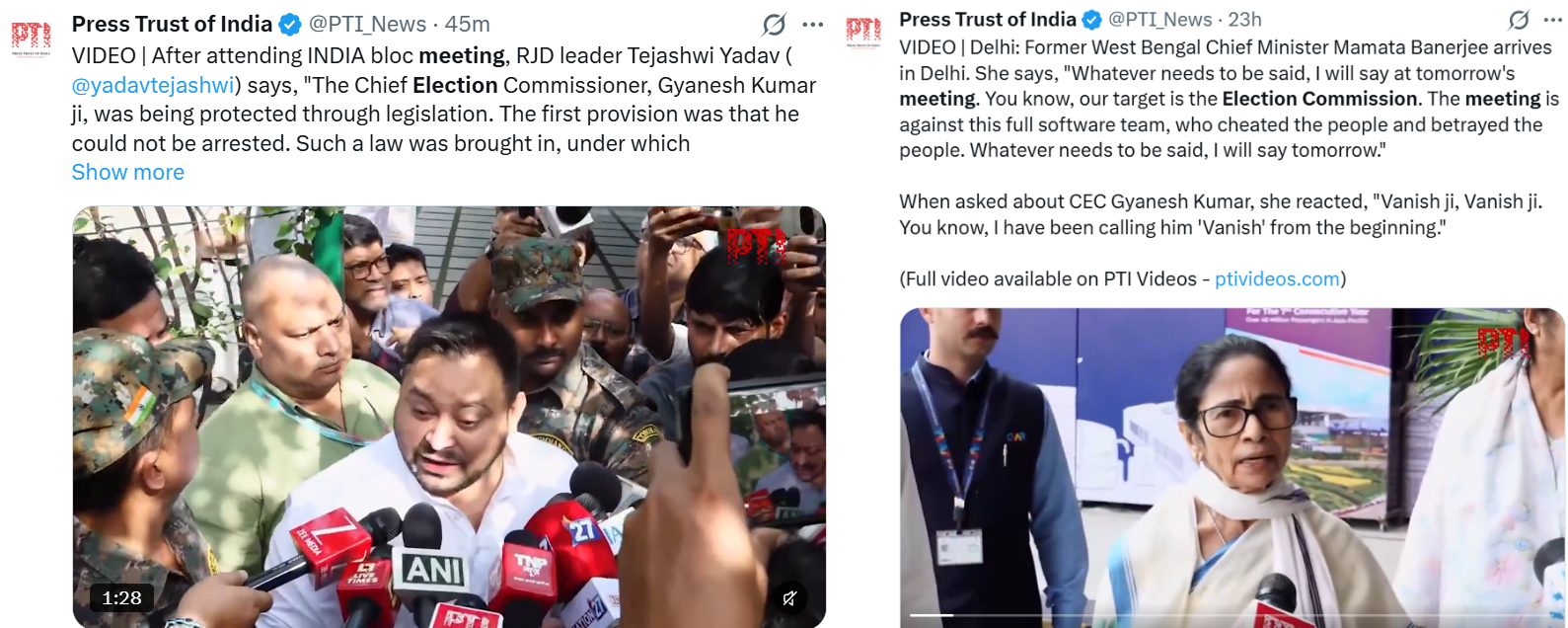
The Bigger Question: Will These Reforms Restore Confidence?
The Election Commission's latest announcements represent one of the most significant procedural reforms in recent years. While the Commission maintains that its decisions were always taken collectively, the controversy has highlighted a crucial reality:
Institutions do not earn trust merely through assurances. They earn trust through transparency, accountability, and clearly defined processes.
The newly announced reforms appear aimed precisely at addressing those concerns.
Whether these measures fully satisfy critics remains to be seen. However, the introduction of documented meetings, independent technology reviews, public reporting mechanisms, and voter-friendly procedures is likely to reshape how the Election Commission functions in the years ahead.
The Verdict So Far
As scrutiny of India's electoral institutions grows, the Election Commission has chosen reform over silence. The nine major changes signal an attempt to strengthen internal accountability while making electoral processes more accessible for citizens.
The real test, however, will not be the announcements themselves but how effectively these reforms are implemented on the ground.
🚨 Stay Ahead of India's Biggest Political & Governance Developments
Want deep, fact-based analysis on Indian politics, elections, governance reforms, and constitutional affairs?
✅ Follow our blog for exclusive insights
✅ Get simplified breakdowns of complex policy issues
✅ Stay informed with unbiased, easy-to-understand political analysis
Bookmark this page and subscribe now because every policy change today shapes India's democracy tomorrow.
Written by
Aditya KulshreshthaDiscussion (0)
Sign in to join the discussion.
Loading comments…