
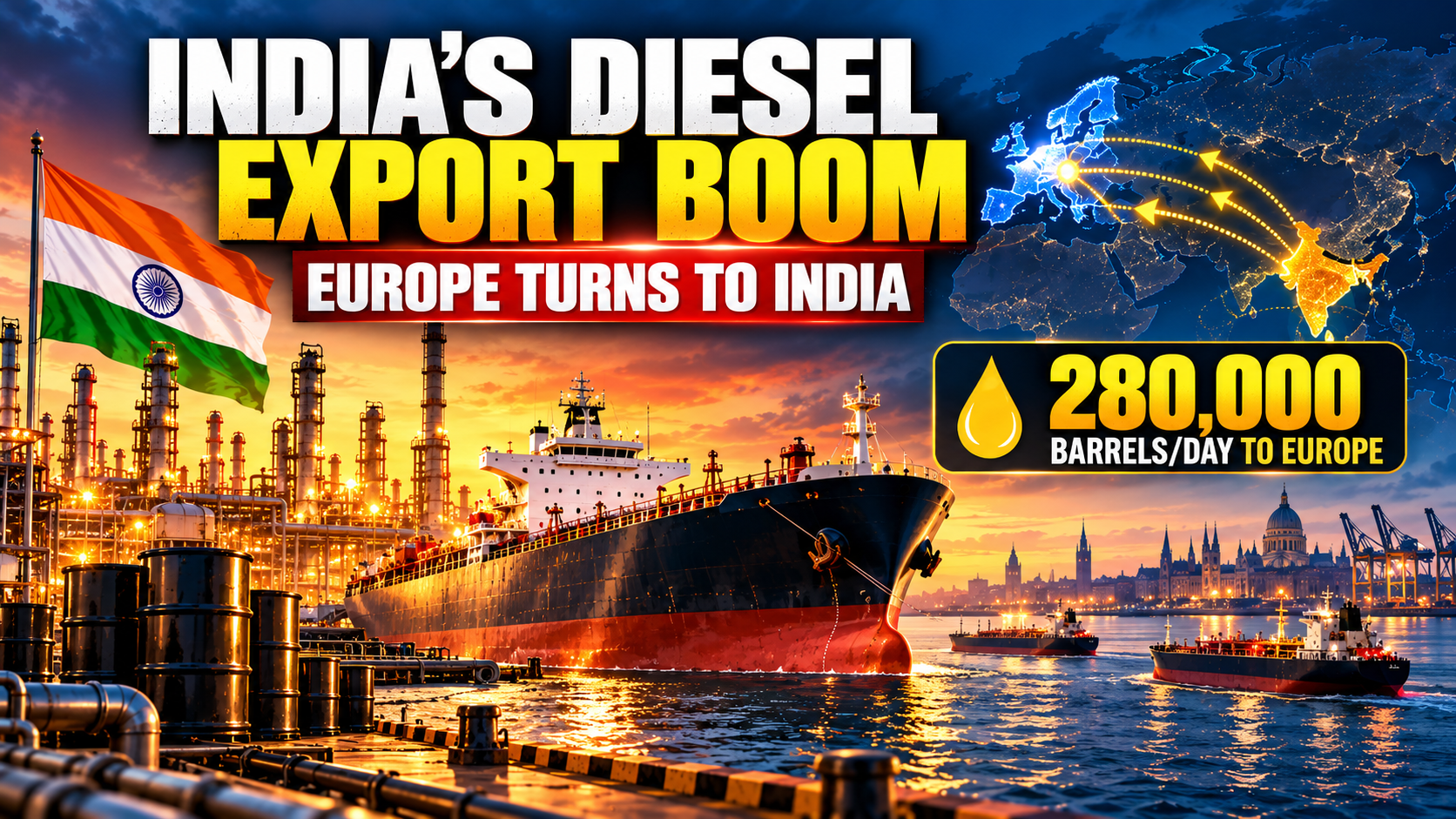
As Europe Faces a Diesel Crunch and China Pulls Back, India Emerges as the Unexpected Energy Powerhouse
While India is often known as one of the world's largest crude oil importers, a remarkable transformation is taking place behind the scenes. Thanks to its massive refining capacity, India is increasingly becoming a global supplier of refined petroleum products, especially diesel.
Now, a fresh surge in diesel exports has put India at the center of the global energy trade. With Europe desperately seeking fuel supplies, China restricting exports, and geopolitical tensions disrupting energy flows, Indian refiners are finding themselves in a unique position to profit.
So, what is driving this diesel export boom, and why is Europe relying so heavily on India? Let's break it down.
India's Diesel Exports Reach a One-Year High
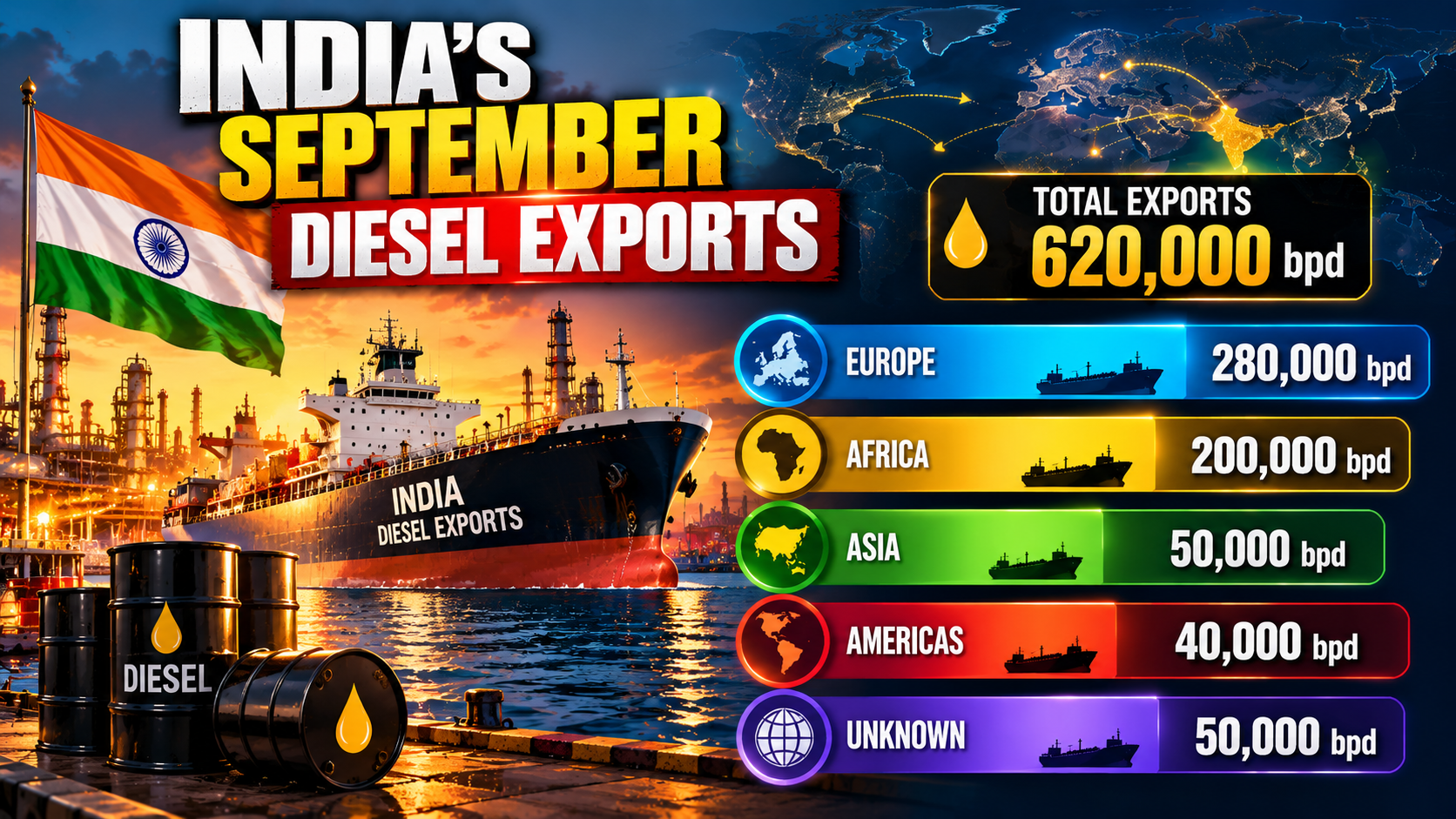
India's diesel exports surged sharply in September 2026, reaching their highest level in over a year. The biggest highlight was Europe.
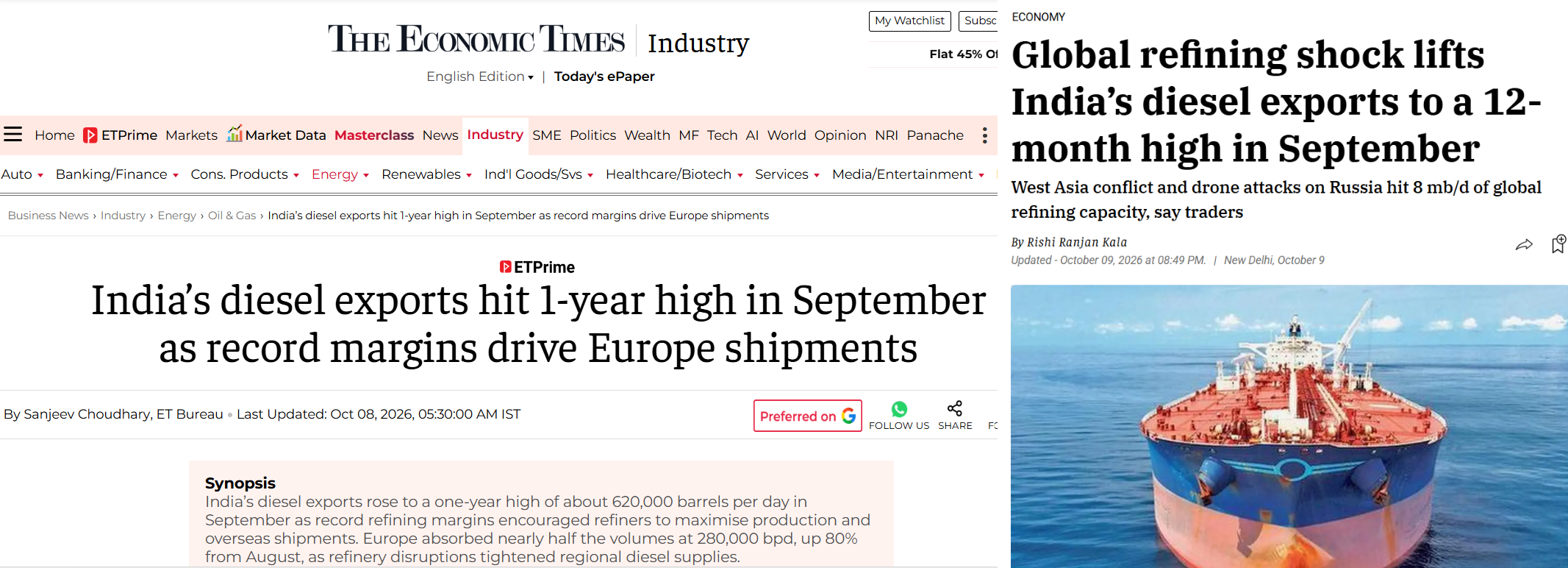
Indian refiners exported approximately 280,000 barrels of diesel per day to Europe, representing nearly 45% of India's total diesel exports during the month. Compared with August, exports to Europe jumped by around 80%, signalling a dramatic increase in demand.
This is not merely a trade statistic. It reflects a major shift in global energy markets.
As several traditional suppliers struggle with production and logistical challenges, buyers are increasingly turning to India for reliable refined fuel supplies.
How Can an Oil-Importing Country Export So Much Diesel?
At first glance, it may sound contradictory. India imports most of its crude oil requirements from foreign countries. However, what many people overlook is India's enormous refining industry.
India possesses one of the world's largest refining networks, including the massive Jamnagar refinery complex, among the biggest in the world.
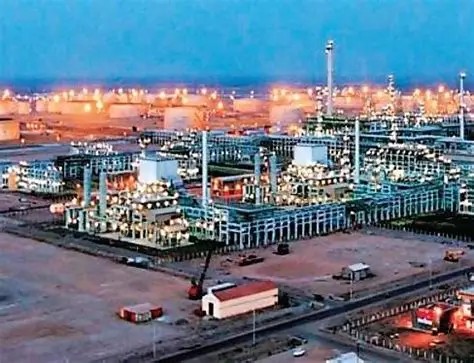
The country's refineries import crude oil from multiple sources, process it into high-value products such as:
1. Diesel
2. Petrol (Gasoline)
3. Aviation Turbine Fuel (ATF)
4. Naphtha
5. Fuel Oil
6. Petrochemical Feedstocks
After meeting domestic demand, India exports the surplus to international markets. Today, India is the world's fourth-largest refining hub, with refining capacity exceeding 5 million barrels per day and an installed capacity of roughly 267 million tonnes annually. This gives the country a powerful strategic advantage in global energy markets.
This strong infrastructure has helped the country become one of the world's leading exporters of refined petroleum products, shipping more than 61 million tonnes overseas in FY 2025-26.
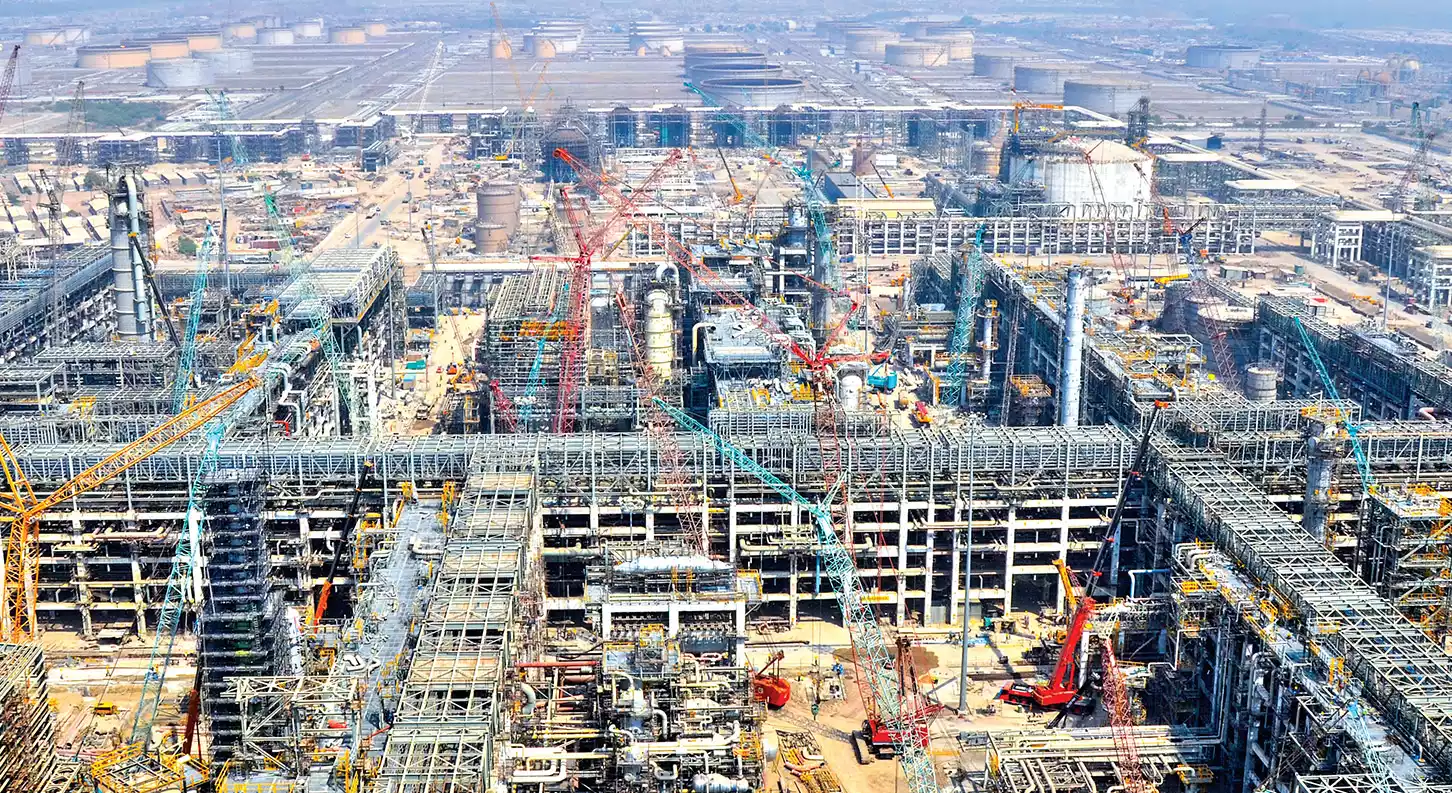
Simply put, India does not need to produce the crude oil itself. It only needs access to crude supplies and the ability to refine them efficiently.
Leading refiners include:
1. Reliance Industries
2. Indian Oil Corporation (IOC)
3. Bharat Petroleum (BPCL)
4. Hindustan Petroleum (HP)
5. Nayara Energy
have developed world-class refining infrastructure capable of processing crude oil from multiple sources and exporting high-value petroleum products worldwide.
As a result, countries facing supply disruptions or changing market conditions increasingly turn to India for refined fuel products such as diesel, petrol, and aviation fuel.
The Secret Behind the Boom: Understanding "Diesel Crack Spreads"
One of the most important drivers behind rising diesel exports is something known as the diesel crack spread.
A crack spread represents the difference between the cost of crude oil and the selling price of refined products such as diesel.
For example:
§ Crude Oil Price = $80 per barrel
§ Diesel Selling Price = $140 per barrel
The diesel crack spread would be approximately:
✅ $140 - $80 = $60 per barrel
The higher this spread becomes, the more profitable diesel production gets for refiners. In September, diesel crack spreads surged significantly across global markets, making diesel exports extremely lucrative for Indian refiners.
As a result, companies naturally increased diesel output and directed more supplies toward international buyers willing to pay premium prices.
Why Has Diesel Become So Expensive Worldwide?
The answer lies in a combination of geopolitical disruptions and supply shortages.
1. West Asia's Energy Disruptions
West Asia remains one of the world's most important energy and refining regions.
Recent geopolitical tensions, attacks on energy infrastructure, and disruptions in shipping routes(like the Strait of Hormuz, Bab el-Mandeb, etc.) linked to the Iran-Israel conflict have created uncertainty in fuel markets. Any disturbance affecting refineries, tankers, or energy logistics can quickly reduce diesel supplies available to global markets.
When supply falls and demand remains strong, prices rise.
🔥 Gulf Fuel Shortfall Creates New Opportunities for India
Despite crude oil flows recovering to nearly pre-war levels, refined fuel exports from the Gulf remain significantly below normal. Recent data shows refined fuel shipments are operating at only around 60% of pre-war levels, compared with approximately 91% recovery in crude and condensate flows.
This highlights a critical energy market reality: crude oil supply can recover much faster than refined fuel supply. Since diesel is one of the world's most essential refined products for transportation, agriculture, and industry, any disruption in refining capacity can quickly create shortages, pushing countries like Europe to seek alternative suppliers such as India.
2. Russian Refining Challenges
Russia has also faced significant challenges. Sanctions, export restrictions, and reported attacks on energy infrastructure have disrupted refining operations and fuel production.
In a fascinating twist, India has been importing Russian crude oil, refining it domestically, and then exporting refined products, including diesel, back into global markets. `
🌍 India's Diesel Trade Pivot: Europe Replaces Russia as Top Buyer
A notable shift is unfolding in India's diesel trade routes. After exporting diesel to Russia during the previous three months, Indian shipments to Russia reportedly dropped to zero in September. Instead, refiners redirected supplies toward Europe, where stronger demand and higher prices offered better returns.
This changing trade pattern highlights how Indian refiners are increasingly responding to global market opportunities, positioning India as a key supplier amid tightening diesel supplies worldwide.
3. Europe's Growing Diesel Shortage
The biggest factor may be Europe itself. Europe consumes enormous amounts of diesel for:
a) Freight transportation
b) Agriculture
c) Manufacturing
d) Construction
e) Logistics networks
Unlike passenger cars, many heavy-duty trucks and industrial machines still rely heavily on diesel.
However, Europe has not expanded refining capacity sufficiently over the years. As a result, it increasingly depends on imports to meet demand. This has created a perfect opportunity for Indian exporters.
With Europe willing to pay higher prices than many Asian buyers, Indian refiners naturally shifted exports toward European markets.
The Geopolitical Irony Europe Cannot Ignore
An interesting contradiction has emerged. For years, several European nations urged countries to reduce dependence on Russian energy supplies.
Yet today, Europe is purchasing large volumes of diesel refined in India using imported crude oil that may originate from multiple global suppliers, including Russia.
Critics, including energy analysts and geopolitical commentators, argue that Europe’s growing reliance on Indian diesel highlights a contradiction between its energy policies and its fuel security needs.
Supporters argue that energy security often forces governments to make pragmatic decisions when fuel supplies become scarce. Either way, it demonstrates how interconnected global energy markets have become.
4. China Steps Back, India Steps Forward
Another major factor benefiting India is China's recent export strategy. China has reportedly tightened fuel export quotas and is prioritizing domestic energy security amid growing geopolitical uncertainty.
Rather than aggressively exporting refined products, China appears focused on conserving fuel supplies for its domestic economy.
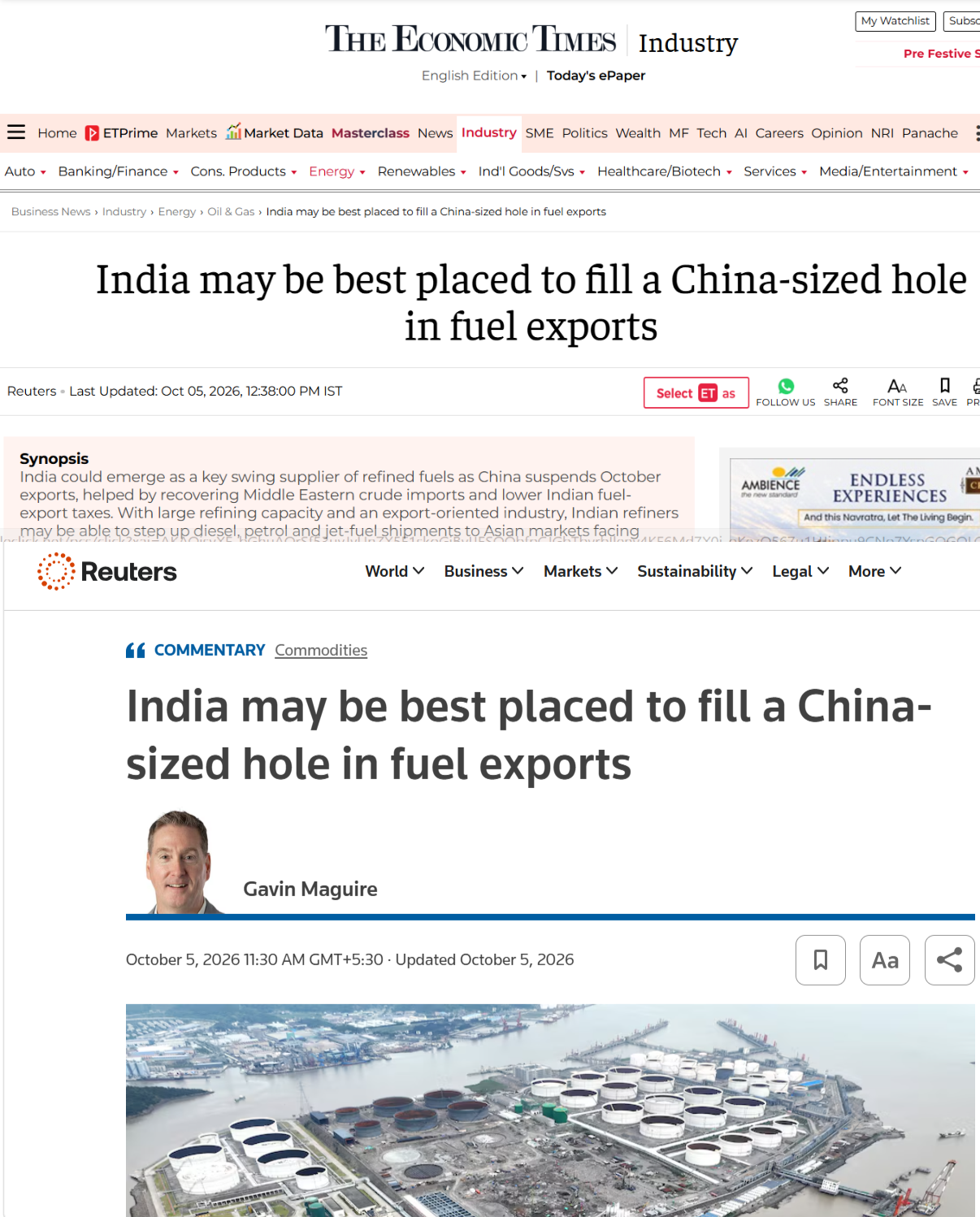
This leaves a supply gap in international markets. And when global demand remains strong while a major exporter scales back shipments, countries like India gain additional opportunities to expand exports and increase revenues.
What Happens Next?
The coming months will be crucial. The G7 nations have announced plans to release significant volumes of oil and fuel supplies from reserves in an effort to stabilize markets and ease price pressures. The grouping includes America, Britain, Canada, Japan, Germany, France, and Italy, with the European Union also taking part in G7 discussions and decision-making.
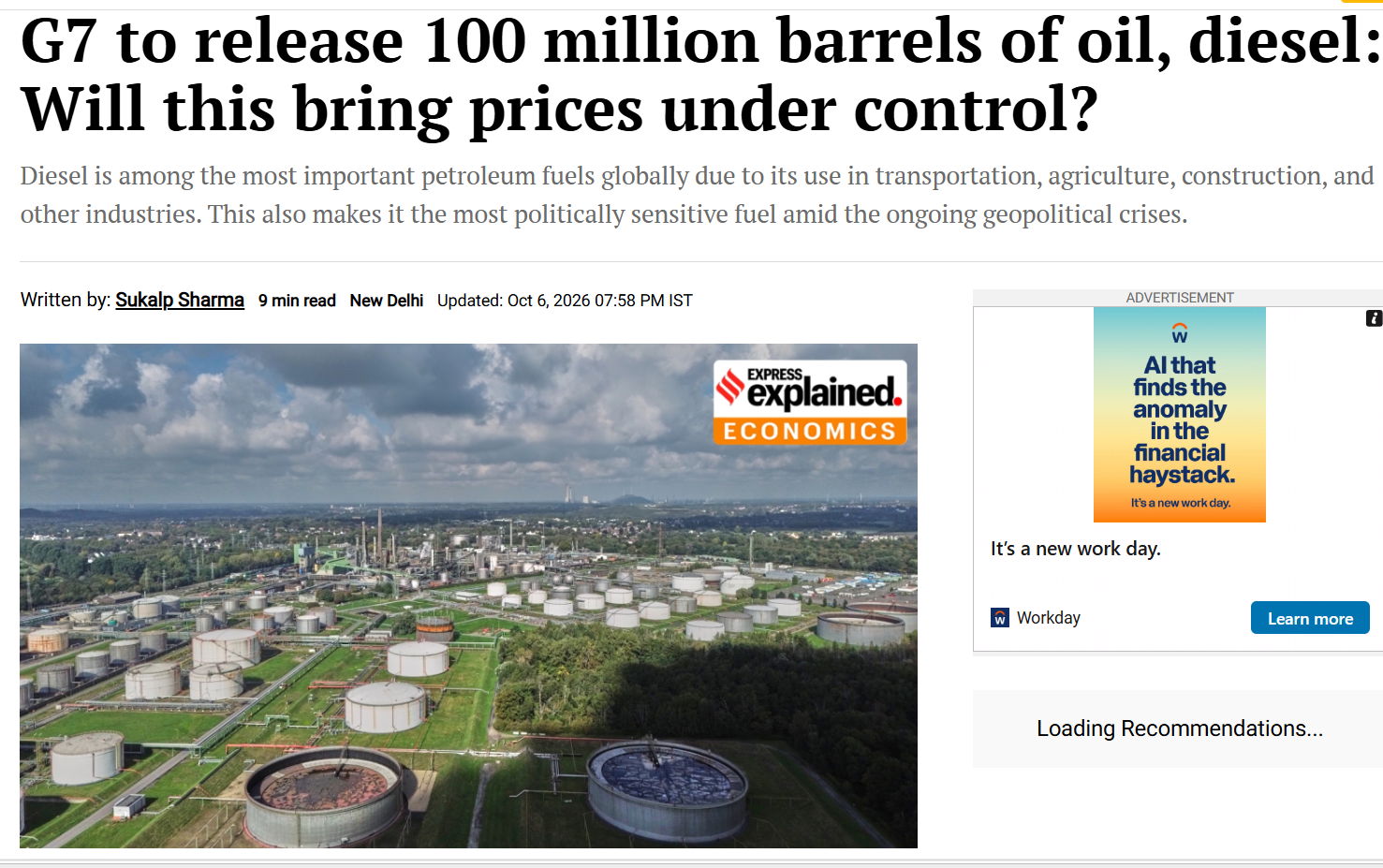
If these measures succeed, diesel prices could moderate. However, several risks remain:
a) Ongoing Middle East tensions
b) Uncertain Russian supply conditions
c) European diesel dependence
d) Chinese export restrictions
e) Potential policy shifts by major exporters
As long as these challenges persist, demand for Indian refined fuels is likely to remain strong.
🌍 G7 Fuel Release Eases Global Supply Fears as US Backs Away from Export Ban Threat
As G7 nations move to release 100 million barrels from strategic reserves to ease fuel shortages, pressure on global energy markets has begun to soften. The coordinated action has also reduced the likelihood of US diesel export restrictions, helping stabilize supply expectations and calm market concerns.
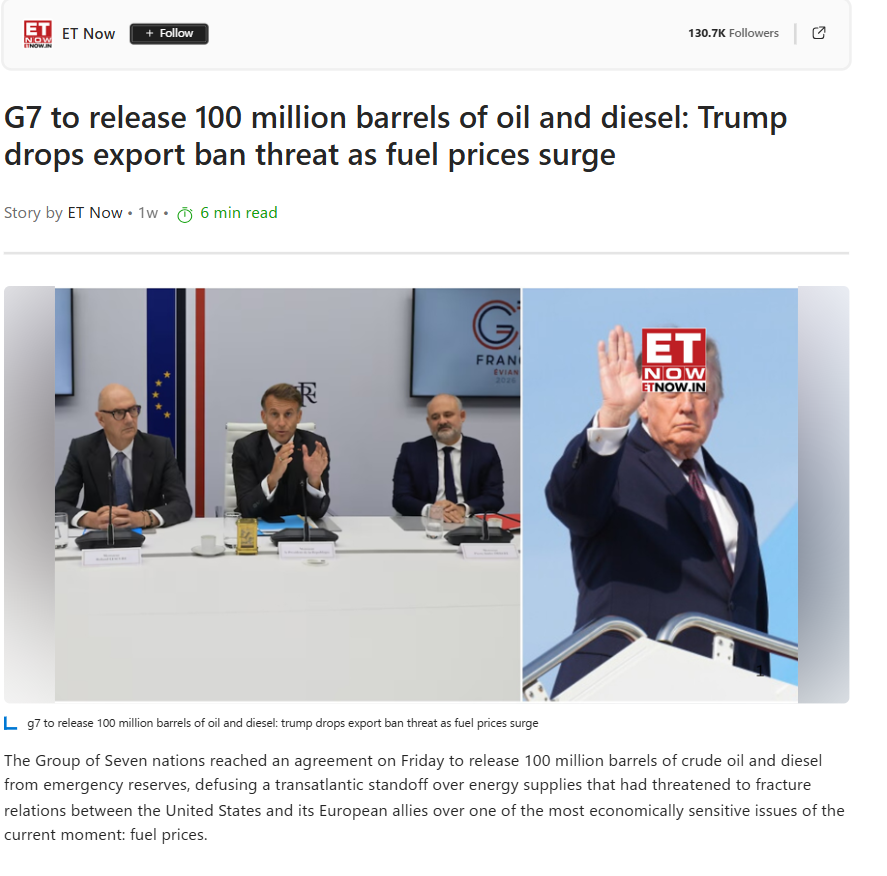
🔥 Energy Security or Geopolitical Double Standard?
A reported US move to facilitate increased Russian diesel supplies has sparked a global debate, raising questions about whether energy security is now outweighing long-standing sanctions policies. As diesel prices surge and global supplies tighten due to the Russia-Ukraine war and Middle East tensions, Washington appears to be prioritizing economic stability over geopolitical rhetoric. 🚨 Trump’s Stunning Russia U-Turn: After Years of Criticizing India, Is America Now Buying Russian Diesel?
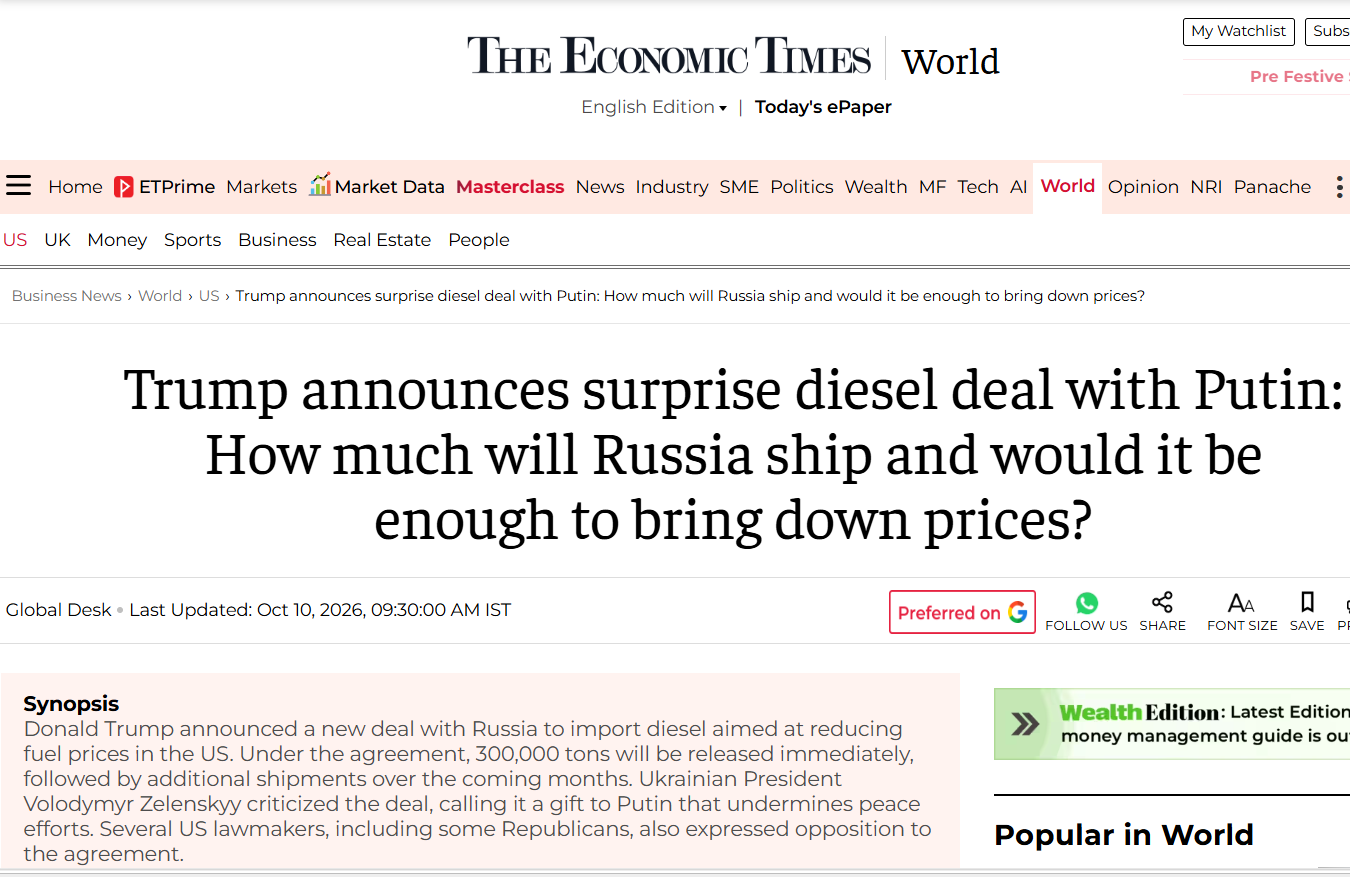
The development is particularly controversial because Western nations had previously criticized countries such as India for importing Russian energy. Some Western policy analysts, geopolitical commentators, sanctions advocates, and pro-Ukraine observers argue that the move exposes a potential double standard. At the same time, supporters say governments must act pragmatically when domestic fuel prices and inflation become major concerns.
🔎 The Energy Chessboard: India's Moment in the Global Energy Spotlight
India's diesel export surge is more than a temporary trade success. It reflects the country's emergence as a critical energy-processing hub capable of transforming imported crude into products desperately needed around the world.
While geopolitical conflicts and supply disruptions have created challenges for many nations, India has leveraged its world-class refining infrastructure to capture new opportunities.
With Europe buying record volumes, China restricting exports, and global diesel markets remaining tight, India's role in shaping the future of energy trade is becoming increasingly important.
The question now is whether India can maintain this advantage while also protecting its own energy security in an increasingly unpredictable world.
🚀 What Do You Think?
📢 Is India becoming the world's most important refining and fuel-export hub?
📢 Can Europe reduce its dependence on imported diesel in the coming years?
📢 Should India prioritize exports for profit or conserve more fuel for strategic reserves?
💬 Share your views in the comments below!
🔔 Follow us for more deep dives into geopolitics, energy markets, global trade, and the economic trends shaping the world.
📲 If you found this analysis valuable, share it with your friends and help spread informed discussions on global affairs.
Written by
Niranjan MehtaDiscussion (0)
Sign in to join the discussion.
Loading comments…