
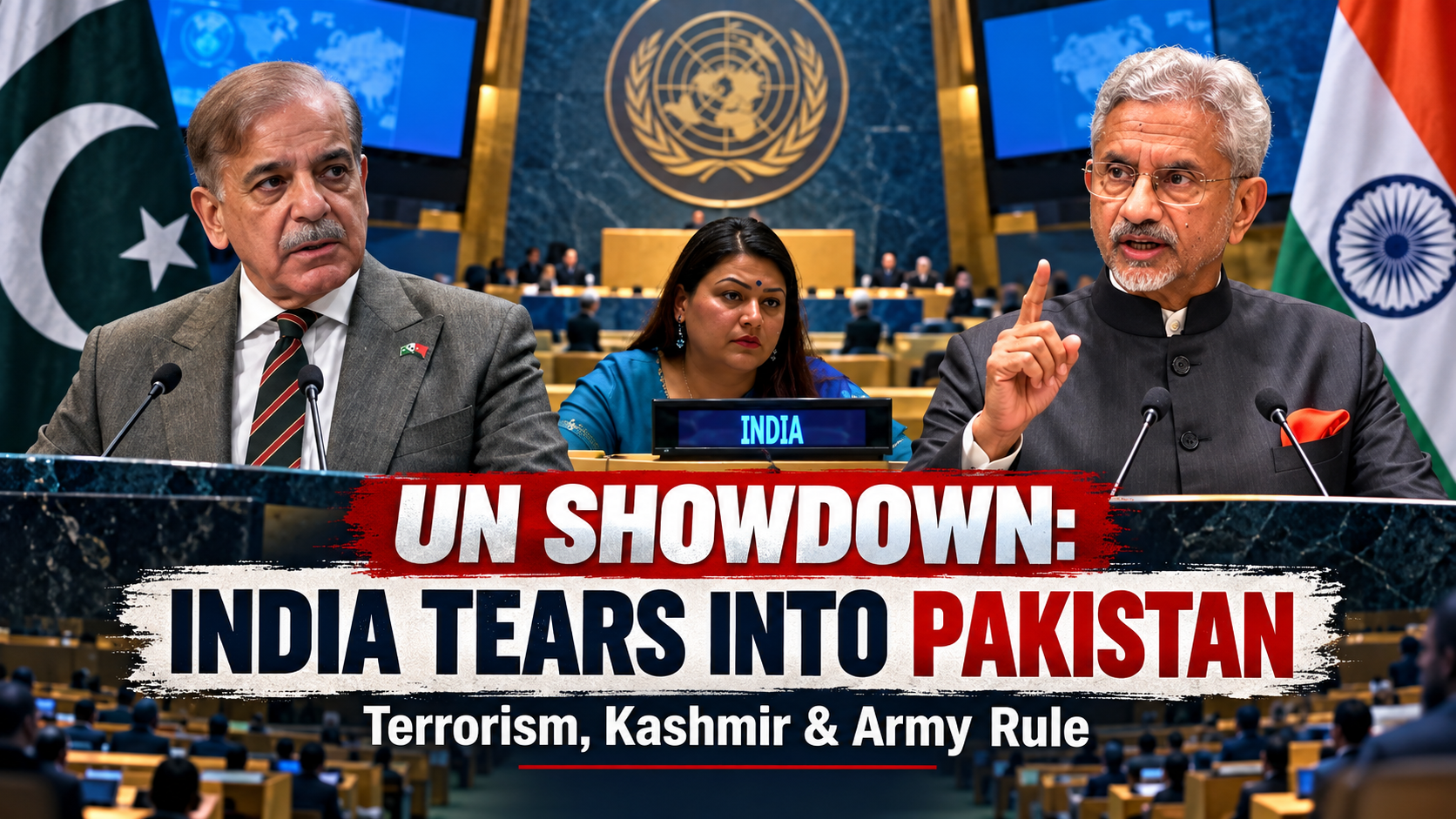
At the United Nations, Pakistan Raised India Again. This Time, India Hit Back Hard.
The annual session of the United Nations General Assembly (UNGA) is where world leaders, foreign ministers, and diplomats present their vision, concerns, and priorities before the international community. However, one familiar pattern once again played out on the global stage: Pakistan used its UN speech to target India.
But unlike many previous occasions, India did not let the accusations pass unanswered.
Invoking its Right of Reply, India delivered a sharp and powerful response, rejecting Pakistan’s narrative and launching a direct attack on Islamabad's record regarding terrorism, military dominance in politics, and the continued internationalization of the Kashmir issue.
The diplomatic exchange quickly became one of the most talked-about moments of the UNGA session.
Pakistan Once Again Brings Up Kashmir at the UN
Pakistan Prime Minister Shehbaz Sharif, while addressing the General Assembly, once again focused heavily on Jammu & Kashmir.
According to Pakistan's position, unresolved issues surrounding Kashmir remain a major source of tension in South Asia. The Pakistani leadership repeated calls for international attention and raised concerns about regional stability.
However, this was hardly surprising for India. For decades, Pakistan has consistently used international platforms to highlight Kashmir, while India has maintained that the issue is a bilateral matter and not subject to international mediation.
The moment Pakistan directly referenced India, New Delhi gained the diplomatic right to respond. And respond it did.
India’s Strong Counterattack: Terrorism as State Policy?
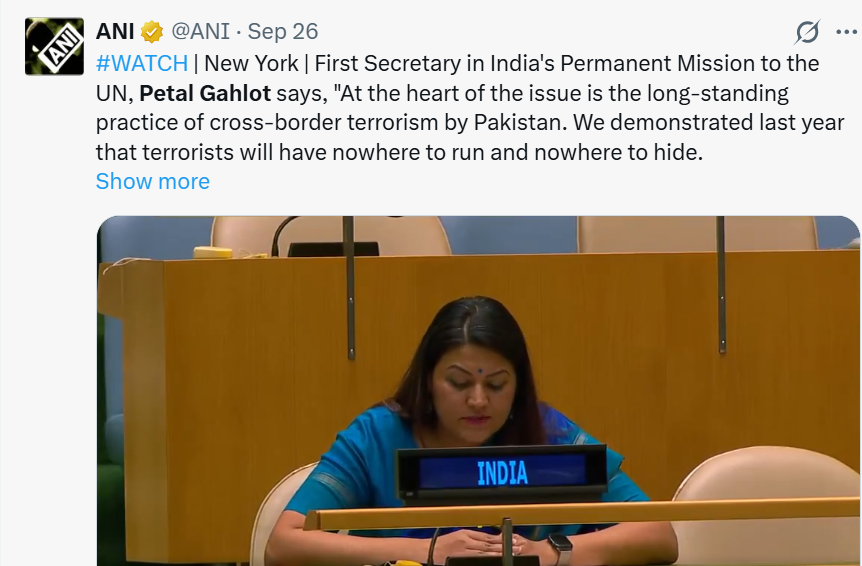
India’s response was delivered by its First Secretary, Petal Gahlot, to the Permanent Mission of India to the United Nations.
The message was blunt. India accused Pakistan of:
1. Using terrorism as a tool of state policy.
2. Providing space for extremist groups.
3. Misleading the international community.
4. Repeatedly raising Kashmir to divert attention from its own domestic challenges.
Rather than allowing Pakistan's claims to dominate the discussion, India shifted the spotlight toward Islamabad's own credibility.
The response reinforced India's long-standing position that cross-border terrorism remains one of the biggest obstacles to regional peace and stability.
“Of the Army, By the Army, For the Army”
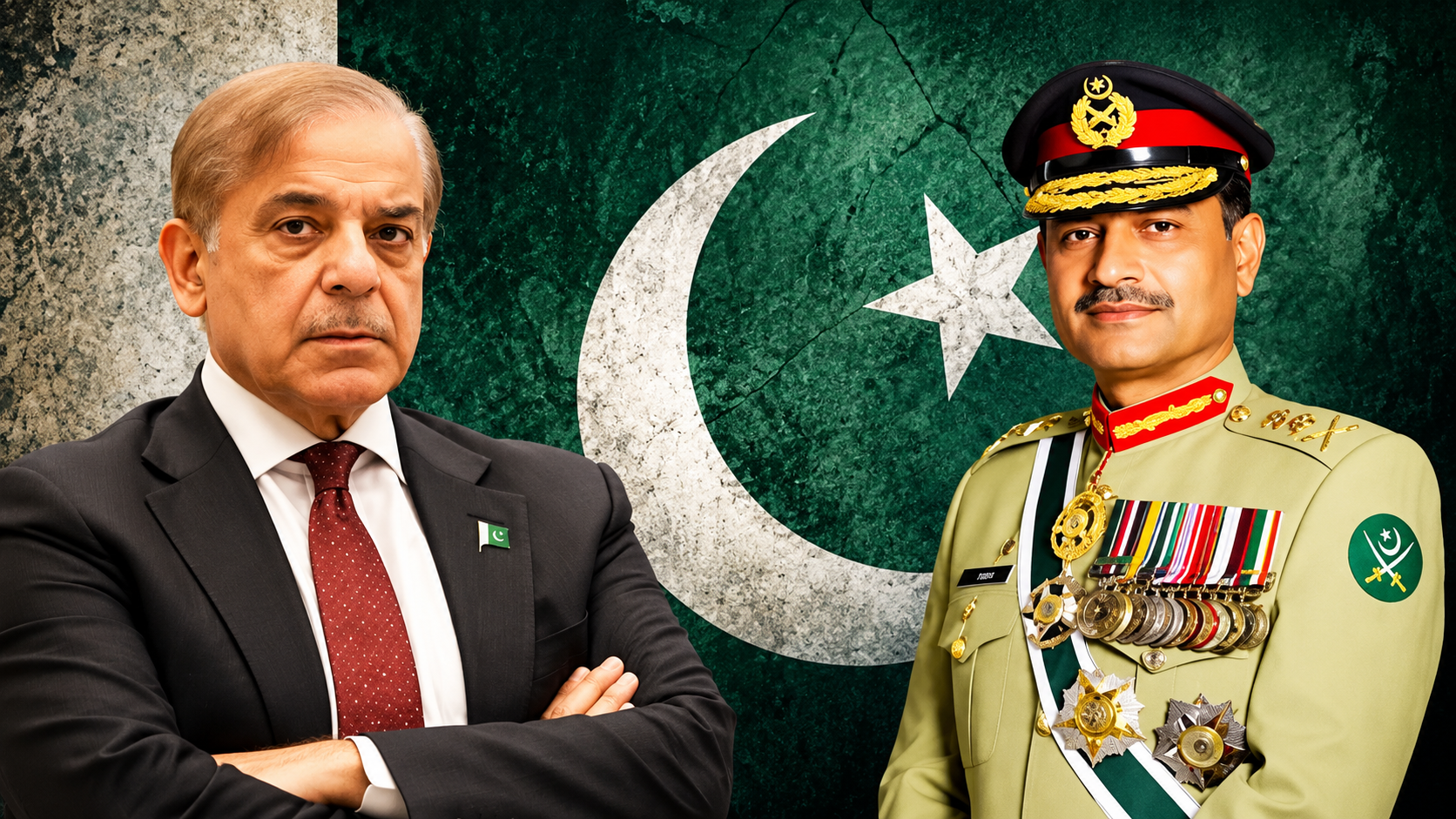
Perhaps the most striking part of India's rebuttal was its characterization of Pakistan’s political structure. India described Pakistan's system as: "Of the Army, By the Army, For the Army." The statement was aimed at highlighting the longstanding influence of Pakistan’s military establishment over civilian governance.
India argued that even when elected governments are in power, major strategic and security decisions often remain heavily influenced by the military. The criticism also touched on Pakistan’s history of military coups and the recurring debate over civil-military relations within the country.
The larger message was clear: Can meaningful diplomacy succeed when ultimate authority does not fully rest with elected leadership?
Who Is Petal Gahlot? The Diplomat Behind India's UN Rebuttal
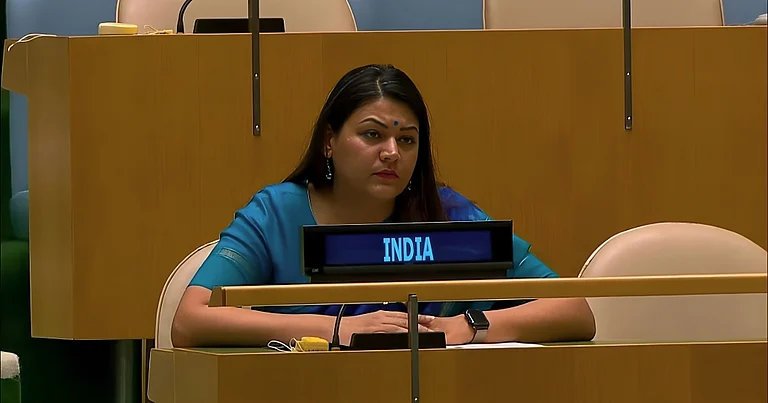
Petal Gahlot, a seasoned career diplomat currently serving at India’s Permanent Mission to the UN, grabbed headlines with her strong response to Pakistan at the UN General Assembly. With previous postings in Paris, San Francisco, and the Ministry of External Affairs, she combines diplomatic experience with a background in political science and international communication.
From global development negotiations to headline-grabbing diplomatic exchanges, Petal Gahlot has emerged as one of India's notable voices on the international stage.
The Osama Bin Laden Reminder
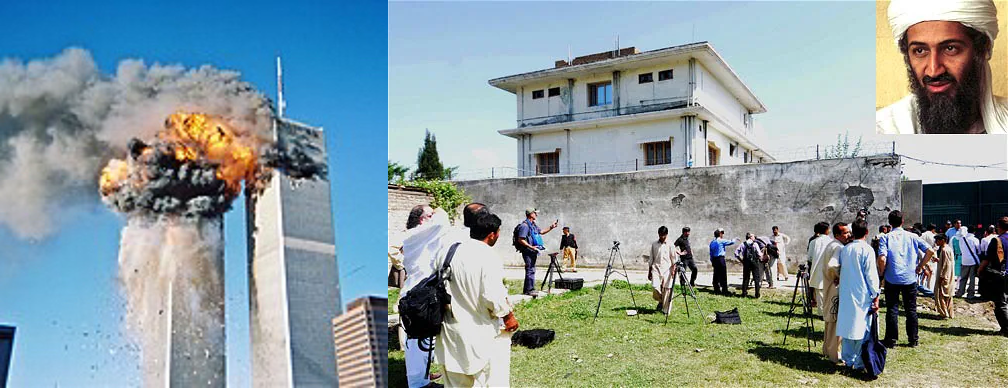
India also brought up one of the most embarrassing chapters in Pakistan’s modern history. The reference was to the discovery of Osama bin Laden in Abbottabad, Pakistan, where the al-Qaeda leader was located and killed during a U.S. operation in 2011 after the 9/11 attacks.
For India, the point was symbolic. If Pakistan seeks to lecture others on terrorism, India argues that questions naturally arise regarding how some of the world's most notorious terrorists found shelter within Pakistani territory.
This argument remains a central pillar of India's diplomatic narrative on terrorism.
A Remark That Triggered Global Attention
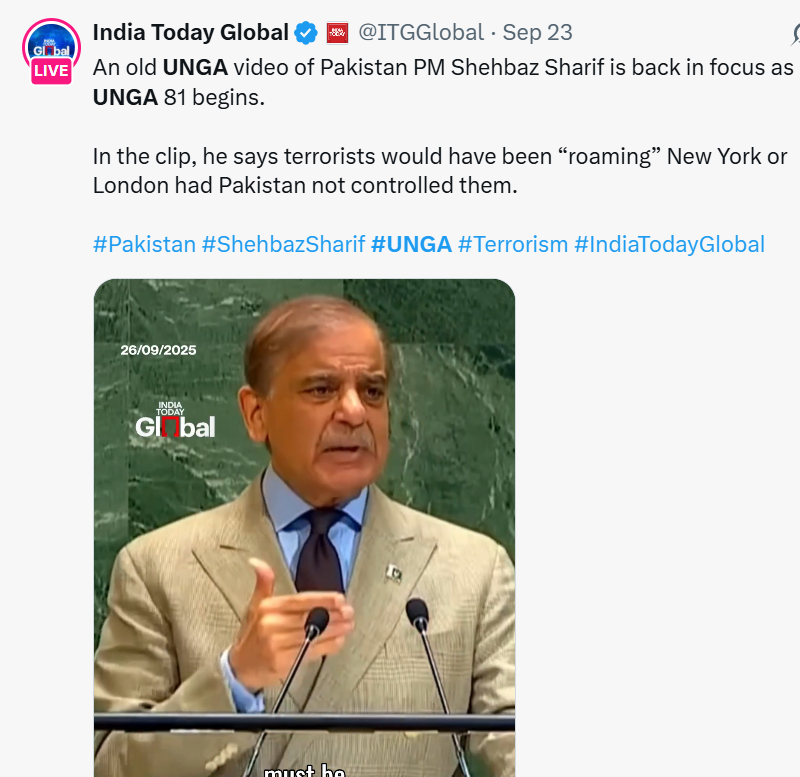
During his remarks, Shehbaz Sharif reportedly suggested that “if Pakistan had not acted against terrorist groups, terrorists could have been roaming freely on the streets of major global cities.”
The statement immediately drew attention across diplomatic and media circles. Several diplomatic observers and analysts noted that the comments could be interpreted as an acknowledgment of Pakistan's long-standing struggle with extremist groups operating from its territory.
India seized upon this opportunity, suggesting that Pakistan's own statements strengthen longstanding concerns regarding terrorism emanating from its soil.
India’s Kashmir Position Remains Unchanged
When Pakistan revisited the Kashmir issue, India firmly reiterated its established stance. New Delhi emphasized that:
1. Jammu & Kashmir is an integral and inseparable part of India.
2. There is no justification for internationalizing the issue.
3. Any discussions related to India-Pakistan differences should remain bilateral.
India has consistently pointed to the Shimla Agreement framework, signed on 2 July 1972 between Indian Prime Minister Indira Gandhi and Pakistani President Zulfikar Ali Bhutto, arguing that the two countries should resolve disputes through direct engagement rather than third-party intervention.
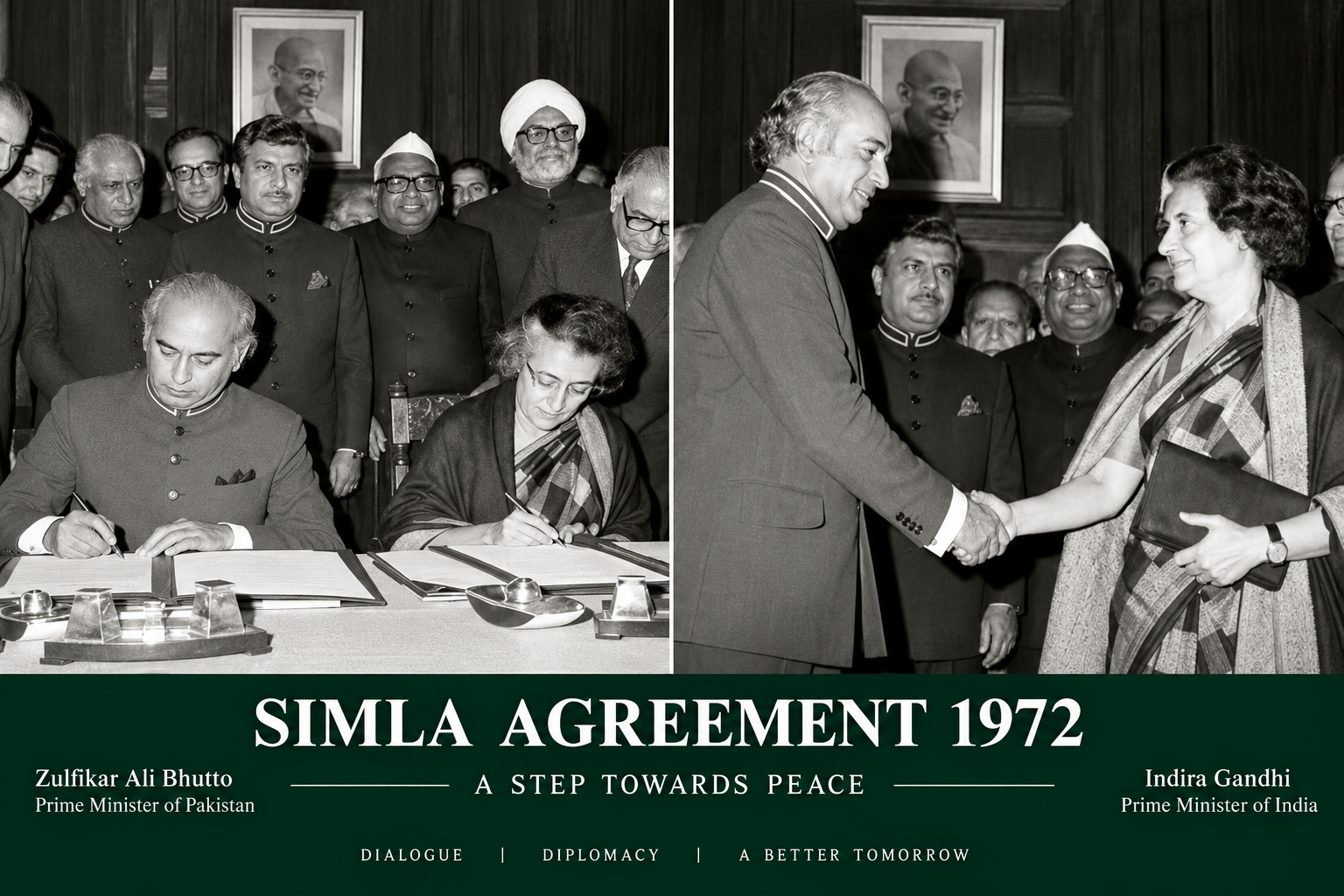
India argues that reliance on decades-old UN resolutions ignores later bilateral accords that reshaped the framework governing India-Pakistan relations. This remains one of the most consistent elements of India's foreign policy approach toward Pakistan.
Turning the Debate Toward Pakistan-Occupied Kashmir(POK)
Interestingly, India sought to reverse the narrative. Instead of focusing solely on Jammu & Kashmir, the discussion shifted toward Pakistan-Occupied Kashmir (PoK).
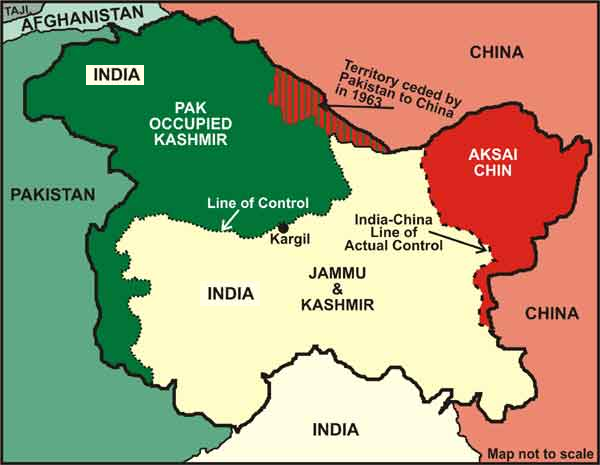
Indian representatives highlighted concerns about governance, civil liberties, public protests, and human rights allegations in the region.
The move effectively flipped Pakistan’s argument back on itself, forcing attention onto areas that Islamabad would generally prefer to keep out of the spotlight. It was a strategic diplomatic manoeuvre designed to challenge Pakistan's moral positioning on the issue.
Human Rights and Minority Questions Surface Again
Another area where India countered Pakistan was on the subject of minority rights. Whenever Pakistan raises concerns regarding minorities in India, New Delhi often responds by questioning Pakistan's own track record.
India highlighted concerns regarding:
1. Religious minorities.
2. Human rights protections.
3. The treatment of vulnerable communities.
4. Controversial blasphemy laws.
Indian officials argued that countries seeking to criticize others must first address challenges within their own borders. The exchange once again demonstrated how human rights discussions between India and Pakistan often evolve into competing narratives rather than consensus-building exercises.
Trump, Third-Party Mediation & the Indus Waters Debate
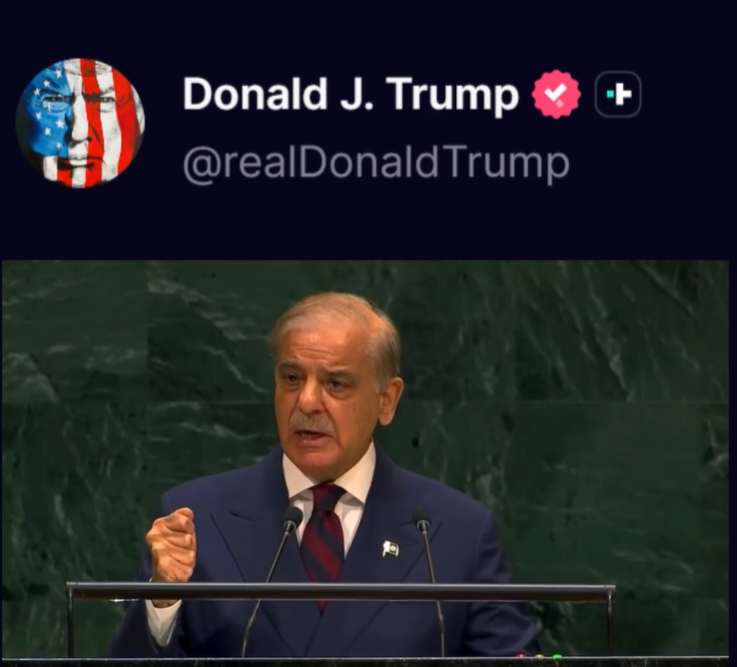
During his UNGA address, Shehbaz Sharif further credited former US President Donald Trump for helping defuse tensions during the 2025 India-Pakistan conflict, portraying the intervention as a key factor in preventing a wider escalation. India, however, has consistently rejected claims that any third party played a role in ending the hostilities.
Sharif also renewed Pakistan's concerns over the Indus Waters Treaty, urging India not to restrict water flows and reiterating Islamabad's position on the decades-old agreement.
Donald Trump later shared on Truth Social a video in which Shehbaz Sharif credited him for his alleged role in helping defuse the India-Pakistan crisis.
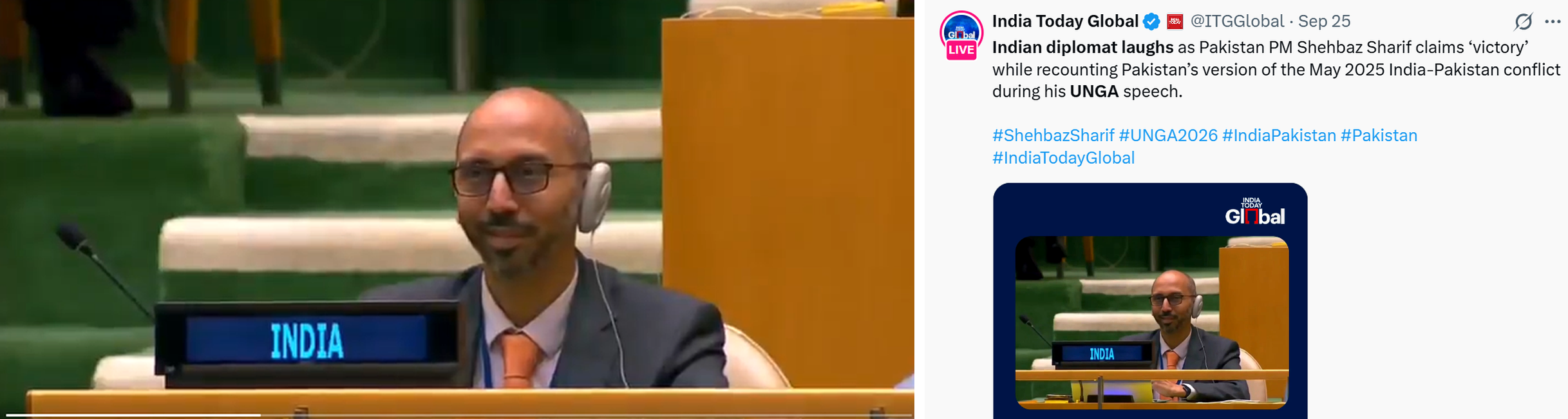
Shehbaz Sharif's attempt to showcase Pakistan's claimed triumph in the May 2025 conflict sparked an unexpected reaction, with Indian diplomat Rentala Srinivas visibly laughing during the UNGA address.
Jaishankar’s One-Line Response Goes Viral
Beyond the formal UN proceedings, another moment grabbed headlines. During a press conference in New York involving External Affairs Minister S. Jaishankar, a Pakistani journalist reportedly questioned India regarding allegations linked to terrorism in Pakistan.
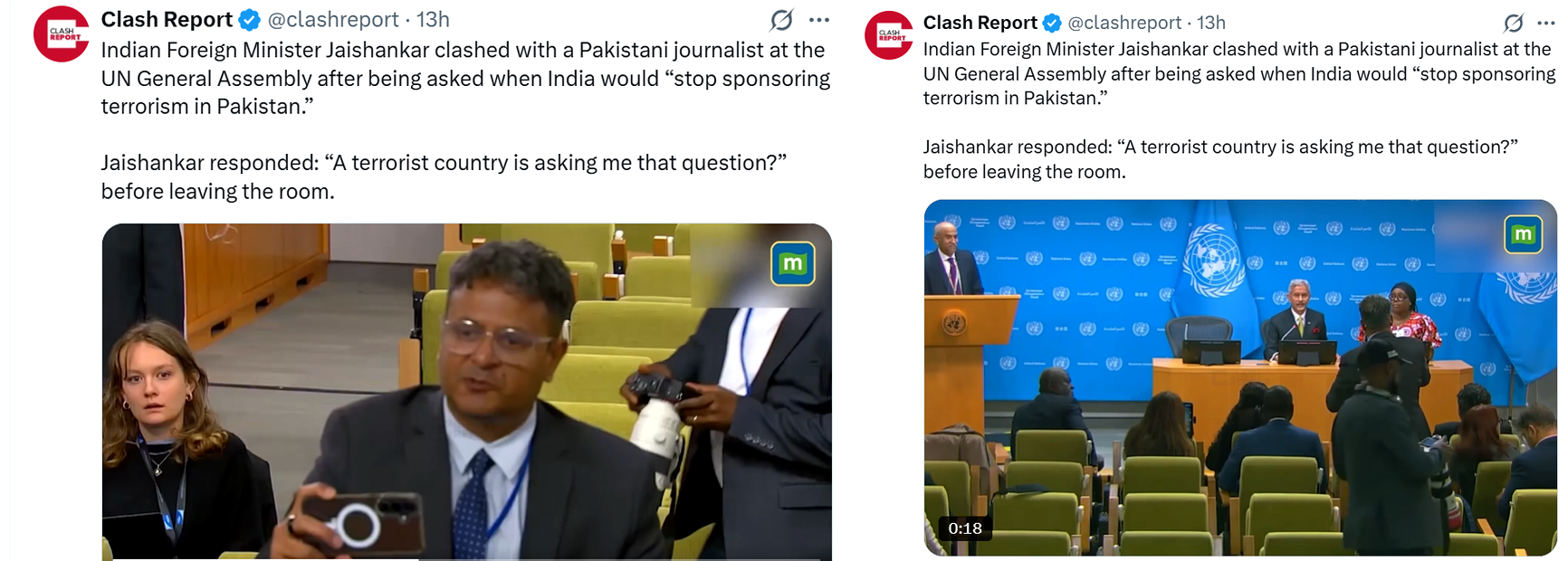
Instead of engaging in a lengthy debate, Jaishankar delivered a short and sharp response that quickly attracted attention. His reaction effectively dismissed the premise of the question and shifted focus back toward Pakistan's international reputation on terrorism.
The brevity of the response made it particularly impactful, with many observers noting how a single sentence managed to dominate discussions that followed.
Why This Diplomatic Exchange Matters
The India-Pakistan rivalry is not new. However, every confrontation on a global platform like the United Nations carries significance because it shapes international perceptions.
This latest exchange demonstrated several key realities:
1. Pakistan continues to prioritize Kashmir on international forums.
2. India remains committed to countering those narratives aggressively.
3. Terrorism remains at the center of diplomatic disagreements.
4. Civil-military relations in Pakistan continue to be a point of criticism.
5. The battle for global opinion is as important as the political dispute itself.
As the UN General Assembly continues, diplomatic observers will closely watch future statements from both countries and assess how global powers react to these competing narratives.
The Bigger Picture
The latest UN face-off was more than just another exchange of accusations. It showcased how India is increasingly taking an assertive diplomatic approach, challenging Pakistan not only on terrorism but also on governance, military influence, and human rights issues.
As both nations continue their battle of narratives on international platforms, one thing is certain: every statement, every rebuttal, and every diplomatic punchline is now part of a larger contest for global credibility.
🔥Stay Ahead of Global Geopolitics
Want sharp, unbiased, and easy-to-understand analysis of India-Pakistan relations, UN diplomacy, global conflicts, and strategic affairs?
📢 What do you think? Did India successfully counter Pakistan's narrative at the UN? Share your views in the comments below and join the conversation!
🔗 Pakistan wasn't the only country raising Kashmir at global forums. Discover why Turkey's President Erdoğan continues to spotlight the issue, even as economic ties with India hit new highs. 👉Turkey’s Kashmir Obsession Returns: Why Erdoğan Keeps Raising the Issue While Buying Record Diesel from India
Written by
Kartikeya RaoDiscussion (0)
Sign in to join the discussion.
Loading comments…