
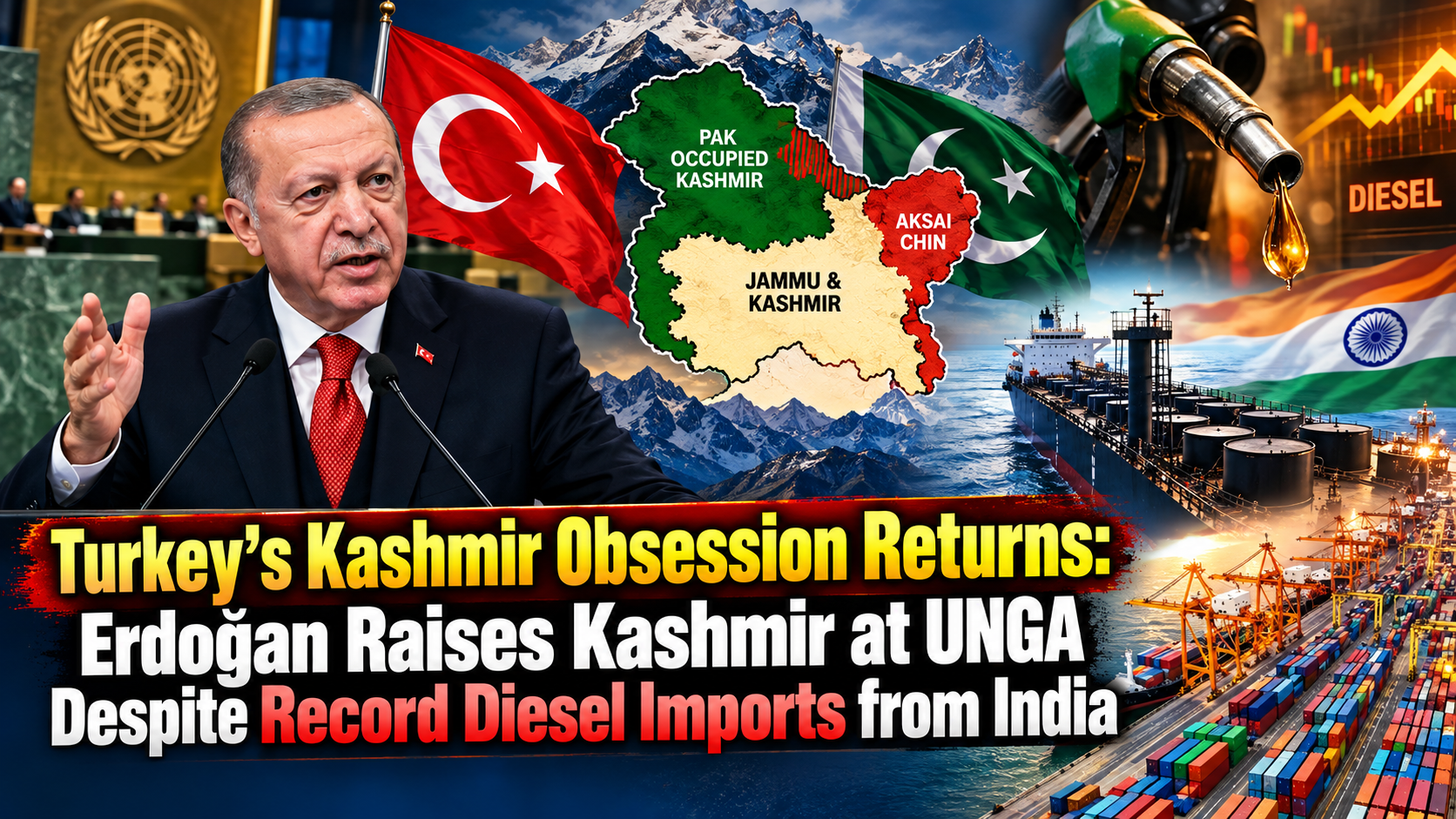
From UN Speeches to Trade Deals: The Curious Contradiction in Turkey-India Relations
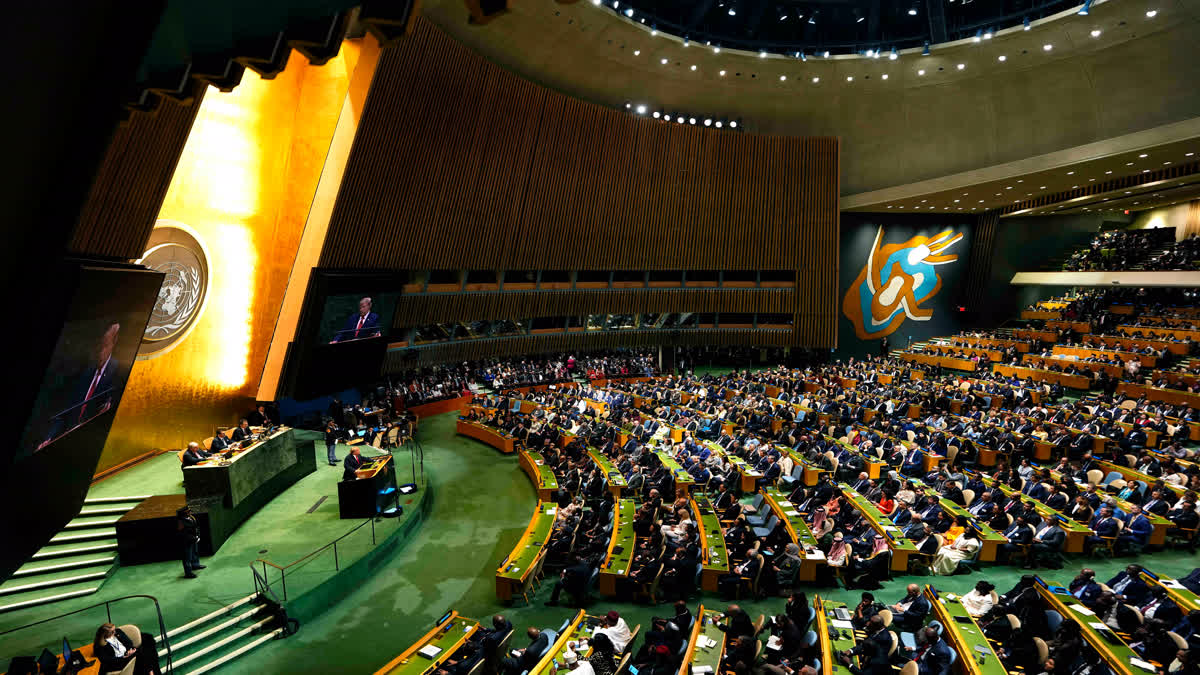
Every year, as world leaders gather at the United Nations General Assembly (UNGA), one familiar pattern seems to repeat itself. Turkish President Recep Tayyip Erdoğan once again raises the Kashmir issue, calls for dialogue, and attempts to bring international attention to a matter that India considers strictly bilateral.
But here’s the paradox: while Ankara continues to echo Pakistan’s position on Kashmir, Turkey is simultaneously deepening economic ties with India and has recently emerged as one of the largest buyers of Indian diesel exports.
Why does Turkey keep discussing Kashmir at the UN? What role does Pakistan play in this narrative? And how can political disagreements coexist with booming trade relations?
Let's decode the geopolitical puzzle.
Erdoğan Raises Kashmir Yet Again at the UN
At the latest United Nations General Assembly session in New York, President Erdoğan once again raised Kashmir in his address.
According to Turkey's position, South Asian disputes, including Kashmir, should be resolved through dialogue within the framework of the United Nations Charter and relevant UN resolutions.
Although Erdoğan broadly spoke about regional disputes, Kashmir was specifically highlighted, continuing a trend that has made Turkey one of the few countries to repeatedly mention the issue from the UNGA platform.
For India, however, such statements remain unacceptable.
India’s Stand: Kashmir Is a Bilateral Matter
India has consistently maintained that Jammu and Kashmir is an integral and inseparable part of the country. New Delhi rejects any form of third-party mediation regarding Kashmir and argues that all issues between India and Pakistan must be addressed bilaterally.
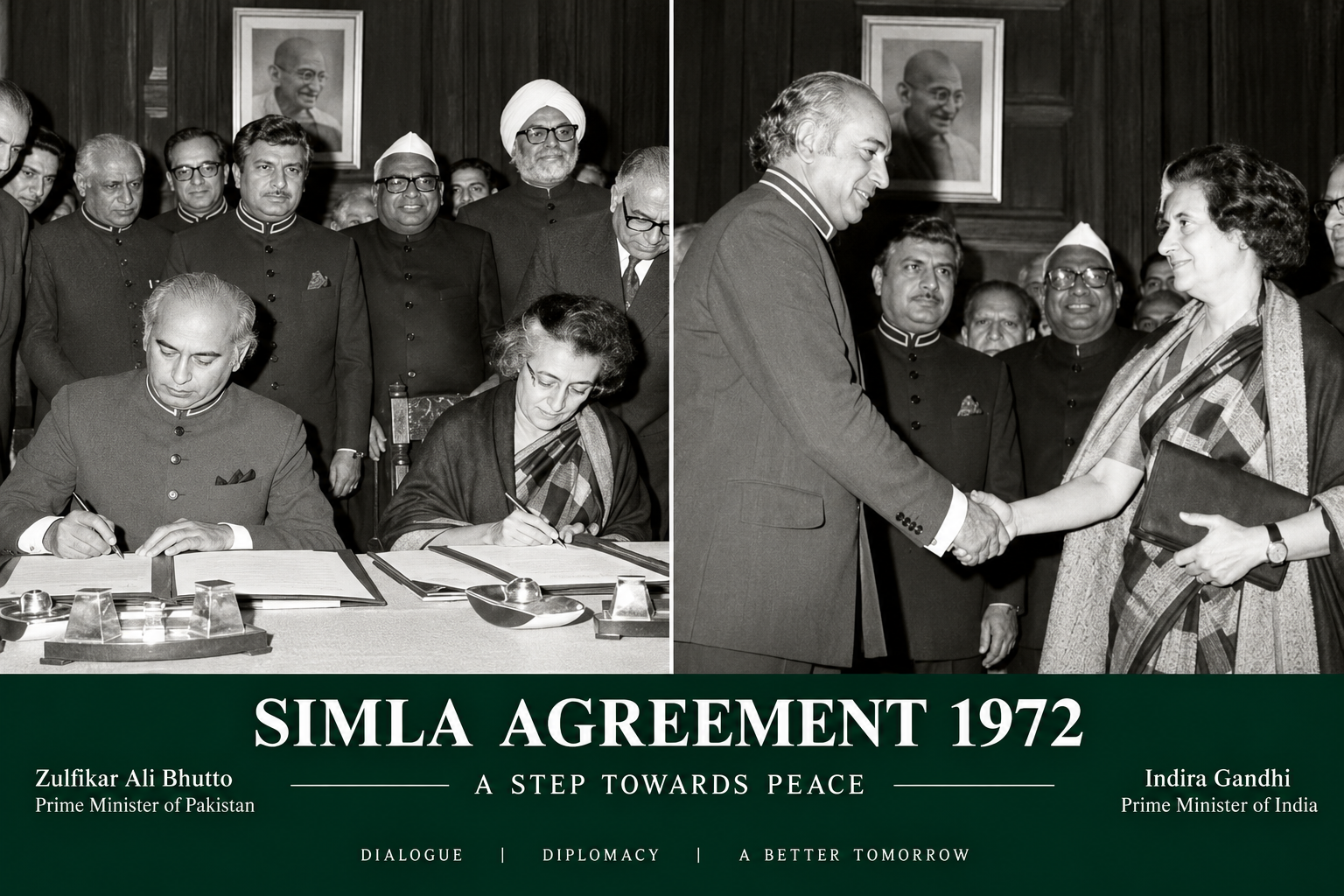
This position is rooted in the 1972 Shimla Agreement, signed after the India-Pakistan War of 1971. The agreement clearly established that disputes between the two countries would be resolved through direct bilateral negotiations.
From India's perspective, references to old UN resolutions overlook the reality that subsequent agreements between India and Pakistan superseded earlier frameworks.
⚖️ The UN Charter Argument Explained
When leaders invoke the UN Charter, they are essentially calling for disputes to be resolved through dialogue, diplomacy, and peaceful engagement rather than confrontation. Referring to the UN Charter places an issue within a broader framework of peaceful dispute resolution, but it does not automatically grant the UN authority to impose a settlement on any country.
What the UN Charter Prioritizes
✅ Peaceful conflict resolution
✅ Respect for sovereignty
✅ Territorial integrity
✅ International peace & stability
✅ Negotiation and mediation
📜 Article 33: Dialogue Before Dispute
Under Article 33, countries involved in a dispute are encouraged to seek solutions through:
1. Negotiation
2. Mediation
3. Arbitration
4. Judicial processes
5. Regional mechanisms
The UN Resolution Debate: What Is Turkey Referring To?
Whenever Turkey mentions "relevant UN resolutions," the reference is usually to UN Security Council Resolution 47, adopted in 1948 after the first India-Pakistan conflict over Kashmir.
The resolution proposed a sequence of steps:
1. A ceasefire between the two sides.
2. Withdrawal of Pakistani forces from the region.
3. Reduction of Indian military presence.
4. A plebiscite (A direct vote by the people of a disputed territory to decide its political future, such as which country they wish to belong to or whether they want independence) under specific conditions.
However, India has consistently maintained that the conditions outlined in the resolution were never fully implemented, particularly because Pakistan did not fulfill the required troop withdrawal provisions.
As a result, New Delhi argues that citing these resolutions today ignores both historical developments and later bilateral agreements between India and Pakistan.
Why Does Turkey Keep Bringing Up Kashmir?
The answer largely lies in Ankara's close strategic partnership with Pakistan. Over the last decade, Turkey and Pakistan have significantly expanded cooperation in:
1. Defense production
2. Drone technology
3. Naval systems
4. Strategic diplomacy (International Forums)
5. Security cooperation
6. Infrastructure
Pakistan has consistently sought international support on the Kashmir issue, and Turkey has emerged as one of its strongest diplomatic backers.
For Islamabad, keeping Kashmir alive in international forums remains politically important. For Ankara, supporting Pakistan helps strengthen a key regional partnership and enhances Turkey's influence within the broader Muslim world.
In simple terms, Turkey's Kashmir rhetoric cannot be viewed separately from its strategic relationship with Pakistan.
🤝 A New Strategic Triangle Emerges: The Mecca Defense Pact
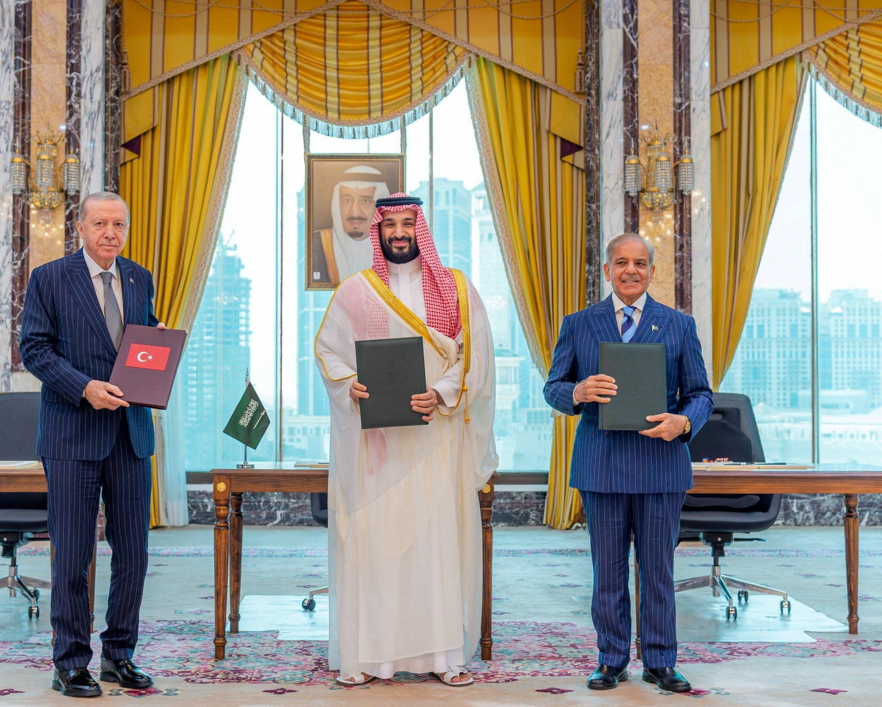
Just weeks before Erdoğan revived the Kashmir issue at the UN, Turkey, Pakistan, and Saudi Arabia signed the Mecca Joint Defence Agreement, signaling closer security cooperation among the three nations.👉 Mecca Defence Pact: Iran's Warning Over the Rise of an 'Islamic NATO'
📅 7 Aug 2026: New defence pact signed
📅 22 Sept 2026: Kashmir raised at UNGA
While the two events are not directly linked, their timing has sparked fresh geopolitical discussions.
A Timeline of Turkey’s Kashmir Advocacy
Turkey's position on Kashmir did not emerge overnight. Over the years, Ankara has repeatedly used international platforms, particularly the United Nations General Assembly (UNGA), to voice its views on the issue. The following timeline highlights how Turkey's stance has evolved and resurfaced at key moments:
A Timeline of Turkey's Kashmir Advocacy
1. 2019: Following India's abrogation of Article 370, Turkey strongly criticized the move and openly backed Pakistan's concerns on Kashmir.
2. 2020: President Erdoğan again raised the Kashmir issue during his UNGA address, drawing a firm diplomatic response from India.
3. 2021-2023: Turkey continued referencing Kashmir in international forums, reinforcing its support for Pakistan's position.
4. 2024: In a notable departure from previous years, Turkey avoided directly mentioning Kashmir at the UNGA, a move widely interpreted as an attempt to improve ties with key global partners, including India.
5. 2025-2026: Ankara returned to its traditional stance, with Erdoğan once again bringing up Kashmir at the UN, signalling that Turkey's broader policy on the issue remains unchanged.
This recurring pattern demonstrates that Turkey's approach remains largely unchanged despite periodic diplomatic adjustments.
The Economic Contradiction: Turkey’s Record Diesel Imports from India
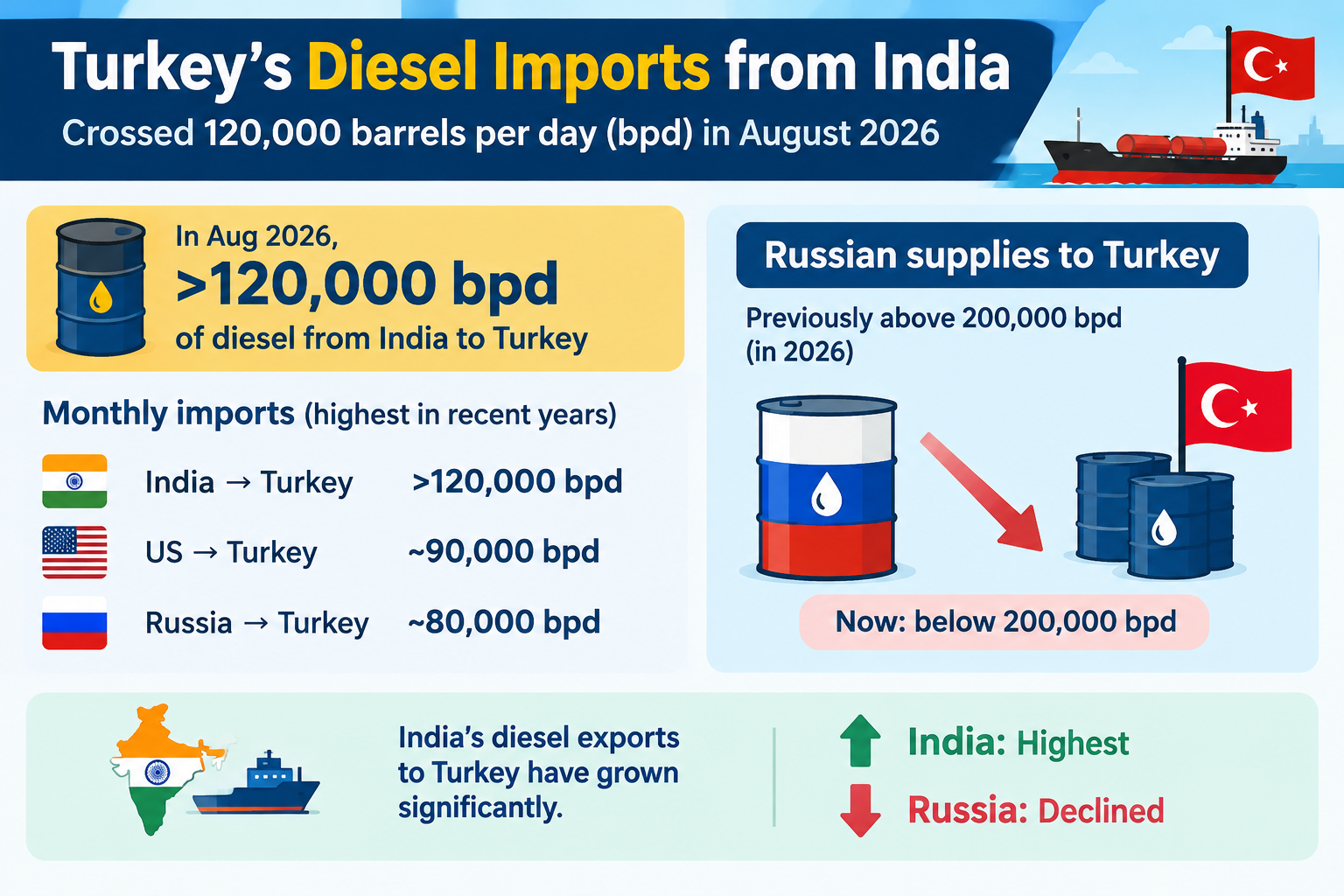
While political disagreements often grab headlines, economics tells a very different story. Recently, reports revealed that Turkey has been purchasing record volumes of diesel from India.
According to available figures, Turkey imported approximately 120,000 barrels per day of diesel from India, making India one of Ankara's most important suppliers.
What's particularly striking is that India's diesel exports to Turkey reportedly exceeded imports from several traditional suppliers during the same period. This development highlights a growing reality in international relations: Countries may disagree politically while remaining deeply interconnected economically.
🔥 India Fills Turkey's Diesel Gap, Emerging as a Critical Energy Lifeline
For years, Russia dominated Turkey's diesel market, supplying nearly 85% of its imports. But with Russian shipments slowing in 2026, India has rapidly emerged as a key alternative supplier. The trend highlights India's growing influence as a global refining and fuel-export powerhouse.
In short: 📉 Russia's share falls | 📈 India's role grows
How India Became a Global Refining Powerhouse
Turkey's diesel purchases also underline India's growing importance in the global energy market. India is not only one of the world's largest importers of crude oil but has also transformed itself into a major refining hub.
Leading refiners such as:
1. Reliance Industries
2. Indian Oil Corporation (IOC)
3. Bharat Petroleum (BPCL)
4. Hindustan Petroleum (HP)
5. Nayara Energy
have developed world-class refining infrastructure capable of processing crude oil from multiple sources and exporting high-value petroleum products worldwide.
As a result, countries facing supply disruptions or changing market conditions increasingly turn to India for refined fuel products such as diesel, petrol, and aviation fuel.
This strategic advantage has elevated India from a major energy consumer to a critical player in global energy security.
Politics vs Economics: A Relationship Defined by Pragmatism
Despite disagreements over Kashmir, India and Turkey continue cooperating in several sectors:
1. Trade
Bilateral commerce continues to expand across multiple industries.
2. Tourism
People-to-people connections and tourism remain active.
3. Infrastructure
Turkish and Indian companies continue exploring opportunities in construction and engineering projects.
4. Diplomatic Engagement
Foreign office consultations between the two countries have resumed after years of limited engagement, demonstrating that communication channels remain open.
This reflects a broader reality of global politics: nations often compartmentalize areas of disagreement while pursuing mutual economic interests.
The Bigger Picture
Turkey's repeated references to Kashmir may generate headlines and diplomatic reactions, but they have not fundamentally altered India's position.
New Delhi continues to view Kashmir as a sovereign matter governed by bilateral agreements with Pakistan, particularly the Shimla Agreement.
At the same time, growing trade ties reveal that strategic interests frequently outweigh political rhetoric. Turkey may support Pakistan diplomatically on Kashmir, but when it comes to energy security and economic necessity, India remains an increasingly important partner.
In today's interconnected world, geopolitics is no longer black and white. Countries can disagree sharply in one arena while cooperating closely in another. The India-Turkey relationship is perhaps one of the clearest examples of this modern diplomatic paradox.
🚀Stay Ahead of Global Geopolitics
Geopolitics is changing faster than ever, and the real story often lies beyond the headlines.
👉 Follow us for sharp analysis on global diplomacy, India’s foreign policy, strategic alliances, energy security, and geopolitical power shifts.
👉 Don't miss the next big geopolitical breakdown. Bookmark this blog, share it with fellow policy enthusiasts, and join the conversation in the comments:
Should India reconsider its economic engagement with countries that repeatedly raise Kashmir on international platforms, or should trade and diplomacy remain separate?
Written by
Niranjan MehtaDiscussion (0)
Sign in to join the discussion.
Loading comments…