
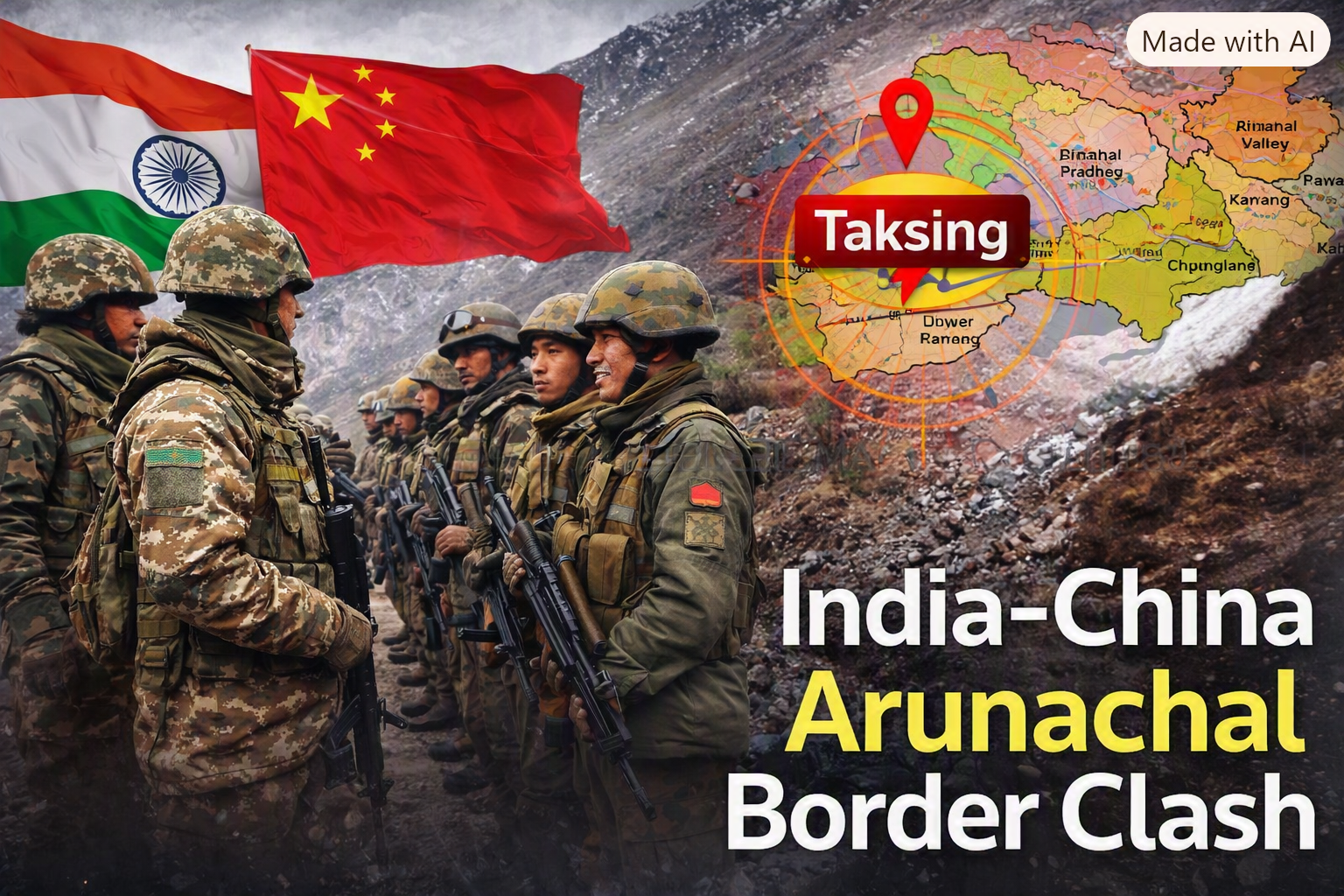
🔥 Face‑Off at the Frontier
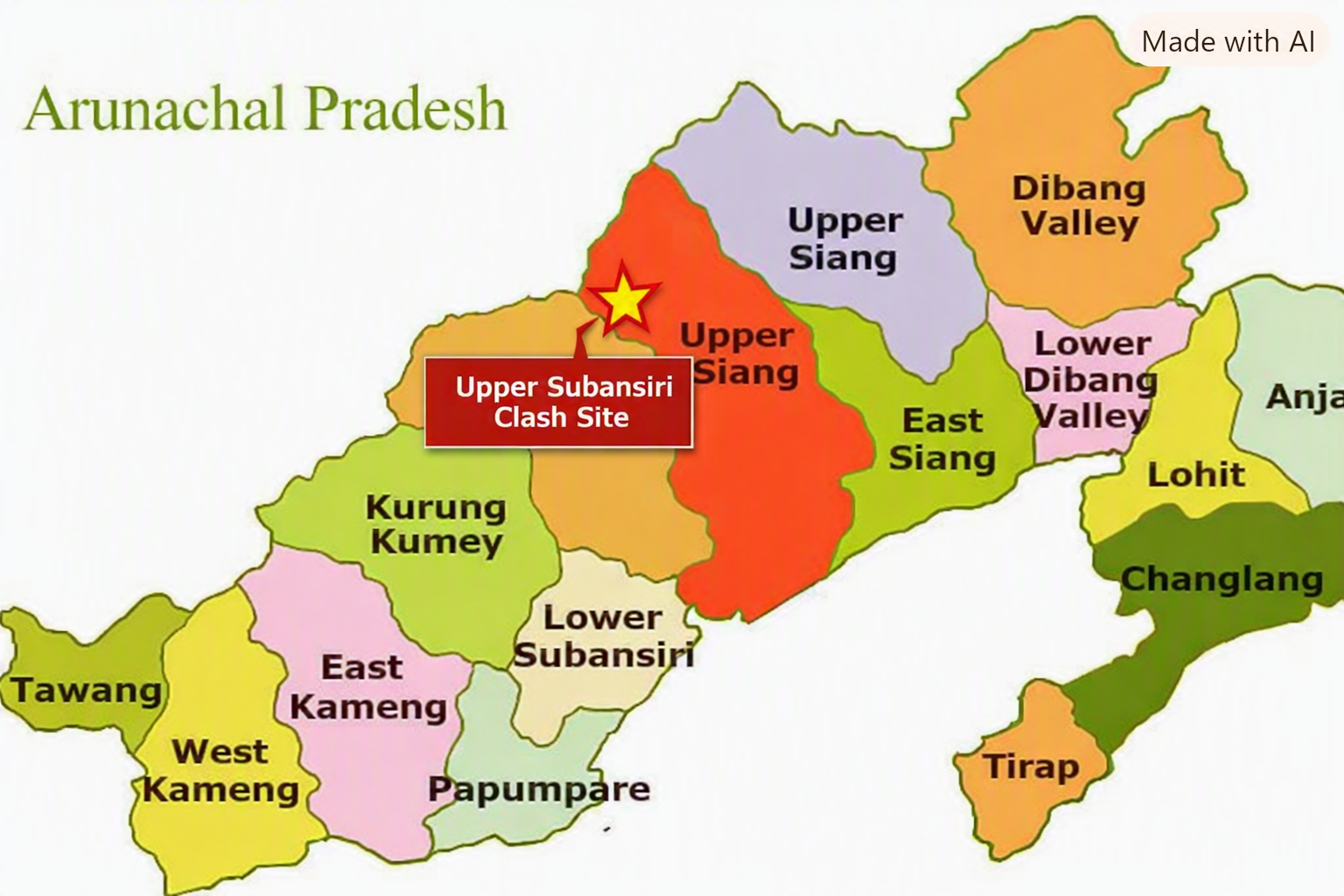
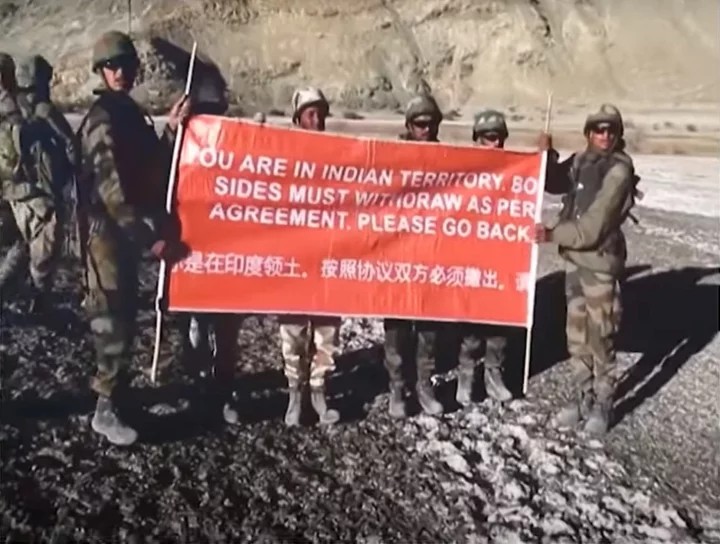
In late July 2026, Indian and Chinese patrols came face‑to‑face in Arunachal Pradesh’s Upper Subansiri district near Taksing. Following the “banner protocol,” both sides asserted territorial claims. While Chinese personnel initially withdrew, reports later suggested attempts to set up temporary tents, though India officially rejected these claims.
🗺️ Mapping Dispute Intensifies
China continues to object to India’s official mapping of Arunachal Pradesh. Recently, India reaffirmed sovereignty by recording 27 locations, including mountains, passes, a lake, and a memorial, on the Survey of India’s maps. This move directly counters Beijing’s claim that Arunachal is “South Tibet.”
🕊️ India’s Clear Message: Border Peace Is Non‑Negotiable
The Ministry of External Affairs, through spokesperson Randhir Jaiswal, declared:
“Peace and tranquillity in the border areas are essential for the overall development of India‑China relations.” This statement underscores India’s new approach post‑Galwan (2020): border peace is the foundation of bilateral ties, not a separate issue.
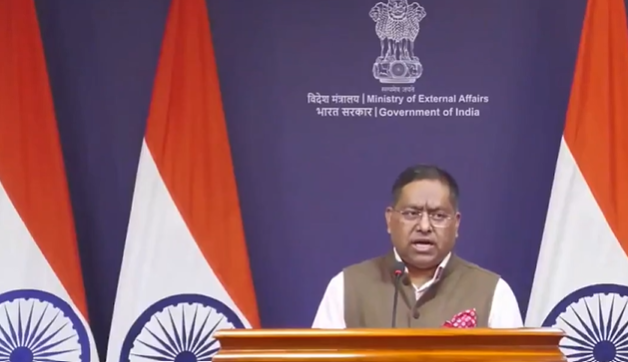
He further emphasized India’s firm stance on the boundary issue with China, noting that New Delhi regards developments in the border regions as matters of the utmost seriousness. He made it clear that peace and stability along the frontier are indispensable, and that the condition of the border will directly shape the trajectory of broader India‑China relations.
🌏 Why Arunachal Matters
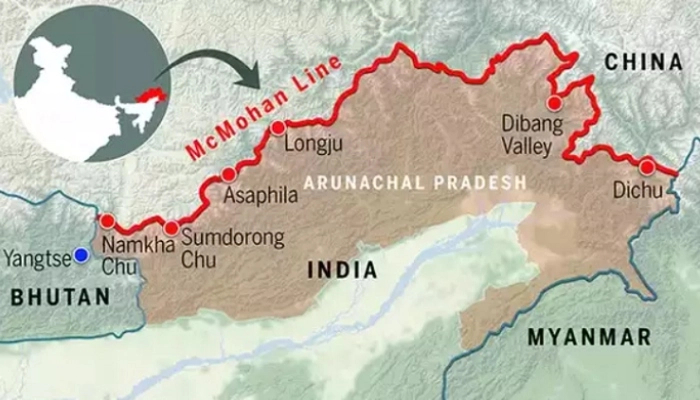
China claims the entire 90,000 sq. km area of Arunachal Pradesh, calling it “Zangnan” (South Tibet). India rejects this outright, citing the McMahon Line of 1914 as the legitimate boundary.
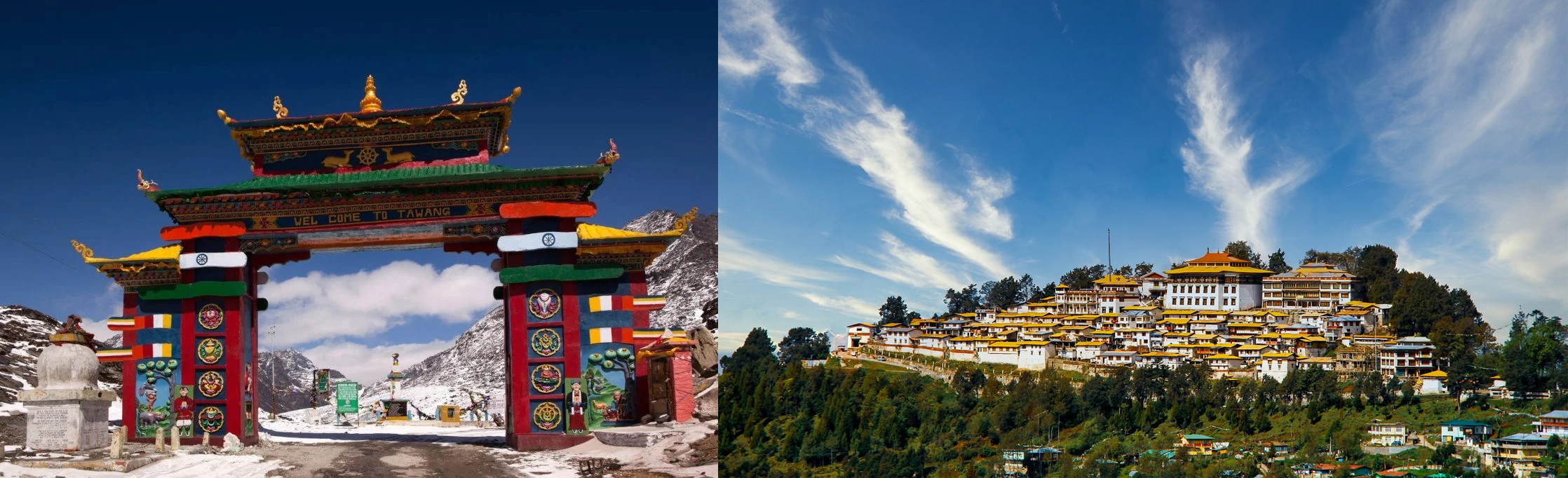
The dispute is most sensitive in Tawang, a district with deep Buddhist significance, home to the Tawang Monastery and birthplace of the Sixth Dalai Lama. For Beijing, Tawang is both a cultural and strategic flashpoint.
India has shifted strategy, investing heavily in border roads, bridges, and tunnels to ensure rapid troop movement in the mountainous terrain.
By officially recording 27 locations in Arunachal Pradesh under their Indian names in the Survey of India map, New Delhi has reinforced its territorial narrative and sent a clear geopolitical signal: Arunachal Pradesh is an integral, inalienable part of India.
What Are These 27 Officially Identified Locations in Arunachal Pradesh?
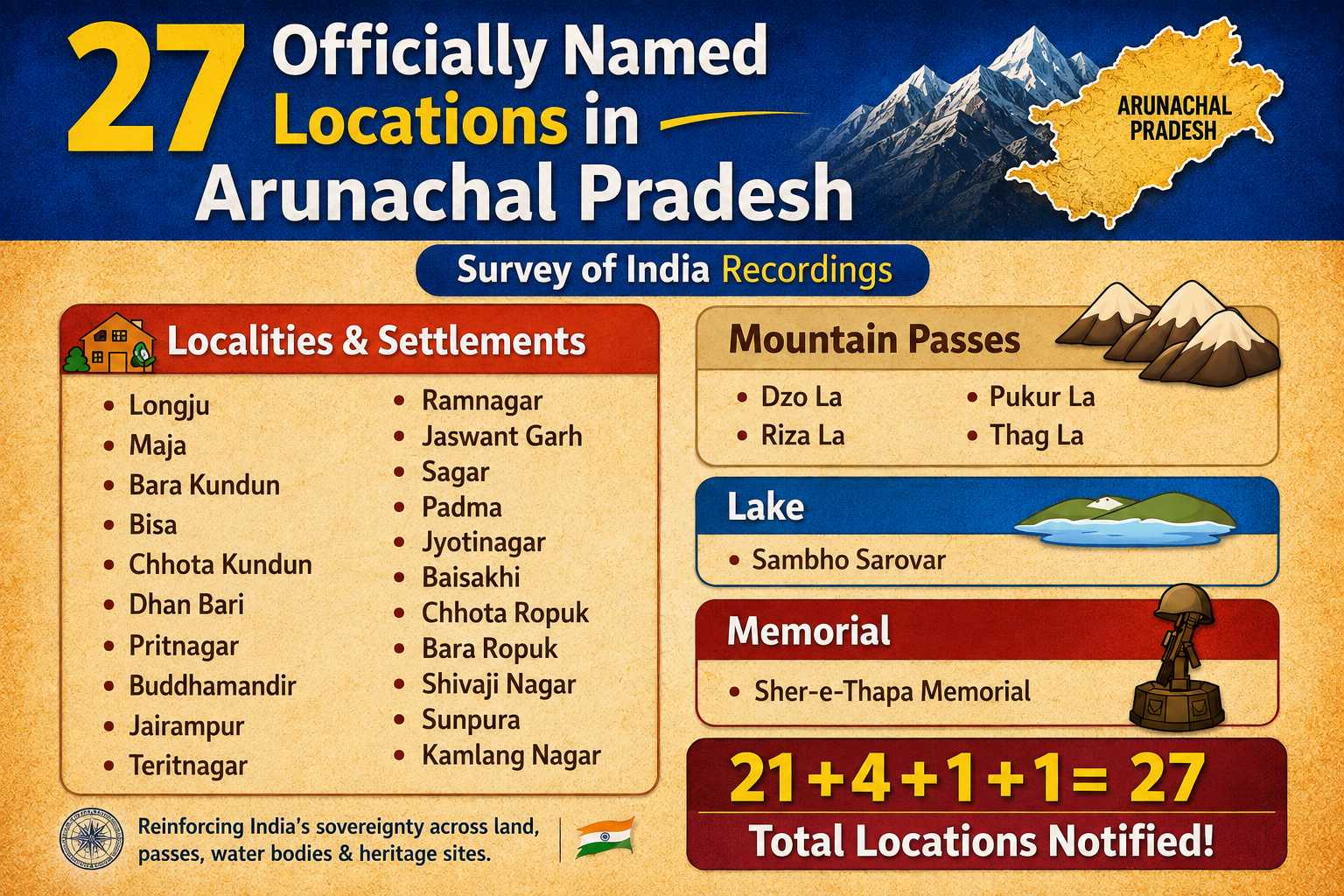
India has formally recognized 27 distinct sites in Arunachal Pradesh on the Survey of India map, grouped as follows:
21 Localities & Settlements: – Longju (historically significant), Maja, Bisa, Bara Kundun, Chhota Kundun, Dhan Bari, Pritnagar, Buddhamandir, Jairampur, Teritnagar, Ramnagar, Jaswant Garh, Sagar, Padma, Jyotinagar, Baisakhi, Chhota Ropuk, Bara Ropuk, Shivaji Nagar, Sunpura, and Kamlang Nagar.
4 Strategic Mountain Passes: Dzo La, Riza La, Pukur La, and Thag La(linked to the 1962 war).
1 Water Body: Sambho Sarovar, a lake of regional importance.
1 memorial (Sher Thapa Memorial, honouring soldiers of the 1962 conflict and commemorating India’s military history.)
Together, these names reinforce India’s territorial narrative: 21 + 4 + 1 + 1 = 27, marking a comprehensive assertion of sovereignty across land, passes, water, and heritage sites.
By including not just land but also water bodies and memorials, India has broadened its territorial database, strengthening historical and cultural claims.
🤝 Diplomacy Amid Tension
Despite confrontations, mechanisms like the WMCC (Working Mechanism for Consultation & Coordination) continue. The 36th meeting on August 6, 2026, reaffirmed efforts to maintain calm. Yet, India insists that without a formal border agreement, tensions will persist.
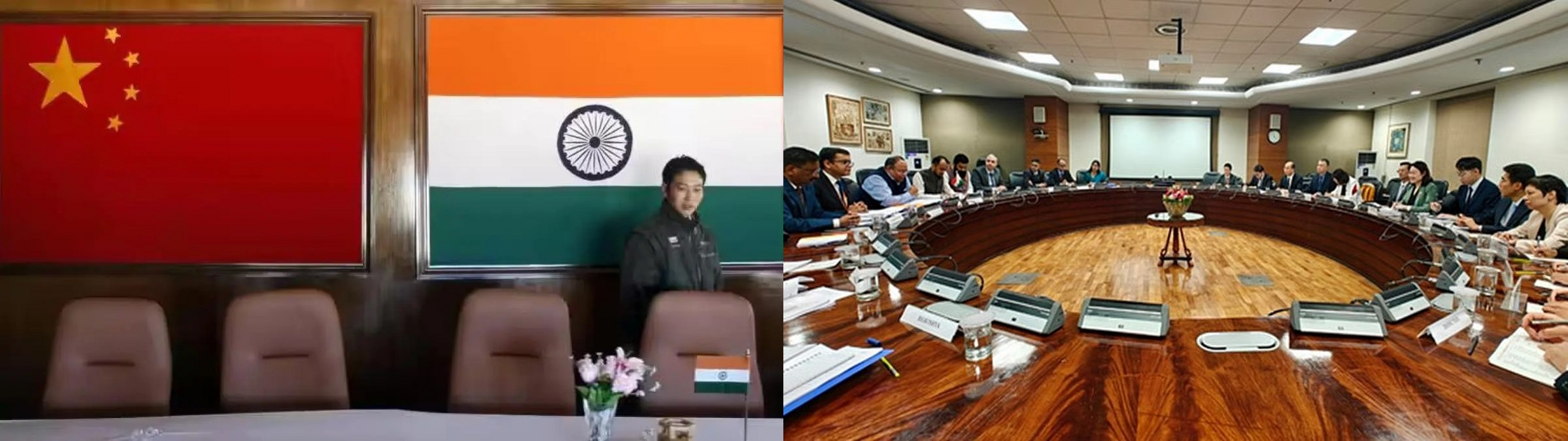
The latest round of WMCC discussions took place in New Delhi, with Sujit Ghosh, Joint Secretary (East Asia), representing India, and Hou Yanqi, Director General of Boundary & Oceanic Affairs, leading the Chinese side.

Both delegations engaged in open and candid dialogue, reviewing the situation along the Line of Actual Control. They reiterated that peace and stability at the border remain vital for the overall trajectory of India‑China relations. India and China agreed to keep using established diplomatic and military mechanisms, including WMCC, local commander‑level talks, and other agreed formats, to address outstanding issues and prevent miscalculations along the frontier.
The Crux
India has drawn a red line: border peace is non‑negotiable. Without it, trade, diplomacy, and cooperation will suffer. As China prepares for upcoming global engagements such as the BRICS summit, India’s stance signals a tougher post‑Galwan reality.
What’s your view: Should India push harder for a permanent border agreement? Share this blog to spark debate on how geopolitics is reshaping Asia. Follow for more deep dives into India’s foreign policy battles.
For a comprehensive breakdown of India’s counter‑moves against China’s cartographic tactics, including the official naming of 27 Arunachal locations, don’t miss our detailed analysis:
https://mangalbhavana.com/article/india-counters-china-map-tactics-arunachal-27-locations
Written by
Ishaan TrivediDiscussion (0)
Sign in to join the discussion.
Loading comments…