
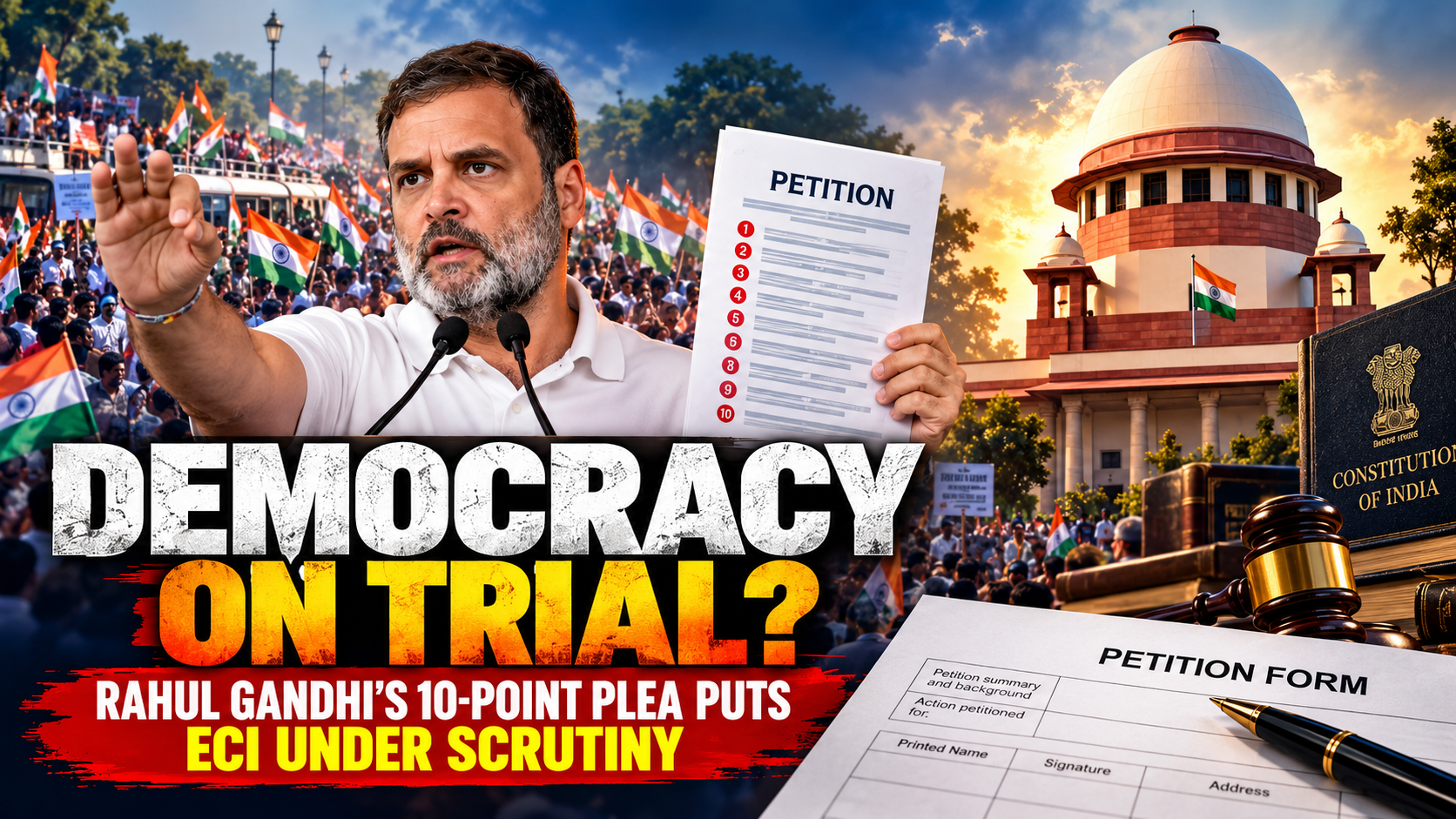
The INDIA bloc's massive march to the Supreme Court culminates in a sweeping petition demanding transparency, accountability, scrutiny of voter roll revisions, Form 6 changes, and the Election Commission's controversial SIR exercise.
In one of the largest opposition mobilizations seen in recent years, Congress leader Rahul Gandhi and leaders of the INDIA bloc marched towards the Supreme Court on October 12, 2026, escalating their confrontation with the Election Commission of India (ECI). The demonstration was not merely a political show of strength. It culminated in a petition before the country's highest court, seeking judicial intervention over alleged irregularities in electoral procedures, voter roll revisions, and decisions linked to the controversial Special Intensive Revision (SIR) exercise.
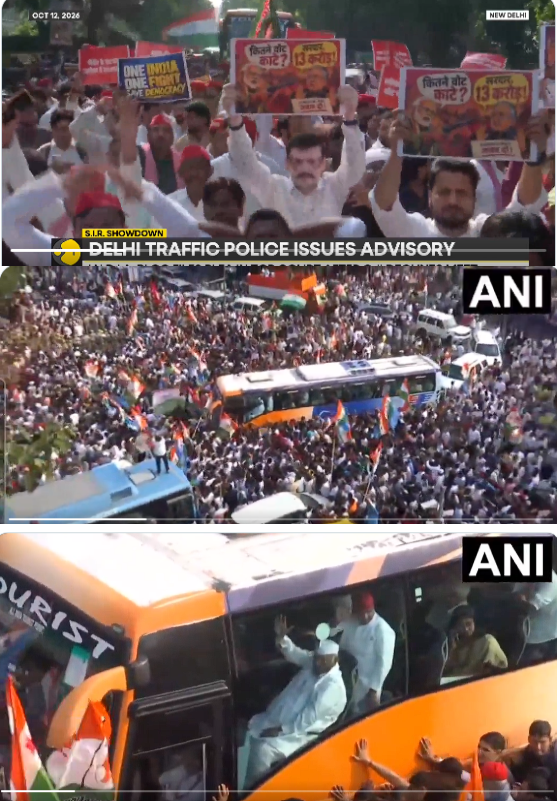
With thousands of supporters joining the march, the opposition has framed the issue as a battle to protect voting rights, electoral transparency, and constitutional accountability. The Supreme Court is now expected to play a crucial role in determining how far these allegations will be examined and whether any corrective measures are required.
🔥 A Show of Opposition Unity Outside the Supreme Court
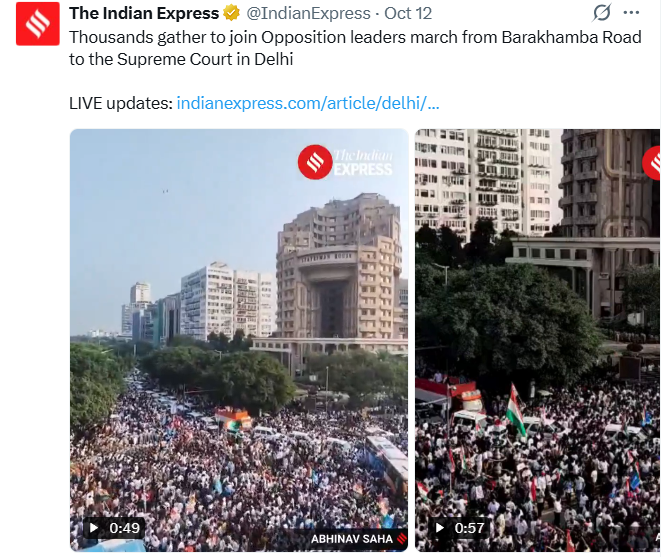
The march witnessed leaders from multiple opposition parties coming together under the INDIA bloc banner. Large crowds gathered in central Delhi before moving towards the Supreme Court in a coordinated protest.
Earlier in the day, Rahul Gandhi addressed the media, reiterating allegations that critical electoral decisions were being taken without following due process. He questioned the functioning of the Election Commission and demanded greater transparency regarding decisions related to electoral roll revisions. 👉Election Commission Under Fire: CEC vs 2 ECs Rift, Voter List Controversy & Explosive Dissent Claims Shake Democratic Trust
The protest was marked by slogans, banners, and symbolic gestures, highlighting growing tensions between the opposition and the Election Commission over the conduct of elections and voter registration procedures.
🔥 Opposition Rift or Strategic Move? Congress Keeps Distance from CJP's Anti-EC Campaign
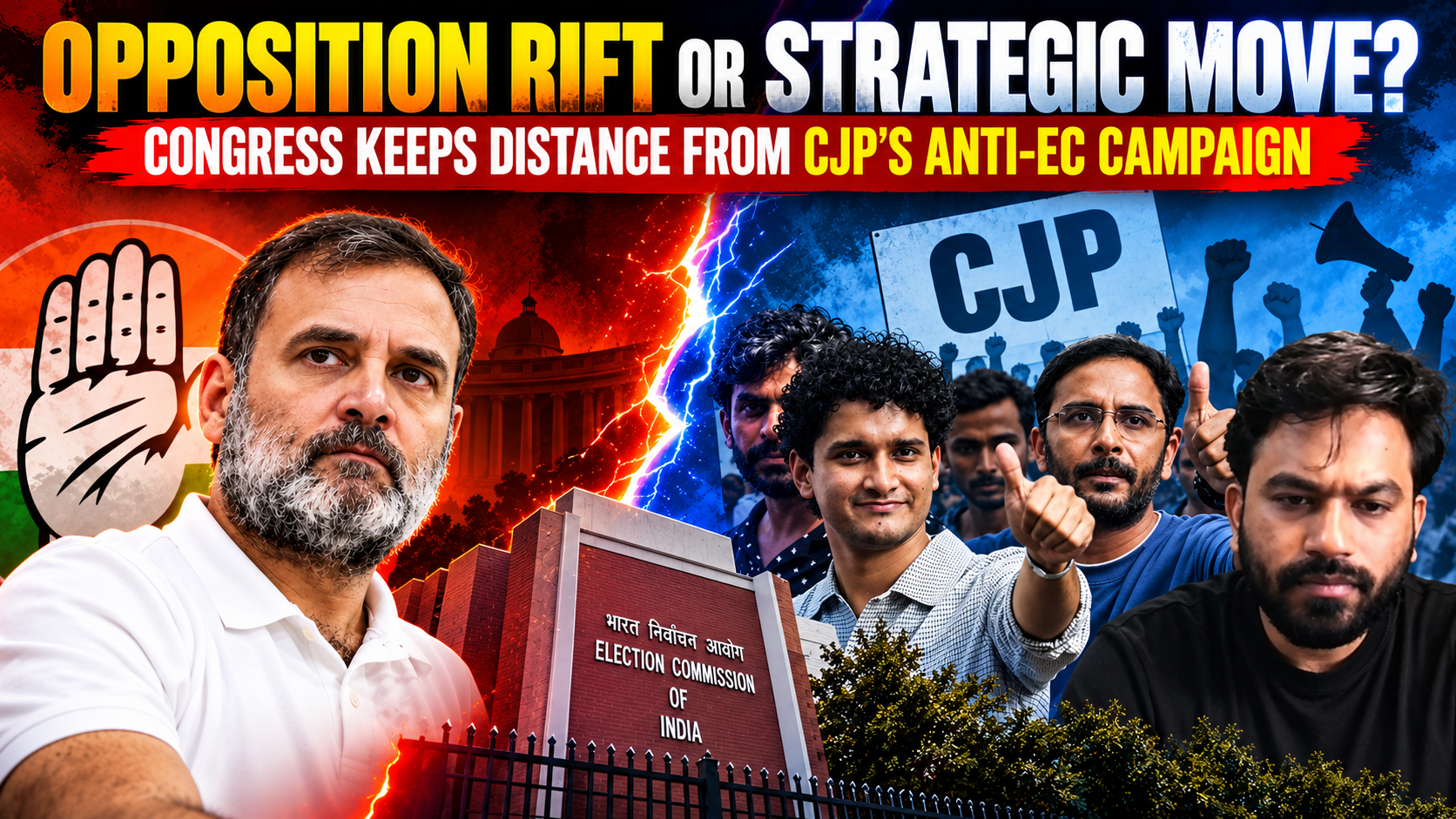
Even as both groups target Chief Election Commissioner Gyanesh Kumar and raise concerns over electoral processes, Congress has chosen to pursue its fight through mass protests and the Supreme Court, while the CJP continues its independent campaign on the streets. The development highlights growing competition within opposition politics over leadership, messaging, and public credibility.
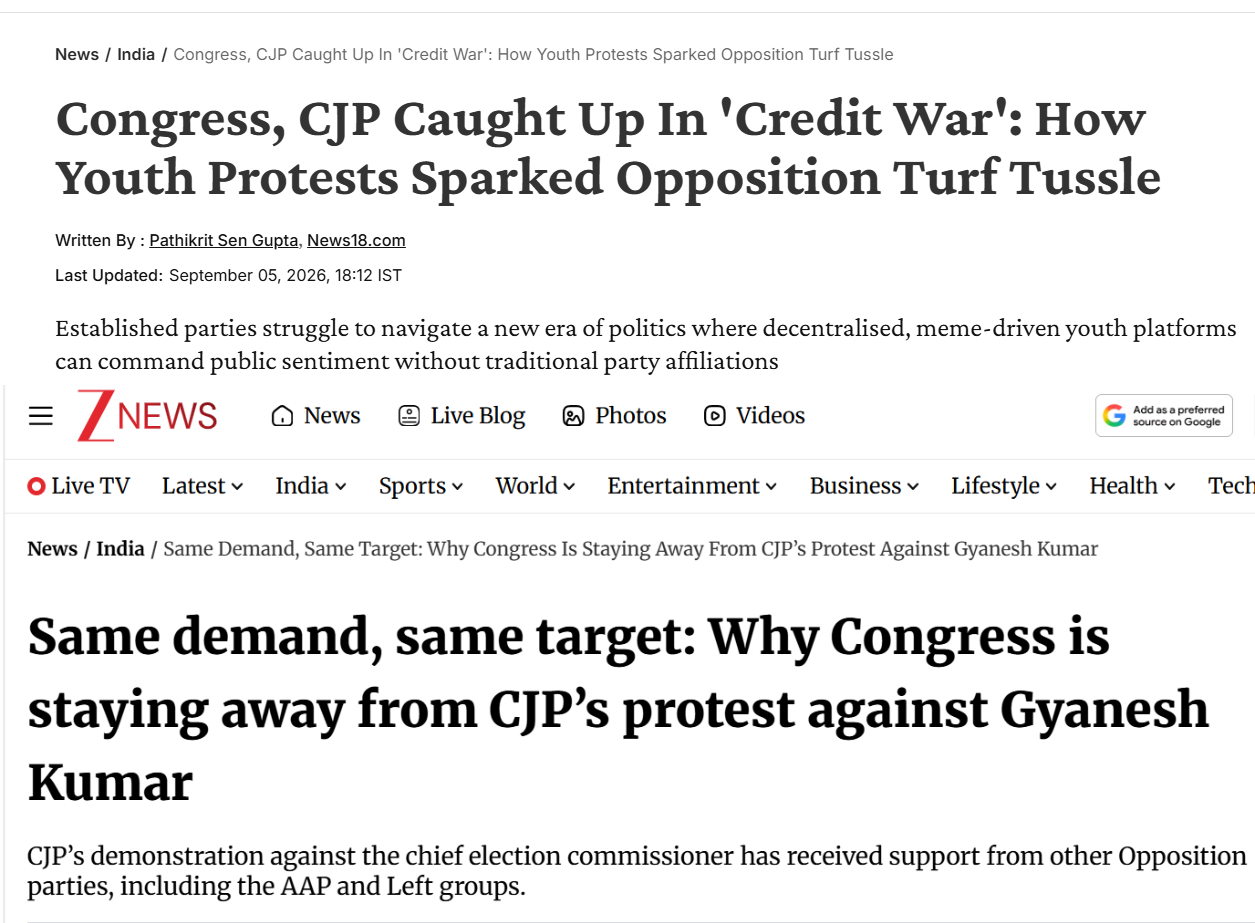
⚖️ From Protest to Petition: Why the Supreme Court Became the Next Battleground
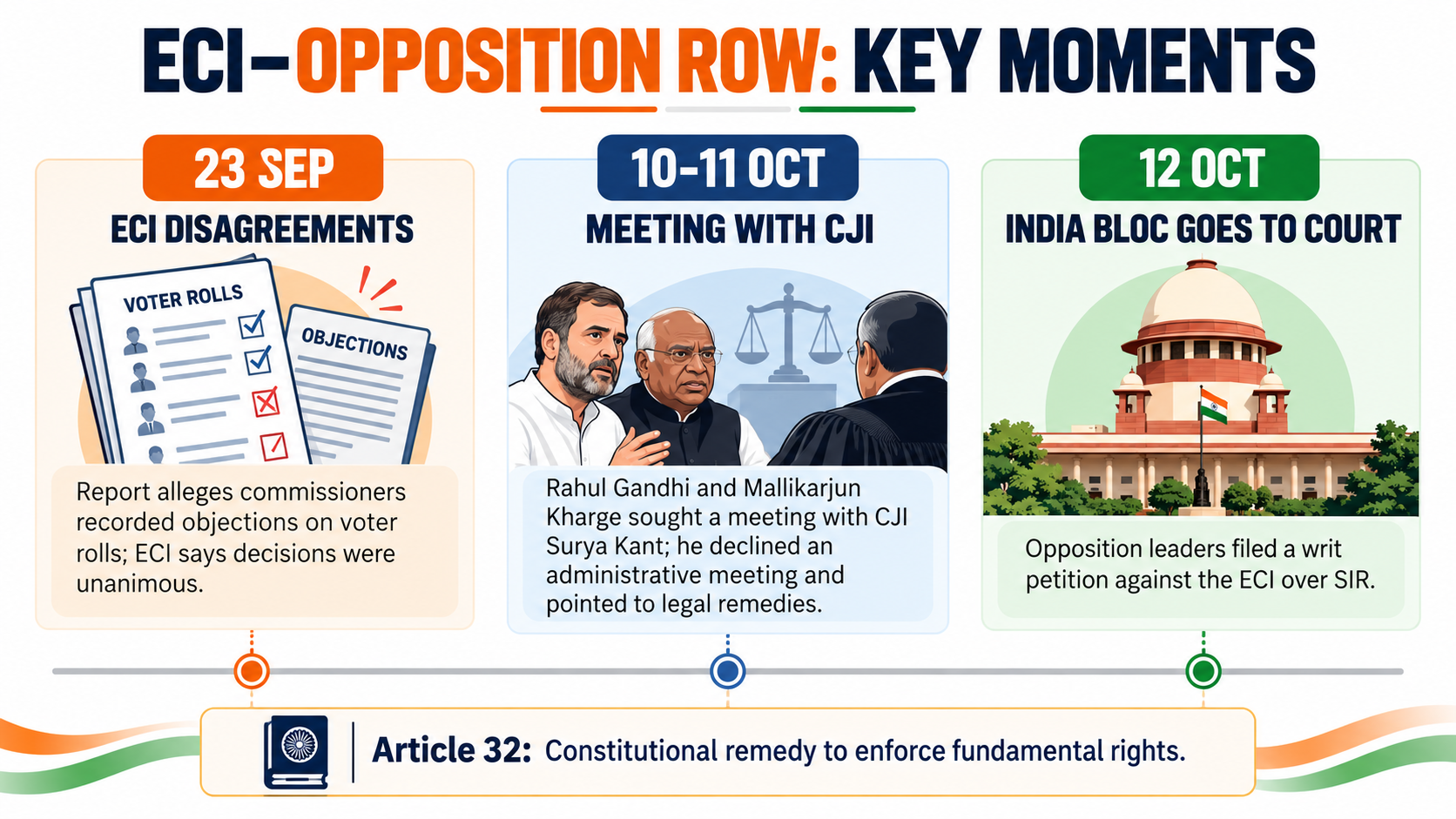
The opposition's move came after Rahul Gandhi reportedly sought a meeting with the Chief Justice of India regarding concerns over electoral procedures. However, the request was declined because matters related to the issue were already before the judiciary and direct meetings could raise concerns about judicial propriety.
Following this, the opposition decided to approach the Supreme Court through a formal constitutional petition.
The petition has reportedly been filed under Article 32 of the Constitution, which allows citizens to directly approach the Supreme Court if they believe their fundamental rights have been violated.
At the center of the dispute is the Election Commission's Special Intensive Revision (SIR) process and the procedures used for maintaining voter rolls.
📋 The 10 Major Demands Made by Rahul Gandhi and the Opposition
The petition reportedly contains ten key requests aimed at increasing transparency, accountability, and scrutiny of the Election Commission's actions.
1️. Make All Election Commission Records Public
The first demand seeks complete disclosure of decisions related to the SIR exercise.
The opposition wants:
a) Internal notes and files
b) Meeting minutes
c) Objections raised by election commissioners
d) Administrative records
e) Data access logs related to electoral databases
According to the petitioners, public disclosure is necessary to understand how major electoral decisions were taken.
2️. Examine Whether the SIR Exercise Is Constitutionally Valid
The petition asks the Supreme Court to determine whether the Election Commission followed constitutional and legal procedures while implementing the SIR process.
The opposition argues that the court should examine whether these actions align with:
a) Article 324 of the Constitution
b) Relevant provisions of election laws
c) Previous Supreme Court judgments governing electoral procedures
If procedural safeguards were ignored, the petitioners argue that the exercise may require judicial scrutiny.
3️. Take Action Against Officials If Violations Are Found
The third demand seeks accountability.
The petition asks the Supreme Court to direct action against any officials found to have violated constitutional or legal requirements during voter roll revisions or related electoral processes.
4️. Create a Proper Grievance Redressal Mechanism
Another major demand relates to complaints filed with the Election Commission.
The opposition alleges that several complaints and concerns raised over electoral procedures have not received satisfactory responses.
The petition therefore requests:
a) Proper documentation of complaints
b) Transparent tracking systems
c) Time-bound responses
d) Judicially reviewable records
Such a mechanism, the opposition argues, would make future disputes easier to examine.
5️. Review Changes Made to Form 6
One of the most contentious issues involves Form 6, the application used by new voters seeking registration in electoral rolls.
The opposition claims that additional requirements were introduced without necessary legislative amendments or procedural approvals.
The Election Commission has reportedly rejected these allegations, but the petition seeks a judicial review to determine whether any changes were made in accordance with established rules.
6️. Establish an Independent Audit Committee
Perhaps the most significant proposal is the creation of an independent audit panel. The opposition has suggested a committee consisting of:
a) Retired Supreme Court judges
b) Technical experts
c) Eminent citizens
The committee would be tasked with examining:
a) Voter deletions
b) Electoral roll amendments
c) Access controls on electoral databases
d) Technical architecture of election-related systems
e) EVM-related concerns
f) International best practices for free and fair elections
The demand reflects broader concerns about transparency in election management systems.
7️. Publish Details of Deleted Voters
The petition also seeks public disclosure of voter deletions. The opposition wants booth-wise publication of:
a) Names removed
b) Reasons for deletion
c) Age-based classifications
d) Gender-wise data
The argument is that transparency would help identify any irregular patterns and allow affected voters to seek remedies more quickly.
8️. No Voter Deletion Without Prior Notice
A key safeguard requested by the petition is that no voter's name should be removed without first allowing them to respond. Under this proposal:
a) Citizens would receive notice before deletion.
b) Individuals could present evidence supporting their eligibility.
c) Deletions would occur only after due process.
The opposition argues that voting rights should not be affected without prior consultation.
9️. Suspend Ongoing SIR Exercises
The petition also seeks an immediate halt to ongoing SIR-related activities across states until the Supreme Court completes its review.
According to the opposition, allowing the exercise to continue could create additional disputes while judicial proceedings are underway.
10. Any Other Necessary Orders to Protect Voting Rights
The final request gives the Supreme Court flexibility to issue any additional directions necessary to:
a) Protect citizens' voting rights
b) Maintain electoral integrity
c) Ensure transparency and fairness
This broad prayer allows the court to craft remedies based on its findings.
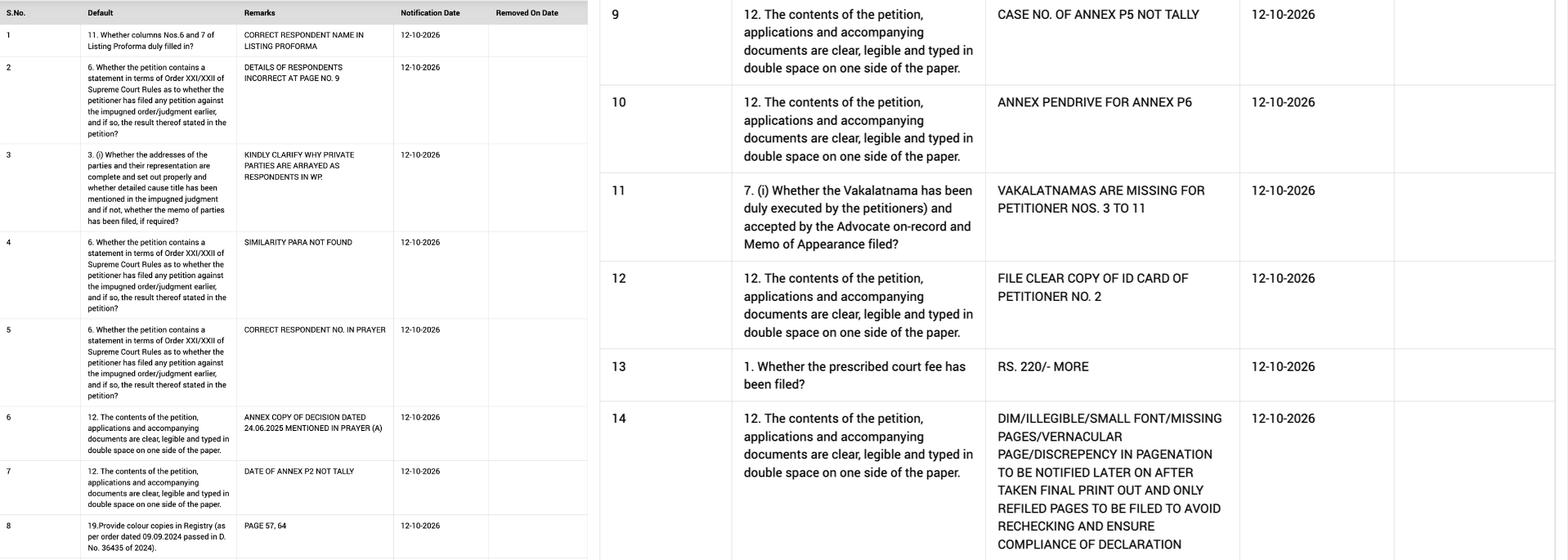
🚨Petition Under Scrutiny: Supreme Court Flags Defects in Rahul Gandhi's Plea
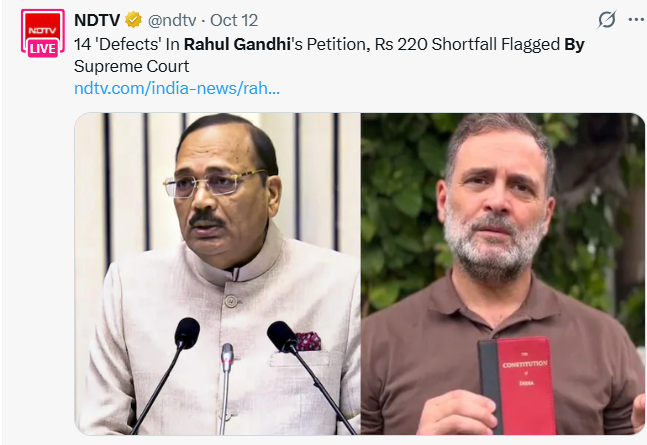
As the legal battle against the Election Commission intensifies, attention has shifted to Rahul Gandhi's Supreme Court petition after procedural deficiencies were reportedly identified, including a ₹220 fee shortfall and several filing-related issues. While such technical defects are generally rectifiable, they have added an unexpected twist to an already high-profile constitutional showdown.
👀 What Can the Supreme Court Do Next?
The Supreme Court possesses wide constitutional powers to examine administrative actions, review the legality of institutional decisions, and issue corrective directions where necessary.
Legal experts suggest the court could:
✅ Seek records from the Election Commission
✅ Conduct judicial review of procedural decisions
✅ Issue interim relief if warranted
✅ Direct corrective measures
✅ Order greater transparency and disclosure
✅ Seek responses from relevant authorities
The court's next steps will largely depend on the merits of the petition and the explanations provided by the Election Commission.
🏛️ A Defining Test for India's Electoral Institutions
The controversy goes far beyond one protest or one political party. At its core, the dispute raises fundamental questions about:
a) Electoral transparency
b) Voter roll management
c) Institutional accountability
d) Public trust in democratic processes
While the opposition views the issue as a fight to protect voting rights, the Election Commission is expected to defend the legality and integrity of its actions. The Supreme Court's eventual ruling could have implications not only for the current controversy but also for how electoral revisions are conducted in the future.
As the legal battle begins, the nation will be closely watching whether the judiciary intervenes, orders reforms, or upholds existing procedures.
🚨 End of an Era? Jantar Mantar Loses Protest Hub Status
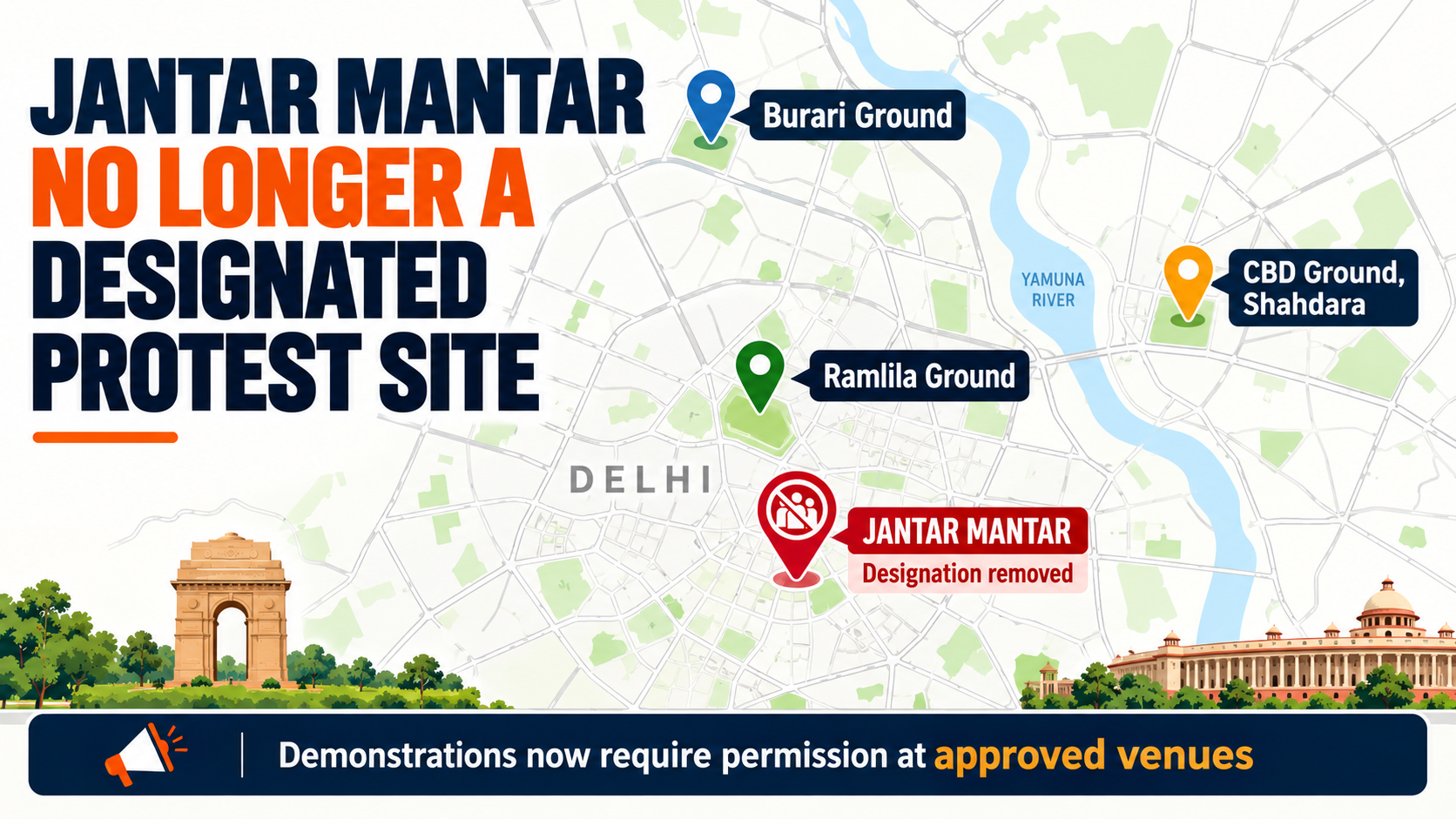
The government has removed Jantar Mantar's designation as Delhi's official protest venue, redirecting demonstrations to three newly approved locations across the capital.
With Jantar Mantar no longer serving as a designated protest site, organizers must now seek permission for demonstrations at Ramleela Ground, Shahdara's CBD Ground, or Burari Ground.
📢 The Battle Ahead
The opposition's massive Supreme Court march has transformed an electoral dispute into a national constitutional debate. With Rahul Gandhi's 10-point petition challenging the Election Commission's actions, the spotlight now shifts to the Supreme Court. Whatever the outcome, the case could become one of the most closely watched legal and political battles in India's recent democratic history.
👉 What Do You Think?
Should electoral roll revisions and voter deletions undergo greater public scrutiny? Can transparency measures strengthen trust in India's elections, or would they complicate the electoral process?
💬 Share your views in the comments below.
📲 Don't forget to share this article with friends and family.
🔔 Follow us for more in-depth analysis on politics, governance, elections, and the stories shaping India's democracy.
Written by
Aarav VashishtDiscussion (0)
Sign in to join the discussion.
Loading comments…