
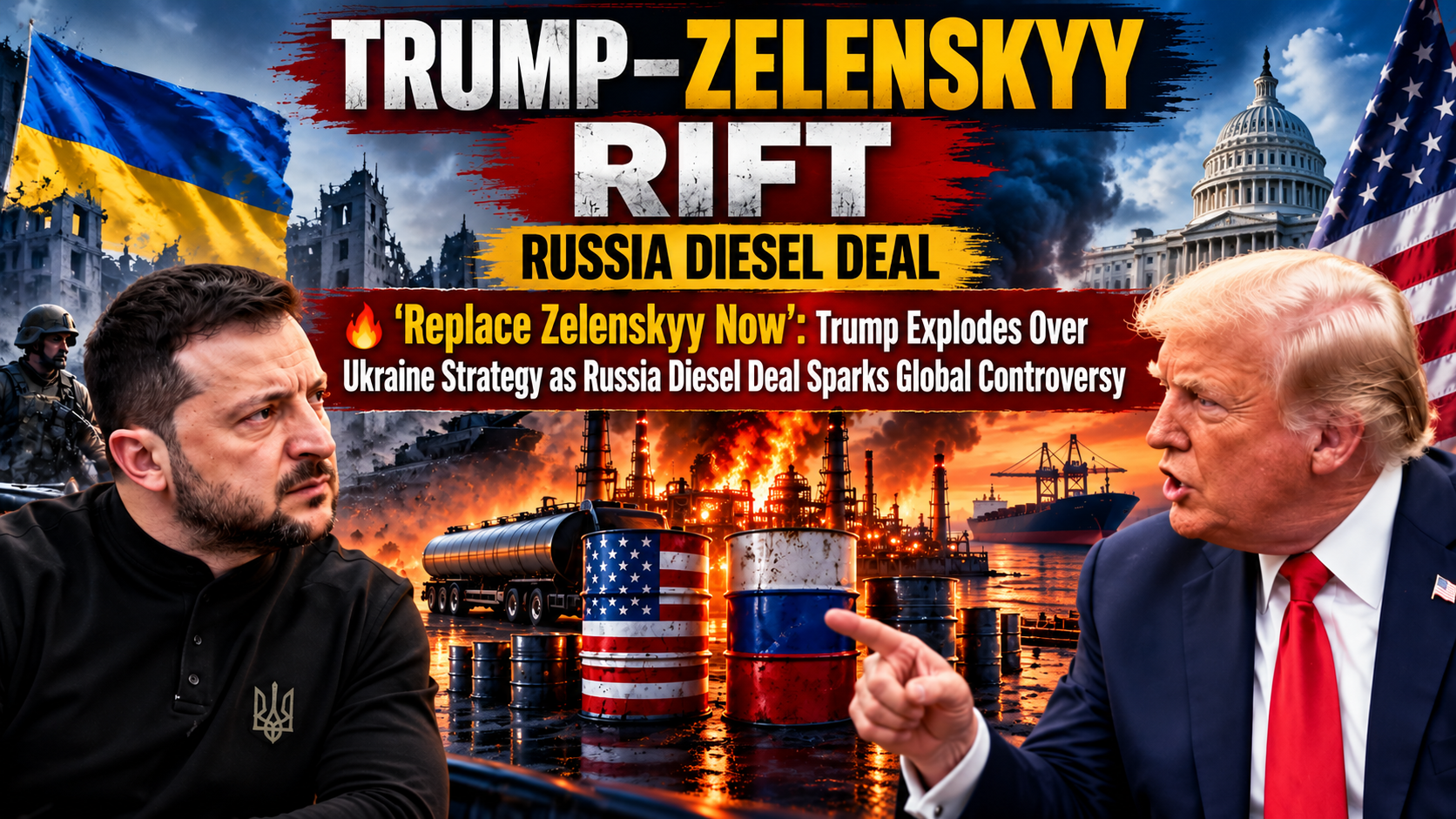
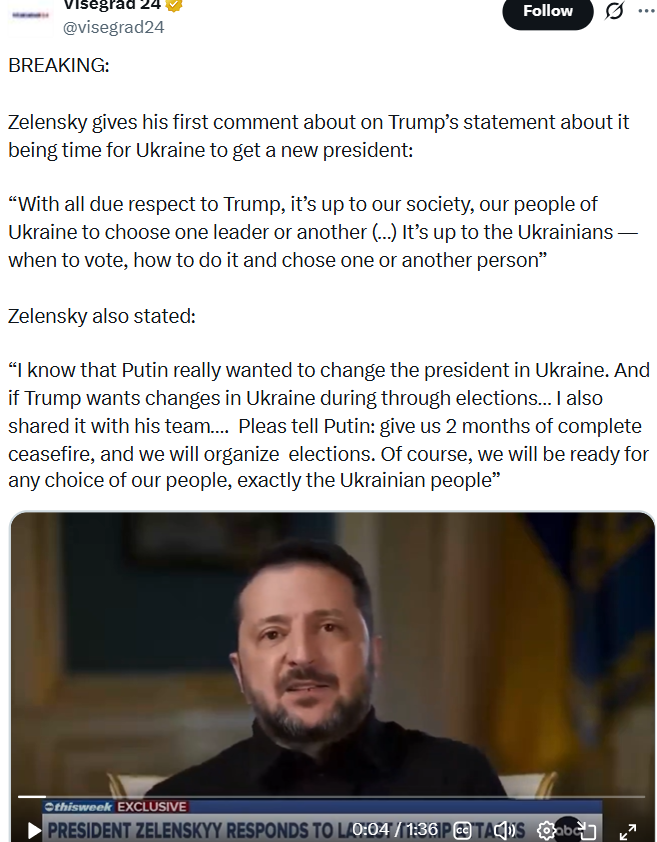
As Zelenskyy condemns Trump's controversial Russia diesel deal, the US President publicly calls for new leadership in Kyiv, raising questions about the future of Western support, sanctions, and the Ukraine war.
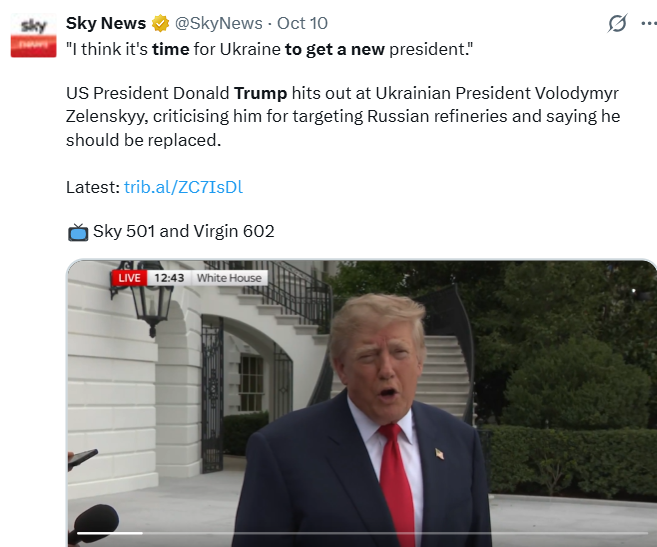
The geopolitical fault lines of the Russia-Ukraine war may be shifting once again. In a dramatic escalation of tensions, US President Donald Trump has publicly suggested that Ukraine should consider replacing President Volodymyr Zelenskyy with a leader capable of securing a peace deal with Russia.
The comments came shortly after Zelenskyy sharply criticized a controversial diesel supply arrangement involving Russia, triggering what could become one of the most significant political confrontations between Washington and Kyiv since the war began.
But why is Trump targeting Zelenskyy's leadership? What is the diesel deal all about? And could this growing rift ultimately benefit Russia?
Let's break down the developing geopolitical storm.
Trump's Message to Ukraine: "You Need a Leader Who Can Make a Deal"
The latest clash between Trump and Zelenskyy goes beyond a simple disagreement over policy.
Trump has openly argued that Ukraine needs leadership capable of negotiating an eventual settlement with Russia. According to Trump's view, years of war have produced devastating consequences while opportunities for diplomatic resolution have repeatedly been missed.
His criticism focuses on three key arguments:
1. Failure to Negotiate
Trump believes Ukraine's current leadership has been unable to reach a workable agreement with Moscow despite multiple opportunities throughout the conflict.
According to this argument, diplomatic openings existed that might have reduced casualties and prevented further destruction.
2. Massive Human and Territorial Losses
Trump has also pointed to the immense human and economic costs of the war. Trump argued that Ukraine has already lost around 30% of its territory and that the conflict has resulted in more than 2 million deaths, citing these figures as evidence that the current approach has failed.
Ukraine has suffered enormous damage to infrastructure, significant displacement of people, and substantial battlefield losses.
3. The Need for New Leadership
The former and current president's position appears clear: Ukraine needs leadership that prioritizes negotiation and conflict resolution rather than an open-ended war.
Trump has repeatedly maintained that if he had been president in 2022, the conflict would never have escalated into a full-scale war.
🚨 The Diesel Deal That Sparked a Geopolitical Firestorm
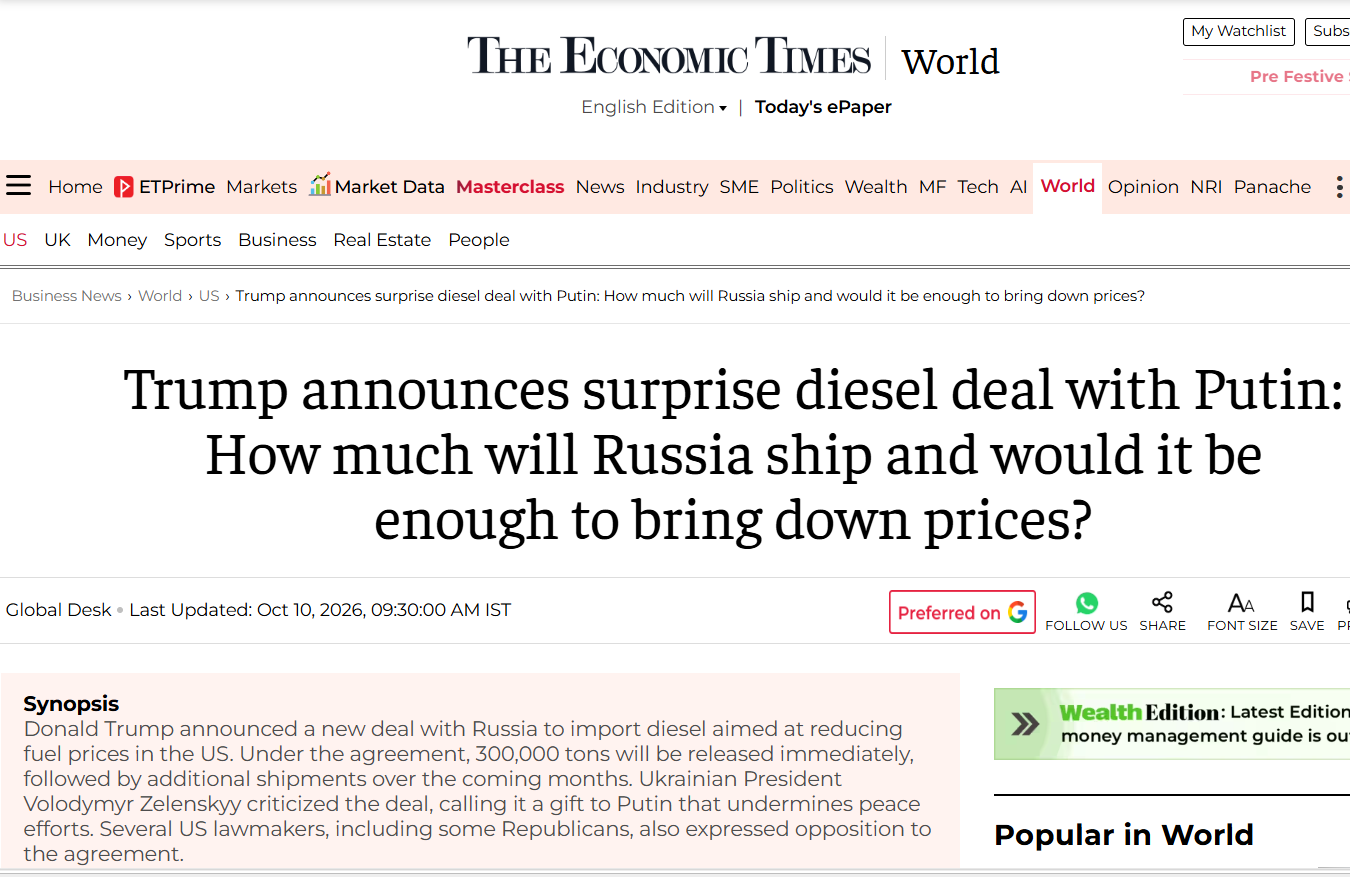
Trump triggered fresh controversy after announcing a plan that would allow Russian diesel to re-enter US and global markets. The proposal reportedly begins with 300,000+ tonnes of supply, followed by 500,000 tonnes and additional volumes in the months ahead, potentially easing fuel shortages and price pressures.
The rationale behind the move is largely economic.🚨 Trump’s Stunning Russia U-Turn: After Years of Criticizing India, Is America Now Buying Russian Diesel?
🔥 Diesel Prices Soar as Energy Markets Come Under Pressure
US diesel prices have climbed to approximately $6.28 per gallon (around $1.66 per litre), representing a sharp increase of nearly 70% from levels seen before the US-Iran conflict. The surge has intensified concerns over rising transportation, manufacturing, and agricultural costs, all of which could add further pressure to inflation.
Why Diesel Matters More Than Many People Realize
When people think about fuel, they often focus on passenger cars. But diesel powers much more than automobiles.
Diesel remains critical for:
1. Agriculture and farming equipment
2. Heavy trucks and transportation networks
3. Construction machinery
4. Mining operations
5. Industrial heating systems
6. Logistics and supply chains
As a result, rising diesel prices can affect nearly every sector of the economy. Higher fuel costs eventually translate into:
1. More expensive food
2. Higher transportation costs
3. Rising construction expenses
4. Increased inflation
For policymakers, diesel prices are not just an energy issue. They are an economic and political issue.
Why Trump Wants More Diesel Supply
Supporters of the diesel arrangement argue that increasing global diesel supply could help ease fuel market pressures and reduce inflationary risks. From this perspective, affordable energy remains a top domestic priority.
With the US midterm elections scheduled for 3 November 2026, lower fuel prices could help ease inflation concerns, boost consumer confidence, and reduce economic anxiety ahead of a crucial political test for the Trump administration.
For the Trump administration, the calculation appears straightforward: Energy affordability today may take priority over geopolitical symbolism.
Zelenskyy's Objection: "This Benefits Russia"
Ukraine sees the situation very differently. Zelenskyy argues that allowing Russia to sell more petroleum products generates additional revenue for Moscow at a time when Western sanctions are intended to limit Russia's ability to finance its war effort.
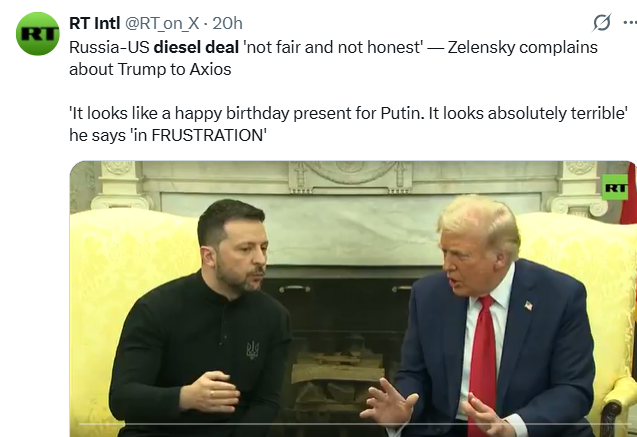
This criticism highlights what many in Ukraine view as a contradiction. For years, several Western voices criticized countries purchasing Russian energy, arguing such purchases indirectly supported Russia's wartime economy.
Now, Kyiv argues that facilitating Russian diesel exports could produce similar effects.
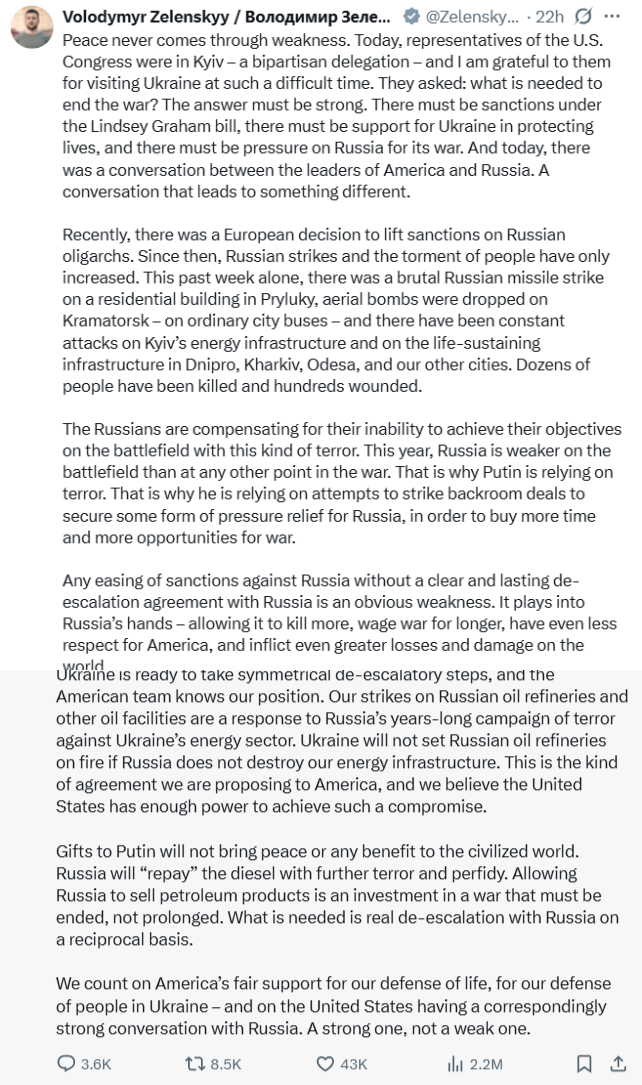
🚨 Russian Strike Fuels Kyiv's Anger Over Diesel Deal
Ukraine's frustration deepened after a deadly Russian attack reportedly killed several civilians, including children. The timing intensified criticism of Washington's controversial diesel arrangement, which Kyiv fears could provide Moscow with additional economic breathing room.
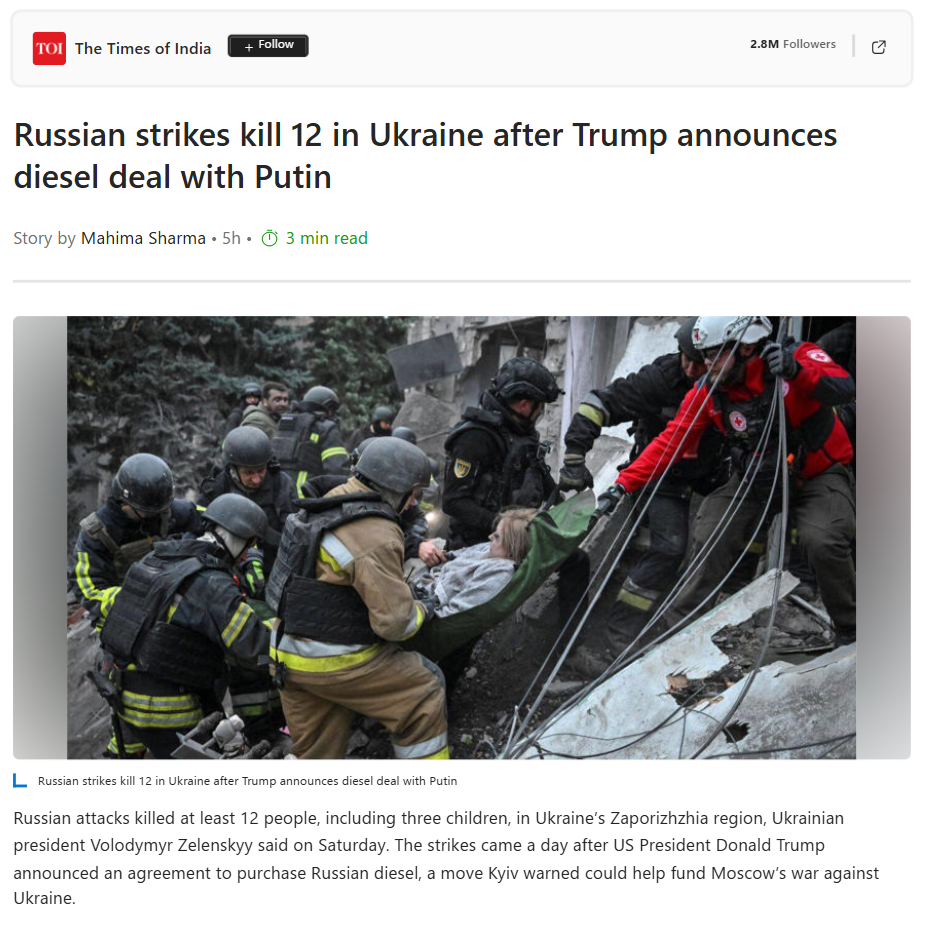
A Question of Consistency
From the Ukrainian perspective, the logic is simple: “If purchasing Russian energy contributes revenue to Moscow, then expanding access to markets for Russian petroleum products could also strengthen Russia financially.”
This is why Zelenskyy and his supporters have reacted so strongly to the arrangement.
🚨 Trump Doubles Down on Controversial Russia Diesel Deal
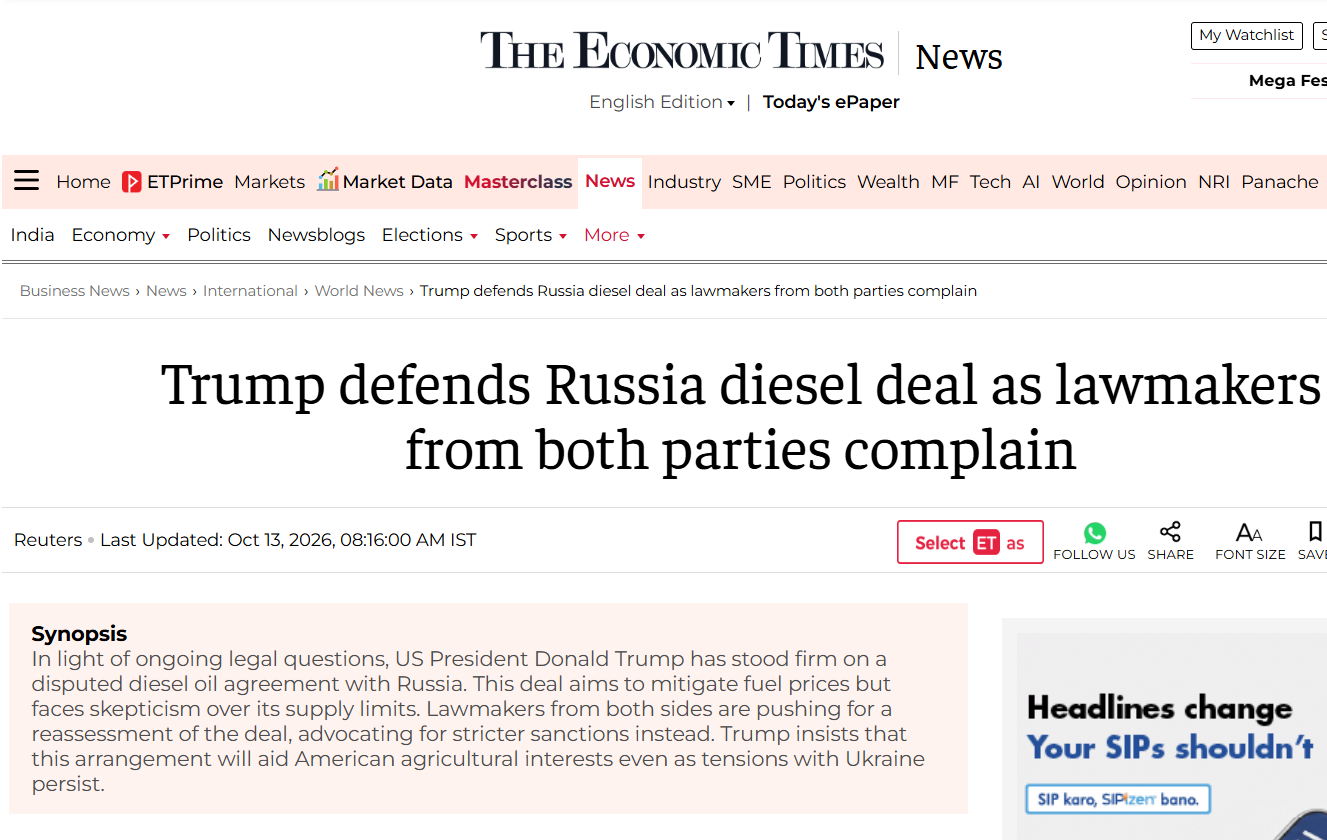
Despite mounting criticism from lawmakers across the political spectrum, Trump has defended the Russia diesel arrangement, arguing that increased fuel supplies could help ease price pressures and support key sectors of the US economy.
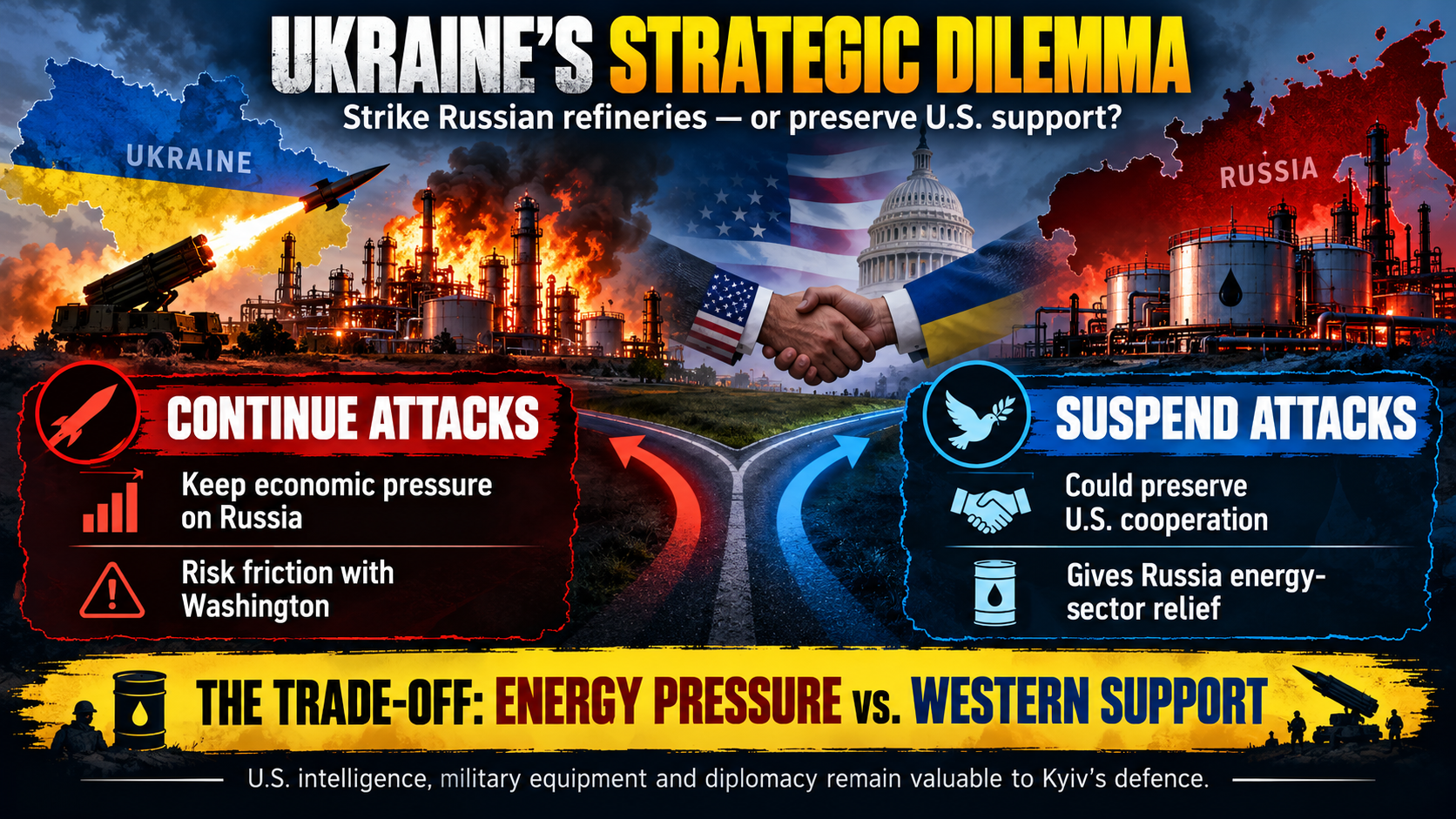
Ukraine's Strategy: Hit Russia's Energy Revenues
For months, Ukraine has pursued a strategy aimed at weakening Russia's energy infrastructure. Using drones and long-range strikes, Ukrainian forces have repeatedly targeted:
1. Oil refineries
2. Fuel storage facilities
3. Energy infrastructure
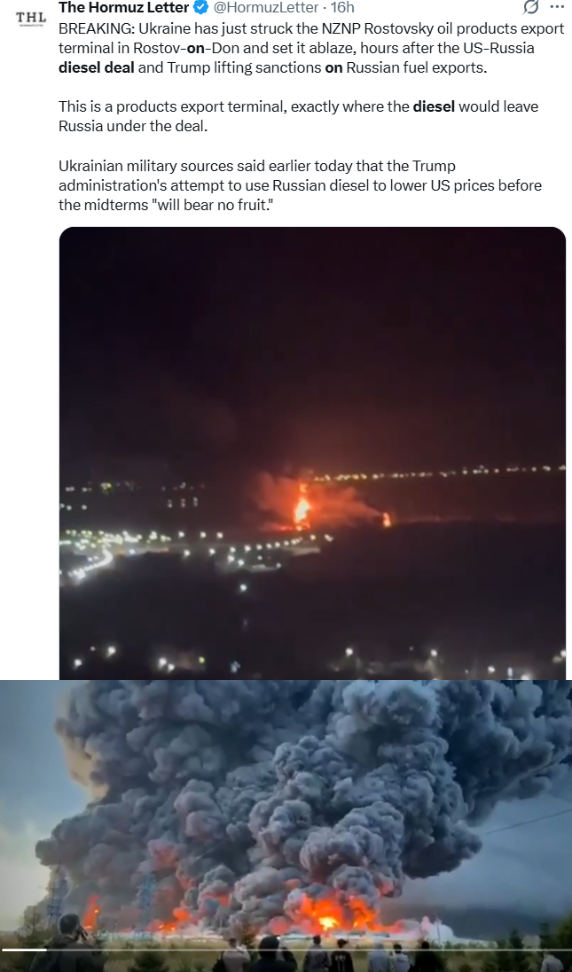
Since energy exports represent a major source of income for Russia, disrupting refining operations can potentially affect both government revenues and military logistics.
Why Trump Opposes Attacks on Energy Infrastructure
Here lies another major source of friction. According to reports and political discussions surrounding the issue, Trump has repeatedly signalled concern that attacks on energy infrastructure could reduce fuel supplies and push diesel prices higher globally.
From Washington's perspective, escalating attacks on refineries may create ripple effects throughout international energy markets.
Ukraine, however, views those same attacks as a legitimate strategy for weakening Russia's war machine. This fundamental disagreement highlights a growing divide:
Trump's Priority
✅ Lower energy prices and a negotiated settlement.
Zelenskyy's Priority
✅ Maintaining economic pressure on Russia and strengthening Ukraine's military position.
Can Trump Actually Remove Zelenskyy?
The short answer is no.
The American president does not have the authority to remove Ukraine's elected leader. Ukraine's leadership is determined by its constitution and domestic legal processes.
However, Trump's comments carry significant political weight because the United States remains one of Ukraine's most important supporters. Even without formal power, public pressure from Washington can influence international perceptions, diplomatic negotiations, and future aid discussions.
Under Ukraine's Constitution, a president serves a 5-year term and remains in office until a successor is elected. However, because Ukraine is currently under martial law, elections have been suspended, making a leadership change through normal voting procedures impossible for now.
“The Ukrainian People Will Decide” — Kyiv Rejects Trump’s Leadership Criticism Amid Deepening US-Ukraine Rift
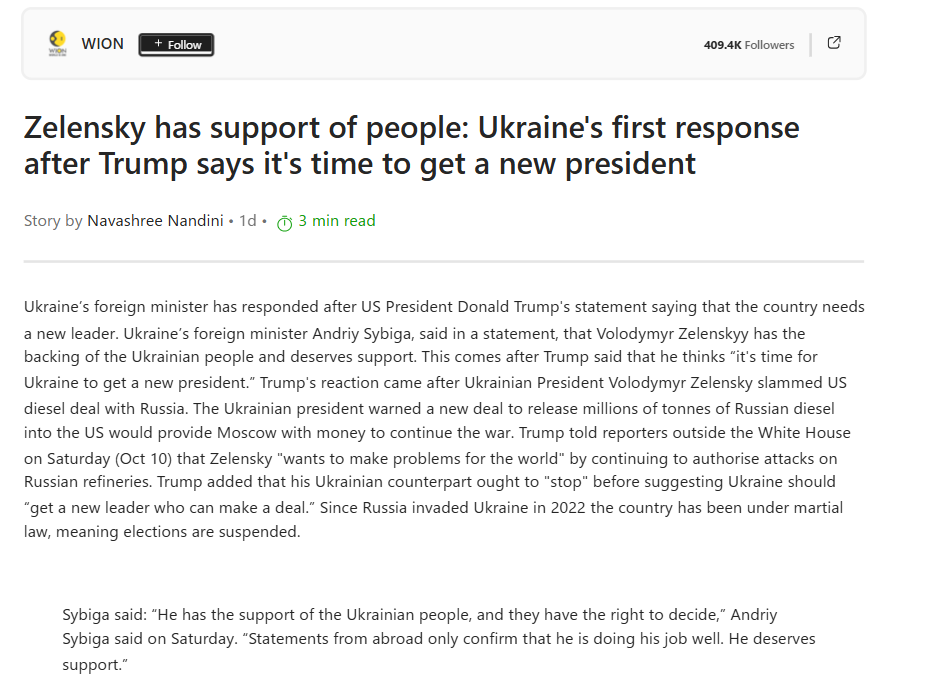
As Donald Trump suggests Ukraine needs a new president, Kyiv has responded forcefully, insisting that Volodymyr Zelenskyy continues to enjoy the backing of the Ukrainian people. The sharp exchange highlights growing tensions between Washington and Kyiv over strategy, sanctions, and the future direction of the war.
Why Russia Could Be the Biggest Winner
If tensions between Washington and Kyiv continue to deepen, Russia could gain several strategic advantages.
Diplomatic Advantage
A divided Western coalition is generally favorable for Moscow.
The more disagreements emerge among Ukraine's supporters, the harder it becomes to maintain a unified strategy.
1. Energy Revenue Gains
Expanded opportunities to sell petroleum products could provide Russia with additional revenue at a critical time.
2. Military Pressure on Ukraine
Should US support become more limited, Ukraine may face greater challenges sustaining military operations.
3. Strains Within the Western Alliance
Growing disagreements between the US, Europe, and Ukraine could complicate future coordination on sanctions, military assistance, and diplomacy.
Europe's Growing Dilemma
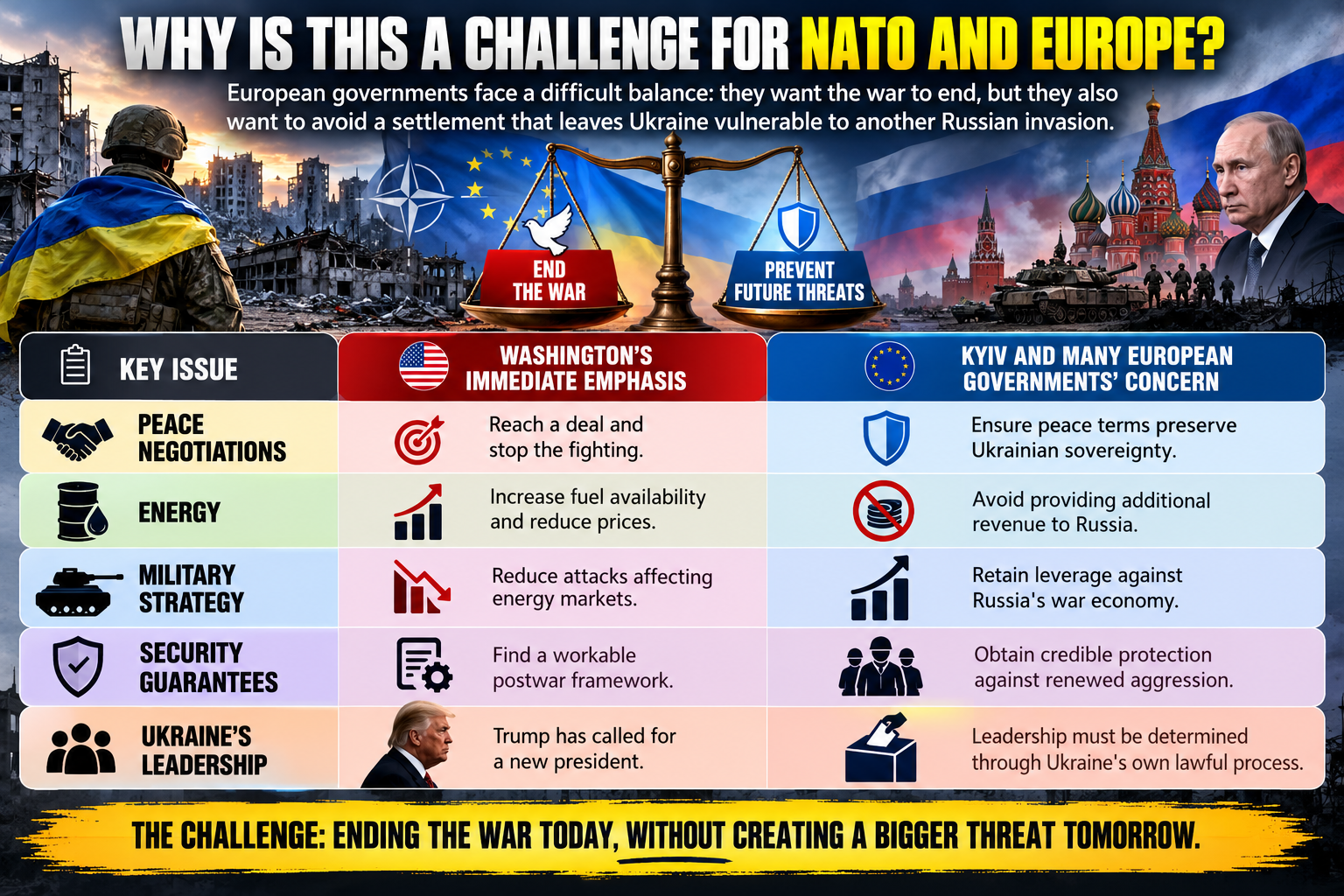
European countries face a difficult balancing act.
On one hand, many European leaders want to continue supporting Ukraine and prevent further Russian territorial gains.
On the other hand, they must also manage economic pressures, energy security concerns, and growing demands for a long-term peace framework.
Trump's more transactional approach to diplomacy has introduced new uncertainty into Europe's strategic calculations.
What Happens Next?
Three major scenarios could emerge:
Scenario 1: US-Ukraine Relations Stabilize
Trump and Zelenskyy find common ground, preserving cooperation while continuing pressure on Russia.
Scenario 2: The Rift Widens
Political tensions deepen, leading to reduced trust and potentially affecting future support.
Scenario 3: The War Drags On
Disagreements over strategy delay meaningful progress toward either peace negotiations or battlefield breakthroughs.
Whatever happens next, one thing is clear: The debate is no longer just about Ukraine and Russia.
It is now increasingly about how far Western allies are willing to go, what price they are prepared to pay, and whether energy security is beginning to outweigh geopolitical strategy.
✅ The Bottom Line
The Trump-Zelenskyy confrontation reveals a growing divide between economic pragmatism and wartime strategy. While Trump argues that lower energy prices and negotiations should take priority, Zelenskyy insists that easing pressure on Russia only strengthens Moscow's position. As this clash unfolds, its consequences could extend far beyond Ukraine, potentially reshaping the future of Western unity, global energy markets, and the trajectory of the war itself.
🚨 Stay Ahead of the Headlines
Geopolitics is changing faster than ever. Don't just read the news, understand the forces shaping global power, energy markets, and economic trends.
✅ Follow us for in-depth geopolitical analysis
✅ Get simplified explanations of complex global events
✅ Discover how international developments affect your money, markets, and the future world order
Bookmark our website and join the conversation today! 🌍📈
Written by
Kartikeya RaoDiscussion (0)
Sign in to join the discussion.
Loading comments…