
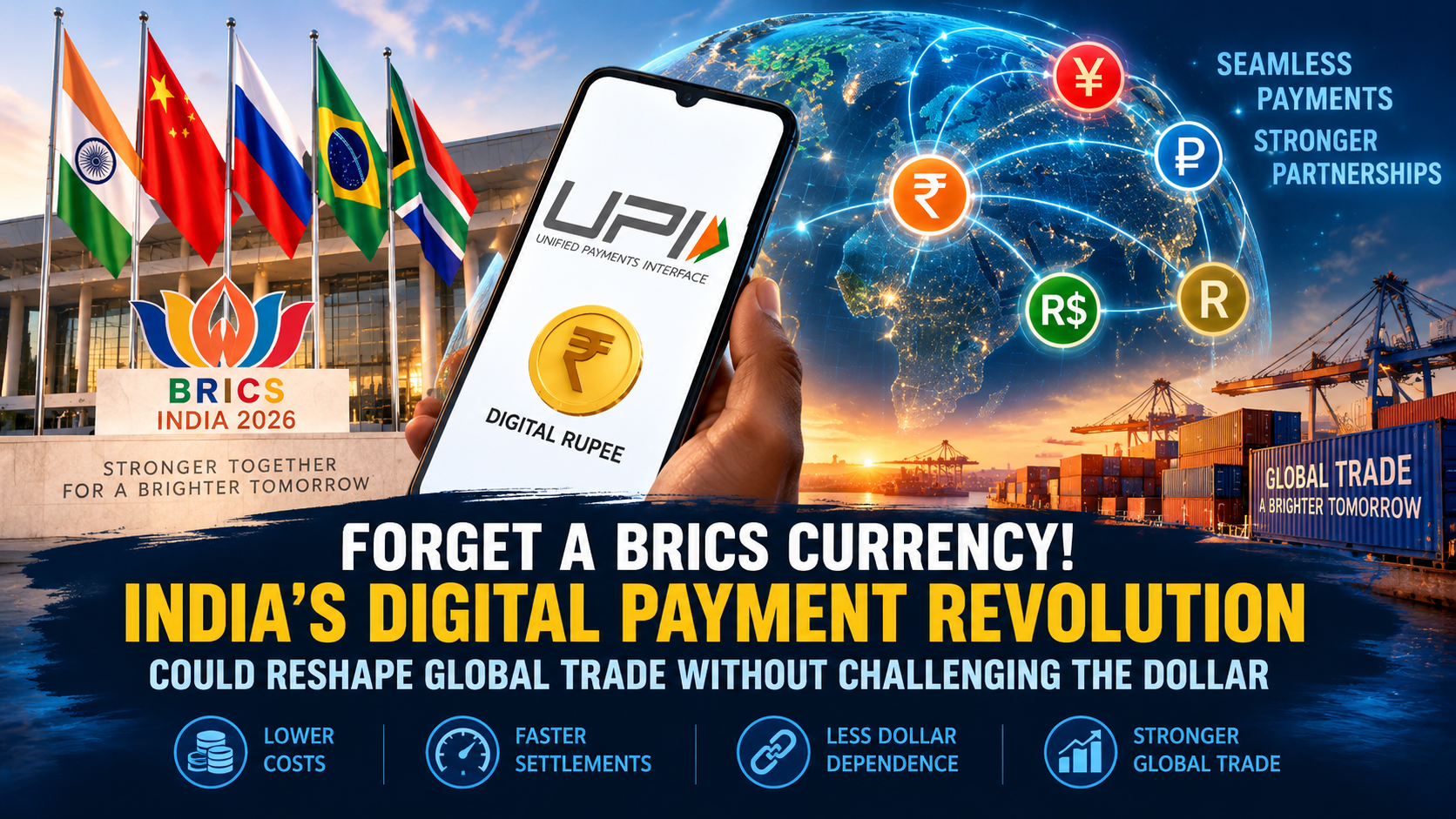
At the BRICS Summit, India Unveils a Smarter Alternative to a Common BRICS Currency
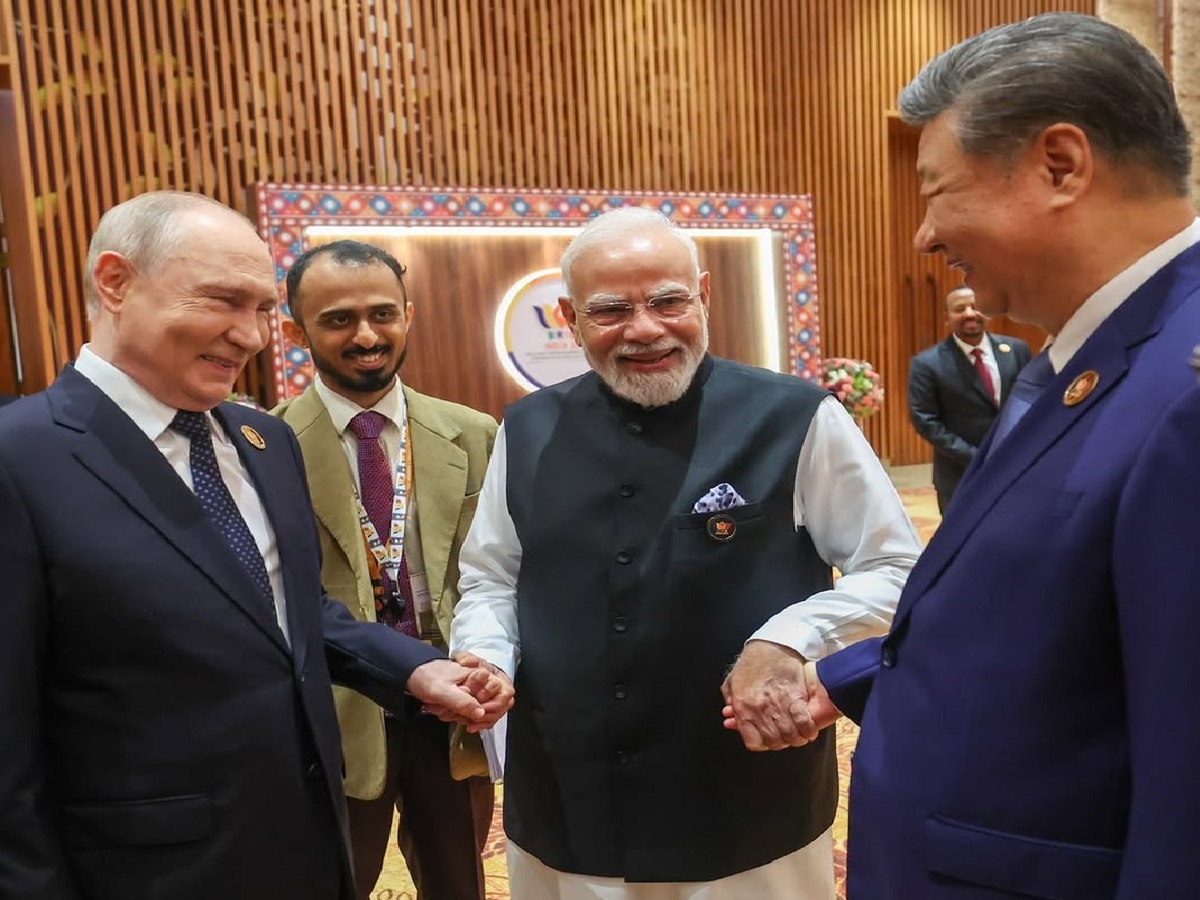
As leaders from BRICS nations gather for the high-profile summit, India's major financial proposal has sparked global attention. For months, speculation surrounded the possibility of BRICS launching its own common currency to challenge the dominance of the US dollar. However, India has now revealed a very different vision.
Instead of creating a new BRICS currency, India is advocating for an interconnected digital payment ecosystem that links the digital currencies of BRICS countries. The proposal could transform cross-border trade, reduce transaction costs, speed up settlements, and gradually decrease dependence on traditional dollar-based payment channels.
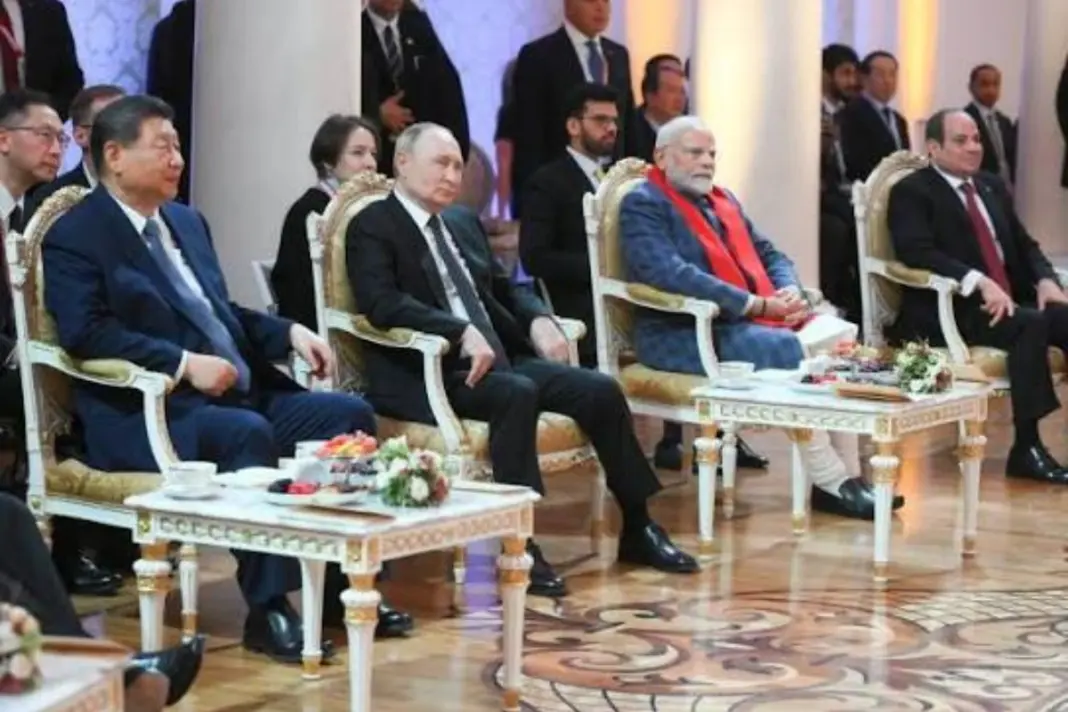
The move is significant because it offers a practical solution to a long-debated challenge while avoiding the complexities and political risks associated with creating a single BRICS currency.
India’s Proposal: No BRICS Currency, Just Connected Digital Currencies
Contrary to widespread reports, India is not pushing for a common BRICS currency similar to the Euro.
Instead, India proposes that each country continues using its own national currency while making their Central Bank Digital Currencies (CBDCs) interoperable.
For example:
India's CBDC: Digital Rupee (e₹)
China's CBDC: Digital Yuan (e-CNY)
Russia's CBDC: Digital Ruble
Brazil's CBDC: Digital Real
The idea is simple yet powerful. Rather than introducing a completely new currency, BRICS countries could create a payment infrastructure that allows these digital currencies to interact and be exchanged directly.
This would enable an Indian importer to pay a Chinese exporter using digital rupees that can be seamlessly converted into digital yuan, without multiple intermediaries.
Why the Current System Is Expensive and Slow
Today, international trade settlements involve several layers of financial intermediaries.
Imagine an Indian company importing machinery from China. The payment journey typically looks like this:
Indian Rupees are deposited in a local bank.
Funds move through correspondent banks.
The amount is converted into US dollars.
Dollars are transferred internationally.
The receiving bank converts dollars into Chinese Yuan.
The Chinese exporter finally receives payment.
This process creates several challenges:
Forex conversion costs
Intermediary banking fees
Compliance expenses
Settlement delays
Dependence on global payment networks
Every additional step increases both cost and complexity. India's proposal seeks to eliminate many of these inefficiencies through direct digital currency interoperability.
Understanding CBDCs: How Digital Rupee Differs from UPI
One of the biggest misconceptions is that Digital Rupee and UPI are the same. They are not.
What is UPI?
UPI is a payment infrastructure. It acts as a channel that transfers money from one bank account to another.
What is Digital Rupee?
The Digital Rupee is the actual currency in digital form, issued directly by the Reserve Bank of India. Unlike physical cash, it exists only digitally but carries the same value and legal status as traditional rupees.
In simple terms, UPI is the courier service, while the Digital Rupee is the parcel being delivered. One moves the value; the other is the value itself.
This distinction becomes crucial when discussing cross-border digital payments among BRICS nations.
The Three Major Advantages of India's Plan
1. Lower Cross-Border Transaction Costs
International transactions can be expensive due to:
Correspondent banking charges
Currency conversion fees
Intermediary commissions
Compliance and verification expenses
A direct digital payment architecture could significantly reduce these costs, making trade more efficient for businesses across BRICS economies.
2. Faster Settlement of International Transactions
Cross-border payments often take days to settle. With interoperable CBDCs, payments can potentially move almost instantly between participating countries.
Faster settlements mean:
Better cash flow
Reduced payment risks
Improved business efficiency
Greater confidence in international trade
3. Reduced Dependence on Dollar-Based Infrastructure
India's proposal does not seek to eliminate the US dollar. However, it aims to reduce unnecessary dependence on dollar-centric payment channels. Currently, even when countries trade using local currencies, underlying payment systems often involve dollar-linked infrastructure at some stage.
An independent BRICS digital payment framework could provide greater flexibility and financial resilience.
Why India Is Not Supporting a Common BRICS Currency
Many observers wonder why BRICS cannot simply introduce a new currency like the Euro. The answer lies in economic reality. The European Union's common currency succeeded because member states developed extensive monetary integration, regulatory alignment, and institutional coordination over decades.
BRICS countries, on the other hand, are vastly different. They have:
Different inflation rates
Different monetary policies
Different exchange-rate systems
Different economic structures
Different regulatory frameworks
Unlike Europe, BRICS nations are geographically dispersed and economically diverse. Creating a common currency under such conditions would be extraordinarily difficult. Interoperable digital currencies are therefore seen as a far more achievable and practical alternative.
The Hidden Challenges Nobody Is Talking About
While the proposal sounds promising, execution will be far from easy.
1. Technical Standardization
A common framework must be established so digital currencies issued by different central banks can communicate with one another.
Questions include:
a) What technology standards will be used?
b) How will transactions be verified?
c) How will interoperability work across platforms?
2. KYC and Compliance Issues
Every country follows different Know Your Customer (KYC) and Anti-Money Laundering (AML) regulations.
Creating trust and verification mechanisms across multiple countries will require significant coordination.
3. Exchange Rate Management
When Digital Rupees are exchanged for Digital Yuan or Digital Rubles:
a) Which exchange rate applies?
b) Who provides liquidity?
c) How will volatility be managed?
These remain critical unanswered questions.
4. Cybersecurity Risks
A multinational digital payment network naturally becomes a major target for cyberattacks. Protecting billions of dollars’ worth of transactions would require military-grade cybersecurity infrastructure and coordinated defense mechanisms.
5. Data Privacy Concerns
Questions over transaction data ownership and control could become highly sensitive.
Countries will want assurances that:
a) User data remains protected.
b) Sovereignty is preserved.
c) Foreign governments cannot access sensitive financial information.
Could China Become the Biggest Winner?
A growing concern among experts is that such a framework could unintentionally strengthen China's financial influence.
China already enjoys several structural advantages:
Massive trade volume with BRICS nations
Global manufacturing dominance
Expanding international use of the Yuan
Advanced digital currency infrastructure
This creates what economists call a "network effect." The more countries use a currency, the more valuable and attractive it becomes for others. If trade within BRICS increasingly shifts toward China's currency over time, the result could be a transition from US financial dominance to Chinese financial dominance.
That is precisely the outcome India wants to avoid. India's objective appears to be creating a balanced, multipolar payment architecture rather than replacing one dominant currency with another.
A Strategic Shift, Not a Financial Revolution Overnight
India's proposal represents one of the most realistic and pragmatic financial initiatives emerging from BRICS discussions. Rather than pursuing an ambitious but difficult common currency, New Delhi is advocating for something far more practical: connecting existing digital currencies to improve trade efficiency while preserving national monetary sovereignty.
However, significant hurdles remain, including technology standards, regulation, privacy, cybersecurity, liquidity management, and geopolitical trust. The proposal may not transform global finance overnight, but if implemented successfully, it could become the foundation of a new era in international payments.
The Bigger Picture
The BRICS digital currency debate is no longer about replacing the US dollar. It is increasingly about creating faster, cheaper, and more independent payment systems for a rapidly changing global economy.
India's interoperable digital currency vision could be the first major step in that direction.
🚀 What Do You Think?
Will India's digital currency strategy make BRICS trade faster and more efficient, or could it unintentionally boost China's financial influence in the long run?
Share your thoughts in the comments, follow us for more geopolitical and economic insights, and stay ahead of the biggest global developments shaping the future of money.
If you found this analysis insightful, explore our earlier articles on BRICS, the Digital Rupee, CBDCs, and India's growing influence in shaping the future global order:
🔗 BRICS Fast-Track: Digital Rupee, CBDCs, and the Future of Global Payments: https://mangalbhavana.com/article/brics-fasttrack-digital-rupee-cbdc-global-payments
🔗 India-Russia Strategic Deals, Technology Transfers, and the Geopolitics of BRICS:https://mangalbhavana.com/article/india-russia-su57-technology-transfer-brics-summit-defense-nuclear-deal
Stay informed with Mangal Bhavana for expert insights on geopolitics, global trade, emerging technologies, and India's rise on the world stage. 🚀
Written by
Vedant BhardwajDiscussion (0)
Sign in to join the discussion.
Loading comments…