
Wars, Fertilizer Shortages, and Rising Food Prices: Is the World Heading Toward Another Major Food Emergency?
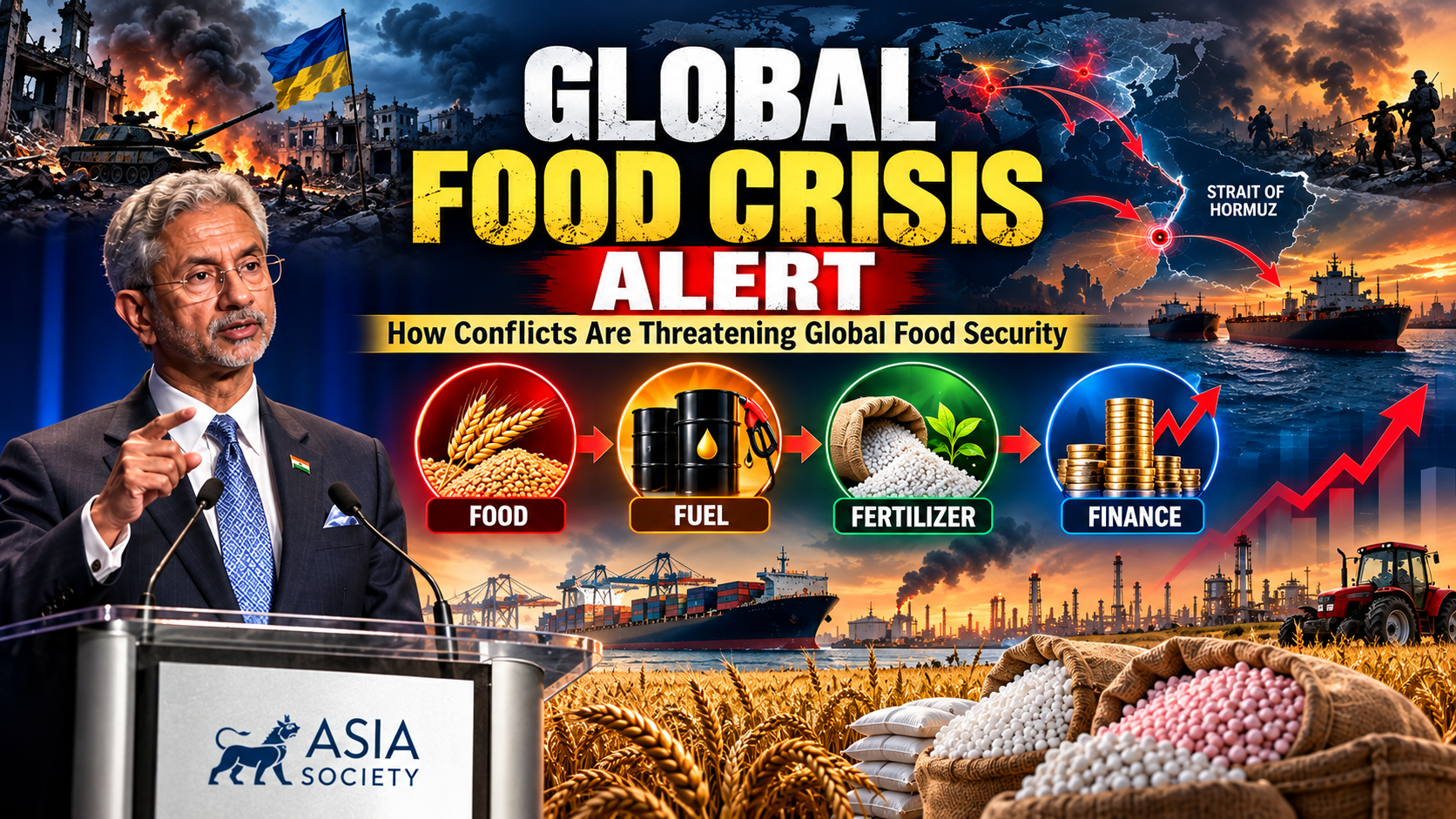
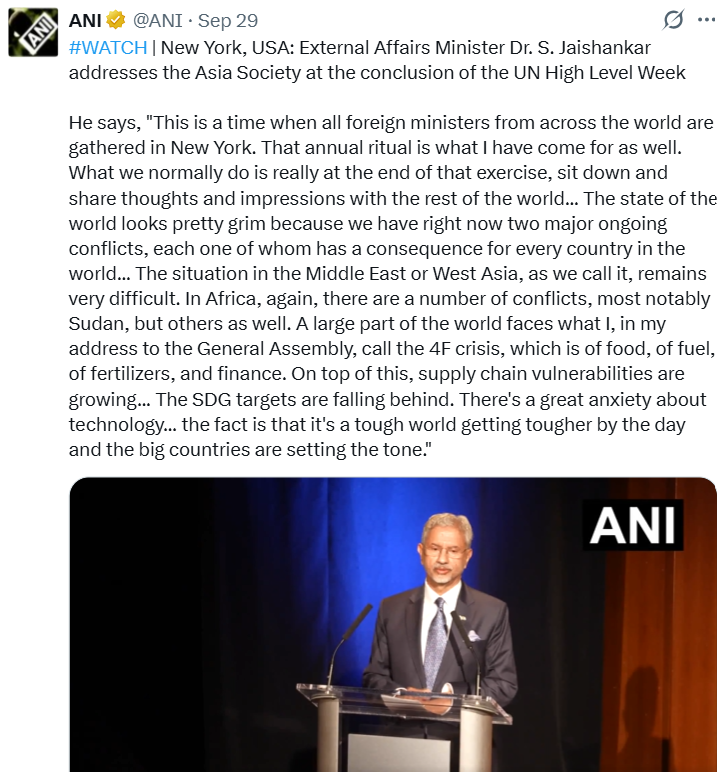
While most people focus on battlefields, geopolitical rivalries, and energy markets, a far bigger crisis may be quietly taking shape: global food security. Recently, India’s External Affairs Minister S. Jaishankar issued a serious warning during a discussion in the United States, cautioning that ongoing geopolitical conflicts could trigger a major food crisis in the coming months.

But how can wars in Ukraine or the Middle East affect the food on our plates? And why are governments worldwide increasingly worried about fertilizer supplies rather than just food stocks? Let's break down the emerging threat.
Why Did Jaishankar Raise the Alarm?
Speaking during an international discussion hosted alongside the United Nations session, Jaishankar highlighted the growing risks arising from prolonged geopolitical conflicts, particularly:
1. The Russia-Ukraine war
2. Rising tensions in the Middle East
3. Disruptions in global energy supplies
4. Uncertainty in fertilizer and grain exports
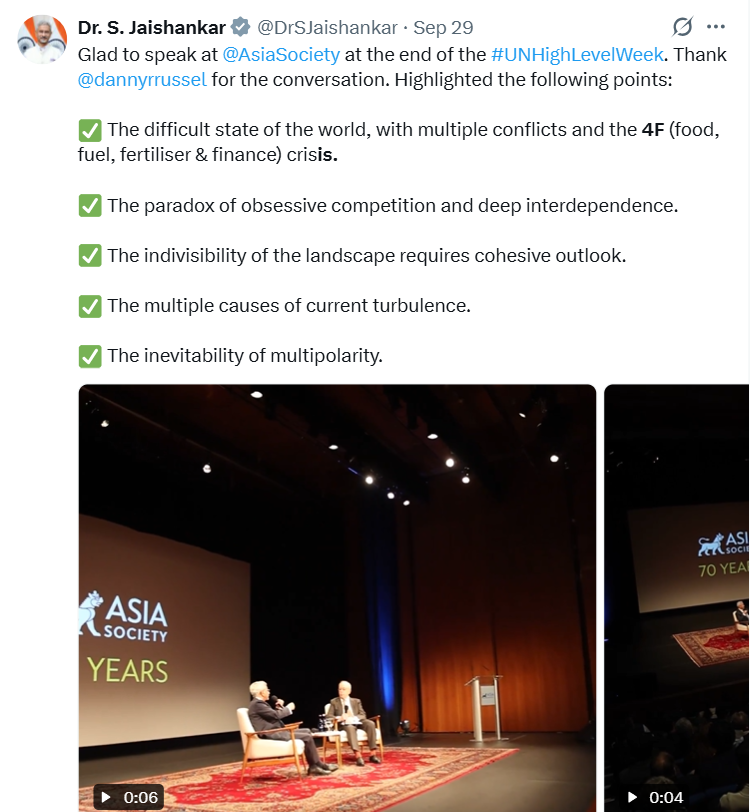
According to him, these disruptions are creating conditions that could severely impact global agricultural production in the near future.
The concern is not merely diplomatic. International organizations, including food security experts, have repeatedly cautioned that supply chain disruptions in energy and fertilizers are becoming a significant risk factor for future food production.
Food Crisis Is Not Just About Empty Warehouses
When people hear the term "food crisis," they often imagine empty grain silos and severe shortages of wheat or rice. However, modern food crises are far more complex. Today's agriculture depends heavily on:
1. Natural gas
2. Fertilizers
3. Ammonia
4. Phosphate
5. Potash
6. Diesel
7. Electricity
8. Global logistics networks
If any of these critical inputs become unavailable or expensive, agricultural output declines.
The chain reaction is simple:
War → Energy Disruption → Higher Fertilizer Costs → Lower Farm Productivity → Reduced Food Supply → Rising Prices → Food Insecurity
That is the real danger policymakers are worried about.
The Fertilizer-Energy-Food Connection Explained
One of the most overlooked realities of global agriculture is its energy dependence.
Take urea, for example. Urea is one of the most widely used fertilizers, especially in India. But producing urea requires ammonia, and ammonia production relies heavily on natural gas.
Natural Gas → Hydrogen → Ammonia → Urea → Crop Production
If natural gas supplies are disrupted, fertilizer production suffers. Farmers receive less fertilizer or face higher prices, leading to lower crop yields.
Eventually, food becomes scarcer and more expensive.
This is why experts say today's energy crisis could become tomorrow's food crisis.
A similar example can be seen in diesel-dependent farming. Tractors, irrigation pumps, harvesters, and food transportation networks all run largely on fuel. When oil prices surge due to geopolitical tensions, farming becomes more expensive at every stage. Farmers spend more on cultivation, transporters pay more to move crops, and retailers pass these costs on to consumers. The result is the same: higher food prices and increased food insecurity, even if there is no immediate shortage of crops.
In simple terms:
Oil Price Shock → Higher Fuel Costs → Expensive Farming & Transport → Higher Food Prices → Food Insecurity
Why the Middle East Matters More Than You Think
Many people associate the Middle East primarily with oil.
However, the region also plays a critical role in global fertilizer markets. Gulf nations account for a substantial share of global exports of:
1. Urea
2. Ammonia
3. Sulphur-based products
A significant portion of these supplies passes through the Strait of Hormuz, one of the world's most important maritime chokepoints. Any military escalation or shipping disruption in this corridor can instantly affect fertilizer availability worldwide, including in India.
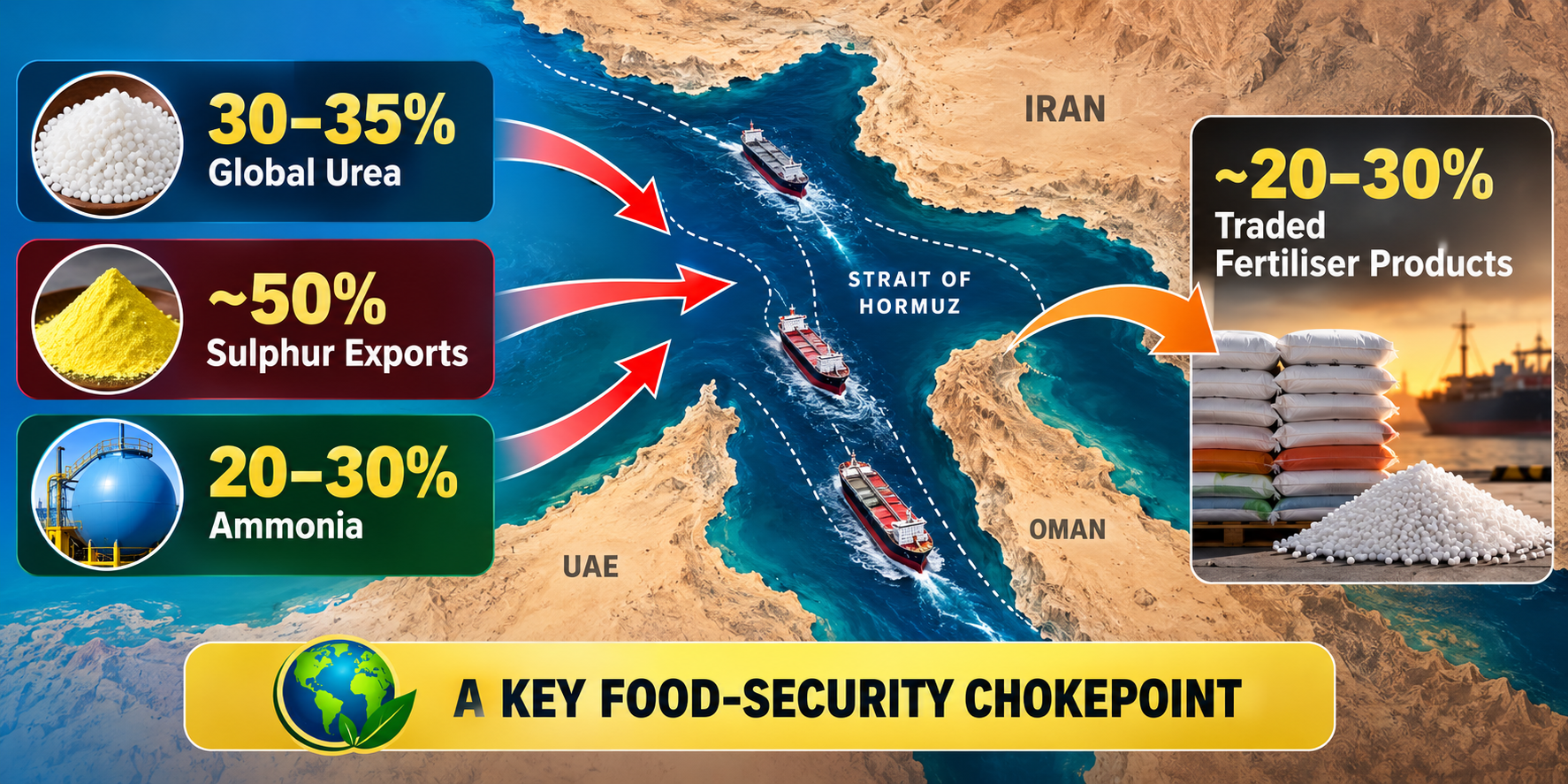
What begins as a regional conflict can quickly impact agricultural productivity across continents.
Ukraine's Role in Global Food Security
Ukraine has long been one of the world's major exporters of:
1. Wheat
2. Corn
3. Sunflower oil
Meanwhile, Russia remains a leading exporter of fertilizers and agricultural inputs. The ongoing conflict has repeatedly disrupted Black Sea shipping routes, affecting global trade flows.
The result?
1. Reduced grain exports
2. Volatile food prices
3. Higher transportation costs
4. Supply chain uncertainty
The consequences are felt far beyond Europe, particularly in food-importing developing nations.
Why Fertilizer Shortages Are More Dangerous Than Grain Shortages
Governments can often manage temporary grain shortages by:
1. Releasing strategic food reserves
2. Increasing imports
3. Implementing price-control measures
But fertilizer shortages are a different challenge altogether.
If farmers miss a growing season due to a lack of fertilizers, that lost production cannot simply be recovered later. A farmer cannot skip fertilizer use this year and apply double the amount next year to compensate. Lower fertilizer availability today means lower harvests tomorrow.
India's fertilizer needs go far beyond urea. Farmers rely on a balanced mix of Nitrogen (N), Phosphorus (P), and Potassium (K), each playing a vital role in crop growth, root development, and disease resistance.
It's like missing the foundation stage while building a house. You cannot skip the foundation today and expect to fix it by adding extra cement next year.
That makes fertilizer shortages a long-term threat rather than a short-term emergency.
The Four-F Crisis: Fuel, Food, Fertilizer and Finance
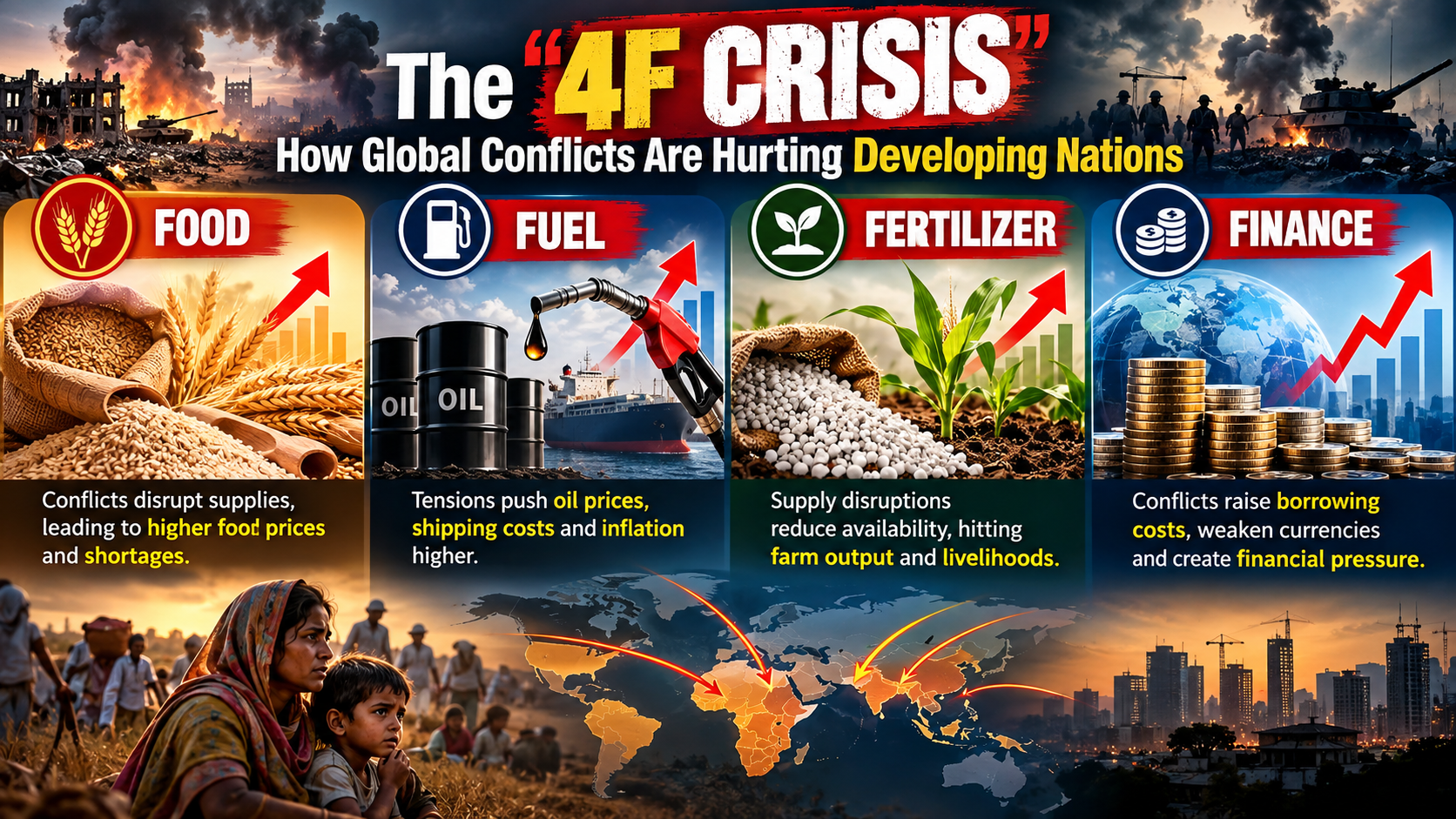
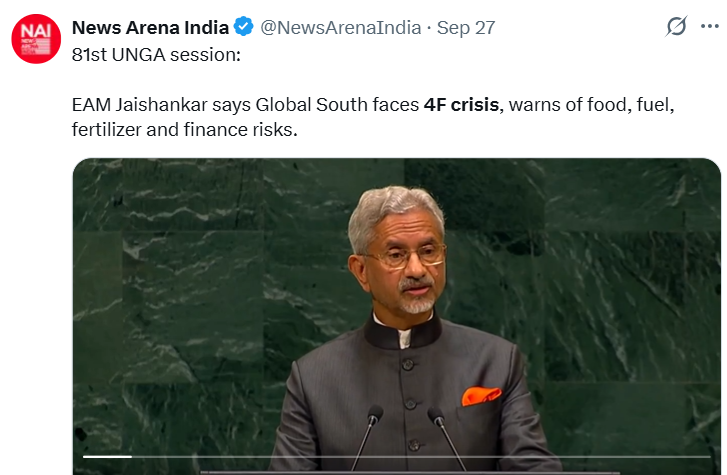
Jaishankar has repeatedly highlighted the growing risk of the 4F Crisis (Fuel, Food, Fertilizer, and Finance), warning that these interconnected challenges could destabilize economies worldwide." ✅4F Crisis Explained: How Fuel, Food, Fertilizer, and Finance Could Trigger the Next Global Shock
🍞 Food
Conflicts disrupt global food supplies, driving up prices and increasing food insecurity.
⛽ Fuel
Geopolitical tensions push energy prices higher, raising transportation and production costs worldwide.
🌾 Fertilizer
Supply disruptions reduce fertilizer availability, threatening crop yields and future food production.
💰 Finance
Economic uncertainty weakens currencies, raises borrowing costs, and strains developing economies.
When these four pressures combine, they create a perfect storm capable of destabilizing economies and worsening food insecurity worldwide.
At the United Nations General Assembly (UNGA), S. Jaishankar sounded the alarm on the growing 4F Crisis, warning that conflicts, terrorism, and geopolitical tensions are driving risks related to food, fuel, fertilizer, and finance, while renewing India's call for urgent UN reforms and stronger support for the Global South.
Five Major Food Crises the World Has Faced in the Last 50 Years
History offers important lessons.
1. The 1972-74 Food Crisis
Poor harvests in several regions, coupled with surging grain purchases by the Soviet Union and the 1973 oil shock, led to severe food and agricultural disruptions globally.
2. The 2007-08 Food Price Crisis
Low grain stocks, rising oil prices, biofuel demand, export restrictions, and poor harvests pushed food prices sharply higher.
3. The 2010-11 Food Shock
Severe drought and wildfires in Russia reduced wheat production, leading to export bans and a surge in global food prices. The severity of the crisis was reflected in the FAO Food Price Index, which climbed to a record 231 points in early 2011.
4. The COVID-19 Crisis (2020)
Food production remained relatively stable, but logistics collapsed. Lockdowns disrupted transport networks, while millions lost income and access to food.
5. The Russia-Ukraine Conflict (2022 onwards)
Disruptions in grain exports, fertilizer trade, and shipping routes sent global food markets into turmoil.
The common pattern? Multiple shocks hitting the system simultaneously.
How India Has Managed the Situation So Far
Despite global turbulence, India has largely avoided a severe fertilizer crisis. The government responded by:
1. Diversifying LNG and energy sources
2. Supporting fertilizer production
3. Maintaining strategic reserves
4. Monitoring supply chains closely
These measures helped stabilize supplies and ease concerns among farmers. However, successful management so far does not eliminate future risks. If geopolitical tensions persist or escalate, pressure on global food systems could intensify once again.
A recent example of such proactive intervention came when India allowed 1 million tonnes (10 lakh tonnes) of duty-free raw sugar imports for the first time in a decade to stabilize prices and safeguard supplies ahead of the festive season. The decision was driven by lower domestic output, growing ethanol-linked sugarcane diversion, and rising demand pressures. ✅ Sugar Shock 2026: India Allows Duty Free Sugar Imports After a Decade Amid Sweet Crisis
The Bottom Line
S. Jaishankar's warning is not simply about food shortages. It is a warning about the fragile interdependence of energy, agriculture, trade, and geopolitics.
The world has learned repeatedly that food crises rarely begin in farms alone. They often start with wars, disrupted supply chains, energy shocks, and policy failures. As global conflicts continue to reshape trade routes and fertilizer markets, governments must act proactively rather than react after the damage is done.
The next global food crisis may not arrive suddenly. It may already be taking shape beneath the surface.
🚨Stay Ahead of Global Events That Shape Our Future
Food security, geopolitics, energy markets, and economic stability are more connected than ever before.
👉 Follow our blog for in-depth analysis of global developments, strategic affairs, and emerging crises before they make headlines.
📩 Subscribe now and get expert insights delivered directly to your inbox.
Written by
Vedant BhardwajDiscussion (0)
Sign in to join the discussion.
Loading comments…