
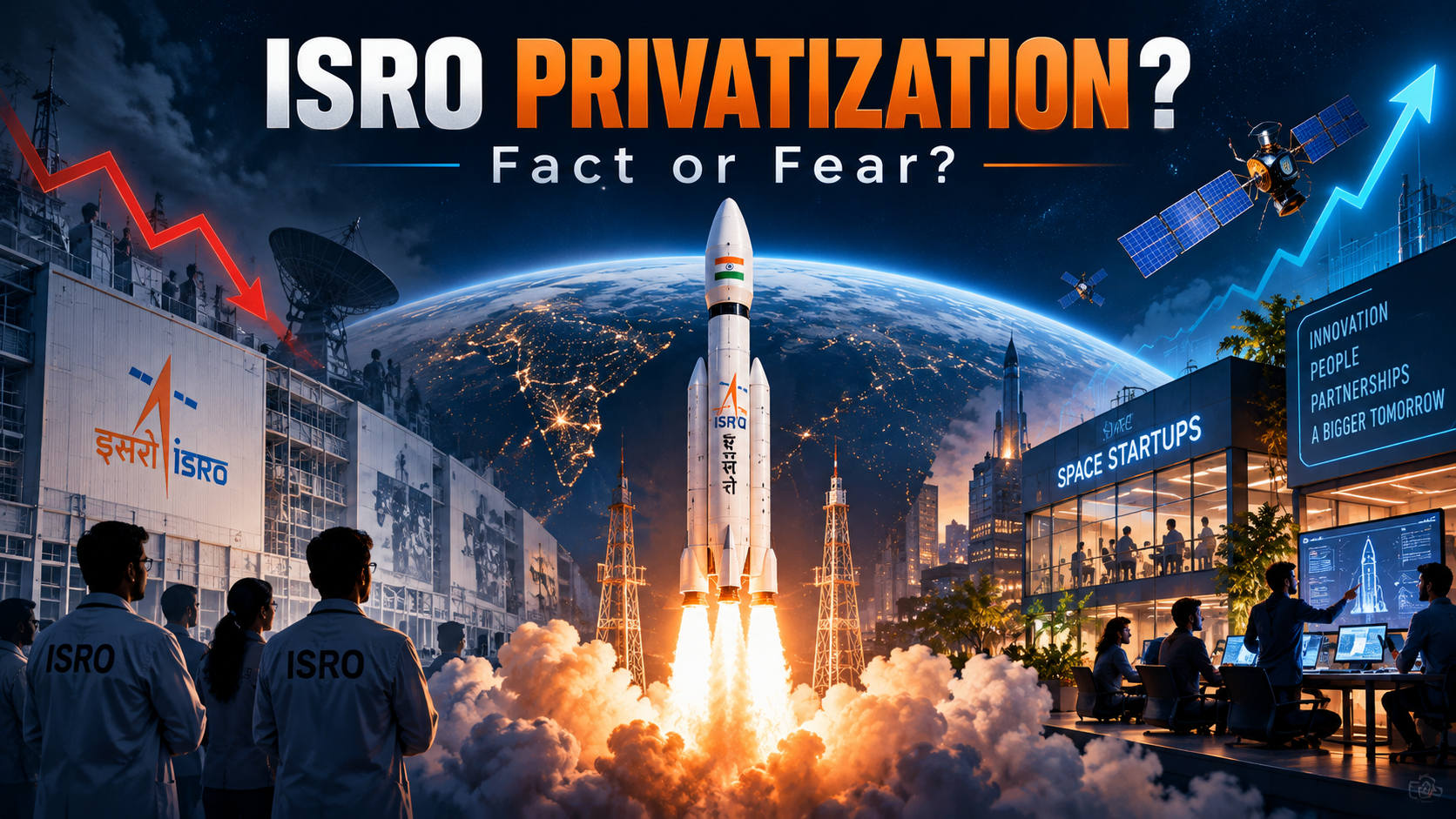
India's Space Race Is Changing Forever. But Is ISRO Being Privatized?
India's space sector is witnessing a historic transformation. Private companies are entering the industry at an unprecedented pace, startups are attracting millions in investments, and commercial space opportunities are expanding rapidly.
But amid this growth, a major controversy has erupted.
Thousands of ISRO employees have reportedly sought clarification from the organization's leadership regarding the future of India's premier space agency. The concern? Whether the government's push for private participation could eventually reduce ISRO's role and impact employee security.
So, is ISRO really being privatized? Or is there more to the story? Let's break it down.
The Trigger: Why ISRO Employees Raised Concerns
A coalition of nine employee associations representing nearly 5,000 ISRO staff members recently sought written clarification from ISRO Chairman and Department of Space Secretary Dr. V. Narayanan regarding the agency's future role.
The concern emerged after statements from senior space-sector officials suggested that manufacturing and routine production activities may increasingly shift toward private industry and public sector enterprises.
For many employees, the question is simple: If private companies manufacture rockets, build satellites, and manage launch operations, what will happen to ISRO's engineers, technicians, and production facilities?
Understanding the ISRO Privatization Debate
The term "privatization" is being widely used, but it actually refers to three very different possibilities.
1. Complete Privatization of ISRO
This would mean ISRO becomes a private entity and moves out of government control. The answer is clear: No, ISRO is not being privatized. ISRO has officially dismissed such claims as baseless and reiterated that India's space agency will remain a government institution.
2. Increased Private Participation in India's Space Sector
This is already happening. The Indian government has opened the space sector to private companies, allowing them to:
Build satellites.
Develop launch vehicles.
Offer launch services.
Manufacture space technologies.
Develop propulsion systems.
Participate in commercial space missions.
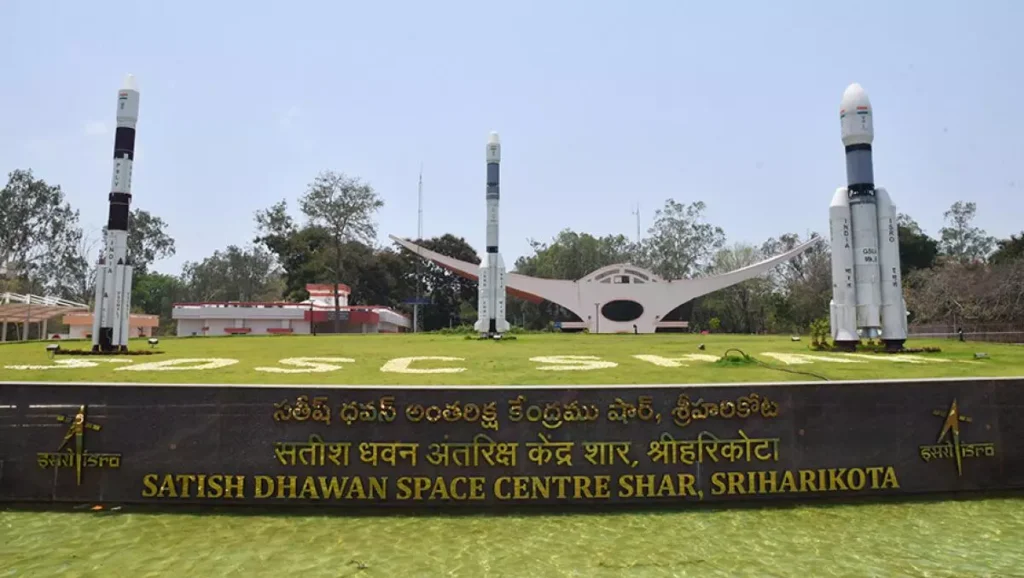
The rise of startups such as Skyroot Aerospace demonstrates how rapidly private participation is growing. On 18 July 2026, India marked a historic moment in its space journey as Hyderabad-based Skyroot Aerospace successfully launched Vikram-1, the country's first privately developed orbital launch vehicle, from the Satish Dhawan Space Centre in Sriharikota. Aptly named "Aagaman" (Arrival), the mission symbolized the emergence of India's private space sector as a major force in the global space industry. Read our detailed analysis of the mission and its impact on India's private space revolution. [Vikram-1: India's Private Space Revolution]
3. Shift in ISRO's Role: The Real Concern
This is where employee anxiety truly lies. Historically, ISRO handled almost everything:
Research & Development.
Rocket manufacturing.
Satellite production.
Mission integration.
Launch operations.
Now, the vision is evolving. ISRO is expected to focus more on:
Advanced research.
Frontier technologies.
Strategic missions.
Deep space exploration.
Human spaceflight programs.
Future launch technologies.
Meanwhile, routine manufacturing and commercialization could increasingly move to private industry.
Why India Is Opening Its Space Sector
For decades, India's government-led space model delivered remarkable success. From the highly reliable PSLV missions to Chandrayaan and Mangalyaan, ISRO proved that world-class space missions could be achieved at a fraction of global costs.
However, the government believes that relying solely on ISRO may not unlock the full economic potential of the global space industry.
The Global Model
Take the United States as an example. NASA focuses heavily on research, exploration, and strategic missions, while private companies such as SpaceX handle commercial launches, cargo transport, and many operational space services.
India is now moving toward a similar ecosystem where:
ISRO drives innovation.
Startups create solutions.
Private companies scale production.
Academia supports research.
Public sector enterprises strengthen manufacturing.
The goal is not replacing ISRO. The goal is multiplying India's space capabilities.
How India's Space Ecosystem Is Being Restructured
Since 2020, responsibilities have been distributed across multiple organizations.
ISRO (Indian Space Research Organization)
Focus Areas:
✅ Advanced R&D.
✅ Strategic missions.
✅ Human spaceflight programs.
✅ Next-generation launch vehicles.
✅ Reusable rocket technologies.
IN-SPACe (Indian National Space Promotion and Authorization Centre)
Responsible for:
✅ Authorizing private space activities.
✅ Supporting industry participation.
✅ Regulating private sector involvement.
NSIL (New Space India Limited)
Responsible for:
✅ Commercialization of ISRO technologies.
✅ Launch service contracts.
✅ Marketing India's space capabilities globally.
Why Employees Are Still Worried
The concern is not merely about job losses. It is about preserving expertise.
Many ISRO employees argue that space technology is not just theoretical knowledge stored in manuals. It involves decades of hands-on experience in designing, manufacturing, testing, and launching complex systems. Their concerns also come at a time when ISRO has been facing challenges related to workforce retention and experienced talent departures. Explore our in-depth report on the growing concerns surrounding ISRO's talent pipeline. [ISRO Talent Exodus Crisis]
A critical question emerges: What Happens When Manufacturing Leaves ISRO?
If routine rocket production gradually shifts to private companies, will ISRO lose crucial operational expertise over time? Industry knowledge is built through practice. Some employees fear that reducing direct involvement in manufacturing and launch operations may eventually weaken institutional capabilities.
Private Companies Are Taking a Bigger Role
Several activities are increasingly moving toward industry participation:
A. Launch Vehicle Production
PSLV (Polar Satellite Launch Vehicle) - ISRO's most reliable workhorse rocket, mainly used for launching Earth observation and remote-sensing satellites into polar or sun-synchronous orbits.
LVM3 (Launch Vehicle Mark-3) -Previously known as GSLV Mk III (Geosynchronous Satellite Launch Vehicle Mark III). It is ISRO's heaviest operational launch vehicle, used for high-payload missions, communication satellites, and the Chandrayaan-2, Chandrayaan-3, and Gaganyaan missions.
SSLV (Small Satellite Launch Vehicle) - A cost-effective, quick-launch rocket designed specifically for launching small satellites.
Other future launch systems.
B. Satellite Manufacturing
ISRO is increasingly outsourcing routine satellite production to industry partners.
C. Launch Infrastructure
Private entities are expected to play larger roles in supporting launch operations and related infrastructure.
D. Technology Transfers
ISRO has already transferred various technologies to private companies to encourage industrial growth.
One significant example is the transfer of SSLV technologies for industrial production.
The Employment Paradox
Here lies the most interesting twist. ISRO Jobs May Reduce...
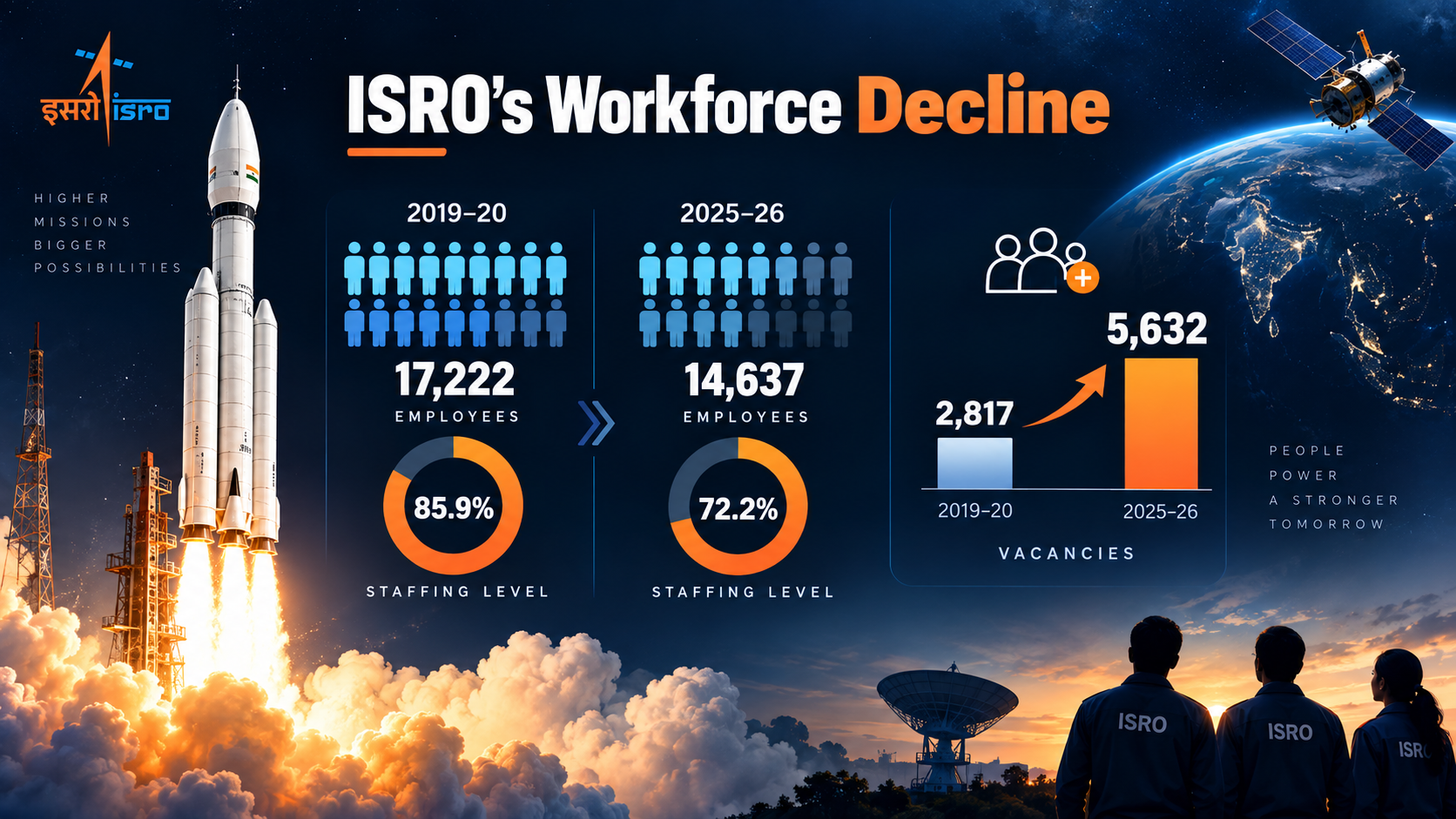
Employee representatives point out that sanctioned positions remain unfilled and staffing levels have declined over recent years.
As routine activities move to the private sector, ISRO may need fewer personnel for some operational roles. But Space Industry Jobs Could Explode.
On the other hand:
Space startups are rapidly increasing.
Private investment is growing.
New commercial opportunities are emerging.
Manufacturing demand is expanding.
Experts believe India's growing space economy could create a vast number of new opportunities across engineering, manufacturing, software, AI, analytics, and aerospace sectors.
In simple terms: Some government jobs may shrink, but the broader space industry could create significantly more employment opportunities overall.
🚀 Fewer Inside ISRO, More Outside: India’s Space Jobs Are Taking Off
India’s space sector is undergoing an interesting shift. ISRO’s workforce fell from 17,222 employees in 2019–20 to 14,637 in 2025–26, while vacancies more than doubled from 2,817 to 5,632.
At the same time, the private space ecosystem has exploded, with space-tech startups rising from just 1 in 2014 to around 440 in 2026. Private-sector investment also jumped from $100.5 million in 2021–22 to $618.5 million by March 2026.
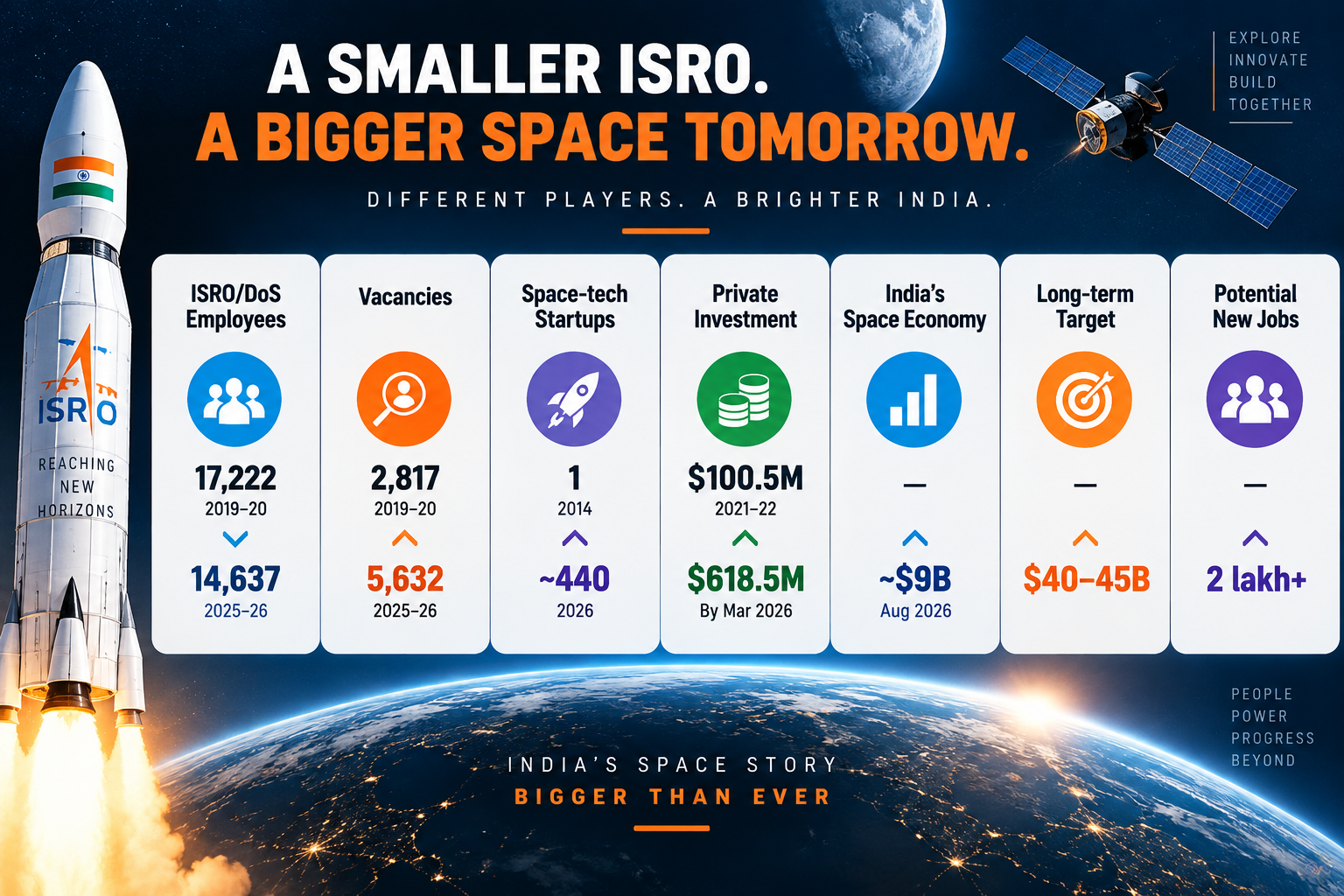
The bigger picture: India may have fewer people working inside ISRO, but the opportunity for people working across the broader space ecosystem is expanding rapidly.
What the Future of ISRO Really Looks Like
The debate is not about whether ISRO will disappear. It won't. The real transformation is that ISRO may evolve from being an organization that does everything itself to becoming one that:
Innovates new technologies.
Leads strategic missions.
Oversees the space ecosystem.
Enables private industry growth.
Much like NASA's relationship with private aerospace companies, ISRO could become the innovation powerhouse driving India's next era of space exploration.
Final Verdict: Privatization or Evolution?
Despite growing concerns among employees, India's government and ISRO leadership have made it clear that ISRO is not being privatized.
What is happening instead is a strategic restructuring of India's space ecosystem. Private companies will manufacture more. Startups will innovate faster. Commercial space activities will expand. And ISRO will focus on pushing the boundaries of science, technology, and exploration.
The challenge ahead is ensuring that India balances commercial growth with the preservation of the technical expertise that made ISRO a global success story.
🚀 What Do You Think?
Is India's decision to open its space sector the right move?
✅ Will private participation make India a global space superpower?
✅ Or could it weaken ISRO's core strengths over time?
Share your thoughts in the comments below and join the conversation on the future of India's space ambitions.
For more insightful updates on geopolitics, technology, defense, and space exploration, subscribe to our newsletter and never miss a story that shapes the future. 🌍🚀
Understanding where ISRO has come from is key to understanding where India's space ambitions are headed next. Dive deep into our latest blog for insights:
https://mangalbhavana.com/article/isro-talent-exodus-crisis-gaganyaan-chandrayaan
https://mangalbhavana.com/article/vikram-1-india-private-space-revolution
Written by
Vedant BhardwajDiscussion (0)
Sign in to join the discussion.
Loading comments…