
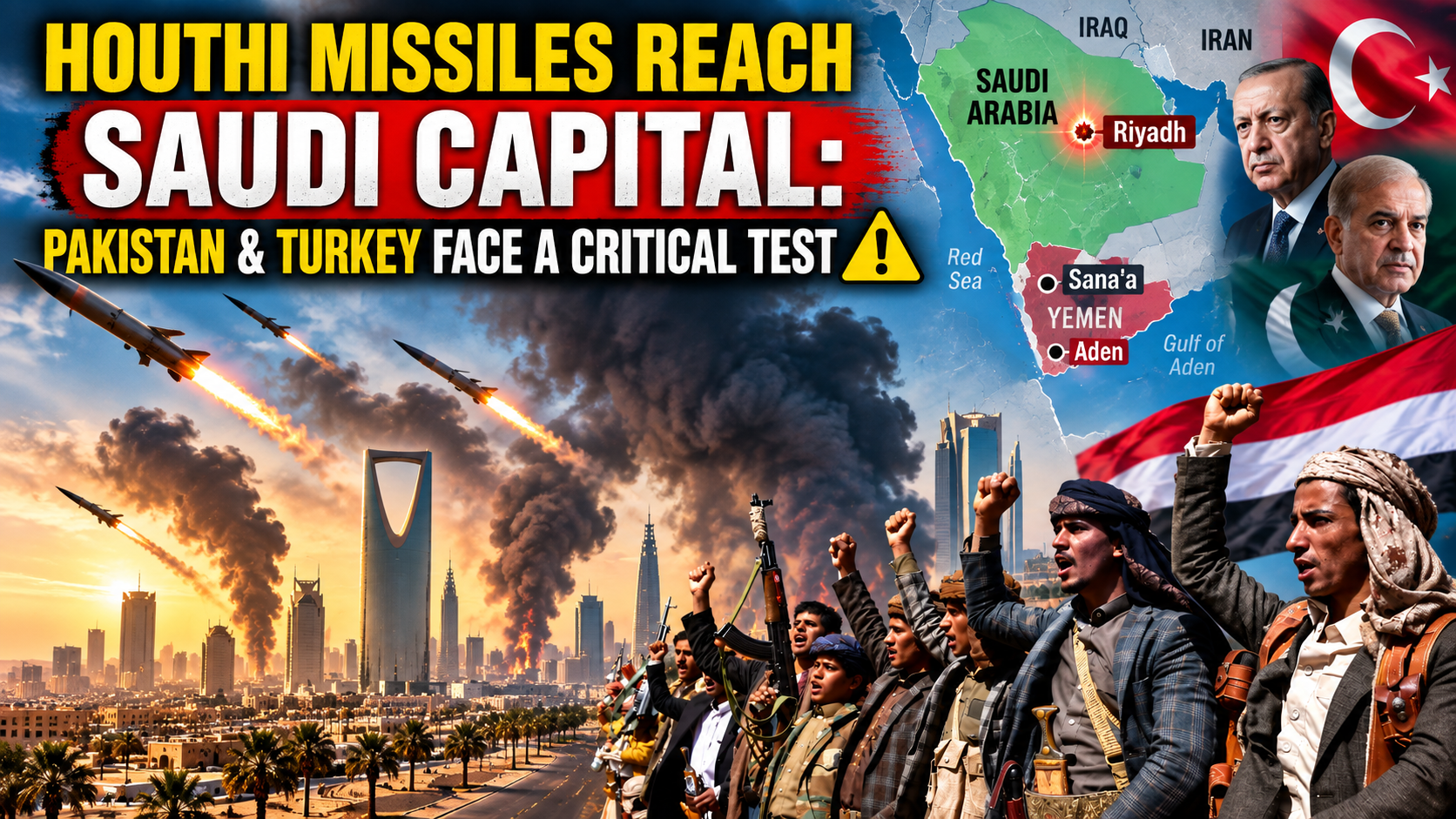
A Direct Strike on Saudi Arabia’s Capital Signals a Major Escalation in the Yemen Conflict
The Middle East conflict has taken a dramatic turn. In a development that has sent shockwaves across the region, the Iran-backed Houthi movement has claimed responsibility for attacks targeting Riyadh, the capital of Saudi Arabia, along with the strategic port city of Yanbu. For the first time in recent years, Riyadh itself has become the center of an aerial threat, raising fears that the Yemen conflict is expanding beyond traditional frontlines.
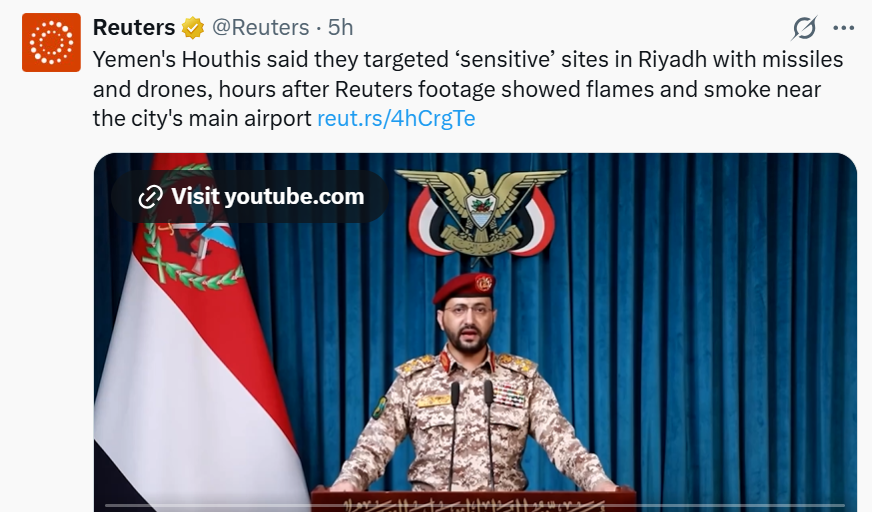
The incident is not just another regional skirmish. It carries profound political, economic, and geopolitical implications that could reshape power dynamics across the Middle East and potentially draw countries like Pakistan and Turkey into an increasingly complex crisis.
What Happened in Riyadh?
Saudi authorities reportedly issued emergency warnings to residents across Riyadh, urging them to remain alert amid aerial threats. Witnesses later reported hearing explosions, while videos and reports showed dark smoke rising near the vicinity of King Khalid International Airport.
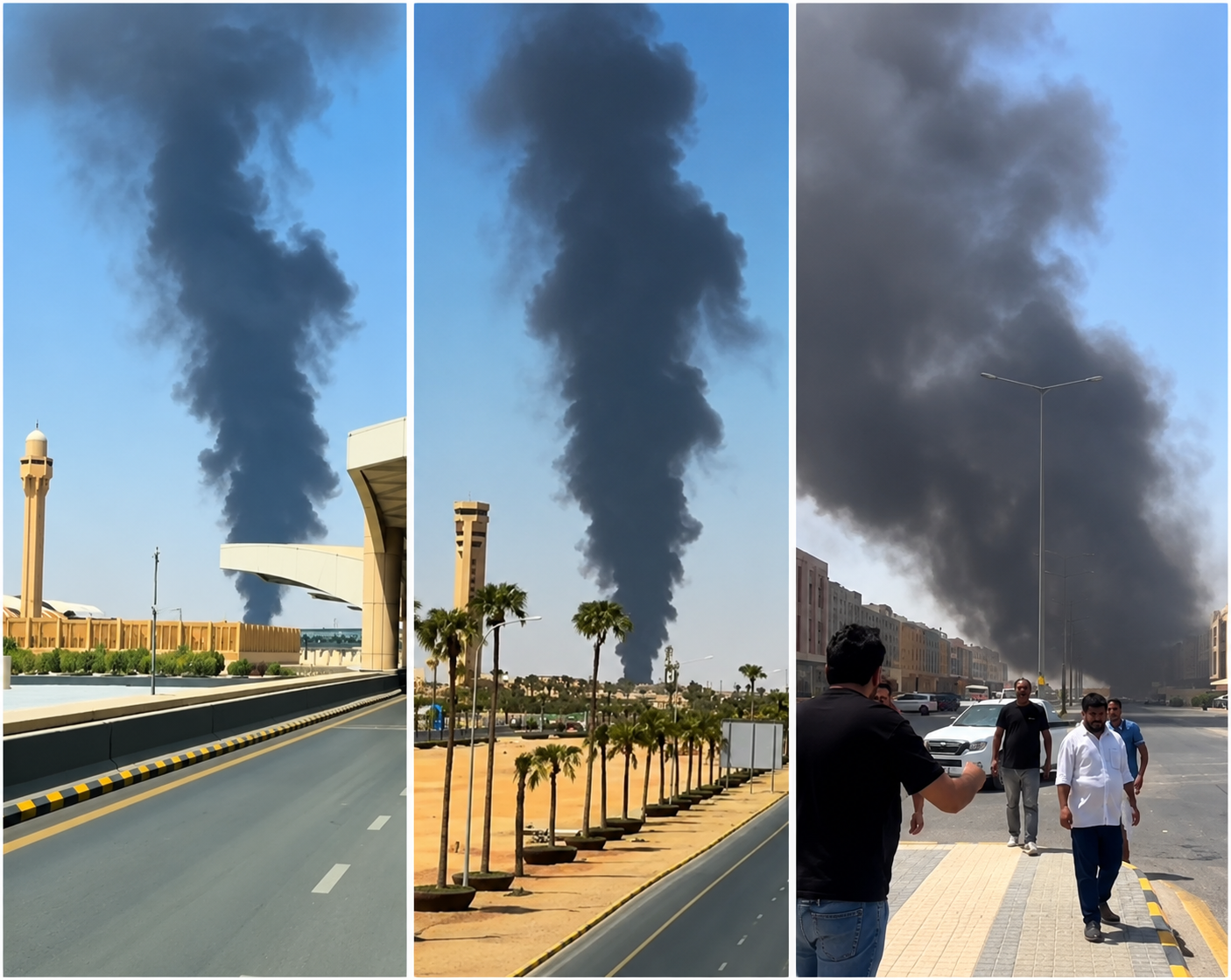
Flight tracking data also indicated disruptions, including delays and cancellations, creating speculation about the scale of the incident.
Although Saudi Arabia has not officially disclosed full details regarding the attack, the Houthis later announced that they had launched a coordinated operation involving:
✅ Cruise missiles
✅ Ballistic missiles
✅ Armed drones
According to Houthi statements, the strikes targeted critical infrastructure and strategic locations within the Saudi capital.
Why Is Riyadh Such a Significant Target?
This attack is important because Riyadh is far more than just another Saudi city. The capital serves as:
The political heart of Saudi Arabia
Headquarters of major government institutions
A key diplomatic center
A major economic hub
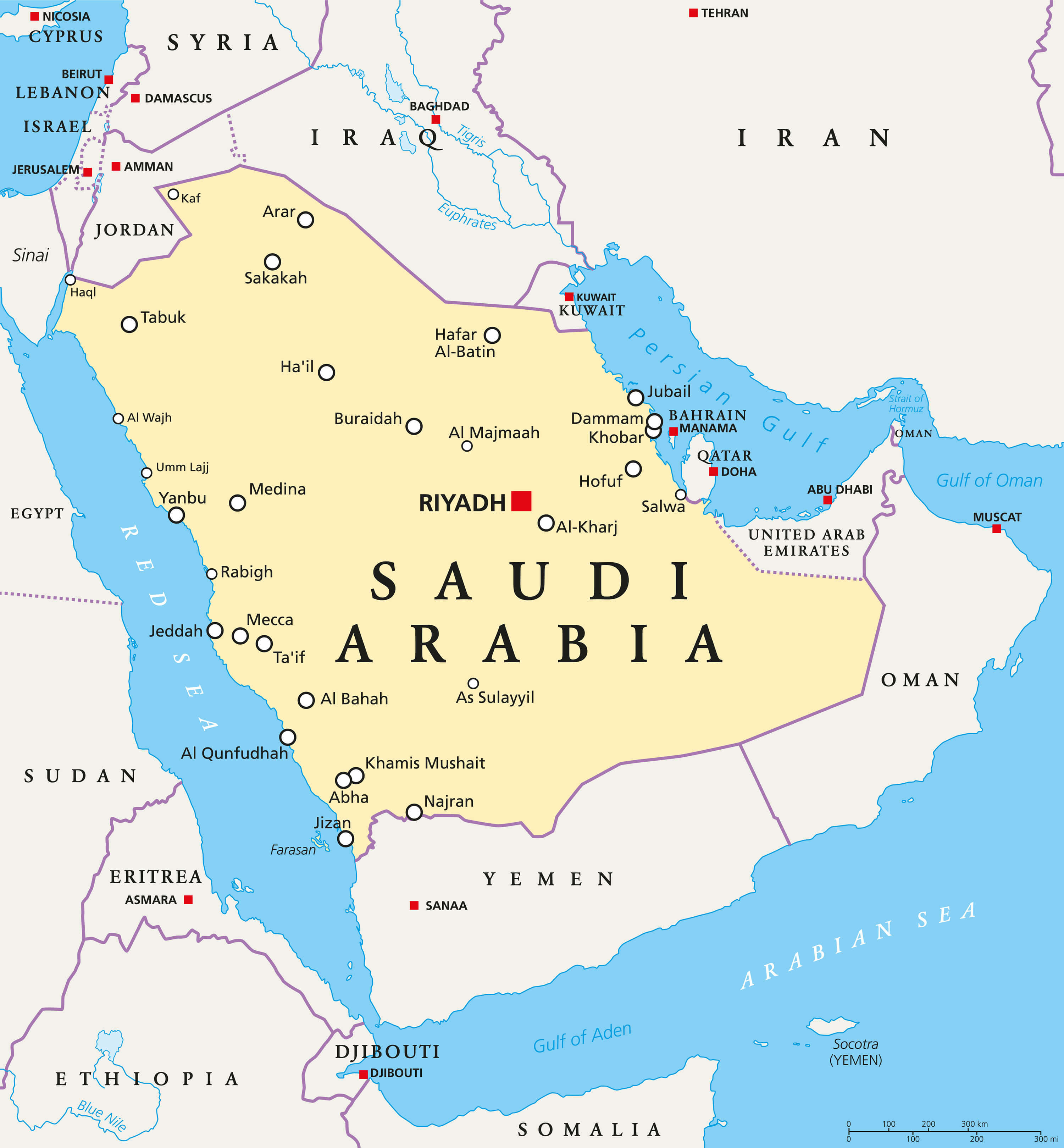
For years, Houthi attacks were primarily concentrated near Saudi Arabia's southern border with Yemen. While missile and drone launches occasionally threatened other regions, Riyadh largely remained insulated from direct battlefield pressure.
A successful strike or even a credible threat against Riyadh delivers something beyond physical damage: psychological impact. It sends a message that no part of Saudi Arabia is entirely beyond the reach of the conflict.
Understanding Saudi Arabia's Involvement in Yemen
To understand the significance of these attacks, one must first understand why Saudi Arabia is deeply involved in Yemen. Saudi Arabia shares an extensive border with Yemen and views stability there as essential to its national security. The country's concerns include:
Border Security
A hostile force controlling northern Yemen poses a direct security threat to Saudi territory.
Maritime Trade Routes
Saudi trade and energy shipments depend heavily on access through the Bab-el-Mandeb Strait, one of the world's most critical maritime chokepoints. If the Houthis disrupt shipping in this corridor, Saudi Arabia's economic interests could be severely affected.
Regional Influence
Saudi Arabia backs Yemen's internationally recognized government, while the Houthis receive support from Iran. As a result, many analysts view the Yemen conflict as a broader regional power struggle between Saudi Arabia and Iran, with the Houthis acting as a key proxy force.
The Return of a Conflict Many Thought Had Calmly Faded
The Saudi-Houthi war dominated headlines between 2015 and 2022. After years of fighting, United Nations-backed efforts helped reduce hostilities, creating a fragile period of relative calm.
However, the current geopolitical environment has changed dramatically.
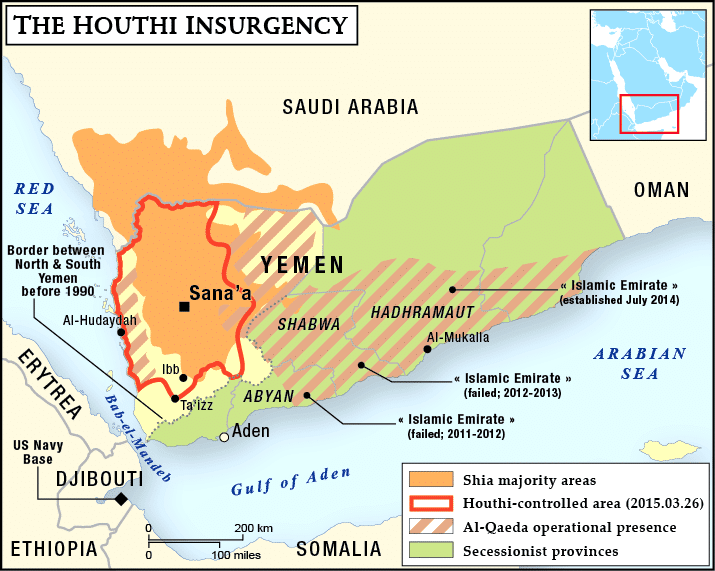
The broader confrontation involving Iran, regional security concerns, and maritime tensions has reignited old fault lines. As pressure on Iran increases, many observers believe Tehran may rely more heavily on allied groups across the region, including the Houthis. This has raised concerns that Yemen is once again becoming a major battleground in the wider Middle East power struggle.
Yanbu Attack Raises Fresh Concerns Over Global Energy Security
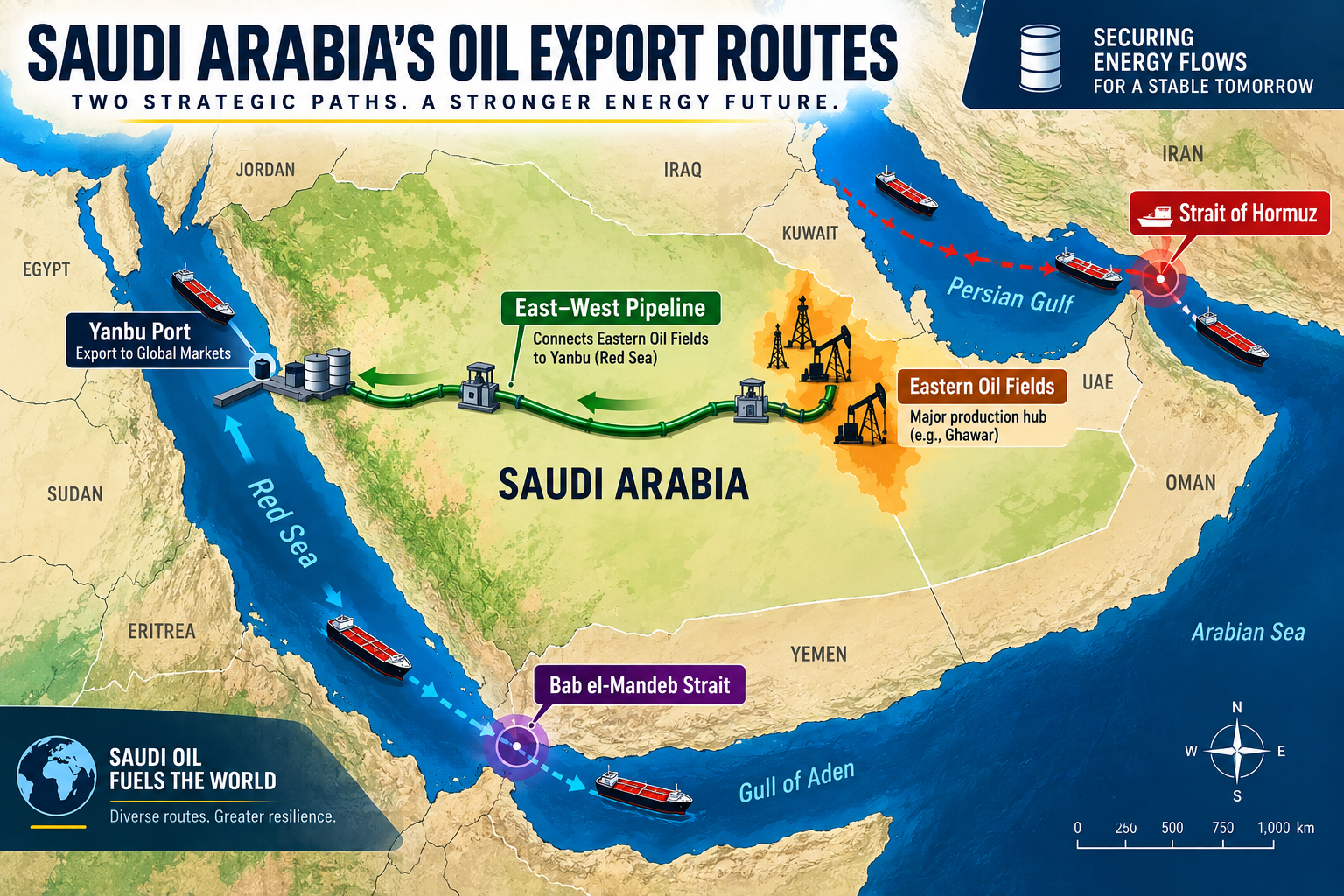
While Riyadh grabbed international attention, the reported attack on Yanbu may hold equally serious consequences. Yanbu is a critical Saudi port linked to the country's East-West Pipeline, a major energy corridor that transports oil from eastern Saudi oil fields to the Red Sea coast. 👉 ⚠️ Saudi Arabia’s Oil Lifeline Under Fire!
Why does this matter?
Because the pipeline gives Saudi Arabia an alternative export route when tensions threaten shipping lanes elsewhere, an attack on Yanbu targets Saudi Arabia's economic lifeline rather than just its political leadership.
Analysts suggest the Houthis may be pursuing a dual-pressure strategy:
Political Pressure: By targeting Riyadh.
Economic Pressure: By targeting oil infrastructure and export facilities.
Combined, these tactics could increase the cost of conflict for Saudi Arabia while creating uncertainty in global energy markets.
Could Pakistan and Turkey Be Pulled Into the Crisis?
One of the most discussed aspects of this escalation is the potential role of Pakistan and Turkey. Both countries maintain important strategic and defense relationships with Saudi Arabia. In recent years, various defense cooperation agreements and security understandings have strengthened ties among these nations. 👉 Mecca Defense Pact: Iran’s Stern Warning as ‘Islamic NATO’ Rises in West Asia
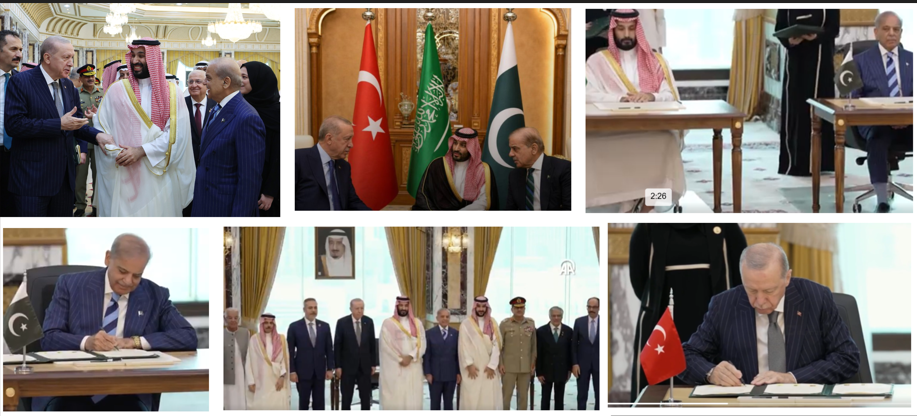
This has led to growing speculation over whether an attack on Saudi Arabia could trigger broader support mechanisms.
However, geopolitical realities are rarely straightforward.
Direct military intervention involves significant risks, especially considering both Pakistan and Turkey maintain important diplomatic relationships across the region, including interactions with Iran.
As a result, immediate military involvement remains uncertain.
What Kind of Support Could Saudi Arabia Receive?
Even without direct combat participation, partners such as Pakistan and Turkey could potentially assist Saudi Arabia in several ways:
Intelligence Sharing: Satellite imagery, surveillance data, and threat assessments.
Air Defense Assistance: Advanced radar systems and defensive technologies.
Logistics Support: Transportation, maintenance, and operational resources.
Naval Cooperation: Enhanced maritime security in critical waterways like the Red Sea.
Strategic Coordination: Joint planning and regional security consultations.
Such forms of support could strengthen Saudi defensive capabilities without crossing the threshold into direct warfare.
Houthi Warning to Pakistan and Turkey Escalates Tensions
Adding another layer of complexity, senior Houthi officials have reportedly issued sharp warnings to both Pakistan and Turkey. The message was clear: any active involvement in support of Saudi Arabia could make them targets as well.
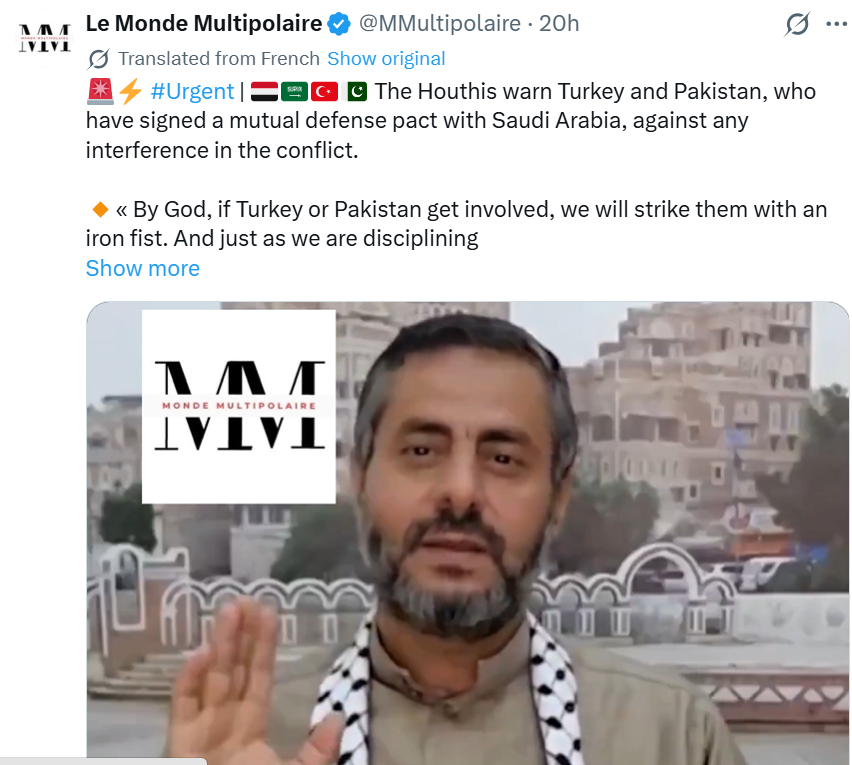
This rhetoric highlights how rapidly the conflict risks expanding beyond Yemen and Saudi Arabia. The fear among regional observers is that what began as a localized conflict could evolve into a broader confrontation involving multiple countries and strategic alliances.
Pakistan's Diplomatic Dilemma
Pakistan may face one of the toughest balancing acts in the region. On one side, it has strong defense and strategic ties with Saudi Arabia. On the other, maintaining a stable relationship with neighbouring Iran remains critical for regional security and economic interests.
This creates a challenging policy question: How can Pakistan support a key ally without damaging relations with another important regional partner?
The answer is far from simple, underscoring why Middle Eastern geopolitics often defies easy solutions.
What Happens Next?
The biggest uncertainty now is how Saudi Arabia responds. If Riyadh launches stronger military operations against Houthi positions, further retaliation could follow. If attacks continue against critical infrastructure, regional powers may face increasing pressure to become involved.
What makes this situation particularly dangerous is the risk of escalation. Each strike invites a response. Each response increases the stakes.
And with strategic oil routes, regional alliances, and rival powers already deeply entangled, the path toward stability appears increasingly difficult.
Conclusion: A Region at a Critical Crossroads
The reported attacks on Riyadh and Yanbu mark more than isolated military incidents. They symbolize a potential new chapter in the Middle East's evolving geopolitical landscape.
From Saudi Arabia's security concerns and energy infrastructure vulnerabilities to the delicate calculations facing Pakistan and Turkey, every move now carries significant regional consequences.
As tensions continue to rise, the world will be closely watching whether diplomacy can regain momentum or whether the conflict enters an even more dangerous phase.
🚨 Stay Ahead of Global Geopolitical Shifts
The Middle East is changing rapidly, and every new development could reshape regional alliances, energy markets, and international security.
👉 Follow our blog for in-depth geopolitical analysis, breaking developments, and expert insights into the world's most critical conflicts.
📩 Subscribe now and never miss a major global story that could impact the future of international politics and economics.
Written by
Ishaan TrivediDiscussion (0)
Sign in to join the discussion.
Loading comments…