
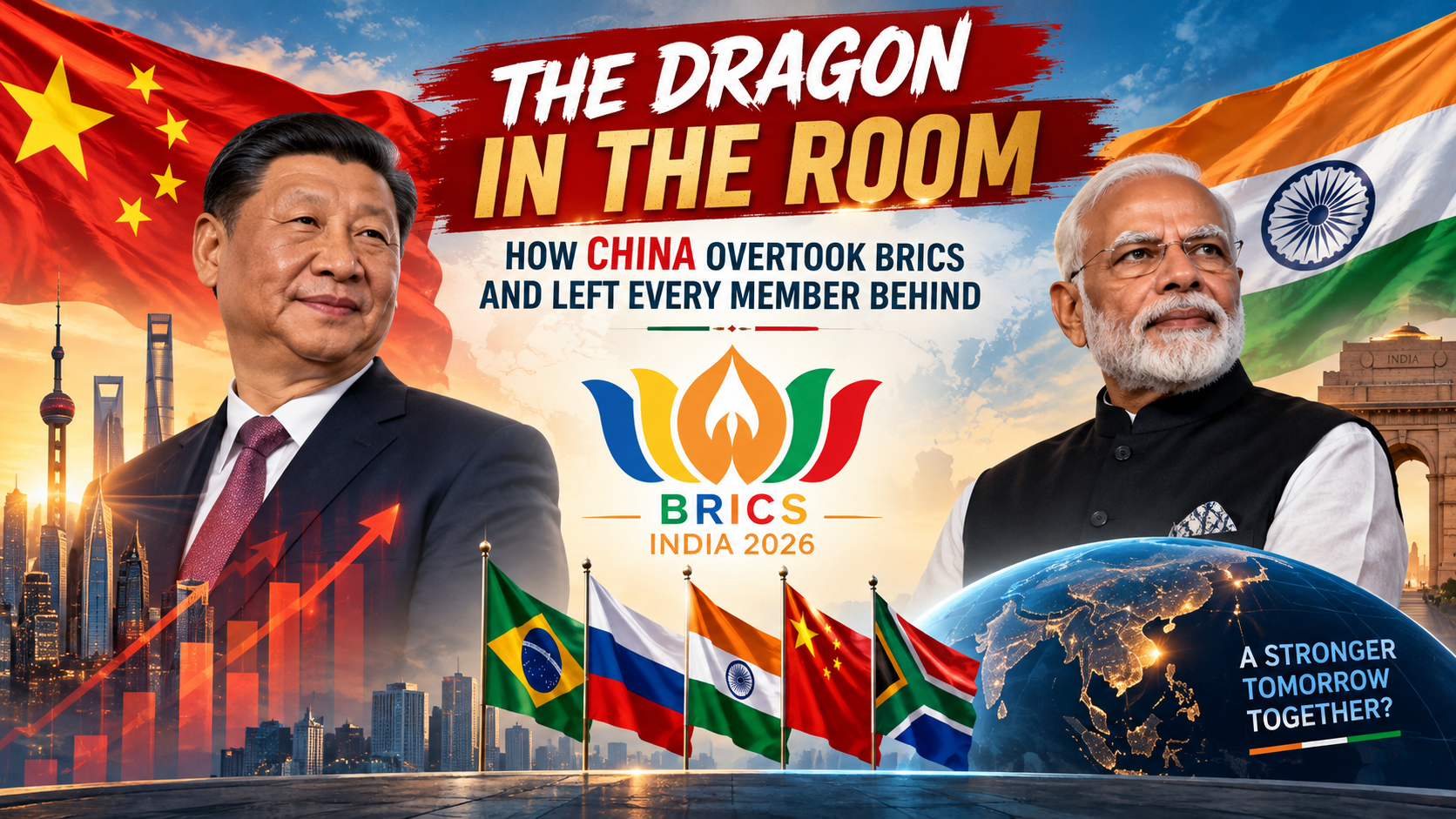
From a $2.7 Trillion Economy to a Global Powerhouse: Can India Ever Close the Gap?
Over the last two decades, China's economic rise has been nothing short of extraordinary. What began as one of several emerging economies within BRICS has transformed into a dominant force that now overshadows every other member combined.
When BRICS was formed in 2006, the vision was simple: give emerging economies a stronger voice in global governance. Today, however, a new reality has emerged. BRICS may be a coalition of rising nations, but China has become the undisputed heavyweight of the group.
So, how did China pull so far ahead? And where does India stand in this evolving economic landscape?
The Original Purpose of BRICS
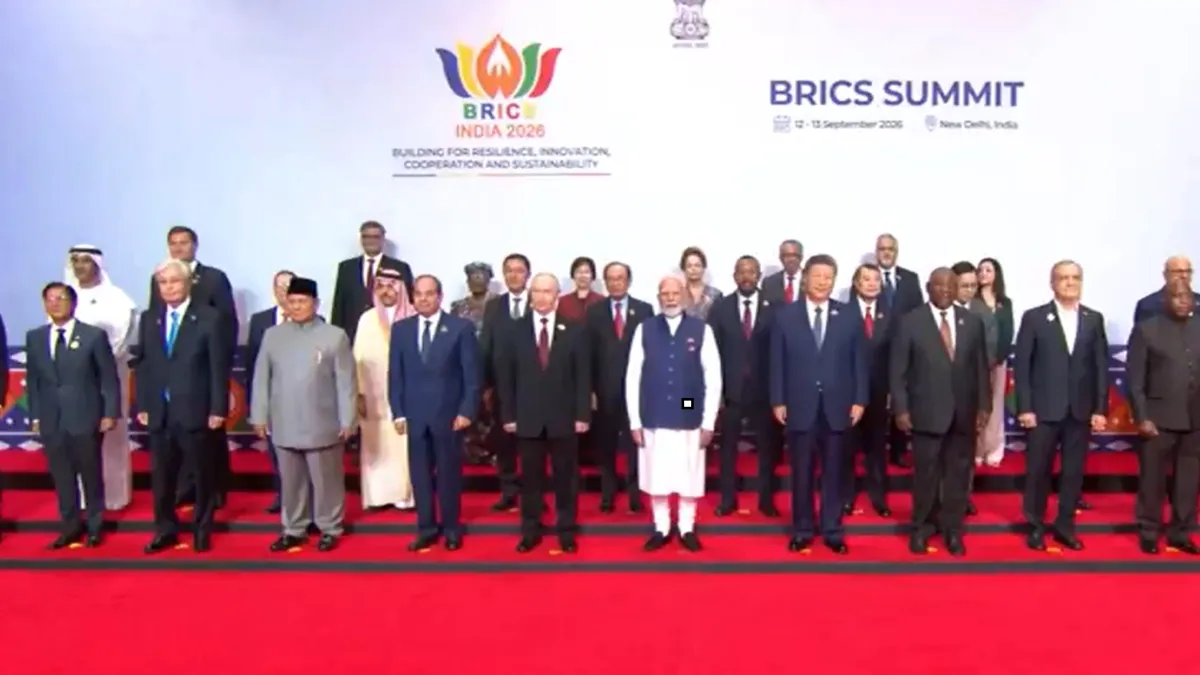
BRICS was established in 2006 with four nations: Brazil, Russia, India, and China. South Africa joined the group in 2010, turning BRIC into BRICS. The alliance was created to challenge the dominance of Western-led institutions such as the G7, IMF, and World Bank. Its primary goals included:
Increasing the representation of emerging economies in global decision-making.
Strengthening South-South cooperation.
Promoting trade and investment among developing nations.
Enhancing the bargaining power of emerging markets.
Today, BRICS has expanded from five members to eleven, including Egypt, Ethiopia, Iran, Indonesia, Saudi Arabia, and the UAE.
But despite this expansion, one country continues to dominate the conversation: China.
China's Stunning Transformation: The Numbers Tell the Story
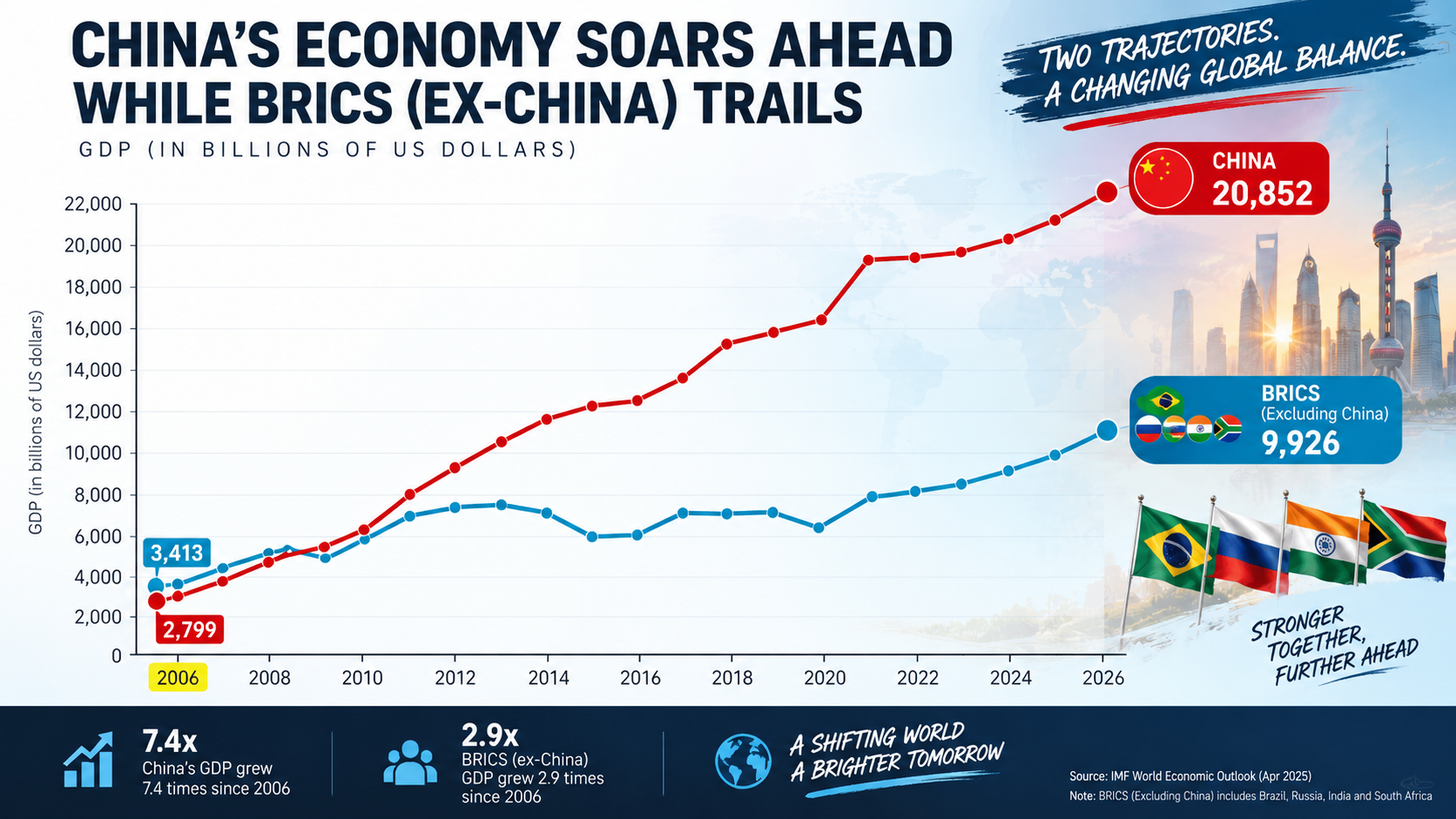
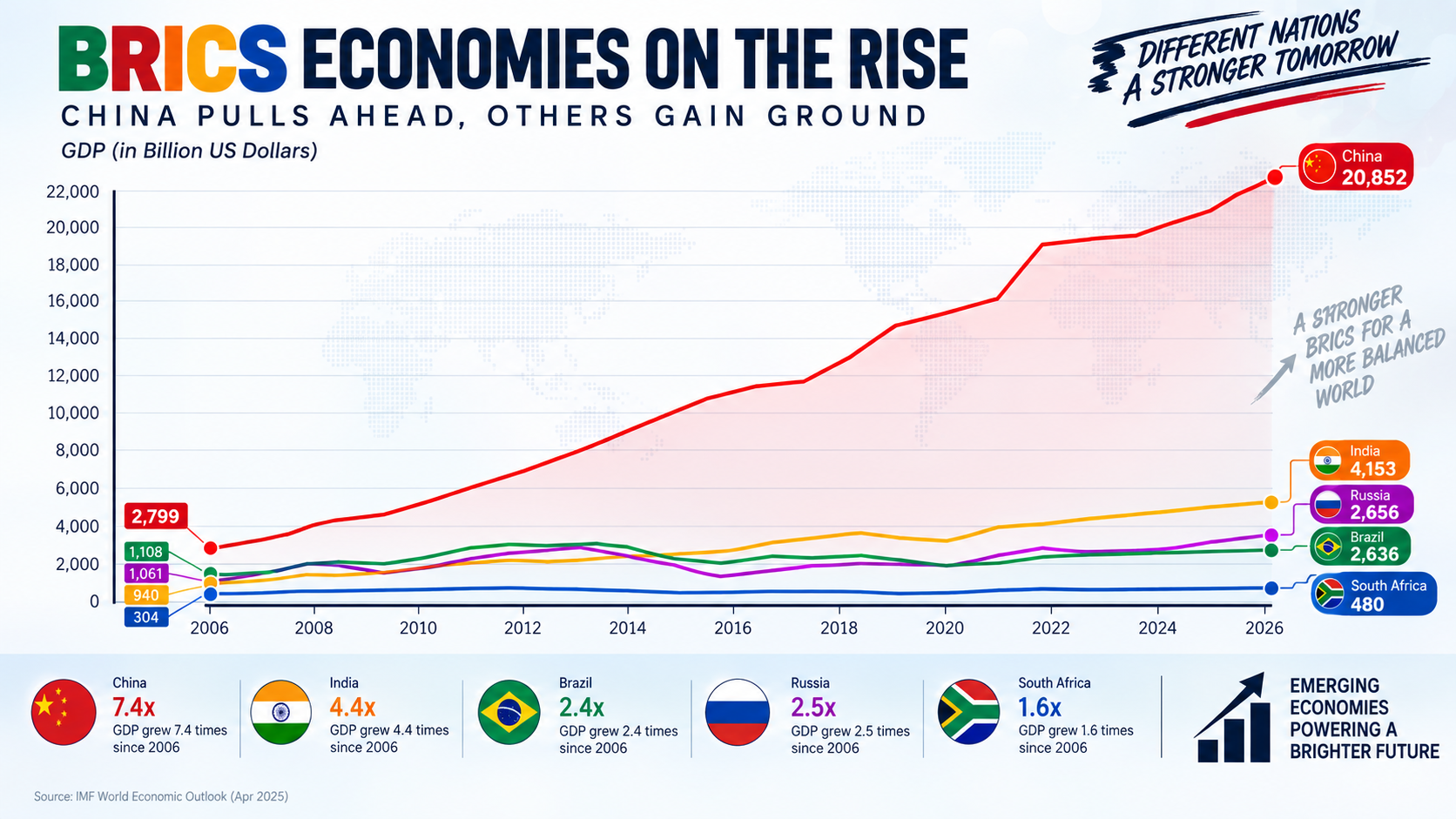
In 2006, China was already the largest economy within BRICS, with a GDP of approximately $2.7 trillion. At that time, the combined GDP of the other BRICS members was about $3.4 trillion, meaning China was large but not overwhelmingly dominant.
Fast forward two decades, and the picture has changed dramatically.
China's economy has now crossed the $20 trillion mark, while the combined economies of Brazil, Russia, India, and South Africa remain significantly smaller. In fact, even if the economies of these countries were combined and doubled, China would still maintain a commanding lead.
The economic balance inside BRICS has completely shifted toward Beijing. This is why analysts increasingly refer to China as the "Dragon in the Room."
How China Pulled Ahead of Everyone Else
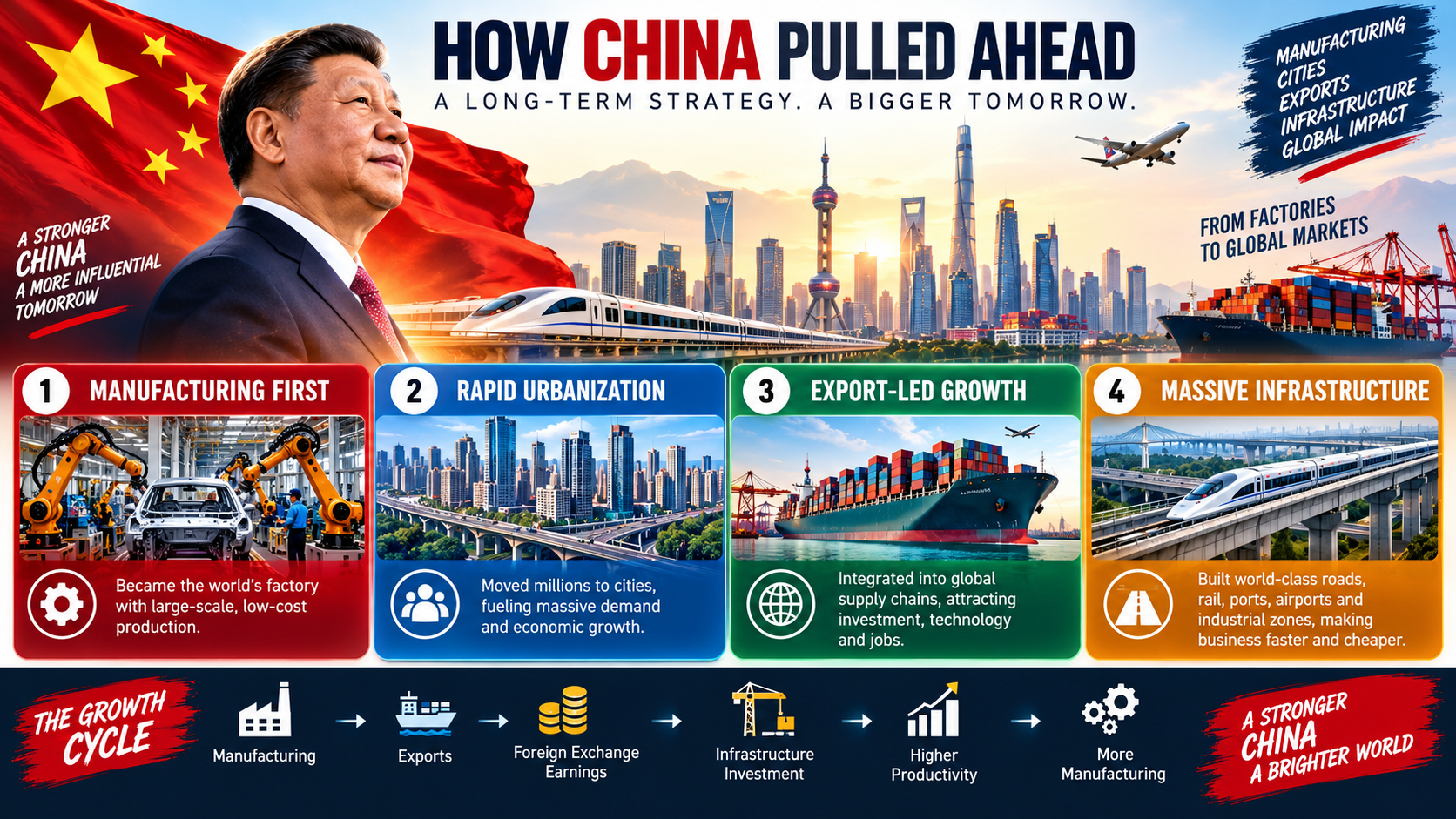
China's rise was not accidental. It was built on a long-term strategy focused on manufacturing, exports, infrastructure, and investment.
1. Manufacturing First
China became the world's factory. From steel and chemicals to machinery and electronics, China built manufacturing capacity at an unprecedented scale. Large-scale production allowed Chinese companies to export competitively across global markets.
The result?
A powerful export engine that generated massive foreign exchange earnings and millions of jobs.
2. Rapid Urbanization
Millions of Chinese citizens moved from rural areas to cities. This migration created huge demand for housing, transportation, construction, utilities and consumer goods. As urban centers expanded, economic activity accelerated, creating a cycle of sustained growth.
3. Export-Led Growth Model
China aggressively integrated itself into global supply chains. Major corporations from the United States, Europe, Japan, and South Korea established manufacturing bases in China. This brought:
a) Foreign investment
b) Technology transfer
c) Employment opportunities
d) Industrial development
A powerful growth cycle emerged:
Manufacturing → Exports → Foreign Exchange Earnings → Infrastructure Investment → Higher Productivity → More Manufacturing
This formula helped China maintain extraordinary growth for years.
4. Massive Infrastructure Investments
China invested heavily in highways, high-speed rail networks, ports, airports, industrial zones and reliable power infrastructure. Efficient infrastructure dramatically reduced transportation and production costs. For businesses, producing and moving goods became faster, cheaper, and more efficient. This gave China a major competitive advantage over many developing economies.
India's Rise: Impressive, But Not Enough
India's economic growth story has also been remarkable. Between 2006 and 2025, India emerged as the second-largest economy within BRICS, excluding China.
However, the challenge is not whether India is growing. The real question is:
Can India grow fast enough to reduce the gap with China?
While India's economy has expanded significantly, China's growth has been so rapid that the distance between the two economies remains enormous. India is advancing. China is accelerating. And that difference matters.
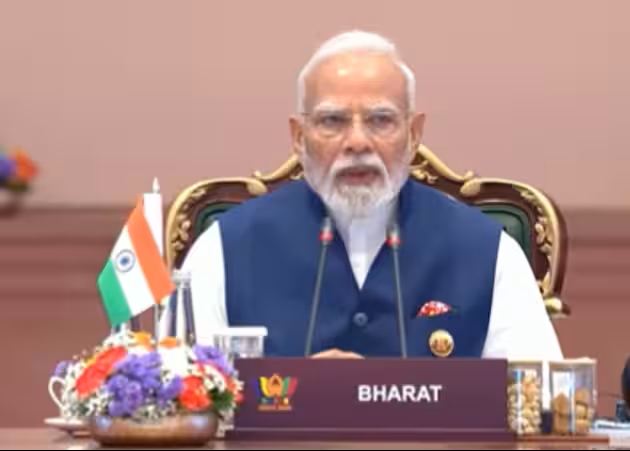
Why GDP Alone Doesn't Tell the Full Story
Comparing economies solely through GDP can sometimes be misleading. This is where GDP Per Capita becomes important. GDP per capita measures average economic output per person and provides a better sense of prosperity and living standards.
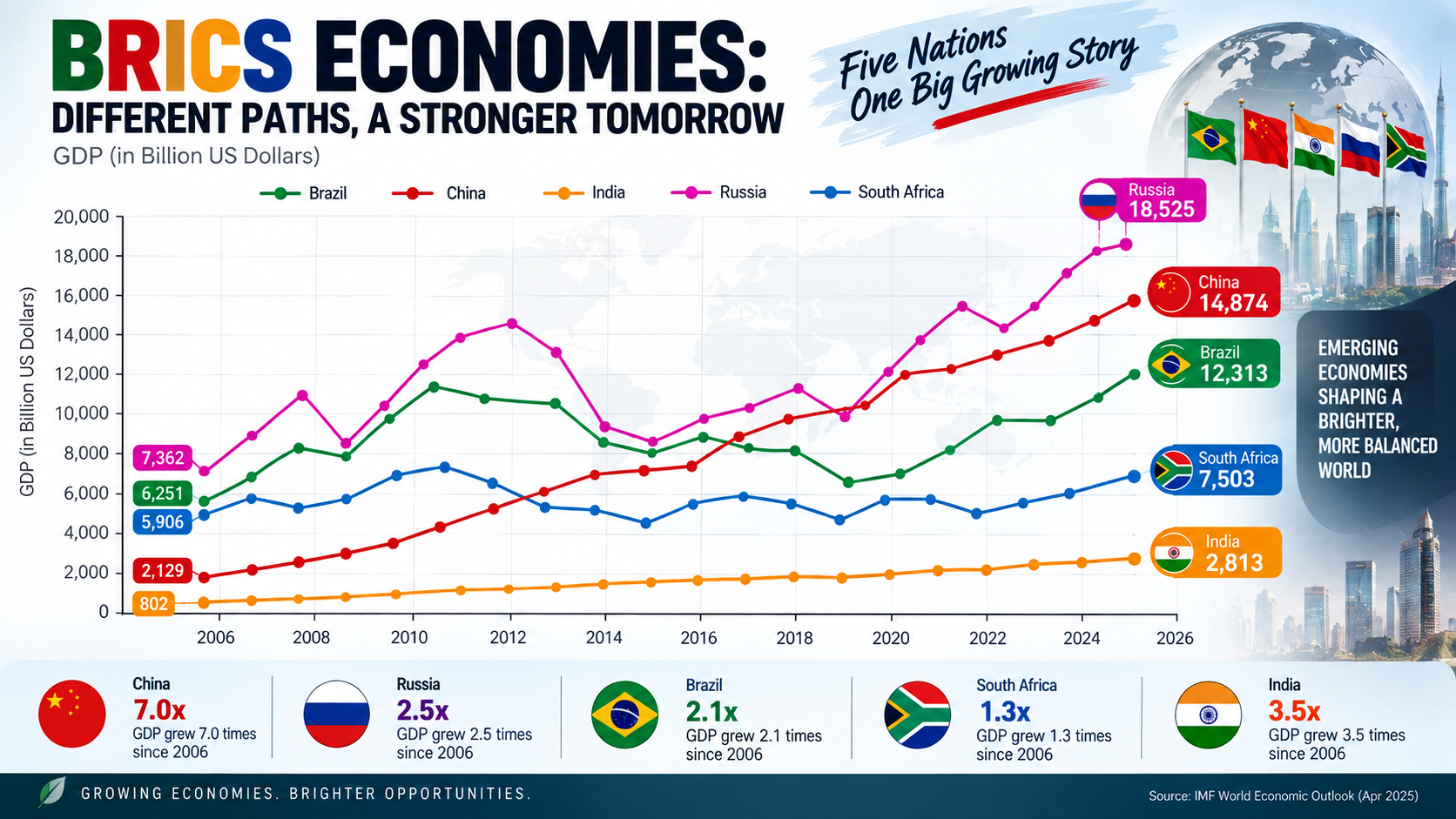
While India has become one of the world's largest economies, its GDP per capita remains significantly lower than China's. China's per capita income has risen dramatically over the past two decades, moving far ahead of Brazil, South Africa, and increasingly closer to Russia. India, despite strong growth, continues to face the challenge of improving income levels for a massive population.
The PPP Factor: A More Balanced Comparison
GDP per capita in dollar terms does not always reflect actual purchasing power. For example, the same amount of money can buy very different quantities of goods and services in India and China.
This is why economists often look at Purchasing Power Parity (PPP). Under PPP calculations, India's economic position improves considerably because the cost of living is lower. The gap between India and China becomes smaller than what nominal GDP figures suggest.
However, China still maintains a substantial lead in overall economic strength and productivity.
How the 2008 Financial Crisis Accelerated China's Rise
The 2008 global financial crisis became a turning point. Many developed economies struggled to recover and experienced years of slow growth. China, meanwhile, responded aggressively with large-scale stimulus measures and infrastructure spending.
While several G7 economies faced stagnation, China's economy continued expanding, helping it narrow the gap with developed nations and strengthen its global influence.
Is BRICS Really an Equal Partnership?
Officially, BRICS is a partnership of sovereign nations working through consensus. But economic realities matter. A country with a $20+ trillion economy naturally has greater influence than countries with far smaller economic capacities.
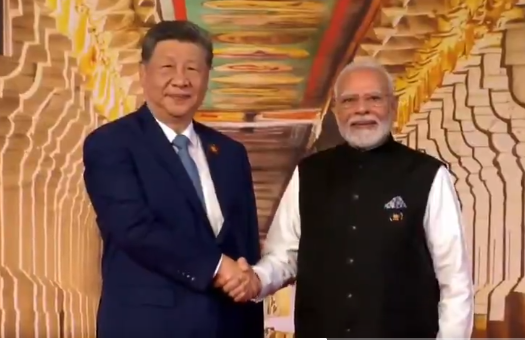
China's:
Massive GDP
Trade power
Foreign exchange reserves
Investment capabilities
give it significant leverage within BRICS and beyond.
This influence extends through lending, infrastructure projects, trade partnerships, and regional investments, particularly across Asia, Africa, and the Global South.
Why India Is Following a Multi-Alignment Strategy
India recognizes both the opportunities and challenges within BRICS. Rather than relying exclusively on any single bloc, India actively participates in:
BRICS
G20
QUAD
SCO
Other global platforms
This "multi-alignment" approach helps India protect its strategic interests while balancing partnerships across different geopolitical groups. India's goal is clear:
“Benefit from cooperation without becoming dependent on any one power center.”
The Bigger Question: Can India Become the Next Economic Giant?
China's journey from a rising economy to a global powerhouse offers valuable lessons in manufacturing, infrastructure development, exports, and long-term planning.
India has already become one of the world's fastest-growing major economies. However, closing the gap with China will require accelerating industrial growth, expanding exports, improving infrastructure, and creating millions of high-productivity jobs.
The race is no longer about growth alone. It's about whether India can grow faster than China over the coming decades. And that may well be one of the defining economic stories of the 21st century.
🚀 What Do You Think?
Can India realistically narrow the economic gap with China in the next 20 years, or has China already built an unassailable lead?
💬 Share your thoughts in the comments below.
📢 If you enjoyed this analysis, don't forget to share it with fellow geopolitics and economics enthusiasts.
🔔 Follow us for more deep dives into BRICS, global power shifts, and the future of India's rise on the world stage by reading our featured blogs:
🔗Forget a BRICS Currency! India’s Digital Payment Revolution Could Reshape Global Trade Without Challenging the Dollar:
https://mangalbhavana.com/article/brics-digital-payment-revolution-india-cbdc-global-trade-dollar
🔗🌍 BRICS Fast Track: RBI’s Digital Rupee & CBDC Revolution Set to Redefine Global Payments: https://mangalbhavana.com/article/brics-fasttrack-digital-rupee-cbdc-global-payments
🔗 BRICS 2026 Bombshell: Is India About to Unlock Russia’s Most Advanced Military and Nuclear Technologies?: https://mangalbhavana.com/article/india-russia-su57-technology-transfer-brics-summit-defense-nuclear-deal
Written by
Aditya KulshreshthaDiscussion (0)
Sign in to join the discussion.
Loading comments…