
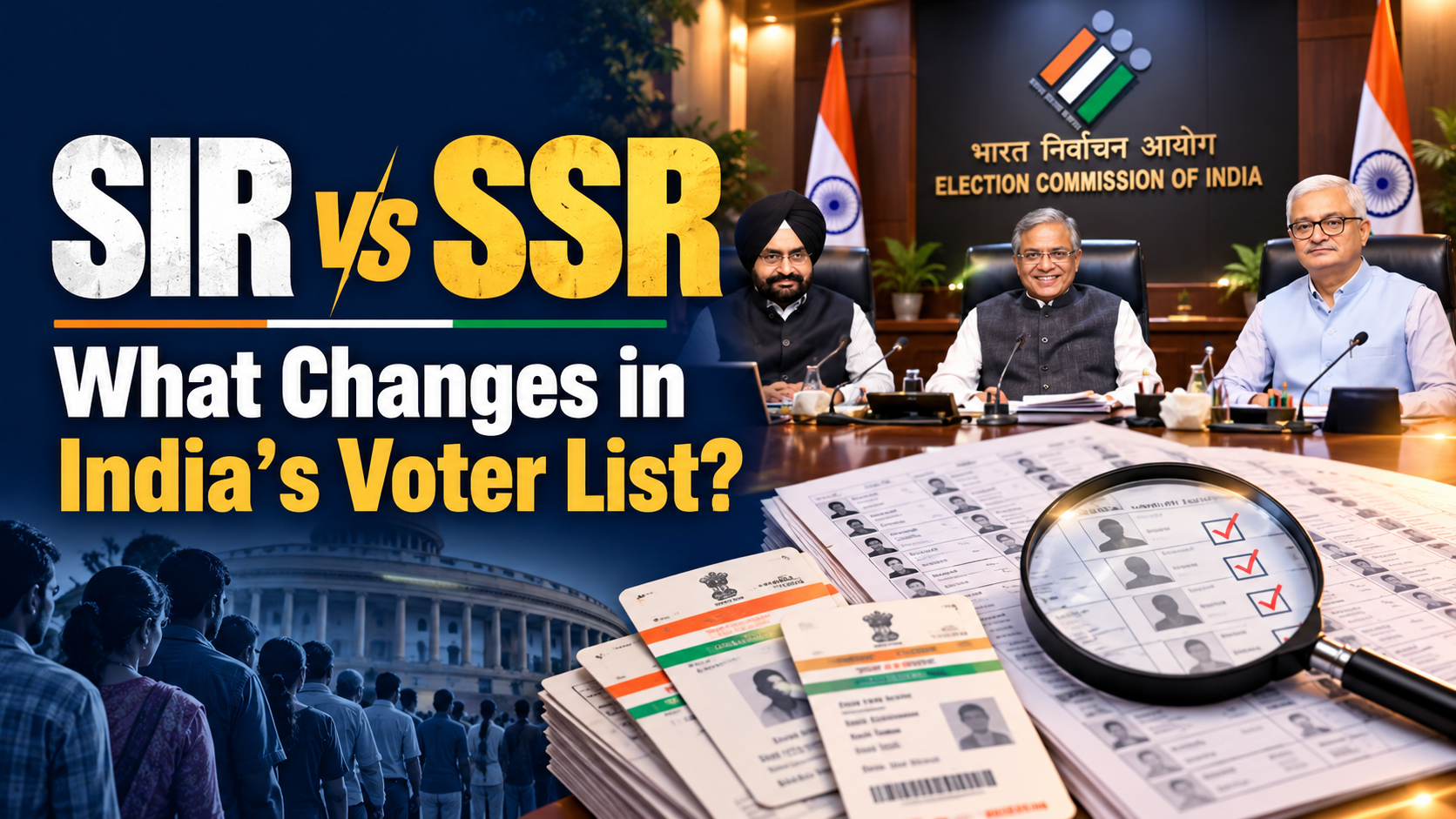
As Protests Rage Over SIR, What Exactly Is SSR and Why Does It Matter?
For months, India's electoral process has been at the center of a heated political debate. Opposition parties have raised serious questions about the Election Commission's Special Intensive Revision (SIR) exercise, alleging irregularities, wrongful deletions, and what some critics have described as "vote theft." Calls for accountability have intensified, with demands for action against election officials.
Amid this controversy, on October 15, 2026, the Election Commission of India (ECI) announced a Special Summary Revision (SSR) of electoral rolls across 17 states and Union Territories, sparking fresh debate over voter registration, voter list corrections, and electoral transparency ahead of crucial elections scheduled for 2027.
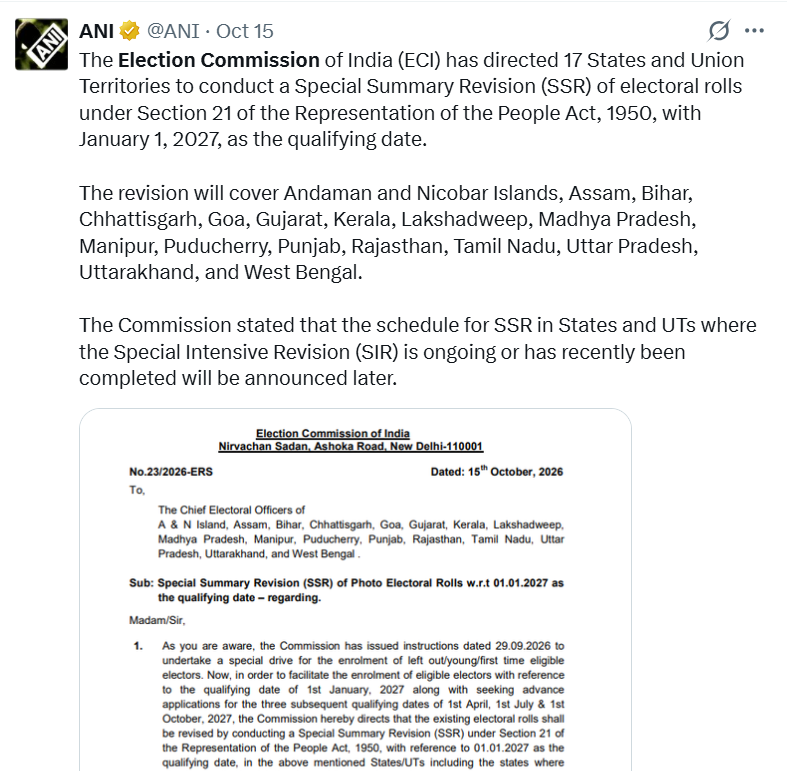
But here's the big question: “What is the difference between SIR and SSR?”
Surprisingly, many people actively debating the issue are unfamiliar with these two processes. Understanding this distinction is essential because the future voter rolls used in major state elections will depend on these exercises.
What Is SSR (Special Summary Revision)?
The Special Summary Revision (SSR) is an annual exercise conducted by the Election Commission to update and refine electoral rolls.
Think of SSR as a routine maintenance process for voter lists. Its primary objectives are:
1. Adding newly eligible voters
2. Correcting errors in voter details
3. Updating addresses
4. Removing ineligible entries
5. Ensuring electoral rolls remain accurate and up to date
SSR is not a new initiative. The Election Commission carries out this exercise regularly to keep voter records current and ensure maximum voter participation.
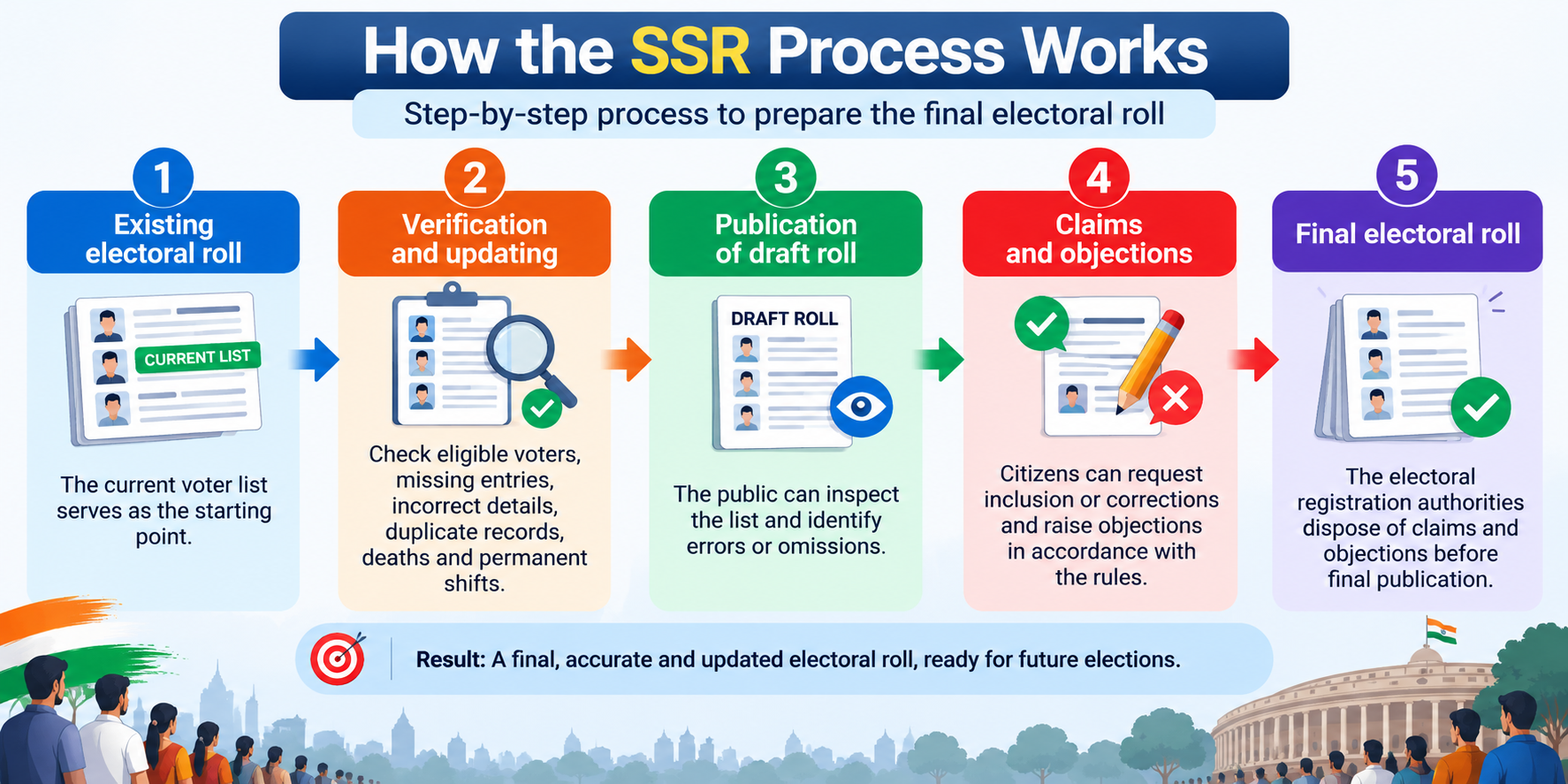
What Is SIR (Special Intensive Revision)?
The Special Intensive Revision (SIR) is very different from SSR. Unlike SSR, SIR is not conducted every year. It is undertaken only occasionally, often after several years, when the Election Commission believes a deeper review of electoral rolls is necessary.
The objective of SIR is to comprehensively examine voter lists and identify:
1. Duplicate voter registrations
2. Incorrect entries
3. Ineligible voters
4. Outdated records
5. Structural inconsistencies in electoral rolls
In simple terms, while SSR updates an existing voter list, SIR can involve a much broader and more intensive verification exercise.
This is one reason why SIR has attracted controversy. Opposition parties, civil society groups, and some electoral reform advocates have raised concerns that extensive documentation requirements could make it harder for certain eligible voters to keep their names on electoral rolls.
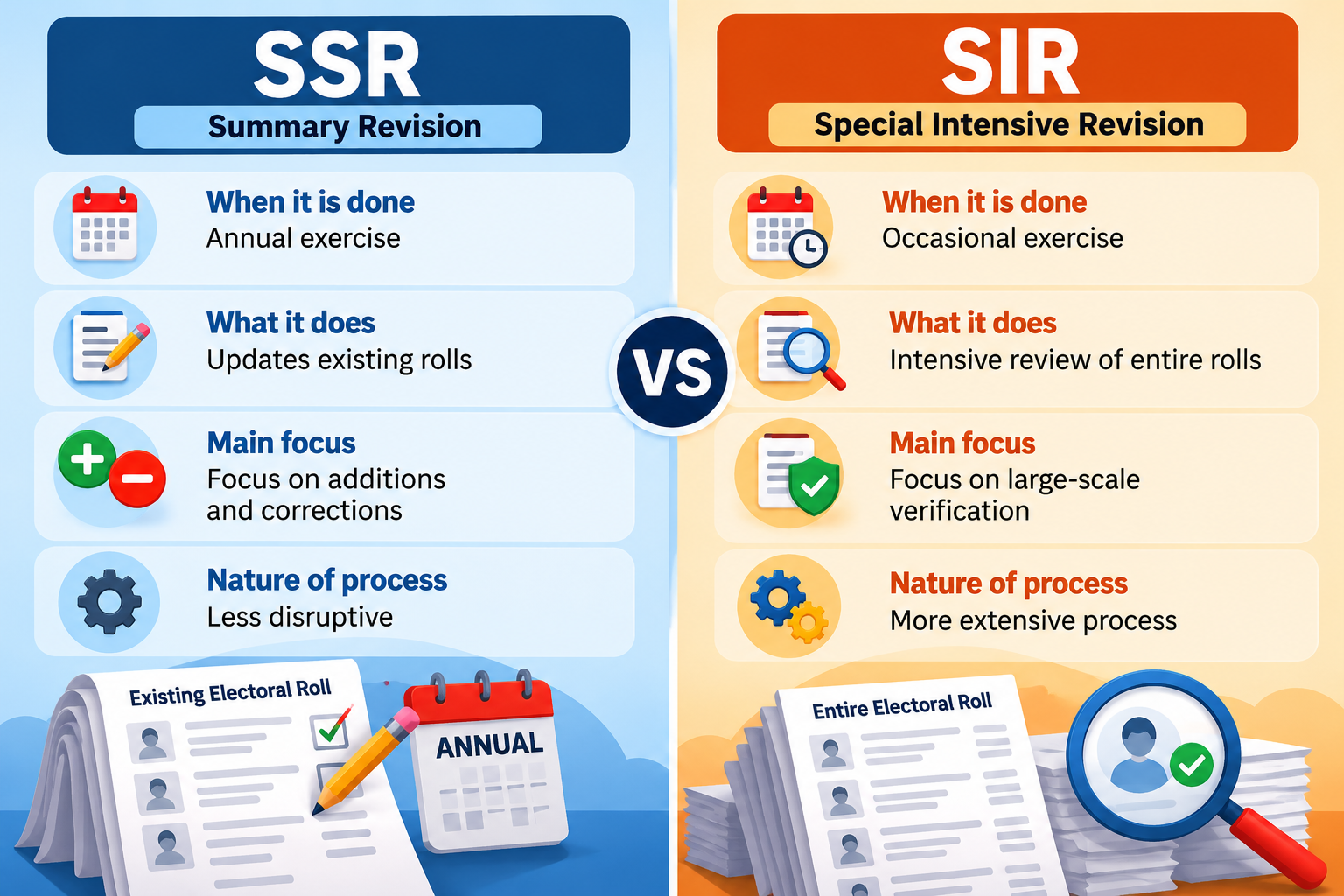
SIR vs SSR: The Key Difference
✅ SSR Updates Existing Voter Lists
Under SSR:
1. Existing voter rolls remain the foundation.
2. New voters can be added.
3. Corrections can be made.
4. Address changes can be updated.
5. Deceased voters can be removed.
The process focuses on improving and updating the current electoral roll.
✅ SIR Re-Examines the Entire Electoral Roll
Under SIR:
1. The voter database undergoes a much more intensive review.
2. Entries may be verified afresh.
3. Duplicate and questionable records are scrutinized.
4. In many cases, large-scale verification exercises are conducted.
What Changes Can Be Made Through SSR?
SSR allows eligible voters to make several important updates to their voter records.
1. New Voter Registration
Citizens who turn 18 years of age can apply to have their names added to the electoral roll.
2. Address Updates
If you have moved from one city or constituency to another, SSR allows you to update your voter registration details.
3. Correction of Personal Information
Mistakes in name spelling, age, gender and address can all be corrected through the SSR process.
4. Removal of Ineligible Entries
Names of deceased voters or duplicate entries can also be removed after verification.
Why Are These 17 States and UTs Important?
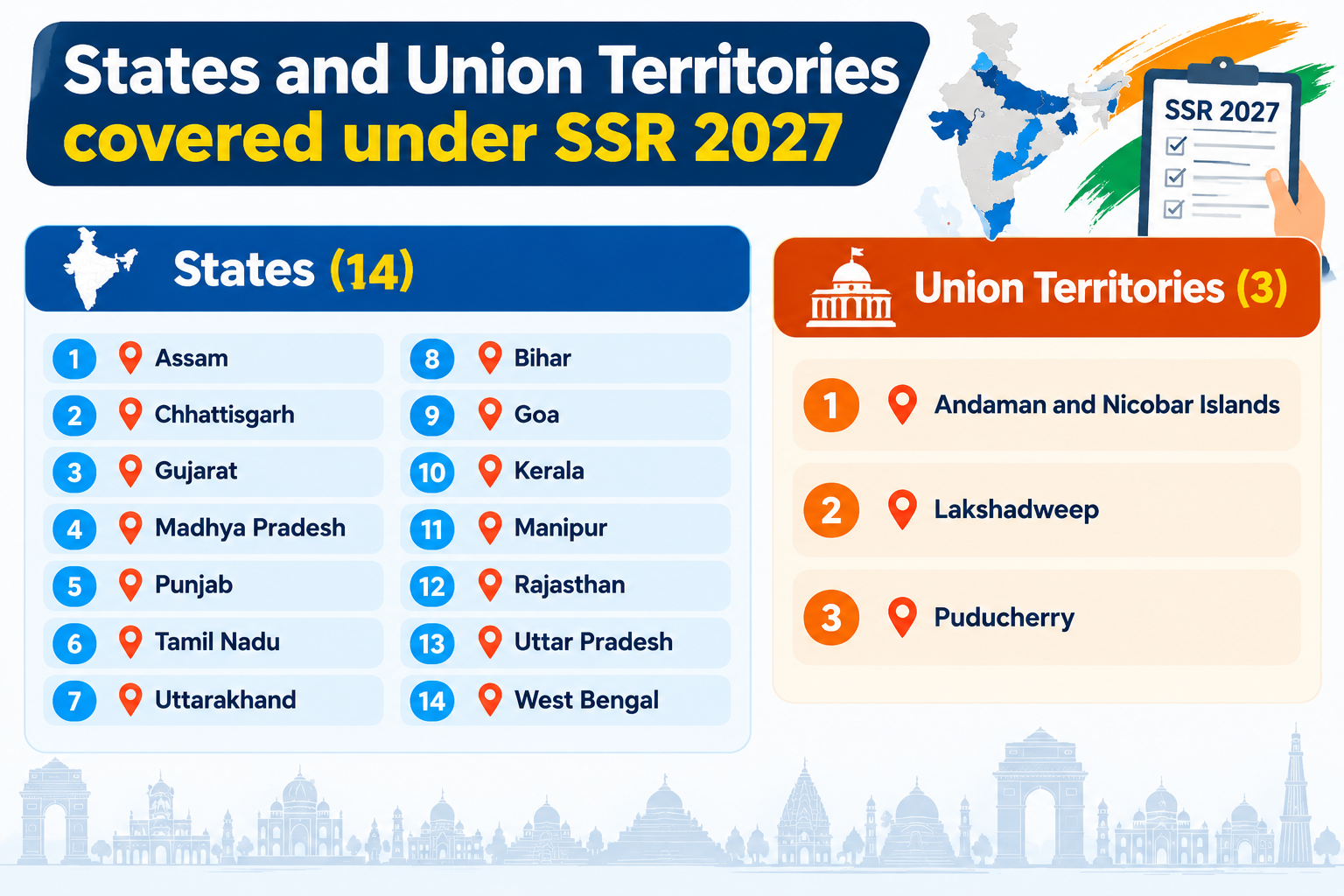
The Election Commission has announced SSR for 17 states and Union Territories, including several regions heading toward significant electoral contests. The move becomes especially important because key states such as:
a) Uttar Pradesh
b) Punjab
c) Uttarakhand
d) Goa
e) Gujarat (later in 2027)
are expected to witness crucial Assembly elections.
To ensure that all eligible citizens are included in the electoral process, voter rolls must be updated well before polling begins. Newly eligible young voters, migrants, and citizens requiring corrections to their records will have an opportunity to update their voting credentials through SSR.
Why Was SSR Not Conducted Earlier?
A common question is: If SSR is an annual exercise, why wasn't it conducted in the usual manner earlier?
The explanation lies in the Election Commission's focus on the broader SIR process. Since intensive revision exercises were underway in several areas, the Commission prioritized those efforts before moving toward the summary revision stage.
In simple terms: “SIR comes first where intensive verification is underway, and SSR follows later to incorporate additions, corrections, and updates.”
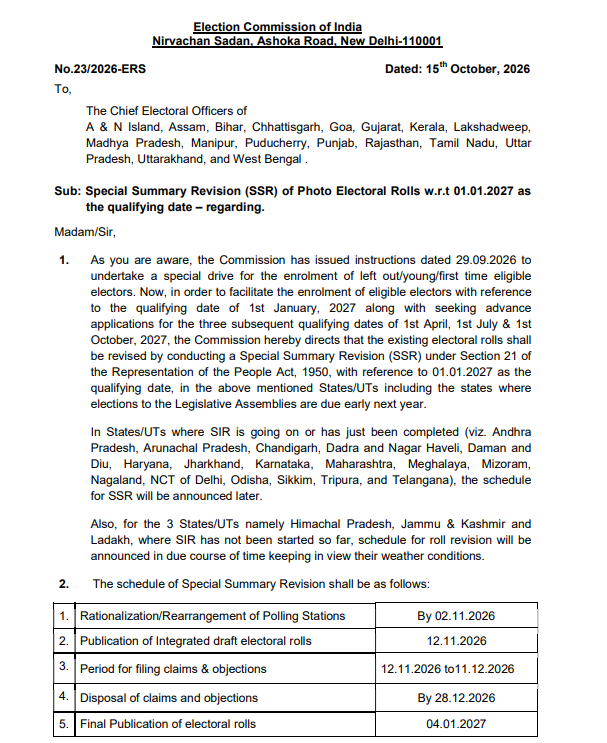
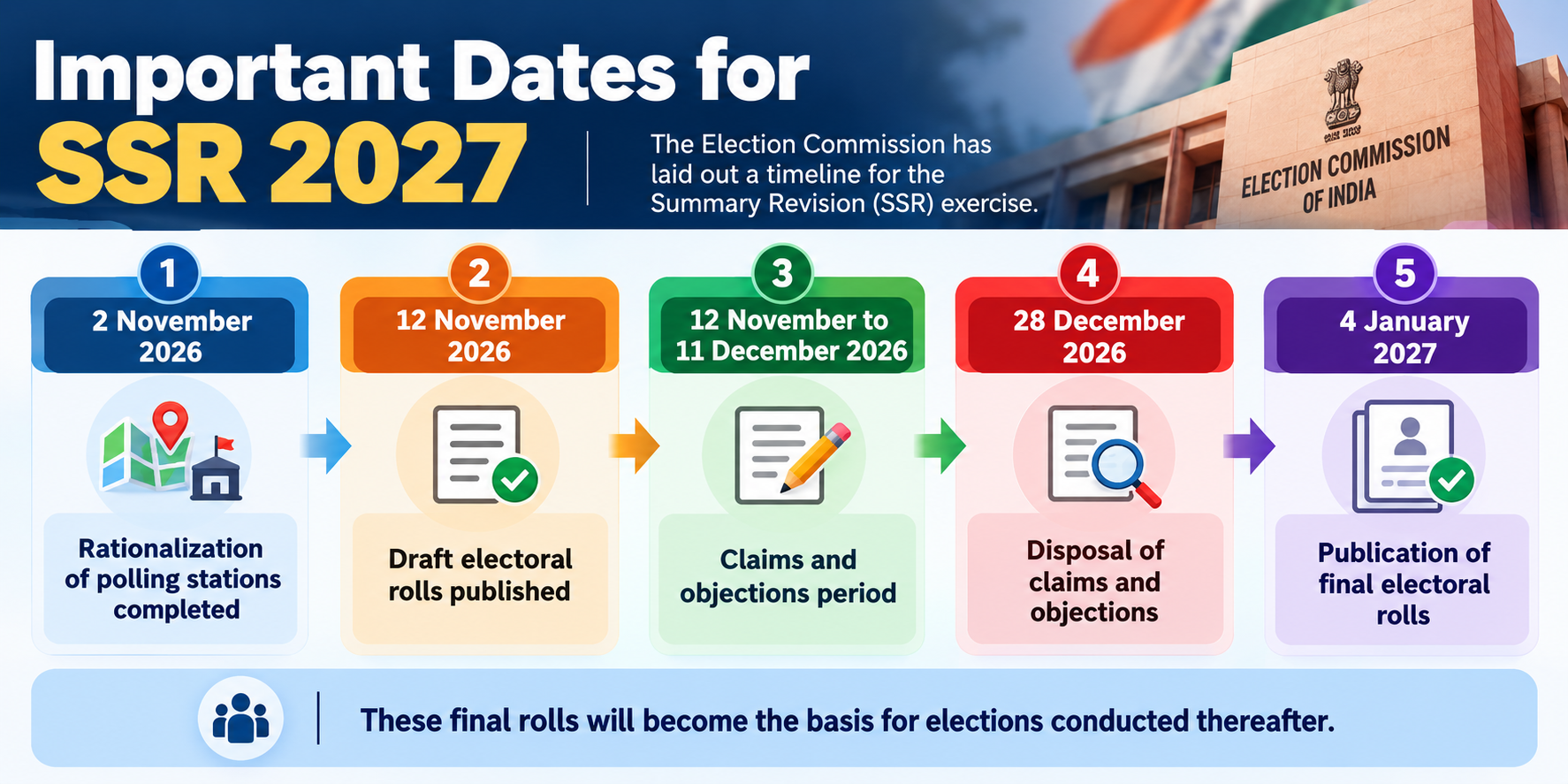
Important Dates for SSR 2027
The Election Commission has laid out a timeline for the SSR exercise.
Key Milestones
Understanding the Important Forms
Form 6: Inclusion of Name
Use Form 6 if:
a) You have turned 18
b) Your name is not present in the electoral roll
c) You want to register as a voter
Form 7: Objection or Deletion
Use Form 7 for:
a) Deletion requests
b) Raising objections regarding voter entries
c) Removal of names of deceased persons
Form 8: Corrections and Updates
Use Form 8 when you need:
a) Address changes
b) Name corrections
c) Date of birth updates
d) Transfer of voter details
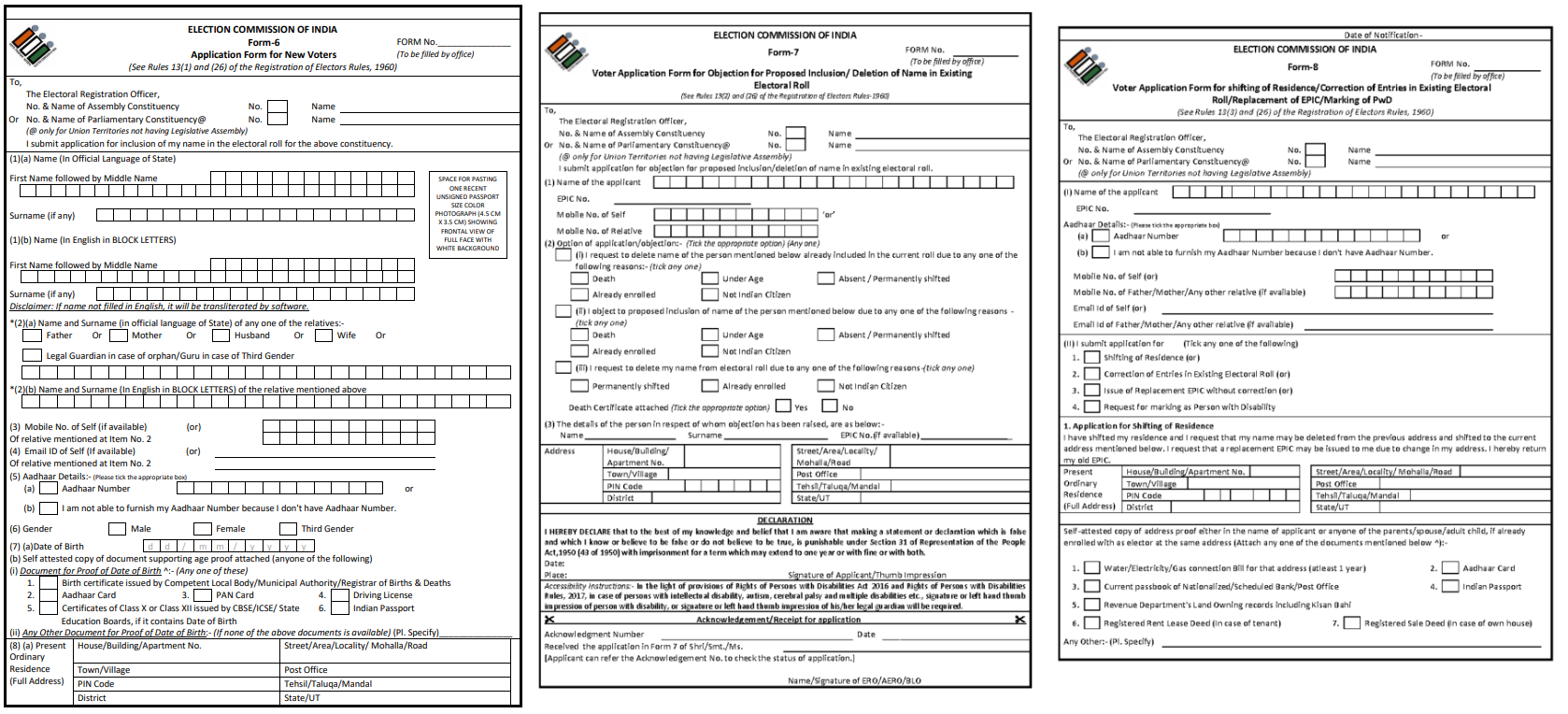
These forms are available through Election Commission channels and play a crucial role during SSR.
🚨 Who Gets to Vote in 2027? The Key Date That Could Decide It
January 1, 2027 has been set as the benchmark date for voter eligibility under the latest electoral roll revision. Citizens who turn 18 by this date can apply to be included in the voter list.
To ensure no young voter misses out, the Election Commission will also allow advance applications for those reaching voting age on April 1, July 1, and October 1, 2027, enabling smoother enrollment throughout the year.
In Simple Terms:
✅ Turn 18 by January 1, 2027? You can be added to the voter list.
✅ Turning 18 later in 2027? You can apply in advance and become eligible once you reach the required age.
Does Removal from the Voter List Mean Loss of Citizenship?
One of the biggest misconceptions surrounding the ongoing debate is that removal from an electoral roll automatically means a person is no longer an Indian citizen.
That is incorrect.
A person's name can be removed from the voter list for various administrative reasons, including:
a) Duplicate registrations
b) Change of residence
c) Incomplete documentation
d) Technical corrections
Citizenship is determined separately under India's constitutional and legal framework, particularly citizenship laws, and not merely by inclusion or exclusion from an electoral roll.
In other words: “Voter registration and citizenship are related but not identical concepts.”
The Bottom Line
The controversy surrounding SIR has undoubtedly intensified India's political debate over electoral transparency. However, the Election Commission's announcement of SSR for 17 states and Union Territories highlights a separate objective: ensuring eligible voters are included, records remain accurate, and electoral rolls are ready for upcoming elections.
While SIR is an intensive clean-up and verification process, SSR is an annual updating exercise designed to add, correct, and maintain voter information.
As India heads toward major state elections in 2027, understanding the distinction between these two electoral exercises is more important than ever.
📢 Stay Election-Aware!
Democracy begins with an accurate voter list. Have you checked your voter registration recently? Whether you're a first-time voter, have changed your address, or need a correction in your details, now is the perfect time to verify your status.
👉 Share this article with friends and family, and let us know in the comments: Do you think the Election Commission's voter roll revision process needs more transparency?
🔔 Want to stay updated on the latest developments in Indian politics, elections, policy decisions, and major national events? Explore our related blogs and follow us for timely analysis, breaking updates, and in-depth explainers.
🚨 Democracy on Trial? Rahul Gandhi’s 10-Point Supreme Court Petition Against the Election Commission Sparks Major Political Storm
👉Election Commission Under Fire: 9 Big Electoral Reforms and Major Process Changes Announced Amid SIR Controversy
👉Election Commission Under Fire: CEC vs 2 ECs Rift, Voter List Controversy & Explosive Dissent Claims Shake Democratic Trust
Written by
Ritvik DeshmukhDiscussion (0)
Sign in to join the discussion.
Loading comments…